I DIDN’T NOTICE her presence until after the execution. Her father had died well, as well as any man could have died that way. At the after-party for the execution, there were representatives from the various ministries present. They were all well-coiffed and well attired. These executions were turning out to be networking opportunities for the politically ambitious. The wine was poured. The flesh was pressed. You might have forgotten that the guillotine’s blade had once again fallen on a poor man’s shaven neck. What even was his crime?
And there she was, standing off to the side, quietly munching on something. Dulcinea, the daughter of a disgraced ex-aristocrat. “I’m sorry about your father,” I told her. She said nothing. For even in this time of mourning, Dulcinea would still not speak to me. Not a word. Not for years. When I expressed my condolences, Dulcinea stared out into space, as if she was vaguely aware of a far-off vibration. She wore a close-fitting linen dress with a gold sash. Her straw-colored hair was done simply but perfectly in the modern fashion. She was sad though.
Later, when I got on the bus back to Tallinn, I noticed her in the back seat, with her brother slumped over sleeping in her lap. He was only eight or nine years old. She stroked his hair and he slept. It was an awful fate. All of their belongings were spread around in bags and boxes.
Again, I said hello, but she said nothing. I began to suspect that I no longer existed on this plane. It was as if I had died too and not yet become aware of it. The day had a cool gray pallor to it as the bus rolled into Kassisaba. Such a grim and dull day. I could see all the houses along the streets. Life moved briskly forward. People had to go to work. People had to live their lives.
At the next stop, Dulcinea, still in her linen dress, woke up her brother and they disembarked. She realized then, in her glacial silence, that she was unable to carry their things. With panic in her blue eyes, she turned to me and said, “Are you coming with us or not?” I was shocked to hear her voice. It was as if I had fallen through the space-time continuum. Naturally, I said yes.
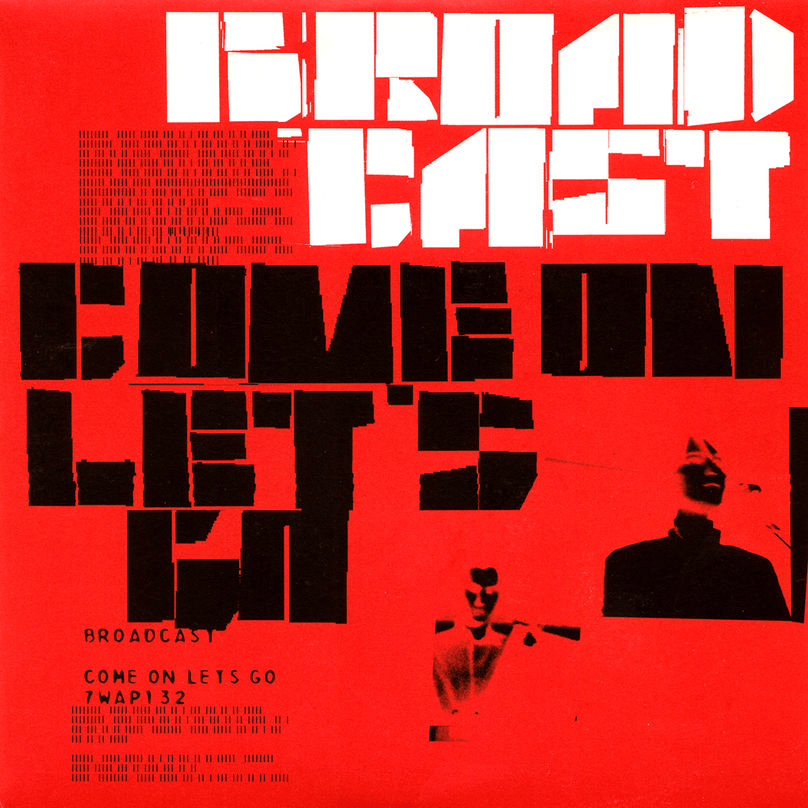
I FIRST HEARD the English group Broadcast in a parking lot, probably in the summer of ’99, or around that time. I remember exactly which parking lot it was. It was the one beside the Presbyterian church in Setauket on Long Island. The song was “Phantom,” off of 1997’s Work and Non Work. I think after that, I fired up the old Napster, and Broadcast’s discography was mine. Even at that time, the internet was nascent and information was scarce and hard to find. I really had no idea what Broadcast was, who was in it. The band was shrouded in mystery.
Since then, there have been some advances in internetting. Thanks to Wikipedia, I know in a flash that the group was formed by Trish Keenan and James Cargill, a bassist (!) in Birmingham in 1995. From what I understand, Keenan and Cargill were a sort of scene super-duo (reminiscent of the Gane-Sadier partnership in Stereolab). I think context is a little important here. There was a 1960s revival going on in the late 1990s (think peak Britpop). This wasn’t just driven by nostalgia. People, including myself, just happened to like music from that time. Why shouldn’t we be able to write our own songs inspired by the music we liked? It raised questions about time and cultural ownership. The bottom line was that no matter the inspiration, what came out sounded different. There was no way to recreate that sound, but a sense of loss infused the music. You can hear this in Belle and Sebastian’s recordings.
In March 2000, Broadcast issued their first proper album, The Noise Made by People, on Warp Records. “Come On Let’s Go” was the second single off the record, released that May. Songwriting credits are attributed to Cargill, Keenan, as well as band members Roj Stevens (keyboards), Tim Felton (guitar), and Steve Perkins (drums). The song received positive reviews, with journalists reaching for familiar words like shimmer psychedelic pop. For a young person, there were haunting lines in the song. “It’s hard to tell who’s real in here, come on, let’s go.” It sounded like spending time with strangers. It sounded like a long, lonely walk home at 2 am.
Broadcast was burned to disc and was my music accompaniment throughout college. Once, while I was walking past the radio station at George Washington University, I heard the Broadcast song “City in Progress” being played over the speakers. There was a young DJ inside, an Asian American girl (I will not speculate if she was Korean or Japanese, etc.) but she seemed so introverted and unassuming, and I was surprised that she too had heard of Broadcast. Of course, I waved at her through the glass. “I love Broadcast,” I mouthed to her. “Me too!” she mouthed back. I later got my friends suspended from their show on the radio, when I was invited on and accidentally said, “fuck you” in response to the hosts’ provocation.
The manager came rushing in, sweating, cursing too. “I’m going to get fined for that!”
Trish Keenan died in 2011, when I was knee-deep in diapers, basically (my three daughters were born in ’03, ’07, and ’11). She contracted pneumonia while touring Australia. Swine flu. She was only 42 years old. Cargill oversaw the release of the remainder of the Broadcast catalogue in 2024. Spell Blanket and Distant Call covered demos recorded between 2000 and 2009. And that was that. There’s no Broadcast without Trish Keenan. I’m not sure what the other band members are up to now. But maybe some of us might try to make songs that sound as good. Pretty please?
MY FACE PRESSED against the glass; my face pressed against the glass. Again morning, my eyes open, and my face is pressed against the glass. I open one eye, then the other. They are both goopy, the glass has a veneer of sand grime on its outside. The glass is old. In a small font, Made in Czechoslovakia is printed in one corner. Surely, I’ve been drooling all over myself. I must have nodded off after the train left Narva Station behind. Where are we? Rakvere?
“Riverhead,” comes the husky voice over the speakers. “Riverhead Station, next stop.” I sit up. Have I been sleeping so long? Who knows how many hours it takes to travel from Narva to Riverhead on Long Island by train. I notice my old knapsack next to me. A twenty-something man is seated beside me, staring into stale air. He’s sipping from a 40-ounce of Olde English. The train pulls into Riverhead station, and I can see all of those houses that sprawl along the avenues and boulevards. There’s the courthouse, the bank, and I know exactly where to walk if you want to go to the aquarium. In fact, I decide I will head over there first. To see the seals.
As we disembark, I can see two women I know from Viljandi. One of them is Esmeralda. What is she doing in Riverhead? Of all godforsaken places? She is with Birgit, the festival organizer. They are walking with purpose. Maybe they have come here to recruit acts for next year’s festival? Esmeralda is milk white, she’s dressed in a green tank top, and her brown hair is up. She looks like she is sleepwalking. Her eyes are all strange and filmy. I call out to her as she strides in the direction of the aquarium. “Where are you going?” I yell. “Please come back.”
AT THE CRACK OF DAWN, I descended the steps to make my daughter an omelette before she went to school. My feet slid across the smooth wood floor toward the kitchenette. I began to make preparations. I liked to get the frying pan sizzling hot, gurgling with butter before adding the eggs. When I turned on the light, I could see that she was back. She told me I could go.
“I cut short my trip,” she said. “You can go now.” “But I promised her an omelette,” I told her. “A mushroom omelette. She was looking forward to it.” “I have some workmen showing up soon,” she said, reaching out to stop my hand from cracking an egg. “Would you just go? Please?”
I took a step back. “No,” I told her. “I promised her an omelette, she’s having an omelette. I am making her an omelette today.” There were animals all around the house. Cats, dogs. Out on the terrace, I could see some musk oxen lazing in the morning sun. “Why do you have musk oxen?” I asked. “This is my house!” she said. Then, with a more urgent tone, “Could you leave?”
There came a knock at the door, some workmen came in in white overalls and white painter’s hats. They set up a ladder and began to prepare to paint the ceiling. But after them marched more men. Some younger types, who looked like boy band singers. Others gray, with beards, speaking of literature. They began to fill the house from top to bottom with their chatter. These were her men. One of them looked like Ben Affleck, the actor. “You didn’t tell me you were dating Ben Affleck,” I said. “That’s Tarmo,” she said. “He just looks like Ben Affleck.”
Soon the house was brimming with other men. I had just wanted to make an omelette. “You have to go,” she said. “You’re no longer needed here.” “But it’s my child. I have a right to make her breakfast.” “Would you please just leave?” she implored me. I did no such thing. Instead, I reached for a bottle of moonshine, drank it down in sad, heavy gulps. Soon I was stinking.
“You fool!” she said. “How are you supposed to drive when you’ve been drinking?” She sank into a chair, sat opposite me. She became her younger form now, blonde, with those crazy eyes. “You need to find another woman,” she told me. “It’s been long enough. That will make everything better.” For a moment, I followed the arc of her logic. Then I realized her logic had led me here, to this house. “What are you, some kind of oracle?” I said. “You know, I gave you everything,” she said, with a slight disgust. “Without me, you’d be back where I found you.”
“Fine then,” I said. Omelette unmade, I crumpled through the door into the morning light. I felt like garbage. Pure, limping garbage. And I had no idea where this place was. For a moment, I was reminded of the rainy streets of Beijing, and how I had been lost just like this, and a friendly Chinese had waved to me through a misty cafe window. I felt free that day in Beijing.
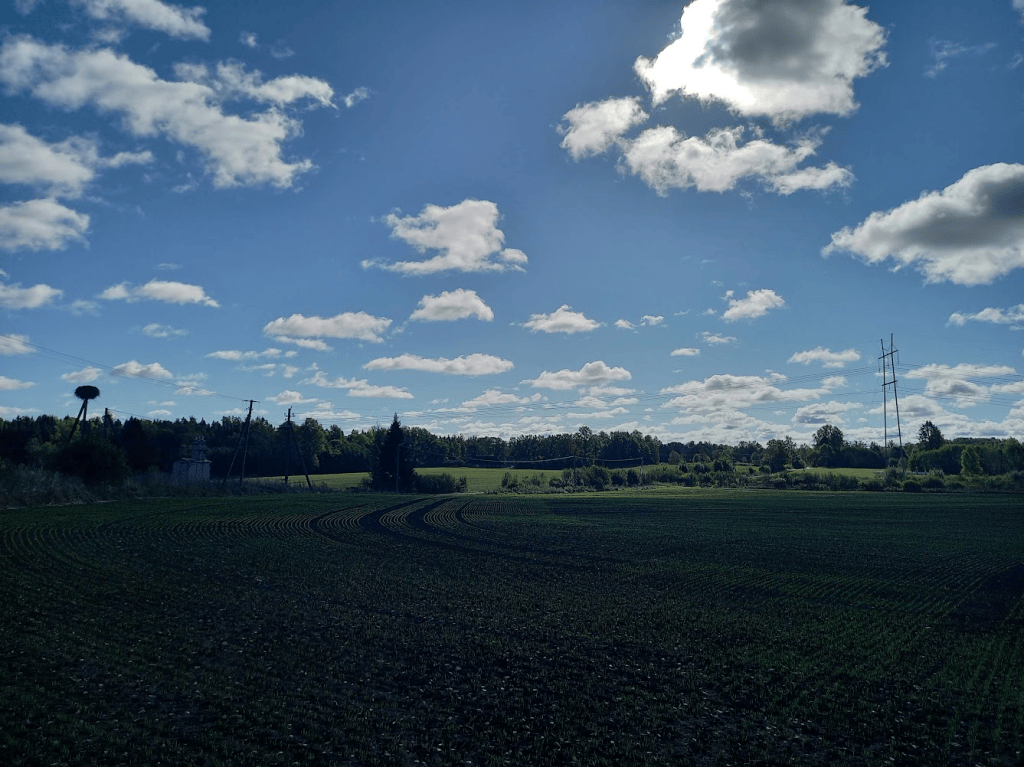
ALMOST EVERY DAY NOW, I take my bicycle out to Varesemäed. This is a small nature preserve on the edge of Viljandi Town. Its name translates as “The Crow Hills.” To get to Varesemäed or the Crow Hills, you cycle up Tallinn Street and bear right towards Põltsamaa. Soon the road dips before the turn to Karula and the last suburban houses fall away. To the right and left, vast fields open up, some of them full of golden rapeseed in the summers, others with dark, rich soil. Power lines are draped across this landscape. At Kikka, there is a small settlement of new homes, though I wonder who lives in them, or why they all moved there. Maybe it’s some sort of religious cult? Or are they exiled political dissidents? Just before you get to Kikka, you can see a massive boulder on the left. This is the boulder I call “Easter Island.”
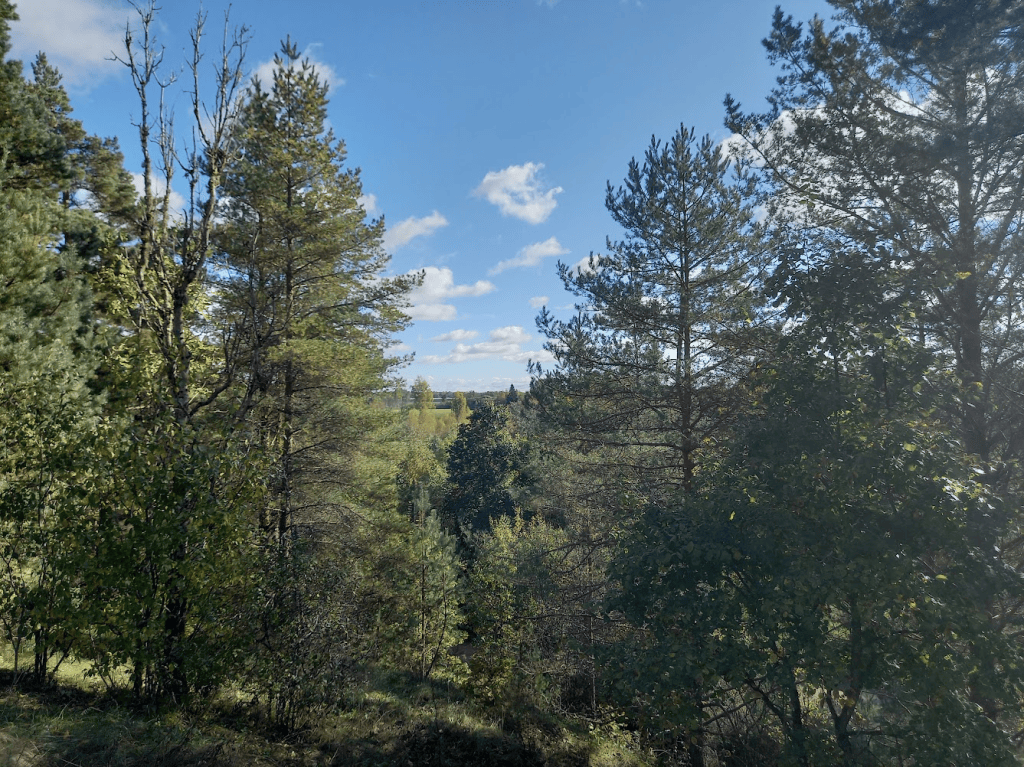
I first started going out to Varesemäed years ago. I was introduced to the preserve by an old friend who liked to frequent such natural places. She called forests “lower pressure zones,” and she would come out to the woods to breathe, admire sunsets and the changing colors in fall. There are several nature preserves dotted around Viljandi, like the one in Loodi, or the one in Sinialliku. But these other places never really got under my skin. All of Estonian nature feels unfamiliar, all of these pines and birches. There is a melancholy contained in the land, though it’s not necessarily ominous or unfriendly, more like a broken-hearted woman boiling tea.
Surely, there must be some things to be happy about.
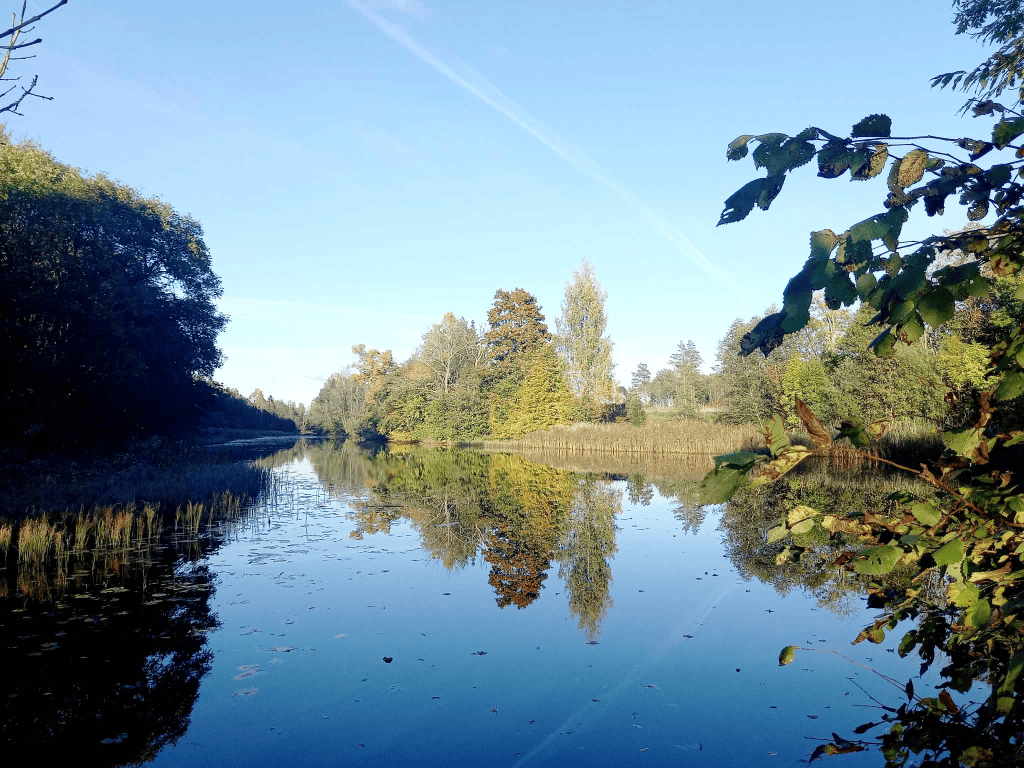
Varesemäed is the most interesting. There are adventures to be had there and it’s become a special place to me. After you pass the religious dissidents at Kikka, there are some other homes. In one, they are doing renovation and they have a robot lawnmower that is busy cutting grass. They have some speakers set up and like to play dance music. I love how the views open to Vana-Võidu at this point, which can be seen across the valley and the Mädajärv.
Then, just before you reach the turn off to Varesemäed, there are more homes. Once I was cycling out there and I saw a sole figure standing by a gate. An old man. Considering we were the only two people anywhere, I waved to him. He said nothing and gave me a puzzled look.
Yesterday when I went out to Varesemäed, the same thing that usually happens happened. I arrived on my bicycle, only to find out that I wasn’t the only person in the park. There was a man seated in his car, parked at the far end of the parking area. He was wearing sunglasses, though it was later in the day and the sun wasn’t so bright. He might have been talking to someone in his car. It was hard to tell because the car windows were very dark. It was a fine new vehicle. Who was the man? Why did he need to come all the way out to Varesemäed to have a conversation? It must have been important because as soon as he saw me, he left.
This scene repeats itself day in and day out. What I find interesting is that it’s usually solitary cars. It’s rarely two cars. People don’t come out here to have conversations between each other, or to meet. They come out here alone, or if they aren’t alone, then they ride in one car together. As soon as the mystery man left the parking area, a large gray van showed up with tinted windows. This van drove to the farthest end of the parking area and stayed there. I felt I was intruding and decided that I should probably leave rather than to start spying on the van.
Naturally, I think these other visitors are up to no good. Drugs? Sex ring? Serial killers? It could be anything. Maybe they are just friends who want to have a conversation away from prying eyes? Or maybe they had just been driving all day and needed a break, to sit in some place alone. “Hey, I know where we should go. Varesemäed! No one will look for us there.” Yes, a “lower pressure area,” as my friend put it. The sign in the parking lot has been peeling away for years. If you train your eye, you can read that there has been a preserve at Varesemäed since 1964. Before the Second World War, there was an Estonian Defense League shooting range.
Finding out more about the history of the place led me to search the archives of old newspapers. The first reference to Varesemäed I could find dated to 1932, when it was mentioned as an example of a ridge-like formation in the Sakala Upland. I found no references to shooting at Varesemäed, but in a 1937 Postimees article, “Suuremad laskewõistlused Wiljandis,” I learned that these shooting competitions were all the rage in the 1930s. General Johannes Orasmaa himself attended a competition between different malevs in Valuoja Valley.
Other newspaper articles from the Soviet era talk about great hikes involving different groups of Pioneers. Sometimes Lithuanian Pioneers would visit and they would all go out to Varesemäed. There was grilling and singing. A lot of happy childhood memories were made.
The best article appeared in 1976 in Tee Kommunismile, where it was reported that the land around Varesemäed had once belonged to the Karula Manor and was sold in 1912 to the Koppel family, which established the Kõre-Varese Farm near the site. It is from this farm that Varesemäed derives its name. Perhaps the broken building ruins that separate the Kehklase järv from the Vägita oja date from this time? I like to spend time around those ruins. If I strain my ears, I can almost hear the conversations of the people who used to live and work in them.
I’ve also been lost on the trails. I’ve been so lost that I came out of the woods on the Küüdeküla Road, thinking I was on the Põltsamaa Road. I’ve never seen strangers in the woods at Varesemäed, only in the parking lot. I must admit I have had my own personal adventures at Varesemäed, such as the time I went swimming naked with an Estonian woman in the lake. I’ve never really understood the rules around nakedness in Estonia. Sometimes, like when you are about to plunge into a lake, or are going into a sauna, being naked is totally fine. If you were to suddenly feel the desire to take off your clothes in Rimi or Selver, that would be ebadekvaatne.
There I was, swimming naked at Varesemäed, when one of those mysterious white vans pulled up. It parked there for some time, and I wondered if someone was taking photos of our nude dip. Surely, this would make an excellent cover shot for some tabloid. Then the mystery van roared off down that dusty road, back to the highway. Ever since then, I have wondered who was in the van. Was it someone I knew? When people gave me a strange look in town after that, or if their eyes lingered on me for too long, I would think, maybe they were in the van?
People do drive too fast on the road to Põltsamaa. The way back is fraught with danger, risk. Trucks go speeding by at astounding speeds. Just the displacement of the air can knock you over. You would think it was the autobahn and not a two-lane road in the middle of nowhere. When I cycle back, I wonder where they are driving to in such a hurry. What’s the best thing that could be waiting for anyone in this land, other than a dish of meekook and some coffee?
I am not the only cyclist out there. Just some weeks ago, I was overtaken by a blonde woman on a bicycle, with a trailer attached, a small child sitting inside. We were by Easter Island when it happened. It was a lovely crisp day, portending of autumn to come. The landscape looked majestic. The woman smiled at me as she cycled by and I thought, “I do love the countryside.”
An Estonian version of this piece was first published 29 September 2026 in the newspaper Sakala. The English version contains different Estonian words, including järv (lake), oja (stream), malev (brigade, team), meekook (honey cake), and ebaadevkvaatne (inadequate, not up to snuff). Before the Second World War, Estonians often used German orthography in writing. “Suuremad laskewõistlused Wiljandis” would be “Suuremad laskevõistlused Viljandis” today, ie. “Great shooting competitions in Viljandi.”
TO BE AT THE TOP of a shiny skyscraper, enclosed in metal and glass, is to experience a kind of disorientation. Maybe you are on the 11th or the 26th floor, but really, you are standing on air, walking on air, surrounded by a concrete box of walled-in oxygen. There was a party for all the program members in this Manhattan honeycomb, it took place in a modern room with a single long table. There was champagne, and champagne glasses, and Dr. Henry Kissinger was there. His bush of gray-black hair looked fine enough. He kept trying to talk to me about China. “Strange,” I told Dr. Kissinger. “I thought you were dead.” He said, in his thick accent, “Did you really think I was capable of death?”
There were a lot of beauties from the program there, in extravagant dresses. One woman stood on stage, handing out awards. A guitar appeared on the table; I was surprised I hadn’t seen it there before. It was a Fender Nocaster model, encased in silver trim. I picked up the guitar and began to pluck out a tune on its metallic strings, but when I did, it slipped from my hands and fell on the floor. When I picked it up, I noticed the headstock was gone, and foam was emerging from the top. Kissinger was there at once. He held the glass to the broken neck, and soon it was full of bubbly. “Didn’t you know that all guitars are full of champagne?” he said.
More people kept coming to the party and it was getting late, so I decided to leave. I took the elevator down. I knew I would have to make the last Long Island Railroad train to Port Jefferson. Or would my father really have to come and pick me up in Ronkonkoma? I tried to open up the schedule on my phone, but the page wouldn’t refresh. To make matters worse, when I got downstairs, I realized I had left my shoes at the party. I exited the elevator, looked over at the doorman, and asked him if I could go back up. “Do you have a pass?” he said. “Any form of identification?” “I just came out of the damn elevator,” I said. “Obviously, I’m allowed to be in the building!” The doorman looked puzzled. He knew not what to do. But procedure!
“Fine, sir,” he grumbled, “but only this one time.”
When I retrieved my shoes, I saw that Dr. Kissinger was still inside, charming young women. Then I rode the elevator down again. Outside, the Manhattan sky was a smoggy white. How odd that there were white nights in New York too? And at such a late hour. The streets were full of people in dark coats. Cars honked their way down the avenue. But when was the last train home now? Or was there a Port Authority LuxExpress to Tartu? Impossible. My phone said the next train was at 3:28 am. That was a long time to wait. I decided to call my daughter, to see if I could stay there. “But dad,” she said, “we don’t have any place for you to sleep. We’d have to pile up clothes on the floor to make you a mattress.” “That sounds fine to me,” I told her. The only problem was that I had no idea where she lived in this urban jungle. Then my phone died.
There I stood, in the streets of New York, surrounded by strangers. I considered for a moment that if there was anyone who could help me, it was Dr. Kissinger. He was older than time. He was undead. I began walking back to the building. Certainly, Dr. Kissinger would still be there. Did he ever miss a party?
ONE DAY, KAROLA told me the following story. When she was 19 years old, she became pregnant. The father was a jobu, in her words, a jerk, and a university mentor who was 25 years her senior. He had received various accolades, orders, and stars, and had seeded the earth with his progeny. He disappeared when he learned of Karola’s pregnancy and never returned her calls. She carried the baby to term but, not knowing what to do with it or herself, one night she suffocated the child with a pillow. An act of desperation. She sobbed while she did it.
“But it was such a beautiful child, you should have seen him, so pink and lovely,” she told me. Karola couldn’t part with her dead child. So she kept him hidden away in the closet, so that nobody but her could see him. She would take him out sometimes and hold him. He still looked quite the same, like a little baby doll. She had never told anyone about the child before. She shared with me her darkest, most disturbing secret.
The beautiful pink dead child. She let me hold him in my arms. It was then that I told her that the child deserved a proper Christian burial. “You can’t just keep him locked up in the closet for all eternity,” I told Karola. We put the baby in a box, buried him at the foot of a tall pine tree. Karola wore white. I read some psalms I had selected for the occasion. Then it was done. The baby was returned to the earth. Soon it would mulch. There wouldn’t be a trace of him.
But my mother saw us from the window. “What were you doing with that strange girl in the forest that day?” she wanted to know. “Tell me what was in the box.” It was such a terrible feeling, that I had to pretend it had all been a dream. “You were dreaming,” I told her. “There is no girl and there is no box.” Of course, there had been. I kept staring at that tree, wondering about Karola’s baby. I felt like an accessory, but I hadn’t killed him. I arranged a proper funeral. I hoped he was sleeping well there in the ground.
WHAT BECAME of the furniture in my grandparents’ house? The little German table in the living room, the shining Buddha beside the couch, the little chair from my grandmother’s home in Virginia? It was here that I awoke in my bed, just as I had gone to sleep in Estonia, on the other side of the ocean. The Atlantic washed against the Netherlands and Denmark, and seeped through the straits, until it caressed the Baltic, which tugged it north to Estonia. Here I was back in the Long Island living room. Everything was a shade of drab brown or drab green.
“I need to make a cup of coffee.” This was my core impulse. Something to smack me over the head and wake me from my deep slumber. A small kitchenette had been installed right here in the corner, where the stereo used to be. I began to empty the contents of the espresso maker. As I did, the black coffee grounds flew into the air. As they landed, they glowed with fire. There were fiery ghost strands burning away all around the room. Each nestled in its own blaze. How could it be that none of these small fires started to spread? They all remained there, in place.
There might be some other explanation for the flickering fires in the living room. In the back, I could see the bedroom where my grandfather died. Or didn’t he die in the bathroom? It was quite dark in there; I could see the furniture in the shadows. But he wasn’t here anymore. He was gone, and grandma was in the kitchen, making cornbread again, all dressed in white. In the kitchen, there was an old metal scale that hung suspended across from the telephone. As I entered the kitchen, the scale began to dance about. “Don’t mind that,” my grandma said. “It’s just the ghosts. They like to play with it.” I also liked to play with it when I was young. How strange to be back in the old house. It was as if it was suspended in time. Nothing had changed. It could have been any year, but my grandma’s hair would always be white. There was nothing to be afraid of, though. The kitchen ghosts were playful. The fires didn’t catch.
MY GIRLFRIENDSAID she found a new place for us to live, somewhere deep in the southeast, some place far away from everything, a place where she said the outside world would never find, touch, or disturb us. She scrolled and trawled real estate listings until she found her dream house. This turned out to be a single story cinderblock bungalow in the middle of town.
“But it has potential,” she said, clutching her fingers together. The interior of the building looked like it hadn’t been touched since about 1978. There was even an old bar in the corner that had no doubt served the likes of rockers Jaak Tingimata and Urho Guidopalu at some forgotten booze-guzzling soiree deep in the Soviet time. There were still empty bottles lying around. By its single window, there was a dusty divan, upon which my girlfriend plopped herself, happy as a bee, enthralled by the opportunities presented by this ancient wreck.
“Just look,” she said, tugging at a torn curtain. “We get good light in here. It has a wonderful view.” Behind the curtain, I saw a series of plastic recycling bins. The graywhite light of winter streamed through the window and I knew not what to think. It seemed that she was sold on the place and if she was sold on the place, I doubted I would be able to unpick her reasoning.
She was quite endearing though and attractive and wore a black skirt with girlish stockings. Some part of her was forever 18, even if she was forty-something now. Her hair had been cut à la Aniston and she danced exuberantly around the dreary interior of the cement bungalow.
“Take a good look at that couch,” she said. “We’ll be making love on it for weeks! You are never going to get off of that old couch.” She began to pull up her blouse when, just at that moment, there came a knock at the door. I went and opened it, only to come face to face with about a dozen men, all wearing towels, sauna hats, and toting wooden ladles in their giant hands. Beyond them, I only saw the white of winter, frozen over parking lots, frosty stone facades.
One of them was especially fierce. He said to me, “This is a public sauna!” “No, it isn’t,” I said. I peered back into the building and noticed there were two plumbers at work on what had once been the showers. Since the building had not been heated, the shower area was covered in mottled patches of ice. Icicles hung suspended from the ceiling of the sauna showers like in an Arctic cave. One of the plumbers said to the other, “It will take forever to fix up this old place.”
“You heard the plumbers,” I told the sauna men. “There will be no sauna today.” “Honey,” my girlfriend called out to me. “Come back to bed.” “Just a minute.” The sauna men were unmoved. A pushing match ensued, and one man couldn’t hold them all back. Soon they overwhelmed me and charged into the dingy space, their ladles held aloft, chanting, “Sauna, sauna, sauna!” “Maybe this isn’t the place for us,” I told my girlfriend. “Maybe we could find some place that isn’t a public sauna?” “Nonsense,” she said and yawned, stretching out. “I think it’s just perfect.”
TRAVELING SOUTH, out of town, along the way I met people who were heading the other direction. They were traveling in packs through the rainy mist. “You’re going the wrong way,” they told me. “Aren’t you going to the ceramics exhibition?” “Aren’t you going to the women’s choral concert?” Eventually night fell and I came to a Japanese restaurant, glowing from the inside with warm light. I went in and took my seat. Dulcinea came in and sat at another table.
She was wearing blue. A blue shirt, blue pants. She ignored me as usual, opened her laptop, feigned work. A woman was walking around the restaurant with a basket full of sweets. She came to my table and offered some of these strange pastries to me, but I couldn’t understand her. She was speaking Japanese. Dulcinea watched this scene unfold and then spoke at last. “They are offering you complimentary desserts,” Dulcinea said. “You just have to choose.”
These were the first words she had spoken to me in years. “So you are talking to me now?” I said. “Of course, I am speaking to you,” she said. “I have been watching you all this time. Do you think I came to this restaurant by accident?” I looked her over. I loved her straw hair, her plain fingers, even her childlike dimples were perfect. “Then why have you been ignoring me?” I asked. “Because I wanted to see if you could finally commit to me, in your soul. If you want me, then you have to make up your mind.” I set down my utencils and said, “My mind is made up.”
Upstairs at the Japanese restaurant, we finally made love. I rolled up Dulcinea’s blue shirt and licked her chest. This was a beautiful feeling. But there were refrigerator magnets all over the blanket and sheets with words printed on them. The tiny words got stuck all over our bodies. Soon we were covered in words.