
I FIRST HEARD the English group Broadcast in a parking lot, probably in the summer of ’99, or around that time. I remember exactly which parking lot it was. It was the one beside the Presbyterian church in Setauket on Long Island. The song was “Phantom,” off of 1997’s Work and Non Work. I think after that, I fired up the old Napster, and Broadcast’s discography was mine. Even at that time, the internet was nascent and information was scarce and hard to find. I really had no idea what Broadcast was, who was in it. The band was shrouded in mystery.
Since then, there have been some advances in internetting. Thanks to Wikipedia, I know in a flash that the group was formed by Trish Keenan and James Cargill, a bassist (!) in Birmingham in 1995. From what I understand, Keenan and Cargill were a sort of scene super-duo (reminiscent of the Gane-Sadier partnership in Stereolab). I think context is a little important here. There was a 1960s revival going on in the late 1990s (think peak Britpop). This wasn’t just driven by nostalgia. People, including myself, just happened to like music from that time. Why shouldn’t we be able to write our own songs inspired by the music we liked? It raised questions about time and cultural ownership. The bottom line was that no matter the inspiration, what came out sounded different. There was no way to recreate that sound, but a sense of loss infused the music. You can hear this in Belle and Sebastian’s recordings.
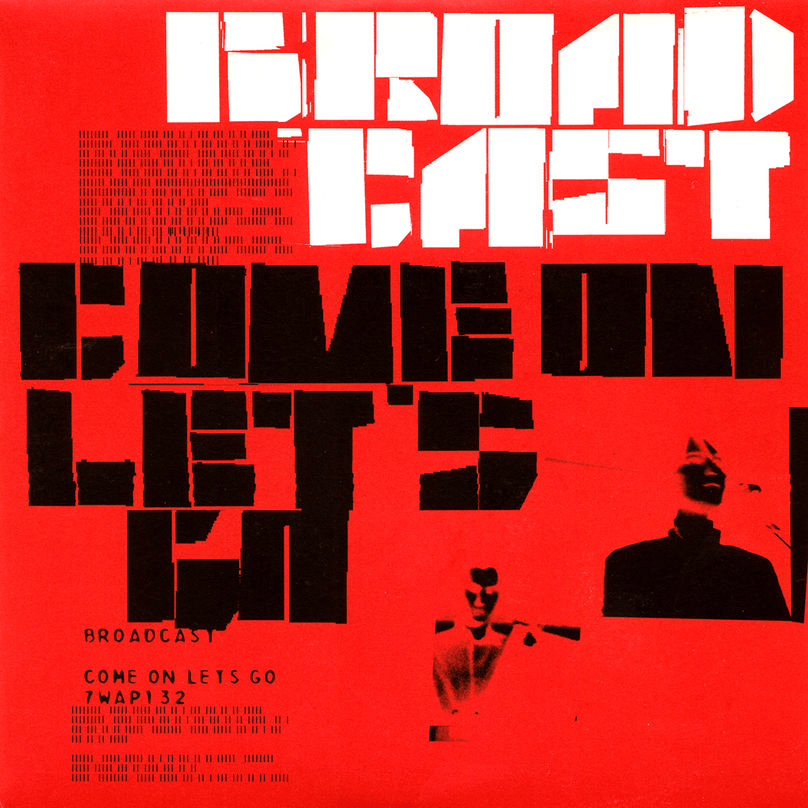
In March 2000, Broadcast issued their first proper album, The Noise Made by People, on Warp Records. “Come On Let’s Go” was the second single off the record, released that May. Songwriting credits are attributed to Cargill, Keenan, as well as band members Roj Stevens (keyboards), Tim Felton (guitar), and Steve Perkins (drums). The song received positive reviews, with journalists reaching for familiar words like shimmer psychedelic pop. For a young person, there were haunting lines in the song. “It’s hard to tell who’s real in here, come on, let’s go.” It sounded like spending time with strangers. It sounded like a long, lonely walk home at 2 am.
Broadcast was burned to disc and was my music accompaniment throughout college. Once, while I was walking past the radio station at George Washington University, I heard the Broadcast song “City in Progress” being played over the speakers. There was a young DJ inside, an Asian American girl (I will not speculate if she was Korean or Japanese, etc.) but she seemed so introverted and unassuming, and I was surprised that she too had heard of Broadcast. Of course, I waved at her through the glass. “I love Broadcast,” I mouthed to her. “Me too!” she mouthed back. I later got my friends suspended from their show on the radio, when I was invited on and accidentally said, “fuck you” in response to the hosts’ provocation.
The manager came rushing in, sweating, cursing too. “I’m going to get fined for that!”
Trish Keenan died in 2011, when I was knee-deep in diapers, basically (my three daughters were born in ’03, ’07, and ’11). She contracted pneumonia while touring Australia. Swine flu. She was only 42 years old. Cargill oversaw the release of the remainder of the Broadcast catalogue in 2024. Spell Blanket and Distant Call covered demos recorded between 2000 and 2009. And that was that. There’s no Broadcast without Trish Keenan. I’m not sure what the other band members are up to now. But maybe some of us might try to make songs that sound as good. Pretty please?

