I SAW MARCOS at a party in the Old Town. I was standing at the top of the steps, and he was coming up. We saw each other just for a moment, but I recognized him right away. He looked just as he did in college. He looked just as he did in his obituary. “Marcos,” I said. “Is that you?”
Before I saw Marcos, I had been kissing a TalTech postdoc from Nigeria named Omolola, or “Lola” for short. She was a woman who knew her pipettes. She spent most of her days in laboratories. There was a clean, cool, clinical edge to Lola. She wore her braids up in a colorful headscarf. She had been showing me some photos on her phone when we began to kiss, just like that. Why it happened, I don’t know. She was my friend Stig’s latest girlfriend, but there was a high level of attrition in his romantic life. Was she a rebound, or was he rebounding from a rebound? She was just one in a series of basketballs being dribbled across some stuffy court.
Lola was an excellent kisser. I wondered how often these spur-of-the-moment make-out sessions happened. Maybe they were going on all the time. The second you left the bank, that young financial advisor was kissing that grizzled old man. Bolt drivers turned to suck face with their latest fare. Flight attendants from Finnair reached over to deliver a cup of blueberry juice and then … There is something about surrendering up to someone, freely, on a whim. One minute, you are at a party, the next you are locking lips with your friend’s girlfriend. Until you see your dead college friend walk by, as if you were in some turn-of-the-century cafeteria.
“Marcos? Marcos? Is that really you?” Marcos and I had been in the same left-wing student group in college. We were card-carrying Young Socialists. He was the son of a Latin American economic policy advisor. After college, he had become more deeply left-wing. Some said he was stockpiling weapons. For an eventual battle royale with the federal government. But when he was about 40, he died. Nobody knew why. Nobody said. We only saw the obituary online, with that smile of his. He looked just like he did now, at a party in the Old Town. “Marcos!” I called to him. “Where are you going? Why are you here?” The Marcos-looking man shook his head, as if he didn’t know who I was. Maybe it wasn’t Marcos at all. No, it probably wasn’t him.
I HID MYSELF at the top of the stairs in a white lookout tower in Porquerolles. I stood at the top of the metal steps, alive in the humidity, not really knowing what would become of me, or how long I’d remain up there. Good thing Linus and Simone came to talk me down. Linus had the appearance of an Irish saint. Simone arrived with her children. Her hair was long and brown and beautiful and she said, “We love you. Everybody loves you. Please come down.” “There’s no sense hiding in a tower in France,” said Linus. “We all have our bouts, but come on.”
I came down the steps, but when I stepped off the last step, I found myself buckled into a seat in the seventh or eighth row of an airplane. We had just landed somewhere. When I looked out the window, I could see it was some place warm, tropical, with palms. It must have been early evening. I could see the sun setting. Celeste came down the aisle with her daughters. She was dressed in her black dress, her curls bobbled everywhere. She instructed them in her calm motherly voice to watch their step as they disembarked. Could she not see me? We had known each other for years. When had I become invisible? Did I have to pretend I didn’t know her, even when we left Estonia? How long would the invisibility spell last? Until the end of time?
Until the end of time. There was a spark of light and the match lit. Out of a vivid darkness I watched the light as it ignited a candle. Then the woman blew the match out, placed it on the bookshelf, and resumed reading her book. The book was Edgar Allan Poe’s. Was it Annabel Lee? She read out the words in the dark library. The shelves of the library were piled high with ancient volumes. I didn’t know who the woman was, but she looked familiar. She was maybe five years older. There was a touch of the young Grace Slick in her, crossed with Françoise Hardy. She wore a red knit sweater dress that ended above her knees. It was embroidered in gold, with strange, zigzagging designs. Her dark, luscious Wonder Woman hair was half up.
“But our love it was stronger by far than the love of those who were older than we,” she read. She stood, book in one hand, candle in the other. I sat beside her looking up. Then I wrapped my arm around her hips and began to caress her. And so I slipped into delicious happiness.
THE NARVA BORDER POINT, the frontier between Estonia and the Russian Federation, the west and the east, the war and the non-war. But it’s a fine October day, with good sunshine, a mostly cloudless sky, a sweet-tasting fresh wind that whips over the invisible line of demarcation, and the dark river waters below that carve one vast landmass from the other.
I stand at the foot of the white Hermann Fortress, but when I look up, I see Montauk Lighthouse. The air does smell strangely of salt. There are seagulls crying along the old stone walls. I enter the lighthouse and proceed through a series of glass doors. The Estonian border guards are at their desks, clad in their navy uniforms, emblazoned with the three gold lions.
Off to the left, I can see a room which, upon closer inspection, appears to be a small Orthodox chapel. Inside, the priest is administering Communion. The candles are burning, and the incense fogs the air, so that even the glass looks foggy. The church is full of old Russian grandmothers and border guards. They are praying quietly. Some are singing. Just then, a border agent comes down the metal steps of the lighthouse, dressed in the light blue shirt of the Russian border guard. She has glasses, dyed red hair. She brushes by me, indifferent to my presence. From the corner of my eye, I can see her name stitched on her breast. Ivanova.
On the other side of the lighthouse castle border station, there is another door that opens into a green yard. The grass is still very green, even though it is October. There isn’t a tree anywhere, a seat anywhere. There isn’t another living soul to be seen or heard. This is the intermediate zone, the no man’s land between the Republic of Estonia and the Russian Federation. I walk about at ease. Then I go back to Estonia, again through the lighthouse. The Russian grandmothers and border guards are still praying peacefully. “Let them pray,” I think.
IT WAS A TOWER. The Ikea Tower. Why it was called that was a mystery. No element of it was made by Ikea. Maybe some of the furniture in the conference room on the 80th floor. The tower was designed to move with the wind. To stand in its conference area was to feel as if one was flying. We were so high up in the air that I couldn’t see the ground down beneath the cloud cover. The movement of the clouds between the legs of the tower made it seem as if we were a ship upon white seas. When I rode the elevator to the conference, I always made sure to look at the buttons. You know how terrified I am of heights. I watched those red buttons.
Later, back at my hotel, I slept in. It had been a long week, and I woke up around noon. I knew I was going to be late for the press conference. Where even was this place? My mind said it was Helsinki, but it looked like Amsterdam, with some elements of Copenhagen stitched in. Of course, I wound up talking to the redhead at the front desk, with her silver earrings and silver brooch. She sparkled like a Celtic warrioress. That went on for far too long, and so I was doubly late. I ran to catch a departing gondola and rode it through the city. Its doors opened and I got out, but I was on a terrace. The furniture was certainly made by Ikea. Simple, white.
Young Scandinavian Arabs were seated around, playing chess.
I got back on the next gondola and was carried to the canal, where I got onto a crowded ferry. I could see the red-brick buildings of the town hall and the national treasury. I tried to take a photo of the town hall, with its golden steeple, which looked just like Pauluse kirik in Tartu, but also like the Københavns Rådhus. What even was this city? Certainly, it was still Helsinki. Or was it? Before I could get a good shot, the ferry arrived to port and we disembarked at last.
Everyone filed into the metro. I could watch their heads disappear as they rode the escalator down. I saw their shadows vanish. Somehow I found a tram that delivered me to the foot of that enormous tower. Up the tube-like elevator again, staring at the buttons. They needed the article immediately following the press conference. I could feel the tower move with the strong winds. There was a woman in the elevator who I knew from Estonia. She was dressed in business attire. She had one of those names that no one outside of Estonia could pronounce, like Õie, Ülle, or Krõõt. “How do you do it?” Õie asked. “I don’t know,” I said. “I don’t know.”
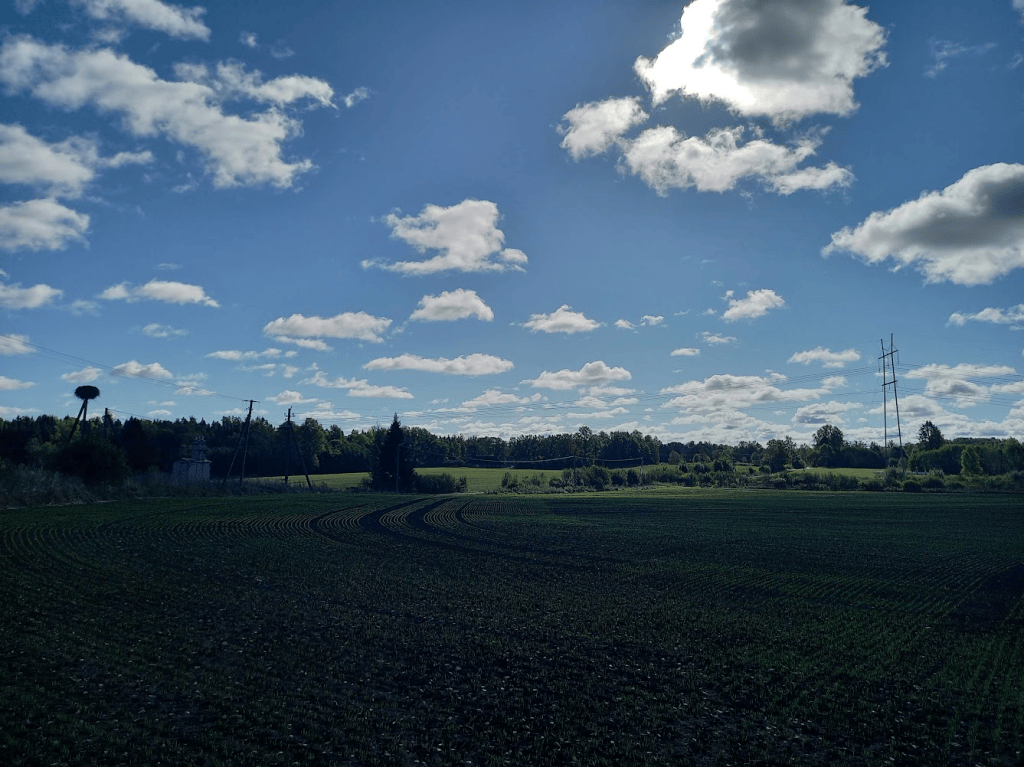
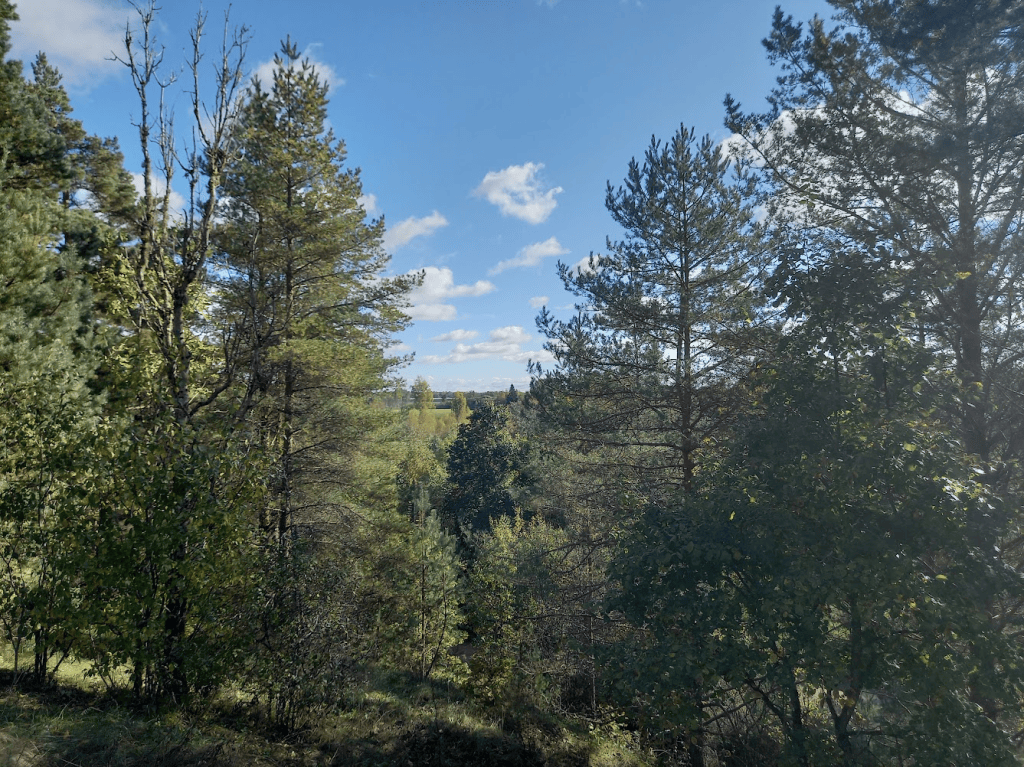
ALMOST EVERY DAY NOW, I take my bicycle out to Varesemäed. This is a small nature preserve on the edge of Viljandi Town. Its name translates as “The Crow Hills.” To get to Varesemäed or the Crow Hills, you cycle up Tallinn Street and bear right towards Põltsamaa. Soon the road dips before the turn to Karula and the last suburban houses fall away. To the right and left, vast fields open up, some of them full of golden rapeseed in the summers, others with dark, rich soil. Power lines are draped across this landscape. At Kikka, there is a small settlement of new homes, though I wonder who lives in them, or why they all moved there. Maybe it’s some sort of religious cult? Or are they exiled political dissidents? Just before you get to Kikka, you can see a massive boulder on the left. This is the boulder I call “Easter Island.”
I first started going out to Varesemäed years ago. I was introduced to the preserve by an old friend who liked to frequent such natural places. She called forests “lower pressure zones,” and she would come out to the woods to breathe, admire sunsets and the changing colors in fall. There are several nature preserves dotted around Viljandi, like the one in Loodi, or the one in Sinialliku. But these other places never really got under my skin. All of Estonian nature feels unfamiliar, all of these pines and birches. There is a melancholy contained in the land, though it’s not necessarily ominous or unfriendly, more like a broken-hearted woman boiling tea.
Surely, there must be some things to be happy about.
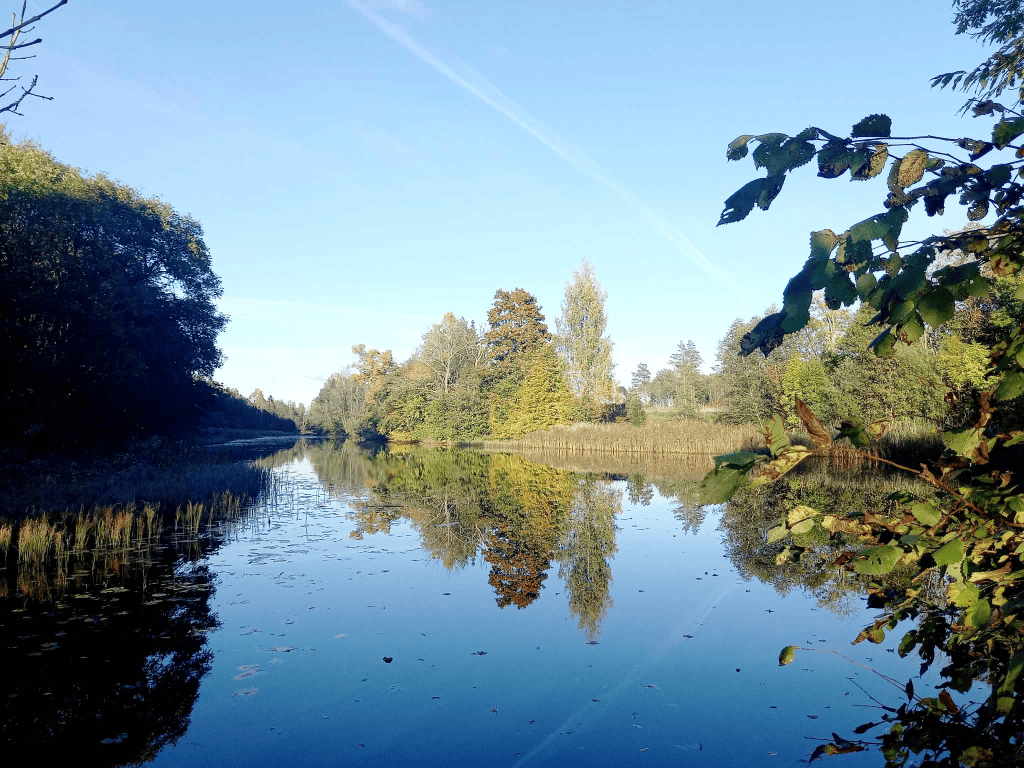
Varesemäed is the most interesting. There are adventures to be had there and it’s become a special place to me. After you pass the religious dissidents at Kikka, there are some other homes. In one, they are doing renovation and they have a robot lawnmower that is busy cutting grass. They have some speakers set up and like to play dance music. I love how the views open to Vana-Võidu at this point, which can be seen across the valley and the Mädajärv.
Then, just before you reach the turn off to Varesemäed, there are more homes. Once I was cycling out there and I saw a sole figure standing by a gate. An old man. Considering we were the only two people anywhere, I waved to him. He said nothing and gave me a puzzled look.
Yesterday when I went out to Varesemäed, the same thing that usually happens happened. I arrived on my bicycle, only to find out that I wasn’t the only person in the park. There was a man seated in his car, parked at the far end of the parking area. He was wearing sunglasses, though it was later in the day and the sun wasn’t so bright. He might have been talking to someone in his car. It was hard to tell because the car windows were very dark. It was a fine new vehicle. Who was the man? Why did he need to come all the way out to Varesemäed to have a conversation? It must have been important because as soon as he saw me, he left.
This scene repeats itself day in and day out. What I find interesting is that it’s usually solitary cars. It’s rarely two cars. People don’t come out here to have conversations between each other, or to meet. They come out here alone, or if they aren’t alone, then they ride in one car together. As soon as the mystery man left the parking area, a large gray van showed up with tinted windows. This van drove to the farthest end of the parking area and stayed there. I felt I was intruding and decided that I should probably leave rather than to start spying on the van.
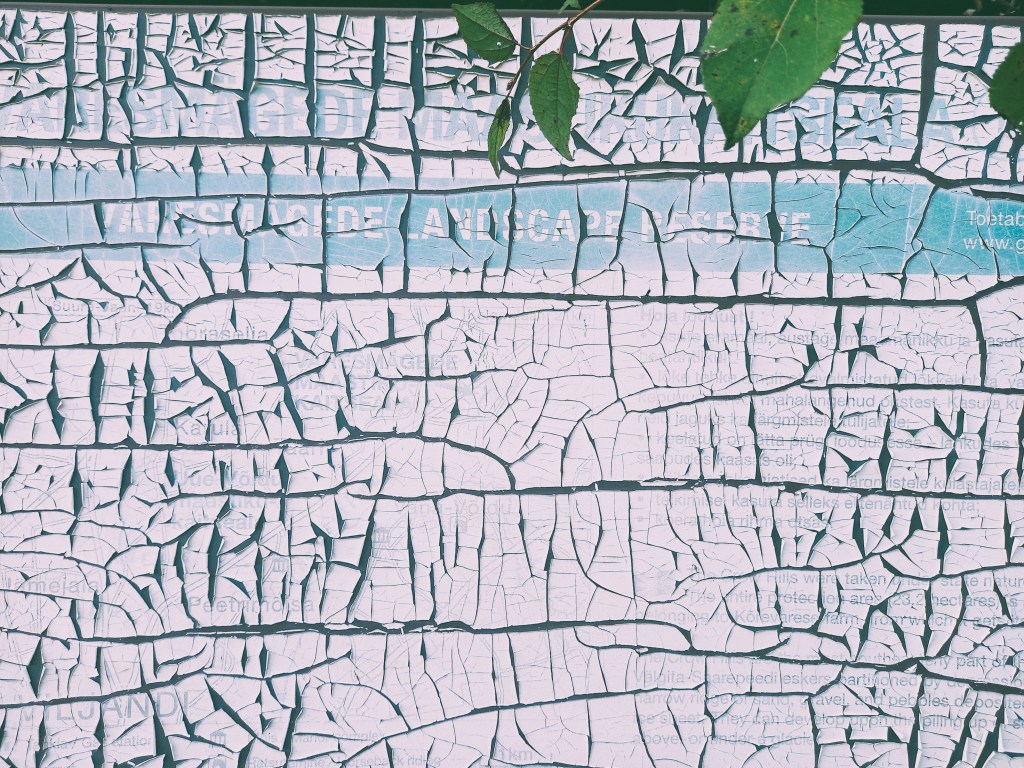
Naturally, I think these other visitors are up to no good. Drugs? Sex ring? Serial killers? It could be anything. Maybe they are just friends who want to have a conversation away from prying eyes? Or maybe they had just been driving all day and needed a break, to sit in some place alone. “Hey, I know where we should go. Varesemäed! No one will look for us there.” Yes, a “lower pressure area,” as my friend put it. The sign in the parking lot has been peeling away for years. If you train your eye, you can read that there has been a preserve at Varesemäed since 1964. Before the Second World War, there was an Estonian Defense League shooting range.
Finding out more about the history of the place led me to search the archives of old newspapers. The first reference to Varesemäed I could find dated to 1932, when it was mentioned as an example of a ridge-like formation in the Sakala Upland. I found no references to shooting at Varesemäed, but in a 1937 Postimees article, “Suuremad laskewõistlused Wiljandis,” I learned that these shooting competitions were all the rage in the 1930s. General Johannes Orasmaa himself attended a competition between different malevs in Valuoja Valley.
Other newspaper articles from the Soviet era talk about great hikes involving different groups of Pioneers. Sometimes Lithuanian Pioneers would visit and they would all go out to Varesemäed. There was grilling and singing. A lot of happy childhood memories were made.
The best article appeared in 1976 in Tee Kommunismile, where it was reported that the land around Varesemäed had once belonged to the Karula Manor and was sold in 1912 to the Koppel family, which established the Kõre-Varese Farm near the site. It is from this farm that Varesemäed derives its name. Perhaps the broken building ruins that separate the Kehklase järv from the Vägita oja date from this time? I like to spend time around those ruins. If I strain my ears, I can almost hear the conversations of the people who used to live and work in them.
I’ve also been lost on the trails. I’ve been so lost that I came out of the woods on the Küüdeküla Road, thinking I was on the Põltsamaa Road. I’ve never seen strangers in the woods at Varesemäed, only in the parking lot. I must admit I have had my own personal adventures at Varesemäed, such as the time I went swimming naked with an Estonian woman in the lake. I’ve never really understood the rules around nakedness in Estonia. Sometimes, like when you are about to plunge into a lake, or are going into a sauna, being naked is totally fine. If you were to suddenly feel the desire to take off your clothes in Rimi or Selver, that would be ebadekvaatne.
There I was, swimming naked at Varesemäed, when one of those mysterious white vans pulled up. It parked there for some time, and I wondered if someone was taking photos of our nude dip. Surely, this would make an excellent cover shot for some tabloid. Then the mystery van roared off down that dusty road, back to the highway. Ever since then, I have wondered who was in the van. Was it someone I knew? When people gave me a strange look in town after that, or if their eyes lingered on me for too long, I would think, maybe they were in the van?
People do drive too fast on the road to Põltsamaa. The way back is fraught with danger, risk. Trucks go speeding by at astounding speeds. Just the displacement of the air can knock you over. You would think it was the autobahn and not a two-lane road in the middle of nowhere. When I cycle back, I wonder where they are driving to in such a hurry. What’s the best thing that could be waiting for anyone in this land, other than a dish of meekook and some coffee?
I am not the only cyclist out there. Just some weeks ago, I was overtaken by a blonde woman on a bicycle, with a trailer attached, a small child sitting inside. We were by Easter Island when it happened. It was a lovely crisp day, portending of autumn to come. The landscape looked majestic. The woman smiled at me as she cycled by and I thought, “I do love the countryside.”
An Estonian version of this piece was first published 29 September 2026 in the newspaper Sakala. The English version contains different Estonian words, including järv (lake), oja (stream), malev (brigade, team), meekook (honey cake), and ebaadevkvaatne (inadequate, not up to snuff). Before the Second World War, Estonians often used German orthography in writing. “Suuremad laskewõistlused Wiljandis” would be “Suuremad laskevõistlused Viljandis” today, ie. “Great shooting competitions in Viljandi.”
HARBOR STREET was always susceptible to floods. Whenever there was a big storm, a nor’easter, a hurricane, the gray seas of the harbor would thrash about and rise ominously. One winter, it lifted huge blocks of white ice up onto the lawns of waterfront homeowners, though one might have asked them why they acquired properties in such a place to begin with. During the winter storm it looked like Antarctica, only with ducks instead of penguins.
When I went back, it was just foggy and the water was at its mostly natural level. The whole area, with its sailboats, boathouses, captain’s cottages and the like, was engulfed in a dense blue mist. Even the green grass of the lawns and the hedges dripped with white moisture. I made the turn up the street in an old-fashioned car, the make of which I didn’t pay much attention to. An old neighbor was sitting in the driver’s seat; I was in the back. Yet, as I found, I was steering the car. I was controlling it with my mind. I could make it brake and accelerate.
Her name was Bettina. She was half asleep. What a funny car, one that could be piloted via telekinesis. Bettina was wrapped up in a blanket. I could only see the back of her head, all blonde and fluffy, like a newborn chick. I said, “Oh look, the guesthouse, does Andy still live there?” Bettina yawned and resettled herself into the driver’s seat. “No, he left many years ago,” she said. “But I have seen him around town.” I had known the workman Andy my whole life, both before and after his stint in juvenile hall. Fleischman and Andy had robbed a liquor store.
“What about Mangione and Schmidt?” I asked. “The carpenters?” “Dead,” she answered. “Mike Mangione died of a heart attack. Schmidt fell off a roof.” “Oh,” I said. The further we went down Harbor Street, the more I noticed that the houses were no longer where they used to be. The Deuteronomy Smith House was still there, the life’s work of the famous shipbuilder, but the others were gone. When we reached the end of the road, I realized that the turnoff that would bring us back around Ditch Road had disappeared too. Instead, a palatial new home had been constructed. The old road was now its driveway. It was lined with lanterns and small pools.
It then dawned on me that I was all alone with Bettina in a car. We were all alone at the end of a road that had no apparent exit. A man and a woman, alone in a car. Something in the atmosphere trembled at that moment. It pulsated away in different colors. “You know,” I told her. “We are all alone together here.” Bettina yawned again. “So what,” she said. “So what.”
MORNING IN EGYPT, a crowded resort hotel breakfast buffet. There were so many people, there were so many discussions, that I found it hard to find a place to sit, or even to hear my own thoughts. I found a seat at a table with a white tablecloth, one that was covered in empty greasy plates and silver cutlery. This was where I came face to face with the British girl.
Some people search their whole lives for these kinds of immediate love encounters. Others just stroll into a bar or across a park and they find them, just like that. The British girl was something else, something unordinary. She had dark hair, lively gray eyes, she was dotted with freckles. I think she said her name was Lily. Or was it Grace? I think she said she came from Exeter. It was hard to hear anything in the breakfast room. We didn’t stay there long though. Things soon moved to another room.
It just went, like the sea, and it took me out with it. I had no idea how old she was, what her past was, or if I was just this morning’s moment of solace. Maybe there were a hundred guys standing behind me, like a hundred setting suns, all lined up in a row across her sexual infinity.
But it was good love, the best kind you can have at a breakfast buffet. Her white button shirt was mostly open now. It was soaked. Then a male voice boomed, “Where is he? I need to have a word with this bloke. Teach him the meaning of respect!” Lily Grace said, “Run! It’s my dad!”
I hightailed it through the corridors of the hotel resort, up and down steps, brushing past other guests. I could still hear the man’s voice grumbling like a thunderstorm. “He’s old enough to be your father!” Was I? Lily Grace looked about 30. But I couldn’t be sure. Out the hotel, down the steps by the tennis courts. Here I paused to tie my shoes, and then I kept running.
Eventually, I reached an inlet along the Nile. Some children were tossing breadcrumbs into its cool, dark waters. I thought they were feeding fish. Then I saw about five or six baby crocodiles, snapping up the crumbs, swimming avidly, blissfully, full of life. “Hey, kids,” I told the children. “I’m not sure that’s such a good idea.” Then, from the back of the inlet, I saw her emerge, the mother crocodile. She was vast and terrifying; she looked as if she had been cut from blocks of black stone. Such a creature could easily kill anyone. It would just seize you or me up in its obsidian jaws and drag us down into the dark. That was what they called nature.
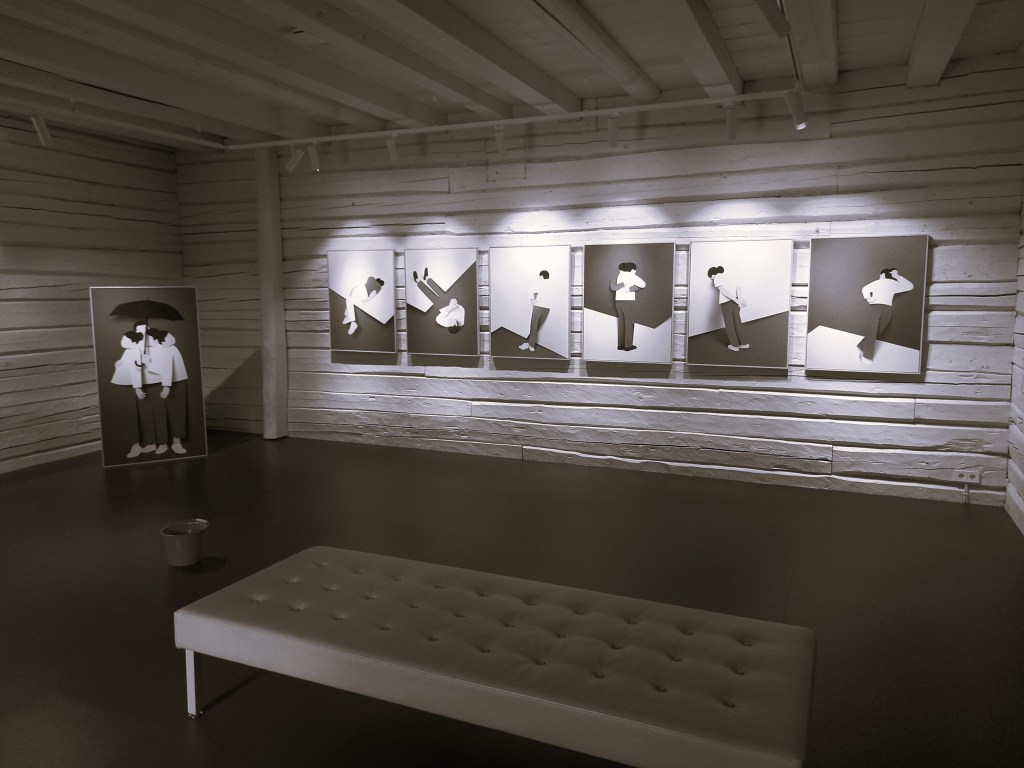
THE FIRST QUESTION that came to mind when I stepped into Rüki Galleri to see Eiko Ojala’s new exhibition was: “Is Eiko a woman or a man?” With a name like that, it would probably be a man, but I wasn’t sure. Maybe she was Japanese? Like Miho, Yoko, Eiko. The woman behind the counter told me that Eiko Ojala was a man and an all-around nice guy. “In my opinion, he’s quite friendly,” she added. Her name was Inessa. So, Eiko and Inessa — these were my main characters.
Rüki Galerii was once stored rye flour. The gallery is located behind the new SEB bank on Tartu Street in the heart of Viljandi. The place is wide and spacious, and precisely for that reason ideal for experiencing Eiko’s exhibition “Mind Notes.”
The technique here is pigment print. At first glance, it’s hard to tell what’s going on. It looks as if someone has cut figures out of paper and glued them all together. But that’s not the case. It’s simply a 3D effect. There are various shapes: men, women; some are lying down, some dancing, some running together, some standing under an umbrella. Incidentally, the figures do look Japanese. They have black hair. Pale skin. There is indeed something Japanese about them. Even though Eiko Ojala is an Estonian man.
There are two buckets on the right. One on the left. Seeing them, I asked Inessa if the roof was leaking. Inessa said no. The buckets were part of the exhibition, she explained.
Inessa also tells me that Eiko Ojala is a famous artist: “His pictures have even appeared in The New Yorker.” And not only. The Washington Post. National Geographic. Time. Le Monde. Wired. Politico. It’s a great honor that “Mind Notes” is here, in Rüki, in the quiet small town of Viljandi.
In the corner are information sheets in Estonian and English describing the concept of the exhibition. These images speak about the body: how the body reacts even when consciousness ignores it. Disturbances, fatigue, comfort. The Silicon Valley “live-to-work” mentality is one influence. The fiction of Franz Kafka is another. How authority functions through spaces, processes, and customs, and how a person goes along with it until they no longer perceive that this is how they are behaving.
Ojala’s human figures express this through restless poses. They are strange, admittedly. They bring to mind characters from the film Backrooms, though it’s hard to say why. Also Playmobil toy people. The prices are high. A picture of people standing together under an umbrella costs 1,500 euros. But these are not exactly the kind of pictures you hang on your bathroom wall. At the same time, they are unique and, in that sense, welcome. After all, when you go to an exhibition, you expect something different. Something new.
I think a visitor who comes here will not be disappointed.
Looking at these images — for example, a dancing person — I’m reminded of old drawings of shamans, where someone “flies” together with some spirit. Like in old Tibetan art, where the gods strike different poses. Overall, the exhibition is a haunting, strange place. Inessa says it reminds her of the series Severance, which depicts a gloomy biotechnology company whose employees have undergone a severance procedure that separates a person’s memories between work and personal life. That seems about right.
Later, when I wrote to Eiko, he sent me the text he read at the exhibition opening in August. He adds that this was actually his first solo exhibition and therefore especially personal.
“As the name suggests, ‘Mind Notes’ — these works are connected to our senses and how we notice and interpret the messages they send us,” he wrote. “Especially in situations where we don’t pay attention to ourselves. Or rather, one could ask whether we notice those messages at all. The claim of this exhibition is that, as it were, we don’t.”
And the buckets? They symbolize repetition. At first, the visitor notices that there are three buckets of water. But over time, the water quietly evaporates. They become part of the exhibition’s rhythm.
My main question, of course, was how the author himself feels about his exhibition. In general, Eiko Ojala is satisfied. “Tranquil Viljandi was the perfect place for this,” he answered me. “But no artist can ever be fully satisfied with their art. One must always keep pushing forward.”
*
‘Mind Notes’ opened at Rüki on 16 August and will remain through 26 September. An Estonian version of this review first appeared in Edasi. More of Eiko Ojala’s art can be seen here. And Inessa (Saarits) is an artist herself.
BEING AN AMERICAN has never been easy. Even at the start, the idea of independence wasn’t exactly popular. About a third of people in the colonies supported the American Revolution, a third were on the side of the British Empire, and a third didn’t really care one way or the other or were just indifferent. As The Who sang in 1971, “Meet the new boss, same as the old boss.” I fear I might have belonged to this third category. I’d like to say I would have been there with Franklin and Jefferson in Philadelphia.
But I can’t really be sure.
In recent years, American politics have been challenging. It’s hard to recall that Minnesota and Greenland were the main topics earlier this year. In the meantime, there’s been a war in Iran. Or is it a war? Is it still ongoing or is it over? Nobody knows. And nobody can even say if it was a war or some other kind of armed conflict. I feel strangely indifferent to it, but perhaps that reflects the same ambivalent feelings that presented at America’s moment of birth.
For me, America is not about flags, armies, and politics. And it isn’t even “American food.” During these years in which America has been wrestling with its soul, I have rediscovered my own origins. I’m happy to inform you that they do eat well there. Not barbecue, hamburgers, fries, or anything else considered to be typical American food. It’s at times easy to forget that America might be an idea, but it’s also a place, where each region has its culture and cuisine.
I am from the East Coast.
What that means is that our local nature found its way onto our plates and soup bowls. When I think of my childhood foods, there were no potatoes or schnitzels, as they have here in Estonia. There was no blood sausage, and dark rye was essentially unknown. The only real black bread available was at some German restaurant, though you could find pumpernickel in the stores. But it’s not the same thing.
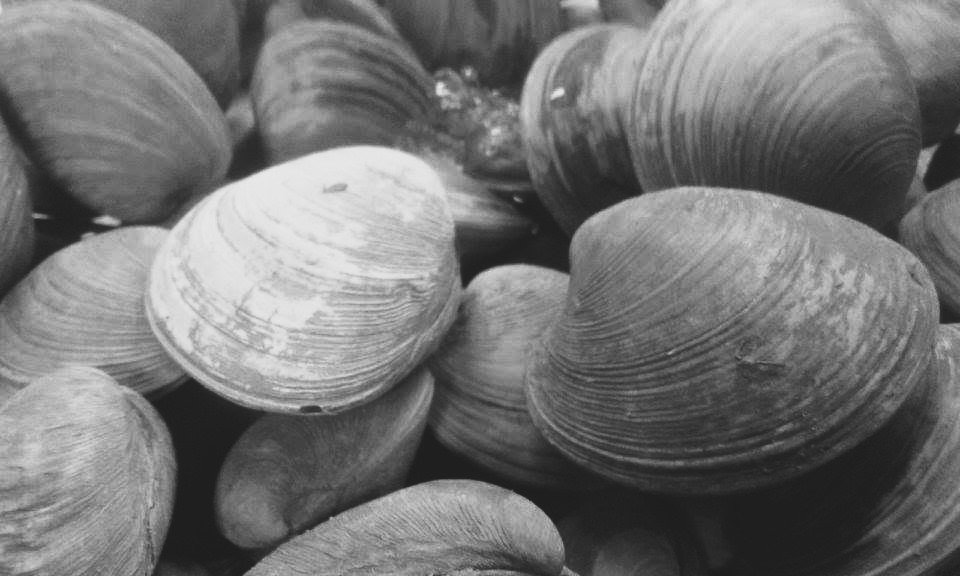
We had lobsters, though, all kinds of crabs, shark and tuna steaks and bags full of clams and mussels. I remember one lovely summer, maybe 1985 or thereabouts, when my father was away on a business trip in England. My mother didn’t feel like making a big dinner that night and decided that our dinner would be a big bowl full of mussels with melted butter. There I sat with my brother on the deck, eating away. I have to admit; it was probably one of the best dinners I’ve ever had.
We lived in a village on the north shore of Long Island. Before the Second World War, this was a summer place, and many of the houses were built as summer cottages at first, before they were outfitted for year-round living. From my window, you could see the sound that separated Long Island from the State of Connecticut. At night, you could see lights glowing on the other side of the water. During the day, white sailboats and ships moved across the water, and sometimes you might hear the honk of a fog horn.
Our food culture was very influenced by New England and in some ways Long Island is a more natural part of that region. The City of New York has a colorful history, where the first Europeans who settled were the Dutch and their heritage lives on in local foods such as koolsla, cole slaw, a cabbage salad with mayonnaise. We did eat this, but more in restaurants or delis.
But my mother did take me to the seafood store regularly, where all kinds of surprises awaited. A usual purchase was soft-shell crabs. These were breaded and fried. I ate every part of them. I don’t even want to know what parts I ate, but there were certainly some unusual tasting parts. Were those the crab brains? Who knows. For me, they were the most nutritious food around.
There were also scallops, which were very welcome for dinner. These came straight from Peconic Bay on the eastern end of Long Island. But you could get these up and down Long Island and across New England and up into Maine, and from there on to Canada, Nova Scotia, New Brunswick. Who knows where the end of the scallop trail is. Scallops were a kind of delicacy, because they were more expensive. Clams were much more common. Truth be told, Justin Petrone’s first meal after breast milk was linguine in white clam sauce.
Just as an Estonian may dream of potato salad, black bread, beer and herring, I dream of shellfish.
In the seafood store, there were also lobsters sleeping in tubs, their claws held shut by colorful rubberbands. We ate lobster quite often. My mother would buy four or five and they would be put in a paperbag. At home, they would await their fate in the cold of the refrigerator until evening. Then they would be put into the boiling water. I remember how I could hear them tapping at the inside of the pot, trying to get out. But at some moment, there was no more tapping. The best parts were the claws, of course, and the rich and meaty tail.
Lobster was something special. They were expensive too and we would eat them at birthdays or some other special occasion. I have a weird memory of my father’s 38th birthday. I was about five years old and I remember how a lobster got up and tried to run across the table, away from my knife and fork. In the end, I did get him. What’s weird is how clear this memory is, even if it was probably a dream. Or was it?
It’s odd to think of how much time I have spent with crustaceans.
Once, in the seafood store, the owner decided to play a trick. He took out the lobster and put it on the floor. It began to move toward me. This was like a scene from a science fiction movie. I can still hear all of those legs tapping on the ceramic tiled floor.
It’s interesting that even McDonalds offers lobster rolls in New England. All you have to do is order your lobster roll and drive up to the next window. And there it is, in your hand. In New York, this is less common, so it was always a fun part of traveling north.
Just one ferry ride and the lobster roll is yours.
What a weird combination — a fast-food delicacy.
I haven’t even got to the soup. Our chowders are interesting. As a child, I knew two kinds. There was New England clam chowder and then Manhattan clam chowder. New England clam chowder is cream based and filling, Manhattan is tomato based and a bit spicier. I should acknowledge that when I was a kid, the waters around Manhattan were not the cleanest. So, I would wonder, peering into my soup, what kind of stuff was in the Manhattan clam chowder. Was there hospital waste in there? Dead bodies? That’s what I imagined was floating in it.
Everybody knew the mafia dumped their hits in the waters around New York.
If you head out farther east, or travel by ship to Martha’s Vineyard and Nantucket, you’ll encounter quahog chowder. Quahog is an Algonquain word, it refers to a kind of clam with a very tough kind of meat. This is very everyday food. One summer when I was spending time at my friend’s grandparents’ house on the eastern end of Long Island, we spent the day collecting clams and made soup at night. So, if someone asks me about American food, this is what comes to mind. What we actually ate.
It’s nice to think and write about soup. It’s like getting your country back with every spoonful.
Long Island’s north shore looks out on Long Island Sound, its east will lead you to Europe, eventually, and its south shore opens up to the Atlantic. These are deep waters and so we often had swordfish, tuna, and mako shark steaks on our table. My father never really made dinner, that was mom’s specialty, but the grill was his domain. He would grill up some shark.
We ate Jaws with baby potatoes.
The indigenous people along the east coast were mainly Algonquians and they subsisted on maize, beans, and squash. In Tallinn, the Three Sisters refers to three old houses, but for indigenous people, the three sisters were just these three staple crops. In school I learned that there was often a big pot at the center of their homes into which they tossed all three, plus some venison or fish. If you were hungry, you just grabbed a bowl and helped yourself.
We never ate that way, exactly, but we did have the sweetest corn in the US, or so we told ourselves, and we knew that the corn we ate at the end of summer would be even sweeter. I had my own strategy for eating corn. Some just chomp away, with corn flying every which way, but I take my time. I do it systematically, so that every piece is properly eaten. Husking the corn was my favorite thing to do before dinner (or do you really want to put out the plates? I don’t.)
So there I would sit. But how many did we usually buy? Sixteen?
Even as suburbia was growing all around us, there were still some functional farms in existence. We would buy our corn from there.
For us, summer meant seafood, corn, and potatoes.
The potatoes were also cultivated on the local farms.
My grandmother wasn’t from the place where we lived. She came from down south. Her father was from North Carolina, and her mother was from Virginia. They had a different food culture. The climate there is warmer, the people are closer to the land. They had smoked hams, fried chicken. Lots of peanuts. Some farmers only grew peanuts. But corn had a special place of honor. My grandma would make me cornbread all the time. Every time I went to visit her, where she had her Elvis Presley Christmas album, she sent me home with bags full of cornbread.
The word for maize comes from an indigenous language — the Taino word mahiz. So I think there’s nothing more American than corn or maize. It’s probably one of the things that define it.
It’s interesting to think of American food today, a rainy morning in some Estonian cafe. Sometimes I even forget that I am from there, but then something odd happens, like I see a bunch of shipping pallets and think, for a moment, that they are lobster traps. Or I start to talk about lobsters and people look at me like I’m weird.
What kind of person talks about lobsters?
Once I had to find the Estonian word for spout, when I was writing about whales. People had no idea what it was. “You know, that spurt that comes out when the whale surfaces to breathe?” Then I realized that I was just from somewhere else. A place where people talk about whales and lobsters all the time. A place where your homeland comes with a hot bowl full of quahog chowder.
America is, after all, named after some Italian explorer named Amerigo. But maize and quahog? Those are real American words, if you ask me.
An Estonian version of this article appeared in the magazine GO Reisiajakiri earlier this year.
Into the mill. Mill:liminal is the audio accompaniment to the 2018 film The Mill, recorded at the Räpina Paper Factory in Estonia.
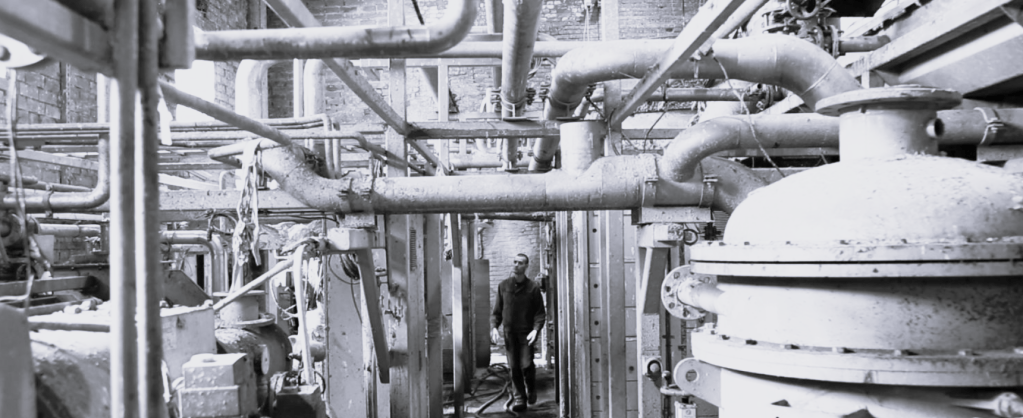
MILL:LIMINAL IS NOT AN EASY RECORD to peg, but that doesn’t mean it isn’t interesting or enjoyable. In fact, it’s among the more haunting, thought-provoking, and meditative recordings I have heard in some time. Released this year by Murmer, the handle of sound artist Patrick Tubin McGinley, it is the sonic accompaniment to a 35-minute film made with Daniel Edward Allen in 2018 called The Mill. To record The Mill, McGinley and Allen descended on the Räpina Paberivabrik, a paper mill in southeast Estonia that has been producing paper continuously since the 1730s. Here, the old mill’s creaks, whirs, rattles and hums are arranged into drone-like compositions distilled into seven, hypnotic tracks. McGinley reports that he was inspired to record the mill after having been a customer. Räpina produced the packaging for earlier releases, and he was drawn in by its mesmeric sounds.
McGinley’s approach to recording is very cinema verite. His sound recorders are the shaky hand holding the camera, giving you a first-person look — or in this case, listen — at what’s happening. The sounds for mill:liminal were recorded mostly with a Sennheisier MKH 30/40 boomed microphone rig connected to an SD744T hard disc portable field recorder. Additional sounds were recorded with self-constructed contact microphones and some with DPA 4060 miniature omnidirectional microphones. So what can sound like sound captured raw is actually the product of some serious technological sophistication and deep processing.
The result is unsettling, for mill:liminal sounds like consciousness melting off the slate of time. In some moments, the low and steady growl of the paper mill machinery takes on monastic tones, as if a monastery of Tibetan monks were assembled for prayer in the mountains.
It’s not hard to find parallels in McGinley’s work, but it does lead one to unexpected places. Is a man in a plaid shirt with a microphone in hand, poised to capture sounds in the field, not unlike Alan Lomax, with his field recordings of world music? McGinley does agree with that.
“I have long-standing thoughts about the world of field recording and experimental music being considered as folk music,” he says. “It’s music that has grown out of a community outside of academic circles, a sort of voice of a population.” Interestingly, he has noted that the mill, in its own way, is a living entity, as people play limited roles in maintaining its processes.
There are also sonic links to the experiments of minimalist composer La Monte Young and his Dream Syndicate. One can see how the hum of a paper mill aligns with Young’s tunings that matched the environmental sounds around him, most famously his reliance on a refrigerator’s 60-cycle electrical hum, which he considered as a foundational drone for his music. Young called the 60-cycle hum the “drone of Western civilization,” but as mill:liminal reminds us, these folk songs of machinery are all around us. If listened to, they can be a thing of beauty.
*
mill:liminal is available now as a digital download and will be available soon as a cd packaged in paper from the Räpina Paberivabrik. In addition to undertaking field recordings of creepy paper mills, Murmer also produces a regular weekly radio show called Framework Radio. Other recordings are available on Bandcamp.