I SAW MARCOS at a party in the Old Town. I was standing at the top of the steps, and he was coming up. We saw each other just for a moment, but I recognized him right away. He looked just as he did in college. He looked just as he did in his obituary. “Marcos,” I said. “Is that you?”
Before I saw Marcos, I had been kissing a TalTech postdoc from Nigeria named Omolola, or “Lola” for short. She was a woman who knew her pipettes. She spent most of her days in laboratories. There was a clean, cool, clinical edge to Lola. She wore her braids up in a colorful headscarf. She had been showing me some photos on her phone when we began to kiss, just like that. Why it happened, I don’t know. She was my friend Stig’s latest girlfriend, but there was a high level of attrition in his romantic life. Was she a rebound, or was he rebounding from a rebound? She was just one in a series of basketballs being dribbled across some stuffy court.
Lola was an excellent kisser. I wondered how often these spur-of-the-moment make-out sessions happened. Maybe they were going on all the time. The second you left the bank, that young financial advisor was kissing that grizzled old man. Bolt drivers turned to suck face with their latest fare. Flight attendants from Finnair reached over to deliver a cup of blueberry juice and then … There is something about surrendering up to someone, freely, on a whim. One minute, you are at a party, the next you are locking lips with your friend’s girlfriend. Until you see your dead college friend walk by, as if you were in some turn-of-the-century cafeteria.
“Marcos? Marcos? Is that really you?” Marcos and I had been in the same left-wing student group in college. We were card-carrying Young Socialists. He was the son of a Latin American economic policy advisor. After college, he had become more deeply left-wing. Some said he was stockpiling weapons. For an eventual battle royale with the federal government. But when he was about 40, he died. Nobody knew why. Nobody said. We only saw the obituary online, with that smile of his. He looked just like he did now, at a party in the Old Town. “Marcos!” I called to him. “Where are you going? Why are you here?” The Marcos-looking man shook his head, as if he didn’t know who I was. Maybe it wasn’t Marcos at all. No, it probably wasn’t him.
THE NARVA BORDER POINT, the frontier between Estonia and the Russian Federation, the west and the east, the war and the non-war. But it’s a fine October day, with good sunshine, a mostly cloudless sky, a sweet-tasting fresh wind that whips over the invisible line of demarcation, and the dark river waters below that carve one vast landmass from the other.
I stand at the foot of the white Hermann Fortress, but when I look up, I see Montauk Lighthouse. The air does smell strangely of salt. There are seagulls crying along the old stone walls. I enter the lighthouse and proceed through a series of glass doors. The Estonian border guards are at their desks, clad in their navy uniforms, emblazoned with the three gold lions.
Off to the left, I can see a room which, upon closer inspection, appears to be a small Orthodox chapel. Inside, the priest is administering Communion. The candles are burning, and the incense fogs the air, so that even the glass looks foggy. The church is full of old Russian grandmothers and border guards. They are praying quietly. Some are singing. Just then, a border agent comes down the metal steps of the lighthouse, dressed in the light blue shirt of the Russian border guard. She has glasses, dyed red hair. She brushes by me, indifferent to my presence. From the corner of my eye, I can see her name stitched on her breast. Ivanova.
On the other side of the lighthouse castle border station, there is another door that opens into a green yard. The grass is still very green, even though it is October. There isn’t a tree anywhere, a seat anywhere. There isn’t another living soul to be seen or heard. This is the intermediate zone, the no man’s land between the Republic of Estonia and the Russian Federation. I walk about at ease. Then I go back to Estonia, again through the lighthouse. The Russian grandmothers and border guards are still praying peacefully. “Let them pray,” I think.
AT THE CRACK OF DAWN, I descended the steps to make my daughter an omelette before she went to school. My feet slid across the smooth wood floor toward the kitchenette. I began to make preparations. I liked to get the frying pan sizzling hot, gurgling with butter before adding the eggs. When I turned on the light, I could see that she was back. She told me I could go.
“I cut short my trip,” she said. “You can go now.” “But I promised her an omelette,” I told her. “A mushroom omelette. She was looking forward to it.” “I have some workmen showing up soon,” she said, reaching out to stop my hand from cracking an egg. “Would you just go? Please?”
I took a step back. “No,” I told her. “I promised her an omelette, she’s having an omelette. I am making her an omelette today.” There were animals all around the house. Cats, dogs. Out on the terrace, I could see some musk oxen lazing in the morning sun. “Why do you have musk oxen?” I asked. “This is my house!” she said. Then, with a more urgent tone, “Could you leave?”
There came a knock at the door, some workmen came in in white overalls and white painter’s hats. They set up a ladder and began to prepare to paint the ceiling. But after them marched more men. Some younger types, who looked like boy band singers. Others gray, with beards, speaking of literature. They began to fill the house from top to bottom with their chatter. These were her men. One of them looked like Ben Affleck, the actor. “You didn’t tell me you were dating Ben Affleck,” I said. “That’s Tarmo,” she said. “He just looks like Ben Affleck.”
Soon the house was brimming with other men. I had just wanted to make an omelette. “You have to go,” she said. “You’re no longer needed here.” “But it’s my child. I have a right to make her breakfast.” “Would you please just leave?” she implored me. I did no such thing. Instead, I reached for a bottle of moonshine, drank it down in sad, heavy gulps. Soon I was stinking.
“You fool!” she said. “How are you supposed to drive when you’ve been drinking?” She sank into a chair, sat opposite me. She became her younger form now, blonde, with those crazy eyes. “You need to find another woman,” she told me. “It’s been long enough. That will make everything better.” For a moment, I followed the arc of her logic. Then I realized her logic had led me here, to this house. “What are you, some kind of oracle?” I said. “You know, I gave you everything,” she said, with a slight disgust. “Without me, you’d be back where I found you.”
“Fine then,” I said. Omelette unmade, I crumpled through the door into the morning light. I felt like garbage. Pure, limping garbage. And I had no idea where this place was. For a moment, I was reminded of the rainy streets of Beijing, and how I had been lost just like this, and a friendly Chinese had waved to me through a misty cafe window. I felt free that day in Beijing.
IT WAS A TOWER. The Ikea Tower. Why it was called that was a mystery. No element of it was made by Ikea. Maybe some of the furniture in the conference room on the 80th floor. The tower was designed to move with the wind. To stand in its conference area was to feel as if one was flying. We were so high up in the air that I couldn’t see the ground down beneath the cloud cover. The movement of the clouds between the legs of the tower made it seem as if we were a ship upon white seas. When I rode the elevator to the conference, I always made sure to look at the buttons. You know how terrified I am of heights. I watched those red buttons.
Later, back at my hotel, I slept in. It had been a long week, and I woke up around noon. I knew I was going to be late for the press conference. Where even was this place? My mind said it was Helsinki, but it looked like Amsterdam, with some elements of Copenhagen stitched in. Of course, I wound up talking to the redhead at the front desk, with her silver earrings and silver brooch. She sparkled like a Celtic warrioress. That went on for far too long, and so I was doubly late. I ran to catch a departing gondola and rode it through the city. Its doors opened and I got out, but I was on a terrace. The furniture was certainly made by Ikea. Simple, white.
Young Scandinavian Arabs were seated around, playing chess.
I got back on the next gondola and was carried to the canal, where I got onto a crowded ferry. I could see the red-brick buildings of the town hall and the national treasury. I tried to take a photo of the town hall, with its golden steeple, which looked just like Pauluse kirik in Tartu, but also like the Københavns Rådhus. What even was this city? Certainly, it was still Helsinki. Or was it? Before I could get a good shot, the ferry arrived to port and we disembarked at last.
Everyone filed into the metro. I could watch their heads disappear as they rode the escalator down. I saw their shadows vanish. Somehow I found a tram that delivered me to the foot of that enormous tower. Up the tube-like elevator again, staring at the buttons. They needed the article immediately following the press conference. I could feel the tower move with the strong winds. There was a woman in the elevator who I knew from Estonia. She was dressed in business attire. She had one of those names that no one outside of Estonia could pronounce, like Õie, Ülle, or Krõõt. “How do you do it?” Õie asked. “I don’t know,” I said. “I don’t know.”
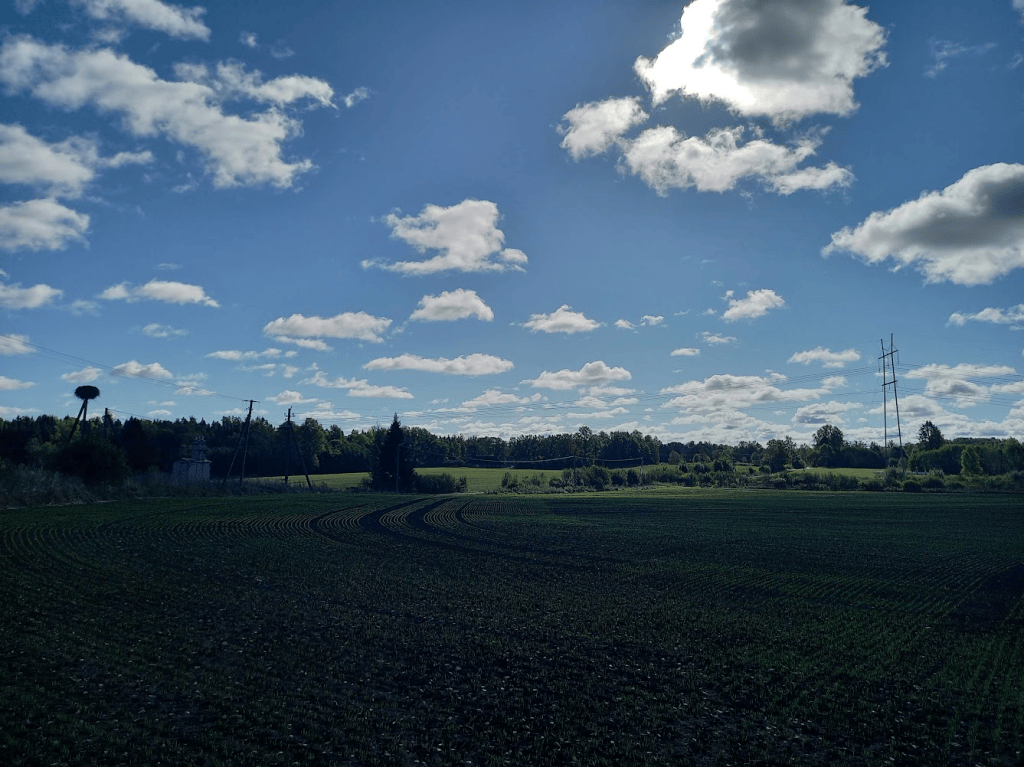
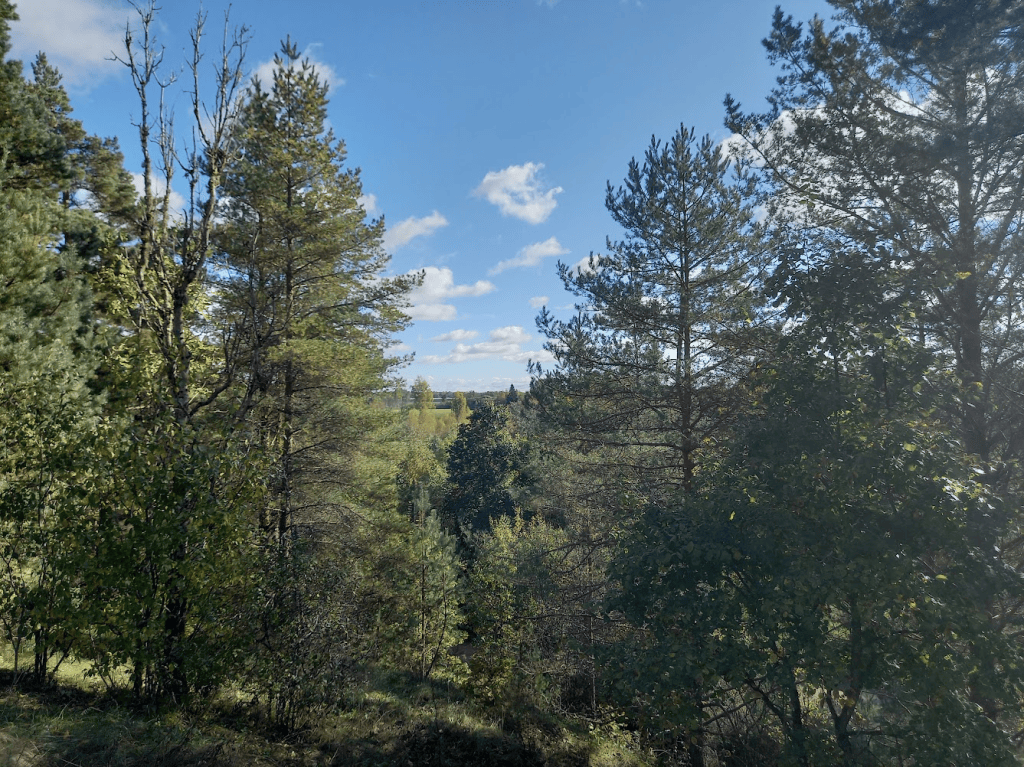
ALMOST EVERY DAY NOW, I take my bicycle out to Varesemäed. This is a small nature preserve on the edge of Viljandi Town. Its name translates as “The Crow Hills.” To get to Varesemäed or the Crow Hills, you cycle up Tallinn Street and bear right towards Põltsamaa. Soon the road dips before the turn to Karula and the last suburban houses fall away. To the right and left, vast fields open up, some of them full of golden rapeseed in the summers, others with dark, rich soil. Power lines are draped across this landscape. At Kikka, there is a small settlement of new homes, though I wonder who lives in them, or why they all moved there. Maybe it’s some sort of religious cult? Or are they exiled political dissidents? Just before you get to Kikka, you can see a massive boulder on the left. This is the boulder I call “Easter Island.”
I first started going out to Varesemäed years ago. I was introduced to the preserve by an old friend who liked to frequent such natural places. She called forests “lower pressure zones,” and she would come out to the woods to breathe, admire sunsets and the changing colors in fall. There are several nature preserves dotted around Viljandi, like the one in Loodi, or the one in Sinialliku. But these other places never really got under my skin. All of Estonian nature feels unfamiliar, all of these pines and birches. There is a melancholy contained in the land, though it’s not necessarily ominous or unfriendly, more like a broken-hearted woman boiling tea.
Surely, there must be some things to be happy about.
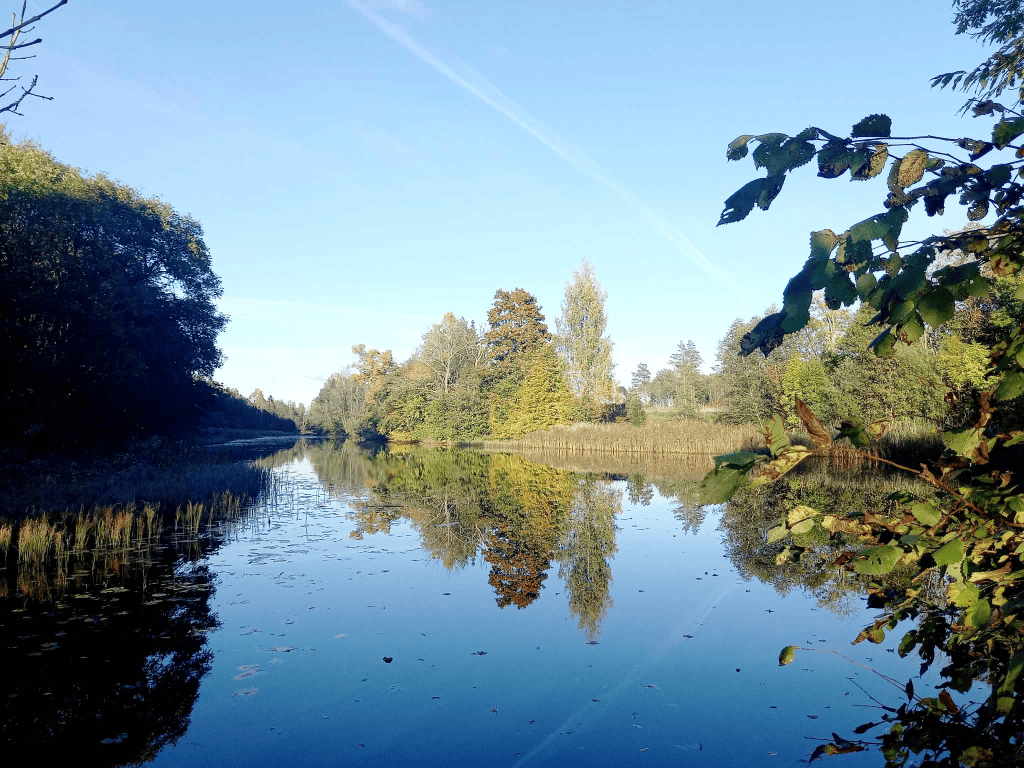
Varesemäed is the most interesting. There are adventures to be had there and it’s become a special place to me. After you pass the religious dissidents at Kikka, there are some other homes. In one, they are doing renovation and they have a robot lawnmower that is busy cutting grass. They have some speakers set up and like to play dance music. I love how the views open to Vana-Võidu at this point, which can be seen across the valley and the Mädajärv.
Then, just before you reach the turn off to Varesemäed, there are more homes. Once I was cycling out there and I saw a sole figure standing by a gate. An old man. Considering we were the only two people anywhere, I waved to him. He said nothing and gave me a puzzled look.
Yesterday when I went out to Varesemäed, the same thing that usually happens happened. I arrived on my bicycle, only to find out that I wasn’t the only person in the park. There was a man seated in his car, parked at the far end of the parking area. He was wearing sunglasses, though it was later in the day and the sun wasn’t so bright. He might have been talking to someone in his car. It was hard to tell because the car windows were very dark. It was a fine new vehicle. Who was the man? Why did he need to come all the way out to Varesemäed to have a conversation? It must have been important because as soon as he saw me, he left.
This scene repeats itself day in and day out. What I find interesting is that it’s usually solitary cars. It’s rarely two cars. People don’t come out here to have conversations between each other, or to meet. They come out here alone, or if they aren’t alone, then they ride in one car together. As soon as the mystery man left the parking area, a large gray van showed up with tinted windows. This van drove to the farthest end of the parking area and stayed there. I felt I was intruding and decided that I should probably leave rather than to start spying on the van.
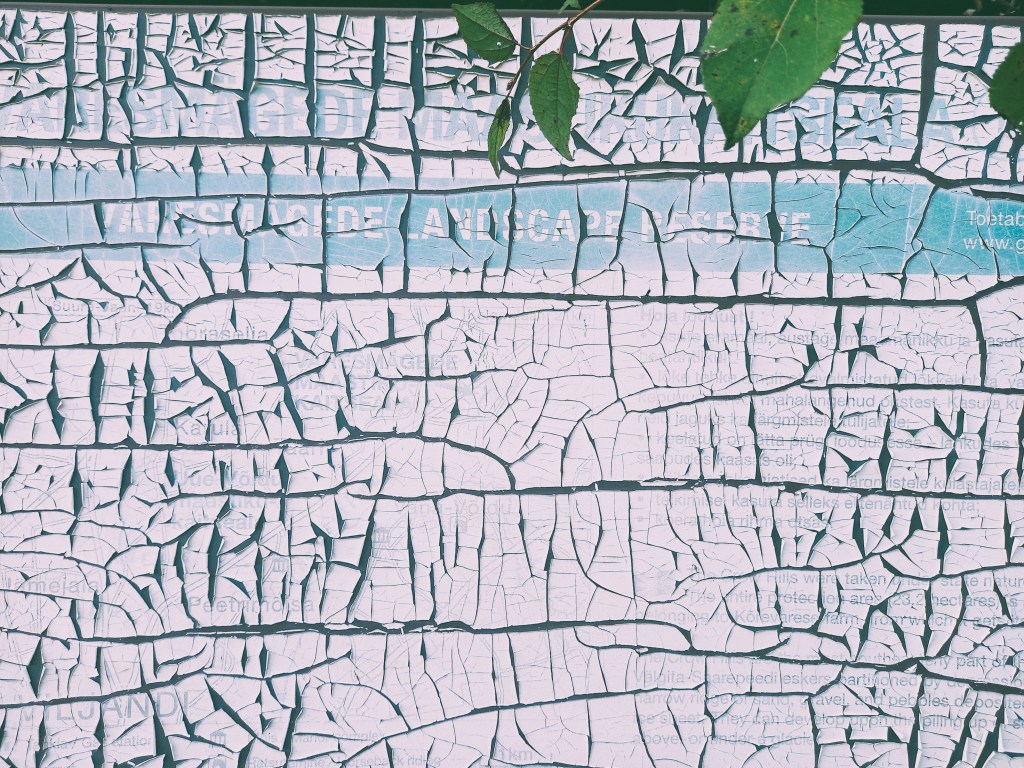
Naturally, I think these other visitors are up to no good. Drugs? Sex ring? Serial killers? It could be anything. Maybe they are just friends who want to have a conversation away from prying eyes? Or maybe they had just been driving all day and needed a break, to sit in some place alone. “Hey, I know where we should go. Varesemäed! No one will look for us there.” Yes, a “lower pressure area,” as my friend put it. The sign in the parking lot has been peeling away for years. If you train your eye, you can read that there has been a preserve at Varesemäed since 1964. Before the Second World War, there was an Estonian Defense League shooting range.
Finding out more about the history of the place led me to search the archives of old newspapers. The first reference to Varesemäed I could find dated to 1932, when it was mentioned as an example of a ridge-like formation in the Sakala Upland. I found no references to shooting at Varesemäed, but in a 1937 Postimees article, “Suuremad laskewõistlused Wiljandis,” I learned that these shooting competitions were all the rage in the 1930s. General Johannes Orasmaa himself attended a competition between different malevs in Valuoja Valley.
Other newspaper articles from the Soviet era talk about great hikes involving different groups of Pioneers. Sometimes Lithuanian Pioneers would visit and they would all go out to Varesemäed. There was grilling and singing. A lot of happy childhood memories were made.
The best article appeared in 1976 in Tee Kommunismile, where it was reported that the land around Varesemäed had once belonged to the Karula Manor and was sold in 1912 to the Koppel family, which established the Kõre-Varese Farm near the site. It is from this farm that Varesemäed derives its name. Perhaps the broken building ruins that separate the Kehklase järv from the Vägita oja date from this time? I like to spend time around those ruins. If I strain my ears, I can almost hear the conversations of the people who used to live and work in them.
I’ve also been lost on the trails. I’ve been so lost that I came out of the woods on the Küüdeküla Road, thinking I was on the Põltsamaa Road. I’ve never seen strangers in the woods at Varesemäed, only in the parking lot. I must admit I have had my own personal adventures at Varesemäed, such as the time I went swimming naked with an Estonian woman in the lake. I’ve never really understood the rules around nakedness in Estonia. Sometimes, like when you are about to plunge into a lake, or are going into a sauna, being naked is totally fine. If you were to suddenly feel the desire to take off your clothes in Rimi or Selver, that would be ebadekvaatne.
There I was, swimming naked at Varesemäed, when one of those mysterious white vans pulled up. It parked there for some time, and I wondered if someone was taking photos of our nude dip. Surely, this would make an excellent cover shot for some tabloid. Then the mystery van roared off down that dusty road, back to the highway. Ever since then, I have wondered who was in the van. Was it someone I knew? When people gave me a strange look in town after that, or if their eyes lingered on me for too long, I would think, maybe they were in the van?
People do drive too fast on the road to Põltsamaa. The way back is fraught with danger, risk. Trucks go speeding by at astounding speeds. Just the displacement of the air can knock you over. You would think it was the autobahn and not a two-lane road in the middle of nowhere. When I cycle back, I wonder where they are driving to in such a hurry. What’s the best thing that could be waiting for anyone in this land, other than a dish of meekook and some coffee?
I am not the only cyclist out there. Just some weeks ago, I was overtaken by a blonde woman on a bicycle, with a trailer attached, a small child sitting inside. We were by Easter Island when it happened. It was a lovely crisp day, portending of autumn to come. The landscape looked majestic. The woman smiled at me as she cycled by and I thought, “I do love the countryside.”
An Estonian version of this piece was first published 29 September 2026 in the newspaper Sakala. The English version contains different Estonian words, including järv (lake), oja (stream), malev (brigade, team), meekook (honey cake), and ebaadevkvaatne (inadequate, not up to snuff). Before the Second World War, Estonians often used German orthography in writing. “Suuremad laskewõistlused Wiljandis” would be “Suuremad laskevõistlused Viljandis” today, ie. “Great shooting competitions in Viljandi.”
THERE I WAS, dancing with the Alexandrov Ensemble in my living room, when the wind blew the roof off the house. This was the premier song and dance ensemble of the Soviet army. They were used to doing prisyadki, or Cossack squat kicks. They knew how to do povzunets. But once I put the needle on the vinyl of Off the Wall, they were totally baffled as how to perform to “Don’t Stop ‘Til You Get Enough.” “Good American music,” I told them. “But how do American soldiers dance to this style of music?” one of the dancers asked. His name was Boris.
Then the wind blew the roof off the house and the soldiers all fled into the street. The house was a single-story bungalow, the type that’s popular in California and other earthquake-prone places. The roof came off intact, hovered in the air. My family members gathered around to observe the sight of a roof being lifted into the air by a spectral, unseen force, then tossed on its side. It wasn’t even that windy. It was like watching the Titanic issue its final deep groan.
How was I ever going to fix that? That was my first thought. In other parts of the house, a table was arrayed with a family meal. Cousins were still seated around, passing buckets of fried chicken. They were unfazed by the loss of the roof. From our side of the house, we could see the roof pitch to one side, then float into some black powerlines. The roof looked like a UFO.
Another gust of wind pushed the roof back toward the house and then across the side yard. Down it came, out by the mailbox, still mostly in one piece, though wooden shingles had started to break off on the sides. Just then, a neighbor boy arrived home from school. The bus had let him off on the street. “Come quick,” I shouted to him. “Maybe we can weigh it down with some rocks!”
All this time, Off the Wall had continued to play on the house speakers. Now it was “Rock with You.” “You fool!” my wife cried out from inside the house. She was cradling our newborn in her arms. She said, “You really think some rocks can stop it from levitating?”
She was right. The wind began its ominous rustling. There was something precise and focused about it. Again, the roof went sailing into the air. Like a zeppelin, it righted itself and began to smoothly float away across a blue sky. “Well,” I sighed and told the boy. “There goes our roof.”
WHEN I OPENED THE DOOR, it was just there, a fat letter full of yellowed pages lying in the corridor, written over in thick, black cursive. Her letter. Where had she even been? She had invited me to a party, which was to be held at an old farm out in the country. The roof of the house was thatched with reeds. When I arrived, I noticed that the gate to the yard was uneven.
I stooped down and began to run my fingers through the black earth. I found a hand shovel and began to dig. I pulled up all kinds of curiosities, silver brooches, spoons, plates, and coins. Some were from the Viking age, others from the rule of Queen Christina. I set these finds alongside the gate, padded the dirt back into place. To think of how long these items had slept.
Later, she turned up. She was wearing a white dress with a lace corset. Her chestnut curls were styled in an elegant coiffure. “I’ve seen all of your movies,” I gushed. She just watched me with big saucers of blue eyes. “I’m not really the greatest actress,” she said. “But here I am. Things do happen in life.” The young woman had appeared in several films in the German-speaking countries. The Germans, Austrians and Swiss all knew about die Frau aus Estland, and she had legions of lonely, middle-aged male fans. Certainly, some women fantasized about her.
Around the swimming pool, a hip hop concert began. Mike D was there. He began to rap the words to “Body Movin’.” There was something soothing about those old words. I knew them all, I began to sing along. All this time, die Frau aus Estland stood beside me, watching me with a kind of fascinated silence. She looked like an aristocrat from Versailles. The last time I had seen her had been at the Coldplay concert in the winter, when she offered me solace from hijinks and insanity. That was the day I met Keith Moon. She reached out and touched my arm with her finger. “I’m always here, you know,” said die Frauaus Estland. “I’ve always been here.”
THE AUDITORIUM hadn’t changed. The murals of the indigenous hunter-gatherers were still on the walls, paintings of the early colonists cutting ice from the bay. It was a school concert. For many years of my life, the seasons had been measured in school concerts. Christmas songs at Christmas, songs of springtime in spring. Musicals, Broadway, pop songs. Do you remember when we sang “Penny Lane”? And how Mr. Asunción played the stirring solo on his trumpet?
The auditorium was full of teenagers in white shirts. It was a Motown retrospective. They were doing “Dancing in the Streets” as they came down the aisles. I knew that the back of the auditorium connected to a secret hallway that led to the music classroom. I followed the singers down the aisle and disappeared into the darkness behind the sleepy American flag.
The secret hallway also hadn’t changed. It was full of boxes of equipment that were used for theatre arts productions. Costumes, scenic designs. We had once stood here, silently sweating in our concert clothes, waiting for the cue to go out on stage. There was a cool air in the hallway, I could hear them all singing. It was “Build Me Up Buttercup” by The Foundations.
And then I saw them. Two silver metal towers, modeled on the one in France. They had been used and reused in any number of plays. I took both of them with me, one under each arm. Somehow, I was able to carry both out the door into the school yard. I was able to get them by the crowds of applauding parents. In front of the school, I saw Brynhild’s dog first, then she came walking after him. She looked as she usually did, white, freckly, grotesque. She said, “Well, hello there. How does it feel to be a thief? Don’t you feel any shame?” She laughed when she said it. Brynhild’s weary laugh. She lay in the grass and toyed with some flowers, touching them. She was completely out of context here. The thing is that I didn’t feel ashamed at all. Theft came quite naturally to me. It was as if the old silver towers had always belonged to me.
Into the mill. Mill:liminal is the audio accompaniment to the 2018 film The Mill, recorded at the Räpina Paper Factory in Estonia.
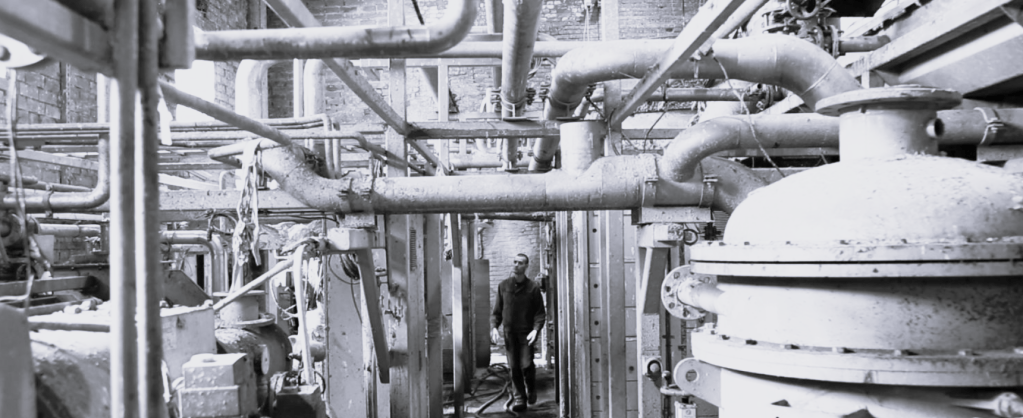
MILL:LIMINAL IS NOT AN EASY RECORD to peg, but that doesn’t mean it isn’t interesting or enjoyable. In fact, it’s among the more haunting, thought-provoking, and meditative recordings I have heard in some time. Released this year by Murmer, the handle of sound artist Patrick Tubin McGinley, it is the sonic accompaniment to a 35-minute film made with Daniel Edward Allen in 2018 called The Mill. To record The Mill, McGinley and Allen descended on the Räpina Paberivabrik, a paper mill in southeast Estonia that has been producing paper continuously since the 1730s. Here, the old mill’s creaks, whirs, rattles and hums are arranged into drone-like compositions distilled into seven, hypnotic tracks. McGinley reports that he was inspired to record the mill after having been a customer. Räpina produced the packaging for earlier releases, and he was drawn in by its mesmeric sounds.
McGinley’s approach to recording is very cinema verite. His sound recorders are the shaky hand holding the camera, giving you a first-person look — or in this case, listen — at what’s happening. The sounds for mill:liminal were recorded mostly with a Sennheisier MKH 30/40 boomed microphone rig connected to an SD744T hard disc portable field recorder. Additional sounds were recorded with self-constructed contact microphones and some with DPA 4060 miniature omnidirectional microphones. So what can sound like sound captured raw is actually the product of some serious technological sophistication and deep processing.
The result is unsettling, for mill:liminal sounds like consciousness melting off the slate of time. In some moments, the low and steady growl of the paper mill machinery takes on monastic tones, as if a monastery of Tibetan monks were assembled for prayer in the mountains.
It’s not hard to find parallels in McGinley’s work, but it does lead one to unexpected places. Is a man in a plaid shirt with a microphone in hand, poised to capture sounds in the field, not unlike Alan Lomax, with his field recordings of world music? McGinley does agree with that.
“I have long-standing thoughts about the world of field recording and experimental music being considered as folk music,” he says. “It’s music that has grown out of a community outside of academic circles, a sort of voice of a population.” Interestingly, he has noted that the mill, in its own way, is a living entity, as people play limited roles in maintaining its processes.
There are also sonic links to the experiments of minimalist composer La Monte Young and his Dream Syndicate. One can see how the hum of a paper mill aligns with Young’s tunings that matched the environmental sounds around him, most famously his reliance on a refrigerator’s 60-cycle electrical hum, which he considered as a foundational drone for his music. Young called the 60-cycle hum the “drone of Western civilization,” but as mill:liminal reminds us, these folk songs of machinery are all around us. If listened to, they can be a thing of beauty.
*
mill:liminal is available now as a digital download and will be available soon as a cd packaged in paper from the Räpina Paberivabrik. In addition to undertaking field recordings of creepy paper mills, Murmer also produces a regular weekly radio show called Framework Radio. Other recordings are available on Bandcamp.
I WAS SITTING in a brightly lit cafe somewhere in a northern city when Ezra Gold walked in. In a room full of laconic blondes, he was refreshingly Jewish. Dark hair, one of those ancient philosophical faces that always looks like it’s posing a penetrating question, when in reality, he was probably just looking for some decent coffee, maybe a scoop of ice cream. Ezra looked mostly the same. But he had acquired some wealth. He was dressed in some high-end red-pink zoot suit. He had a joyful countenance. He said, “Hey there, buddy. Good to see you!”
He had two daughters with him, both around 10 years old. They held on to his tailored pant legs; he ordered them both some ice cream. Before he left, he invited me to visit him in America. “You should come back to America, man,” said Ezra Gold. And like that, he was gone.
I hadn’t seen Ezra since we had lived on the same floor in college. I had maintained no contact with him. He was a ghost from the past, but a welcome one. I took him up on his offer, and soon I was hiking down a dirt road somewhere along the mid-Atlantic. The roads curved up into the mountains, the foothills of the Appalachians, and there was a rocky peninsula, surrounded by blue water. Here some tired fishermen sat, tossing their lines into the waters, watching them dance. “Do you know where Ezra Gold lives?” I asked one of them. He was a lonely old hobo type with a few gold teeth, and he pointed toward those hills over yonder.
I kept walking into the hills. It was autumn now; delicious golden leaves blanketed the landscape. Dug into the hills, I could see the brick bones of an old factory, its chimneys still intact, its roof and workers long gone. Eventually I came to a small town and found the building I had been searching for, a kind of orange cream-colored tall apartment tower.
This was where Ezra Gold lived.
“Hey, buddy, glad you made it,” he said, welcoming me in. “Can I get you anything?” He went to the kitchenette and made two coffees. I looked around his home. In the other room, I could see his daughters stretched out on a couch, both absorbed in the glow of the internet. There were piles of clothes on the floor, his bed looked as if it hadn’t been made in weeks. A blue-gray light filled the room with melancholy. That’s when I realized that Ezra Gold’s wife had also left him. He had been deserted, marooned, jettisoned, discarded, abandoned. But he set out two cups on the table as if nothing was amiss. “So,” said Ezra. “What have you been up to?”