I SAW MARCOS at a party in the Old Town. I was standing at the top of the steps, and he was coming up. We saw each other just for a moment, but I recognized him right away. He looked just as he did in college. He looked just as he did in his obituary. “Marcos,” I said. “Is that you?”
Before I saw Marcos, I had been kissing a TalTech postdoc from Nigeria named Omolola, or “Lola” for short. She was a woman who knew her pipettes. She spent most of her days in laboratories. There was a clean, cool, clinical edge to Lola. She wore her braids up in a colorful headscarf. She had been showing me some photos on her phone when we began to kiss, just like that. Why it happened, I don’t know. She was my friend Stig’s latest girlfriend, but there was a high level of attrition in his romantic life. Was she a rebound, or was he rebounding from a rebound? She was just one in a series of basketballs being dribbled across some stuffy court.
Lola was an excellent kisser. I wondered how often these spur-of-the-moment make-out sessions happened. Maybe they were going on all the time. The second you left the bank, that young financial advisor was kissing that grizzled old man. Bolt drivers turned to suck face with their latest fare. Flight attendants from Finnair reached over to deliver a cup of blueberry juice and then … There is something about surrendering up to someone, freely, on a whim. One minute, you are at a party, the next you are locking lips with your friend’s girlfriend. Until you see your dead college friend walk by, as if you were in some turn-of-the-century cafeteria.
“Marcos? Marcos? Is that really you?” Marcos and I had been in the same left-wing student group in college. We were card-carrying Young Socialists. He was the son of a Latin American economic policy advisor. After college, he had become more deeply left-wing. Some said he was stockpiling weapons. For an eventual battle royale with the federal government. But when he was about 40, he died. Nobody knew why. Nobody said. We only saw the obituary online, with that smile of his. He looked just like he did now, at a party in the Old Town. “Marcos!” I called to him. “Where are you going? Why are you here?” The Marcos-looking man shook his head, as if he didn’t know who I was. Maybe it wasn’t Marcos at all. No, it probably wasn’t him.
THAT WAS A DAY. It was the seventh of May. It was gray, mildly humid, the exhausted underbelly of a spring that had otherwise been pined after all winter. I know the date because I sent a letter on May 7. It read, “I’m sitting here in Tartu at her cafe, it has been completely redone.” There was more on top, but some of it is too incriminating to go into, even in this kind of story.
How had I even arrived at the place? My path was certain, to cut across one street, then another. In Tartu, the streets are wide and obvious. Follow them down to the bus station. If you have time to spare, wander through the market and along the river, take a picture, mind your own business. But while my mind was minding its own business, my feet carried me in another direction, here.
Why did I come here? She probably drank coffee in this cafe every day. Multiple times, in fact.
“I once sat right here with Fred Jüssi,” I wrote to my friend. “Just like this. And he took me aside, and said, ‘All of the things you think are so important in this life actually aren’t.’ Or something like that.” The old naturalist had told me other things, like how he knew when to initiate love and when to break it. “When it’s time to burn it all!” I wondered why Jüssi had told me those things.
But this was a love that didn’t seem burnable. It outlasted others. She was the woman you think about when you are in the arms of other women. You stare at the ceiling, her name on your lips.
I had gone to the cafe because I knew she worked there. There was thus a chance I might see her. “Admittedly stalkerish,” I wrote. “At the same time, I just wanted to cross paths with her, or more like put myself in her path, just to see what happens. I am curious.” This was my reasoning.
I wasn’t really dangerous, anyway, I thought. I was just sitting there drinking carbonated water.
Someone decided to play the Bee Gees at that moment, as if the whole pathetic scene couldn’t get any more weird and ridiculous. It was “More Than a Woman.” “But she is more than a woman,” I typed. I imagined her appearing in slow-motion, her hair glistening like the cosmos.
“She is young, but she knows that I like her and seems unfazed by it,” I wrote away in the cafe. “And I specifically like her for that reason. No need to discuss anything. It’s been understood.”
Or so I imagined, because she wasn’t there that day, and I didn’t have the nerve to seek her out.
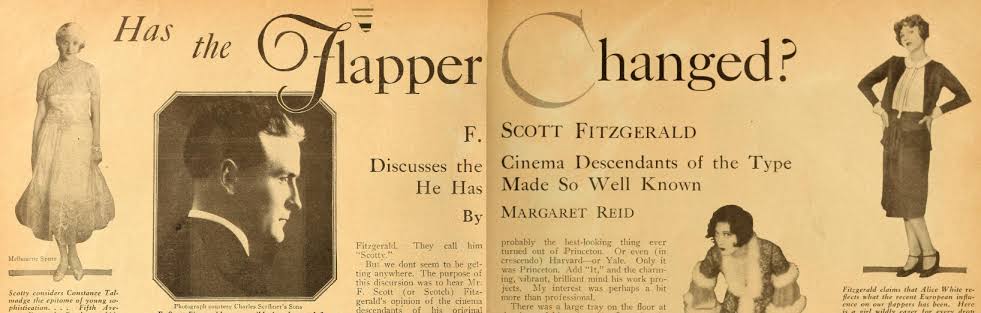
I left the cafe thinking about that scene in Tender is the Night where Dick follows Rosemary to the set of her latest film and calls her from a phone booth from around the corner. Where every sane, sober-thinking man would have said no, he said yes, on total impulse. I knew that story was true, at least at heart, and was really about F. Scott Fitzgerald and the actress Lois Moran. “I went there because I knew Fitzgerald would do exactly that,” I later confided in my friend. “Because Fitzgerald wasn’t always a good person, but at least he was alive. Fitzgerald would have gone.”
*
When did life become literature? Or had it always been this way? I remember when she first emerged into view, lurking at first on the periphery, just another cafe girl. But slowly, she took shape, the eyes, the lips, the fingers with their silver rings. I could sense her when she brought me my drinks. I didn’t even have to look up, and sometimes when I did, her cheeks were rosy. I measured my affection for her in the reams of sentences these moments produced. My notebook served as a kind of romantic barometer; the better the writing, the deeper the feeling. Fitzgerald would have approved, I thought. Somewhere he was looking down at me, or up at me. Scott. Somewhere he was scribbling into his notebooks about some lovely young woman just like this.
And then one day, while marching back into town, I stepped into the cafe and demanded to know her name. Sometimes I wonder where that impulse came from. She told me her name, of course. This was a name I learned to take very good care of. I would never say it. I kept it hidden away.
Scott Fitzgerald emerged into my world in a similar way. First he was a wispy apparition, later he took full form. The Great Gatsby was compulsory reading in any high school literature course. There, in the halls of a brick high school, deep in the Nineties, our teacher, Mr. O’Connor, who refused to retire, taught us about Fitzgerald, Hemingway, and the Lost Generation. But I know these faces, I thought. These are people like us. When I looked around the room, I could see them sitting there. It wasn’t hard to imagine Hemingway as the brooding student to my left, with the smart answers. It wasn’t hard to imagine Fitzgerald by the door, a well-dressed preppie, always ready with a poetic line. I knew Fitzgerald before I knew him. He had just been waiting.
After Mr. O’Connor’s heart attack, we had a succession of substitute teachers. One of them, a gray-haired woman who wore a red turtleneck, started to call me “F. Scott” because of my style. I took it as the greatest compliment. To be a proper F. Scott, one needed a Zelda, a lifelong muse. Wasn’t it Scott Fitzgerald who taught me that people were material? That experiences were to be transformed into story? Scott shamelessly stole from his wife’s diary, sometimes word for word. There’s the “beautiful little fool” line that he smuggled into The Great Gatsby. But supposedly whole sections of 1922’s The Beautiful and Damned were lifted from Zelda Fitzgerald’s diary.
Scott was outraged when Zelda published her own book, Save Me the Waltz in 1932. She had used up all the material that he had been harvesting for his novel in progress Tender is the Night.
As Zelda, who provided counterpoint to Scott’s story arc, wrote, “Plagiarism begins at home.”
One day, as I was passing the cafe in autumn, I saw her in the window. When she looked up, there was a kind of oceanic shift in all the big waters around me. Sometimes I would write all day there by the window, and she would work too. “Well,” I would say, “hakkab jälle pihta.” “Jõudu tööle,” she would whisper and float off. Sometimes I would see her wandering around town, wearing sunglasses, listening to music. She would disappear around a corner, and I would watch her reflection in the windows she passed, until she vanished completely. But I was happy.
*
Then there was that day on the bus, the bus day, which happened at the end of August one summer when we were both heading to Tartu. I had disavowed any hopes of pursuing her, or anyone for that matter, but there she was. She sat across from me. I was too nervous to move. I wouldn’t even move my head. But other than greeting her, I felt her presence the entire way. I heard her munch on her damned juusturoll, acquired from a supermarket bakery (I often saw her in supermarkets) and the crumpling of the greasy paper in her hands as she took another bite. I could almost taste the crumbs as she did. I could make out just at the periphery of my vision, the whiteness of her shoes. She always wore those shoes. So many Estonians had shoes like those.
She was so ordinary in every way, and I would see women from behind everywhere who looked just like her. But none of them were her. She was sitting right there and all I could do was hide in my notebook, writing about her. What do you say to a woman who inspires you to write? Do you give her your messy first drafts? When we exited into the city, loud with traffic and the clanging of drills and jackhammers, we walked a while in the sun. She was going her way, I was going mine. She had exams. I had a conference. “Cool,” she said, blinking up at me. “Not really,” I said. She was just a young woman. What did I expect? Ecstasy? Euphoria? More poetry? I didn’t even know. All of this mythmaking was getting a bit too mythological for its own good. I did feel elated though. I felt a little like Fitzgerald. Later, I told the driver as I watched her once again recede into the streets of the city, “Can you believe I love that girl? I barely know who she is.”
The driver glanced in the rear view mirror. He said nothing back, but he must have understood.
There are only a few recordings of Scott Fitzgerald’s voice, by the way. Some were recorded in California in 1940, the last year of his short life. His voice is just as you would imagine it to be. A breathy tenor that lingers melodiously on the vowels. The voice of an old and dear friend. There is also a film of Fitzgerald in 1922, when he was just 26, the wunderkind of This Side of Paradise, writing at a desk in a garden, the sun against his features, at the height of his powers. Fitzgerald wrote and rewrote. This was his method. He pressed on, no matter the challenge.
Or so I like to think. For this is another myth of Fitzgerald that haunts me, along with his famous drunken antics, such as the time he and Zelda asked guests at a swanky Hollywood party in 1927 to hand over their watches for a magic trick and then went to the kitchen and boiled them in the tomato sauce. That when Fitzgerald awakened from another spree, he put on his tie and sat at his typewriter. Even when Zelda was institutionalized, and Fitzgerald’s career was dead, and he was in debt and living in dollar-a-night hotels in the South, he was still typing. Maybe it isn’t true, but, at his nadir, Fitzgerald did write “Crazy Sunday,” “Babylon Revisited,” and “The Crack-Up.”
*
I don’t believe a muse has to remain one though. She’s never just a heroine, a source of material. No, I think a muse must remain a person. A real person, a flesh-and-blood human being, with weepy moods, highs and lows, career highlights, dreams, traumas, and memories. A person to be cared for, despite all the words that are written about her. For as much as Scott was helping himself to Zelda’s diary for his literary projects, he did love her. When he arrived in California again in 1937, looking for work, and people remarked how his intense eyes appeared as if he was viewing the very openings of hell, I think it was the agony of seeing Zelda institutionalized that made them appear that way. I believe Scott did love Sheilah Graham, the English columnist with a colorful past and with whom he spent the last few years of his life in Hollywood. Scott turned Sheilah Graham into the main character in the novel he was working on, The Last Tycoon. Because to write about someone is to love them too. In a writerly, Scott Fitzgerald kind of way.
Scott died a few days before Christmas in 1940, a chain-smoker who guzzled Coca Cola and had been suffering from alcoholism for years. He stood up in Sheilah Graham’s apartment and dropped dead on the floor, a tragic figure. In the terms of the obtuse Estonian media, the man had what could be called an ootamatu terviserike.
*
One cold winter evening, I found myself on a lonely train platform, surrounded by forest, when a southbound train pulled up for a stop. There she sat. I could see her through the window, totally alone, staring out into the black darkness. How strange, I thought at that moment. To have her delivered to me, at this moment, like this.
First, I went and hid in another wagon on the train. But then I gave myself a little pep talk as the train rattled through the night and she sat there in her seat. “You can only keep running away from yourself for so long,” I lectured myself. “Something put her on this train. Go talk to her.”
Which I did. I wonder what we looked like, the sight of this enormous man seated across from a young woman who was half his size and half his age. The writer, denuded of his pens and notebooks, was forced to make conversation with his muse. She was all there. Her fox-like eyes, her silver rings. She was staring out the windows of wintertime Estonia, lost in her own story. Maybe she was writing poetry in her heart about another young man. Maybe I was some minor character. When we arrived at the station, it was flurrying, frost had formed on the platform. It occurred to me that this was like the scene of a novel. Such a scene demanded good dialogue.
“You know,” I said, affecting my most romantic posturing. “I do happen to like you very much.”
The young woman looked up curiously at the big man in the jacket beside her and said nothing.
“But do you want to know why I like you?”
The young woman shrugged a bit, as if to say, mul pole õrna aimugi. “I haven’t the faintest idea.”
“I like to watch you when you listen to music,” I said. “You seem to be lost in another world.”
“That’s because music lifts us up,” she whispered. “Music can take us into other dimensions.”
The young woman put on her headphones again after that, tightened her coat, and walked home. I stood there for a while as the snow swept down. My hands were shaking then, both from the cold air and because I had been so bold to live out such a wonderful scene. Fitzgerald himself couldn’t have written it better on a $1,000-a-week screenwriter’s salary. It was just too perfect.
*
The Estonian version of this piece appears in the autumn 2026 edition of Edasi magazine. Special thanks to Robert Westbrook, the son of Sheilah Graham and author of Infinite Lies, who helped me with this story.
I DIDN’T NOTICE her presence until after the execution. Her father had died well, as well as any man could have died that way. At the after-party for the execution, there were representatives from the various ministries present. They were all well-coiffed and well attired. These executions were turning out to be networking opportunities for the politically ambitious. The wine was poured. The flesh was pressed. You might have forgotten that the guillotine’s blade had once again fallen on a poor man’s shaven neck. What even was his crime?
And there she was, standing off to the side, quietly munching on something. Dulcinea, the daughter of a disgraced ex-aristocrat. “I’m sorry about your father,” I told her. She said nothing. For even in this time of mourning, Dulcinea would still not speak to me. Not a word. Not for years. When I expressed my condolences, Dulcinea stared out into space, as if she was vaguely aware of a far-off vibration. She wore a close-fitting linen dress with a gold sash. Her straw-colored hair was done simply but perfectly in the modern fashion. She was sad though.
Later, when I got on the bus back to Tallinn, I noticed her in the back seat, with her brother slumped over sleeping in her lap. He was only eight or nine years old. She stroked his hair and he slept. It was an awful fate. All of their belongings were spread around in bags and boxes.
Again, I said hello, but she said nothing. I began to suspect that I no longer existed on this plane. It was as if I had died too and not yet become aware of it. The day had a cool gray pallor to it as the bus rolled into Kassisaba. Such a grim and dull day. I could see all the houses along the streets. Life moved briskly forward. People had to go to work. People had to live their lives.
At the next stop, Dulcinea, still in her linen dress, woke up her brother and they disembarked. She realized then, in her glacial silence, that she was unable to carry their things. With panic in her blue eyes, she turned to me and said, “Are you coming with us or not?” I was shocked to hear her voice. It was as if I had fallen through the space-time continuum. Naturally, I said yes.
I HID MYSELF at the top of the stairs in a white lookout tower in Porquerolles. I stood at the top of the metal steps, alive in the humidity, not really knowing what would become of me, or how long I’d remain up there. Good thing Linus and Simone came to talk me down. Linus had the appearance of an Irish saint. Simone arrived with her children. Her hair was long and brown and beautiful and she said, “We love you. Everybody loves you. Please come down.” “There’s no sense hiding in a tower in France,” said Linus. “We all have our bouts, but come on.”
I came down the steps, but when I stepped off the last step, I found myself buckled into a seat in the seventh or eighth row of an airplane. We had just landed somewhere. When I looked out the window, I could see it was some place warm, tropical, with palms. It must have been early evening. I could see the sun setting. Celeste came down the aisle with her daughters. She was dressed in her black dress, her curls bobbled everywhere. She instructed them in her calm motherly voice to watch their step as they disembarked. Could she not see me? We had known each other for years. When had I become invisible? Did I have to pretend I didn’t know her, even when we left Estonia? How long would the invisibility spell last? Until the end of time?
Until the end of time. There was a spark of light and the match lit. Out of a vivid darkness I watched the light as it ignited a candle. Then the woman blew the match out, placed it on the bookshelf, and resumed reading her book. The book was Edgar Allan Poe’s. Was it Annabel Lee? She read out the words in the dark library. The shelves of the library were piled high with ancient volumes. I didn’t know who the woman was, but she looked familiar. She was maybe five years older. There was a touch of the young Grace Slick in her, crossed with Françoise Hardy. She wore a red knit sweater dress that ended above her knees. It was embroidered in gold, with strange, zigzagging designs. Her dark, luscious Wonder Woman hair was half up.
“But our love it was stronger by far than the love of those who were older than we,” she read. She stood, book in one hand, candle in the other. I sat beside her looking up. Then I wrapped my arm around her hips and began to caress her. And so I slipped into delicious happiness.
AT THE CRACK OF DAWN, I descended the steps to make my daughter an omelette before she went to school. My feet slid across the smooth wood floor toward the kitchenette. I began to make preparations. I liked to get the frying pan sizzling hot, gurgling with butter before adding the eggs. When I turned on the light, I could see that she was back. She told me I could go.
“I cut short my trip,” she said. “You can go now.” “But I promised her an omelette,” I told her. “A mushroom omelette. She was looking forward to it.” “I have some workmen showing up soon,” she said, reaching out to stop my hand from cracking an egg. “Would you just go? Please?”
I took a step back. “No,” I told her. “I promised her an omelette, she’s having an omelette. I am making her an omelette today.” There were animals all around the house. Cats, dogs. Out on the terrace, I could see some musk oxen lazing in the morning sun. “Why do you have musk oxen?” I asked. “This is my house!” she said. Then, with a more urgent tone, “Could you leave?”
There came a knock at the door, some workmen came in in white overalls and white painter’s hats. They set up a ladder and began to prepare to paint the ceiling. But after them marched more men. Some younger types, who looked like boy band singers. Others gray, with beards, speaking of literature. They began to fill the house from top to bottom with their chatter. These were her men. One of them looked like Ben Affleck, the actor. “You didn’t tell me you were dating Ben Affleck,” I said. “That’s Tarmo,” she said. “He just looks like Ben Affleck.”
Soon the house was brimming with other men. I had just wanted to make an omelette. “You have to go,” she said. “You’re no longer needed here.” “But it’s my child. I have a right to make her breakfast.” “Would you please just leave?” she implored me. I did no such thing. Instead, I reached for a bottle of moonshine, drank it down in sad, heavy gulps. Soon I was stinking.
“You fool!” she said. “How are you supposed to drive when you’ve been drinking?” She sank into a chair, sat opposite me. She became her younger form now, blonde, with those crazy eyes. “You need to find another woman,” she told me. “It’s been long enough. That will make everything better.” For a moment, I followed the arc of her logic. Then I realized her logic had led me here, to this house. “What are you, some kind of oracle?” I said. “You know, I gave you everything,” she said, with a slight disgust. “Without me, you’d be back where I found you.”
“Fine then,” I said. Omelette unmade, I crumpled through the door into the morning light. I felt like garbage. Pure, limping garbage. And I had no idea where this place was. For a moment, I was reminded of the rainy streets of Beijing, and how I had been lost just like this, and a friendly Chinese had waved to me through a misty cafe window. I felt free that day in Beijing.
IT WAS A TOWER. The Ikea Tower. Why it was called that was a mystery. No element of it was made by Ikea. Maybe some of the furniture in the conference room on the 80th floor. The tower was designed to move with the wind. To stand in its conference area was to feel as if one was flying. We were so high up in the air that I couldn’t see the ground down beneath the cloud cover. The movement of the clouds between the legs of the tower made it seem as if we were a ship upon white seas. When I rode the elevator to the conference, I always made sure to look at the buttons. You know how terrified I am of heights. I watched those red buttons.
Later, back at my hotel, I slept in. It had been a long week, and I woke up around noon. I knew I was going to be late for the press conference. Where even was this place? My mind said it was Helsinki, but it looked like Amsterdam, with some elements of Copenhagen stitched in. Of course, I wound up talking to the redhead at the front desk, with her silver earrings and silver brooch. She sparkled like a Celtic warrioress. That went on for far too long, and so I was doubly late. I ran to catch a departing gondola and rode it through the city. Its doors opened and I got out, but I was on a terrace. The furniture was certainly made by Ikea. Simple, white.
Young Scandinavian Arabs were seated around, playing chess.
I got back on the next gondola and was carried to the canal, where I got onto a crowded ferry. I could see the red-brick buildings of the town hall and the national treasury. I tried to take a photo of the town hall, with its golden steeple, which looked just like Pauluse kirik in Tartu, but also like the Københavns Rådhus. What even was this city? Certainly, it was still Helsinki. Or was it? Before I could get a good shot, the ferry arrived to port and we disembarked at last.
Everyone filed into the metro. I could watch their heads disappear as they rode the escalator down. I saw their shadows vanish. Somehow I found a tram that delivered me to the foot of that enormous tower. Up the tube-like elevator again, staring at the buttons. They needed the article immediately following the press conference. I could feel the tower move with the strong winds. There was a woman in the elevator who I knew from Estonia. She was dressed in business attire. She had one of those names that no one outside of Estonia could pronounce, like Õie, Ülle, or Krõõt. “How do you do it?” Õie asked. “I don’t know,” I said. “I don’t know.”
HARBOR STREET was always susceptible to floods. Whenever there was a big storm, a nor’easter, a hurricane, the gray seas of the harbor would thrash about and rise ominously. One winter, it lifted huge blocks of white ice up onto the lawns of waterfront homeowners, though one might have asked them why they acquired properties in such a place to begin with. During the winter storm it looked like Antarctica, only with ducks instead of penguins.
When I went back, it was just foggy and the water was at its mostly natural level. The whole area, with its sailboats, boathouses, captain’s cottages and the like, was engulfed in a dense blue mist. Even the green grass of the lawns and the hedges dripped with white moisture. I made the turn up the street in an old-fashioned car, the make of which I didn’t pay much attention to. An old neighbor was sitting in the driver’s seat; I was in the back. Yet, as I found, I was steering the car. I was controlling it with my mind. I could make it brake and accelerate.
Her name was Bettina. She was half asleep. What a funny car, one that could be piloted via telekinesis. Bettina was wrapped up in a blanket. I could only see the back of her head, all blonde and fluffy, like a newborn chick. I said, “Oh look, the guesthouse, does Andy still live there?” Bettina yawned and resettled herself into the driver’s seat. “No, he left many years ago,” she said. “But I have seen him around town.” I had known the workman Andy my whole life, both before and after his stint in juvenile hall. Fleischman and Andy had robbed a liquor store.
“What about Mangione and Schmidt?” I asked. “The carpenters?” “Dead,” she answered. “Mike Mangione died of a heart attack. Schmidt fell off a roof.” “Oh,” I said. The further we went down Harbor Street, the more I noticed that the houses were no longer where they used to be. The Deuteronomy Smith House was still there, the life’s work of the famous shipbuilder, but the others were gone. When we reached the end of the road, I realized that the turnoff that would bring us back around Ditch Road had disappeared too. Instead, a palatial new home had been constructed. The old road was now its driveway. It was lined with lanterns and small pools.
It then dawned on me that I was all alone with Bettina in a car. We were all alone at the end of a road that had no apparent exit. A man and a woman, alone in a car. Something in the atmosphere trembled at that moment. It pulsated away in different colors. “You know,” I told her. “We are all alone together here.” Bettina yawned again. “So what,” she said. “So what.”
MORNING IN EGYPT, a crowded resort hotel breakfast buffet. There were so many people, there were so many discussions, that I found it hard to find a place to sit, or even to hear my own thoughts. I found a seat at a table with a white tablecloth, one that was covered in empty greasy plates and silver cutlery. This was where I came face to face with the British girl.
Some people search their whole lives for these kinds of immediate love encounters. Others just stroll into a bar or across a park and they find them, just like that. The British girl was something else, something unordinary. She had dark hair, lively gray eyes, she was dotted with freckles. I think she said her name was Lily. Or was it Grace? I think she said she came from Exeter. It was hard to hear anything in the breakfast room. We didn’t stay there long though. Things soon moved to another room.
It just went, like the sea, and it took me out with it. I had no idea how old she was, what her past was, or if I was just this morning’s moment of solace. Maybe there were a hundred guys standing behind me, like a hundred setting suns, all lined up in a row across her sexual infinity.
But it was good love, the best kind you can have at a breakfast buffet. Her white button shirt was mostly open now. It was soaked. Then a male voice boomed, “Where is he? I need to have a word with this bloke. Teach him the meaning of respect!” Lily Grace said, “Run! It’s my dad!”
I hightailed it through the corridors of the hotel resort, up and down steps, brushing past other guests. I could still hear the man’s voice grumbling like a thunderstorm. “He’s old enough to be your father!” Was I? Lily Grace looked about 30. But I couldn’t be sure. Out the hotel, down the steps by the tennis courts. Here I paused to tie my shoes, and then I kept running.
Eventually, I reached an inlet along the Nile. Some children were tossing breadcrumbs into its cool, dark waters. I thought they were feeding fish. Then I saw about five or six baby crocodiles, snapping up the crumbs, swimming avidly, blissfully, full of life. “Hey, kids,” I told the children. “I’m not sure that’s such a good idea.” Then, from the back of the inlet, I saw her emerge, the mother crocodile. She was vast and terrifying; she looked as if she had been cut from blocks of black stone. Such a creature could easily kill anyone. It would just seize you or me up in its obsidian jaws and drag us down into the dark. That was what they called nature.
THERE I WAS, dancing with the Alexandrov Ensemble in my living room, when the wind blew the roof off the house. This was the premier song and dance ensemble of the Soviet army. They were used to doing prisyadki, or Cossack squat kicks. They knew how to do povzunets. But once I put the needle on the vinyl of Off the Wall, they were totally baffled as how to perform to “Don’t Stop ‘Til You Get Enough.” “Good American music,” I told them. “But how do American soldiers dance to this style of music?” one of the dancers asked. His name was Boris.
Then the wind blew the roof off the house and the soldiers all fled into the street. The house was a single-story bungalow, the type that’s popular in California and other earthquake-prone places. The roof came off intact, hovered in the air. My family members gathered around to observe the sight of a roof being lifted into the air by a spectral, unseen force, then tossed on its side. It wasn’t even that windy. It was like watching the Titanic issue its final deep groan.
How was I ever going to fix that? That was my first thought. In other parts of the house, a table was arrayed with a family meal. Cousins were still seated around, passing buckets of fried chicken. They were unfazed by the loss of the roof. From our side of the house, we could see the roof pitch to one side, then float into some black powerlines. The roof looked like a UFO.
Another gust of wind pushed the roof back toward the house and then across the side yard. Down it came, out by the mailbox, still mostly in one piece, though wooden shingles had started to break off on the sides. Just then, a neighbor boy arrived home from school. The bus had let him off on the street. “Come quick,” I shouted to him. “Maybe we can weigh it down with some rocks!”
All this time, Off the Wall had continued to play on the house speakers. Now it was “Rock with You.” “You fool!” my wife cried out from inside the house. She was cradling our newborn in her arms. She said, “You really think some rocks can stop it from levitating?”
She was right. The wind began its ominous rustling. There was something precise and focused about it. Again, the roof went sailing into the air. Like a zeppelin, it righted itself and began to smoothly float away across a blue sky. “Well,” I sighed and told the boy. “There goes our roof.”
WHEN I OPENED THE DOOR, it was just there, a fat letter full of yellowed pages lying in the corridor, written over in thick, black cursive. Her letter. Where had she even been? She had invited me to a party, which was to be held at an old farm out in the country. The roof of the house was thatched with reeds. When I arrived, I noticed that the gate to the yard was uneven.
I stooped down and began to run my fingers through the black earth. I found a hand shovel and began to dig. I pulled up all kinds of curiosities, silver brooches, spoons, plates, and coins. Some were from the Viking age, others from the rule of Queen Christina. I set these finds alongside the gate, padded the dirt back into place. To think of how long these items had slept.
Later, she turned up. She was wearing a white dress with a lace corset. Her chestnut curls were styled in an elegant coiffure. “I’ve seen all of your movies,” I gushed. She just watched me with big saucers of blue eyes. “I’m not really the greatest actress,” she said. “But here I am. Things do happen in life.” The young woman had appeared in several films in the German-speaking countries. The Germans, Austrians and Swiss all knew about die Frau aus Estland, and she had legions of lonely, middle-aged male fans. Certainly, some women fantasized about her.
Around the swimming pool, a hip hop concert began. Mike D was there. He began to rap the words to “Body Movin’.” There was something soothing about those old words. I knew them all, I began to sing along. All this time, die Frau aus Estland stood beside me, watching me with a kind of fascinated silence. She looked like an aristocrat from Versailles. The last time I had seen her had been at the Coldplay concert in the winter, when she offered me solace from hijinks and insanity. That was the day I met Keith Moon. She reached out and touched my arm with her finger. “I’m always here, you know,” said die Frauaus Estland. “I’ve always been here.”