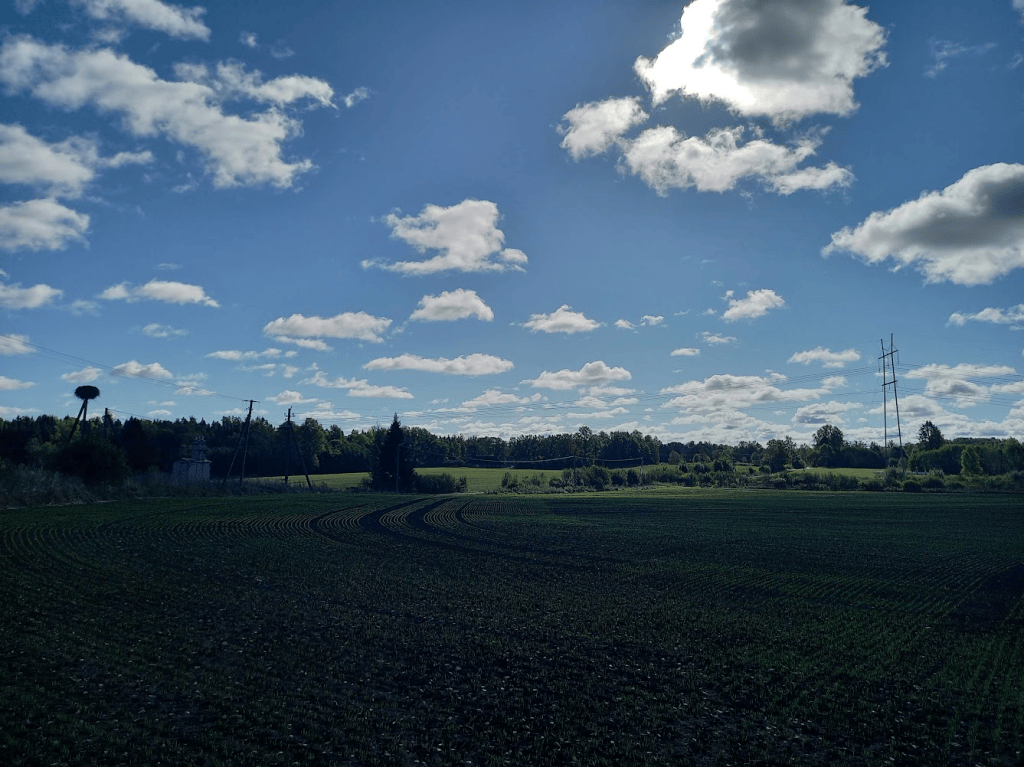
ALMOST EVERY DAY NOW, I take my bicycle out to Varesemäed. This is a small nature preserve on the edge of Viljandi Town. Its name translates as “The Crow Hills.” To get to Varesemäed or the Crow Hills, you cycle up Tallinn Street and bear right towards Põltsamaa. Soon the road dips before the turn to Karula and the last suburban houses fall away. To the right and left, vast fields open up, some of them full of golden rapeseed in the summers, others with dark, rich soil. Power lines are draped across this landscape. At Kikka, there is a small settlement of new homes, though I wonder who lives in them, or why they all moved there. Maybe it’s some sort of religious cult? Or are they exiled political dissidents? Just before you get to Kikka, you can see a massive boulder on the left. This is the boulder I call “Easter Island.”
I first started going out to Varesemäed years ago. I was introduced to the preserve by an old friend who liked to frequent such natural places. She called forests “lower pressure zones,” and she would come out to the woods to breathe, admire sunsets and the changing colors in fall. There are several nature preserves dotted around Viljandi, like the one in Loodi, or the one in Sinialliku. But these other places never really got under my skin. All of Estonian nature feels unfamiliar, all of these pines and birches. There is a melancholy contained in the land, though it’s not necessarily ominous or unfriendly, more like a broken-hearted woman boiling tea.
Surely, there must be some things to be happy about.
Varesemäed is the most interesting. There are adventures to be had there and it’s become a special place to me. After you pass the religious dissidents at Kikka, there are some other homes. In one, they are doing renovation and they have a robot lawnmower that is busy cutting grass. They have some speakers set up and like to play dance music. I love how the views open to Vana-Võidu at this point, which can be seen across the valley and the Mädajärv.
Then, just before you reach the turn off to Varesemäed, there are more homes. Once I was cycling out there and I saw a sole figure standing by a gate. An old man. Considering we were the only two people anywhere, I waved to him. He said nothing and gave me a puzzled look.
Yesterday when I went out to Varesemäed, the same thing that usually happens happened. I arrived on my bicycle, only to find out that I wasn’t the only person in the park. There was a man seated in his car, parked at the far end of the parking area. He was wearing sunglasses, though it was later in the day and the sun wasn’t so bright. He might have been talking to someone in his car. It was hard to tell because the car windows were very dark. It was a fine new vehicle. Who was the man? Why did he need to come all the way out to Varesemäed to have a conversation? It must have been important because as soon as he saw me, he left.
This scene repeats itself day in and day out. What I find interesting is that it’s usually solitary cars. It’s rarely two cars. People don’t come out here to have conversations between each other, or to meet. They come out here alone, or if they aren’t alone, then they ride in one car together. As soon as the mystery man left the parking area, a large gray van showed up with tinted windows. This van drove to the farthest end of the parking area and stayed there. I felt I was intruding and decided that I should probably leave rather than to start spying on the van.
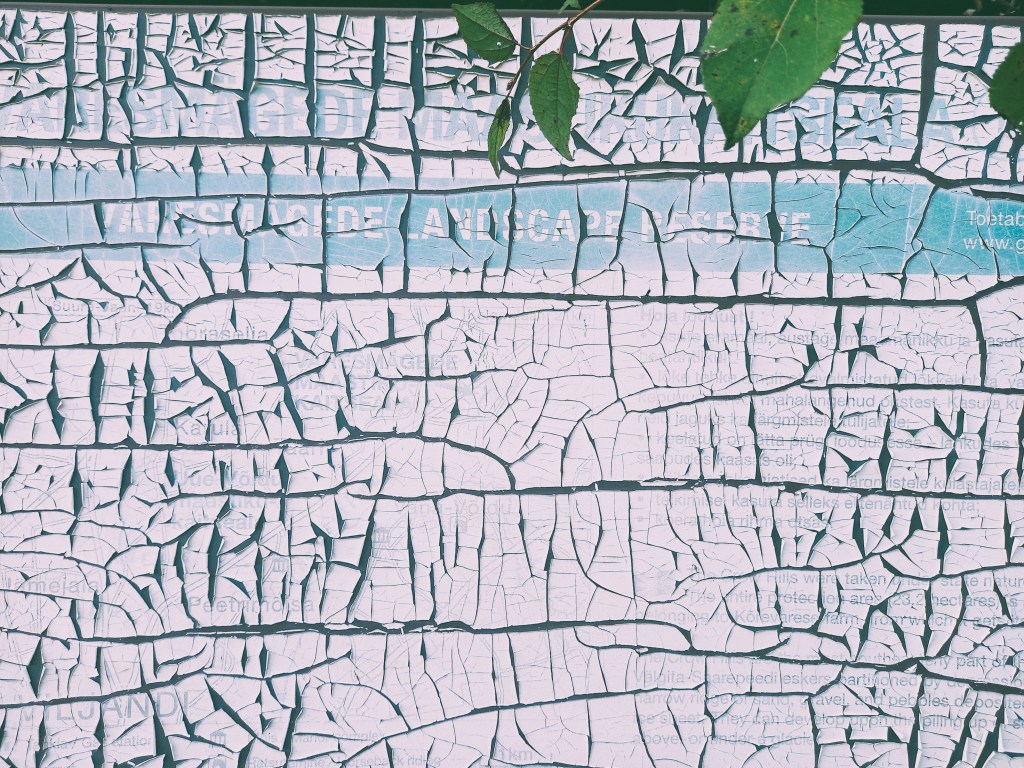
Naturally, I think these other visitors are up to no good. Drugs? Sex ring? Serial killers? It could be anything. Maybe they are just friends who want to have a conversation away from prying eyes? Or maybe they had just been driving all day and needed a break, to sit in some place alone. “Hey, I know where we should go. Varesemäed! No one will look for us there.” Yes, a “lower pressure area,” as my friend put it. The sign in the parking lot has been peeling away for years. If you train your eye, you can read that there has been a preserve at Varesemäed since 1964. Before the Second World War, there was an Estonian Defense League shooting range.
Finding out more about the history of the place led me to search the archives of old newspapers. The first reference to Varesemäed I could find dated to 1932, when it was mentioned as an example of a ridge-like formation in the Sakala Upland. I found no references to shooting at Varesemäed, but in a 1937 Postimees article, “Suuremad laskewõistlused Wiljandis,” I learned that these shooting competitions were all the rage in the 1930s. General Johannes Orasmaa himself attended a competition between different malevs in Valuoja Valley.
Other newspaper articles from the Soviet era talk about great hikes involving different groups of Pioneers. Sometimes Lithuanian Pioneers would visit and they would all go out to Varesemäed. There was grilling and singing. A lot of happy childhood memories were made.
The best article appeared in 1976 in Tee Kommunismile, where it was reported that the land around Varesemäed had once belonged to the Karula Manor and was sold in 1912 to the Koppel family, which established the Kõre-Varese Farm near the site. It is from this farm that Varesemäed derives its name. Perhaps the broken building ruins that separate the Kehklase järv from the Vägita oja date from this time? I like to spend time around those ruins. If I strain my ears, I can almost hear the conversations of the people who used to live and work in them.
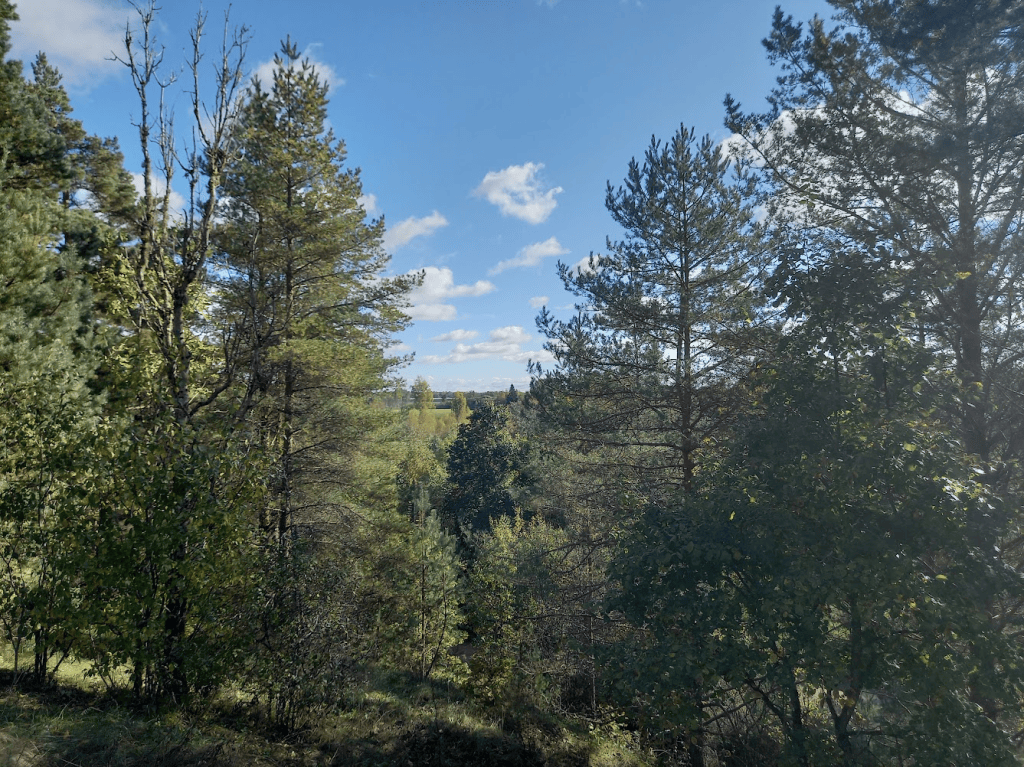
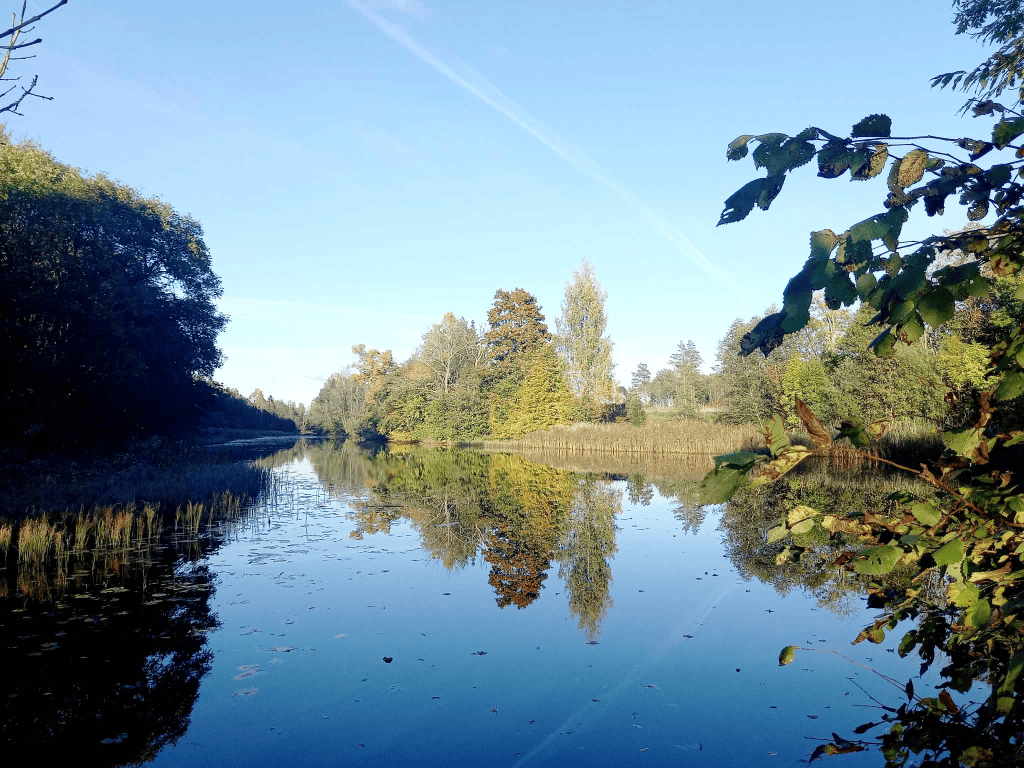
I’ve also been lost on the trails. I’ve been so lost that I came out of the woods on the Küüdeküla Road, thinking I was on the Põltsamaa Road. I’ve never seen strangers in the woods at Varesemäed, only in the parking lot. I must admit I have had my own personal adventures at Varesemäed, such as the time I went swimming naked with an Estonian woman in the lake. I’ve never really understood the rules around nakedness in Estonia. Sometimes, like when you are about to plunge into a lake, or are going into a sauna, being naked is totally fine. If you were to suddenly feel the desire to take off your clothes in Rimi or Selver, that would be ebadekvaatne.
There I was, swimming naked at Varesemäed, when one of those mysterious white vans pulled up. It parked there for some time, and I wondered if someone was taking photos of our nude dip. Surely, this would make an excellent cover shot for some tabloid. Then the mystery van roared off down that dusty road, back to the highway. Ever since then, I have wondered who was in the van. Was it someone I knew? When people gave me a strange look in town after that, or if their eyes lingered on me for too long, I would think, maybe they were in the van?
People do drive too fast on the road to Põltsamaa. The way back is fraught with danger, risk. Trucks go speeding by at astounding speeds. Just the displacement of the air can knock you over. You would think it was the autobahn and not a two-lane road in the middle of nowhere. When I cycle back, I wonder where they are driving to in such a hurry. What’s the best thing that could be waiting for anyone in this land, other than a dish of meekook and some coffee?
I am not the only cyclist out there. Just some weeks ago, I was overtaken by a blonde woman on a bicycle, with a trailer attached, a small child sitting inside. We were by Easter Island when it happened. It was a lovely crisp day, portending of autumn to come. The landscape looked majestic. The woman smiled at me as she cycled by and I thought, “I do love the countryside.”
An Estonian version of this piece was first published 29 September 2026 in the newspaper Sakala. The English version contains different Estonian words, including järv (lake), oja (stream), malev (brigade, team), meekook (honey cake), and ebaadevkvaatne (inadequate, not up to snuff). Before the Second World War, Estonians often used German orthography in writing. “Suuremad laskewõistlused Wiljandis” would be “Suuremad laskevõistlused Viljandis” today, ie. “Great shooting competitions in Viljandi.”