HARBOR STREET was always susceptible to floods. Whenever there was a big storm, a nor’easter, a hurricane, the gray seas of the harbor would thrash about and rise ominously. One winter, it lifted huge blocks of white ice up onto the lawns of waterfront homeowners, though one might have asked them why they acquired properties in such a place to begin with. During the winter storm it looked like Antarctica, only with ducks instead of penguins.
When I went back, it was just foggy and the water was at its mostly natural level. The whole area, with its sailboats, boathouses, captain’s cottages and the like, was engulfed in a dense blue mist. Even the green grass of the lawns and the hedges dripped with white moisture. I made the turn up the street in an old-fashioned car, the make of which I didn’t pay much attention to. An old neighbor was sitting in the driver’s seat; I was in the back. Yet, as I found, I was steering the car. I was controlling it with my mind. I could make it brake and accelerate.
Her name was Bettina. She was half asleep. What a funny car, one that could be piloted via telekinesis. Bettina was wrapped up in a blanket. I could only see the back of her head, all blonde and fluffy, like a newborn chick. I said, “Oh look, the guesthouse, does Andy still live there?” Bettina yawned and resettled herself into the driver’s seat. “No, he left many years ago,” she said. “But I have seen him around town.” I had known the workman Andy my whole life, both before and after his stint in juvenile hall. Fleischman and Andy had robbed a liquor store.
“What about Mangione and Schmidt?” I asked. “The carpenters?” “Dead,” she answered. “Mike Mangione died of a heart attack. Schmidt fell off a roof.” “Oh,” I said. The further we went down Harbor Street, the more I noticed that the houses were no longer where they used to be. The Deuteronomy Smith House was still there, the life’s work of the famous shipbuilder, but the others were gone. When we reached the end of the road, I realized that the turnoff that would bring us back around Ditch Road had disappeared too. Instead, a palatial new home had been constructed. The old road was now its driveway. It was lined with lanterns and small pools.
It then dawned on me that I was all alone with Bettina in a car. We were all alone at the end of a road that had no apparent exit. A man and a woman, alone in a car. Something in the atmosphere trembled at that moment. It pulsated away in different colors. “You know,” I told her. “We are all alone together here.” Bettina yawned again. “So what,” she said. “So what.”
BEING AN AMERICAN has never been easy. Even at the start, the idea of independence wasn’t exactly popular. About a third of people in the colonies supported the American Revolution, a third were on the side of the British Empire, and a third didn’t really care one way or the other or were just indifferent. As The Who sang in 1971, “Meet the new boss, same as the old boss.” I fear I might have belonged to this third category. I’d like to say I would have been there with Franklin and Jefferson in Philadelphia.
But I can’t really be sure.
In recent years, American politics have been challenging. It’s hard to recall that Minnesota and Greenland were the main topics earlier this year. In the meantime, there’s been a war in Iran. Or is it a war? Is it still ongoing or is it over? Nobody knows. And nobody can even say if it was a war or some other kind of armed conflict. I feel strangely indifferent to it, but perhaps that reflects the same ambivalent feelings that presented at America’s moment of birth.
For me, America is not about flags, armies, and politics. And it isn’t even “American food.” During these years in which America has been wrestling with its soul, I have rediscovered my own origins. I’m happy to inform you that they do eat well there. Not barbecue, hamburgers, fries, or anything else considered to be typical American food. It’s at times easy to forget that America might be an idea, but it’s also a place, where each region has its culture and cuisine.
I am from the East Coast.
What that means is that our local nature found its way onto our plates and soup bowls. When I think of my childhood foods, there were no potatoes or schnitzels, as they have here in Estonia. There was no blood sausage, and dark rye was essentially unknown. The only real black bread available was at some German restaurant, though you could find pumpernickel in the stores. But it’s not the same thing.
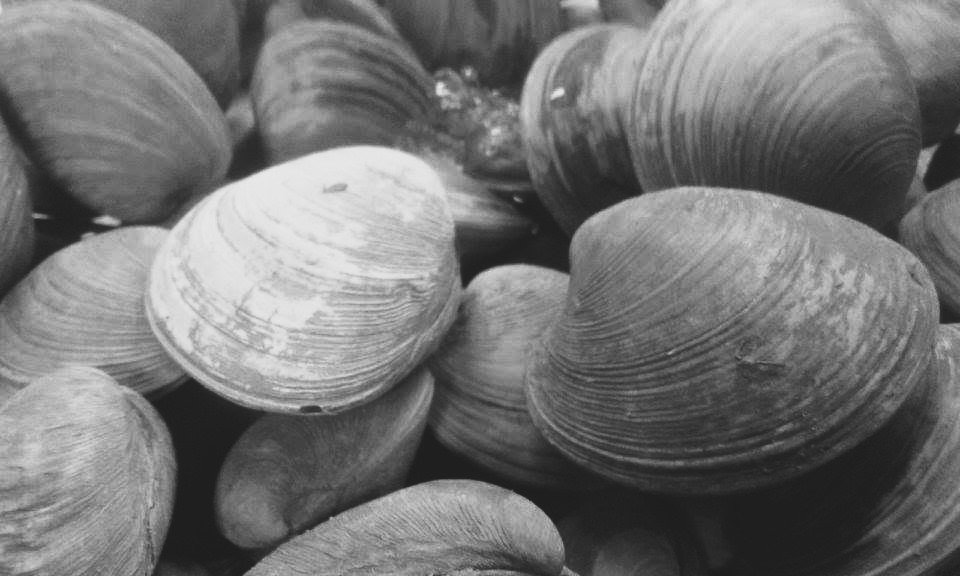
We had lobsters, though, all kinds of crabs, shark and tuna steaks and bags full of clams and mussels. I remember one lovely summer, maybe 1985 or thereabouts, when my father was away on a business trip in England. My mother didn’t feel like making a big dinner that night and decided that our dinner would be a big bowl full of mussels with melted butter. There I sat with my brother on the deck, eating away. I have to admit; it was probably one of the best dinners I’ve ever had.
We lived in a village on the north shore of Long Island. Before the Second World War, this was a summer place, and many of the houses were built as summer cottages at first, before they were outfitted for year-round living. From my window, you could see the sound that separated Long Island from the State of Connecticut. At night, you could see lights glowing on the other side of the water. During the day, white sailboats and ships moved across the water, and sometimes you might hear the honk of a fog horn.
Our food culture was very influenced by New England and in some ways Long Island is a more natural part of that region. The City of New York has a colorful history, where the first Europeans who settled were the Dutch and their heritage lives on in local foods such as koolsla, cole slaw, a cabbage salad with mayonnaise. We did eat this, but more in restaurants or delis.
But my mother did take me to the seafood store regularly, where all kinds of surprises awaited. A usual purchase was soft-shell crabs. These were breaded and fried. I ate every part of them. I don’t even want to know what parts I ate, but there were certainly some unusual tasting parts. Were those the crab brains? Who knows. For me, they were the most nutritious food around.
There were also scallops, which were very welcome for dinner. These came straight from Peconic Bay on the eastern end of Long Island. But you could get these up and down Long Island and across New England and up into Maine, and from there on to Canada, Nova Scotia, New Brunswick. Who knows where the end of the scallop trail is. Scallops were a kind of delicacy, because they were more expensive. Clams were much more common. Truth be told, Justin Petrone’s first meal after breast milk was linguine in white clam sauce.
Just as an Estonian may dream of potato salad, black bread, beer and herring, I dream of shellfish.
In the seafood store, there were also lobsters sleeping in tubs, their claws held shut by colorful rubberbands. We ate lobster quite often. My mother would buy four or five and they would be put in a paperbag. At home, they would await their fate in the cold of the refrigerator until evening. Then they would be put into the boiling water. I remember how I could hear them tapping at the inside of the pot, trying to get out. But at some moment, there was no more tapping. The best parts were the claws, of course, and the rich and meaty tail.
Lobster was something special. They were expensive too and we would eat them at birthdays or some other special occasion. I have a weird memory of my father’s 38th birthday. I was about five years old and I remember how a lobster got up and tried to run across the table, away from my knife and fork. In the end, I did get him. What’s weird is how clear this memory is, even if it was probably a dream. Or was it?
It’s odd to think of how much time I have spent with crustaceans.
Once, in the seafood store, the owner decided to play a trick. He took out the lobster and put it on the floor. It began to move toward me. This was like a scene from a science fiction movie. I can still hear all of those legs tapping on the ceramic tiled floor.
It’s interesting that even McDonalds offers lobster rolls in New England. All you have to do is order your lobster roll and drive up to the next window. And there it is, in your hand. In New York, this is less common, so it was always a fun part of traveling north.
Just one ferry ride and the lobster roll is yours.
What a weird combination — a fast-food delicacy.
I haven’t even got to the soup. Our chowders are interesting. As a child, I knew two kinds. There was New England clam chowder and then Manhattan clam chowder. New England clam chowder is cream based and filling, Manhattan is tomato based and a bit spicier. I should acknowledge that when I was a kid, the waters around Manhattan were not the cleanest. So, I would wonder, peering into my soup, what kind of stuff was in the Manhattan clam chowder. Was there hospital waste in there? Dead bodies? That’s what I imagined was floating in it.
Everybody knew the mafia dumped their hits in the waters around New York.
If you head out farther east, or travel by ship to Martha’s Vineyard and Nantucket, you’ll encounter quahog chowder. Quahog is an Algonquain word, it refers to a kind of clam with a very tough kind of meat. This is very everyday food. One summer when I was spending time at my friend’s grandparents’ house on the eastern end of Long Island, we spent the day collecting clams and made soup at night. So, if someone asks me about American food, this is what comes to mind. What we actually ate.
It’s nice to think and write about soup. It’s like getting your country back with every spoonful.
Long Island’s north shore looks out on Long Island Sound, its east will lead you to Europe, eventually, and its south shore opens up to the Atlantic. These are deep waters and so we often had swordfish, tuna, and mako shark steaks on our table. My father never really made dinner, that was mom’s specialty, but the grill was his domain. He would grill up some shark.
We ate Jaws with baby potatoes.
The indigenous people along the east coast were mainly Algonquians and they subsisted on maize, beans, and squash. In Tallinn, the Three Sisters refers to three old houses, but for indigenous people, the three sisters were just these three staple crops. In school I learned that there was often a big pot at the center of their homes into which they tossed all three, plus some venison or fish. If you were hungry, you just grabbed a bowl and helped yourself.
We never ate that way, exactly, but we did have the sweetest corn in the US, or so we told ourselves, and we knew that the corn we ate at the end of summer would be even sweeter. I had my own strategy for eating corn. Some just chomp away, with corn flying every which way, but I take my time. I do it systematically, so that every piece is properly eaten. Husking the corn was my favorite thing to do before dinner (or do you really want to put out the plates? I don’t.)
So there I would sit. But how many did we usually buy? Sixteen?
Even as suburbia was growing all around us, there were still some functional farms in existence. We would buy our corn from there.
For us, summer meant seafood, corn, and potatoes.
The potatoes were also cultivated on the local farms.
My grandmother wasn’t from the place where we lived. She came from down south. Her father was from North Carolina, and her mother was from Virginia. They had a different food culture. The climate there is warmer, the people are closer to the land. They had smoked hams, fried chicken. Lots of peanuts. Some farmers only grew peanuts. But corn had a special place of honor. My grandma would make me cornbread all the time. Every time I went to visit her, where she had her Elvis Presley Christmas album, she sent me home with bags full of cornbread.
The word for maize comes from an indigenous language — the Taino word mahiz. So I think there’s nothing more American than corn or maize. It’s probably one of the things that define it.
It’s interesting to think of American food today, a rainy morning in some Estonian cafe. Sometimes I even forget that I am from there, but then something odd happens, like I see a bunch of shipping pallets and think, for a moment, that they are lobster traps. Or I start to talk about lobsters and people look at me like I’m weird.
What kind of person talks about lobsters?
Once I had to find the Estonian word for spout, when I was writing about whales. People had no idea what it was. “You know, that spurt that comes out when the whale surfaces to breathe?” Then I realized that I was just from somewhere else. A place where people talk about whales and lobsters all the time. A place where your homeland comes with a hot bowl full of quahog chowder.
America is, after all, named after some Italian explorer named Amerigo. But maize and quahog? Those are real American words, if you ask me.
An Estonian version of this article appeared in the magazine GO Reisiajakiri earlier this year.
ON THE WAY HOME, I wound up as a stowaway, riding in the back of an old-fashioned mail bus. It had been recently refurbished, and the interior smelled of fresh pine. Crates of letters were stacked up on both sides of the coach. I knew that if I followed the north coast road, I would eventually make it home, but at some point, the road changed. It was generic and unfamiliar, and the forest here was so dense and green that I lost my bearings entirely.
There was also water on both sides of the road now, which made no sense. The south coast was a good 20 miles away. The mail bus rolled to a stop, and a wooden ladder descended mechanically from the back. Into the storage area walked the postman, wearing a striped jacket and a straw hat, as if he had just stepped out of 1910. “Another stowaway, huh?” he said.
The postman wasn’t angry. He fetched a few envelopes and went to stuff some mailboxes. “But where are we?” I asked him. “I thought this was Long Island.” The postman’s eyes narrowed. “You, good sir, are in the most exclusive part of Long Island. Pristine, undeveloped, inhabited by only the oldest, wealthiest families. It’s so off limits that it’s never appeared on any map.”
The postman went on. “See that, over there? That’s Fresh Pond. Most people think that’s the north shore. But out here, there’s this strip of unspoiled land, a grant to the settlers of these parts by His Majesty Charles II.” I stuck my head out of the mail bus and looked around. I saw no homes anywhere, just old-growth forest teeming with wildlife. The air here was so fresh it hurt just to breathe it. How could it be that there was a part of the island I had never seen?
“If it’s so exclusive, how do I get anywhere from here?” I asked. “I don’t think my parents know how to get here.” “Where are you going?” he asked. I told him the name of the town. “No worries,” he said, returning to the front of the bus. “I’ll drop you at the old post office. You’ll have to find your way home from there. And you can never tell anyone that you saw this place.”
AND SO WE RETURNED to Huntington on Long Island, which is one of the few settlements that could be called a real town on the North Shore and not on overgrown coastal meadow village or a sprawled out ship-building port, but a real micro-city with its own library and its ways and boulevards with names like New York Avenue and Prospect Street. There used to be trolleys running the length of Main Street, gliding along metallic grooves, bells ringing, in the old days, the Model T and Model A days, when the automobile was a luxury and the straw hat ruled. The trolleys inevitably circled around the grand town hall at the end of Main Street.
This vast brick structure, constructed by some post-war — here meaning post-Civil War — architect was still in use when I returned there with an Estonian woman, whose name I could never remember, but who was so keen to see my childhood places, such as the swimming pool at the YMCA, and we walked up the granite steps, where there were long lines of townspeople waiting to see some clerk or process some paperwork. What was her name anyway? Annikki? Tuulikki? In the long lawns that stretched down toward the center of town, some women were at work gardening. One poked her head up from between the bushes and I noticed the embroidered white linen bonnet of an Estonian folk costume. Then I heard lines of Estonian dialogue passed between the women, who were planting the gardens with yellow flowers.
Annikki and I came down the steps and there was a friendly encounter with the Estonian gardeners. “What on earth are you doing here?” She asked. “We came over for the summer,” the woman said. She was dressed in a white, traditional folk costume. It was strange that she would wear such beautiful clothes for such hard work, yet there wasn’t a spot of dirt on her.
The cemetery was next to the town hall, on the other side of a grove of dark trees. There was a long stone wall now erected between these properties, but there were many doors in this wall, which stretched for quite some ways, but most of the doors were sealed, and even from in between the few cracks, I could only hear the sounds of young town hall civil servants talking.
We found our way around to the cemetery, which was where my grandfather was entombed, and his father Salvatore and mother Rosaria, and their fathers and mothers and many cousins.
“This is where they sleep, the old Italians,” I told Annikki. She was a slender girl, with tufts of red hair and freckles. Her hair seemed to be in constant windblown animation. I put an arm around her. Annikki was compulsively curious about the world. But something about this world was off. For when I peered down in the cemetery, I saw the ruins of Rome, the tombs of Pompeii. Crumbling columns, nude statues missing arms and noses, all covered with moss.
“This must be the older part of the cemetery,” I told Annikki. “Where the very old Italians sleep. My relatives are buried in the newer part.” There was a small stone house at the gate, with statues of Apollo and Venus out in front. Out of this house stepped an Italian woman, dark-haired and olive-eyed, some years older than me, her skin a perpetual sun-kissed brown.
She began to speak to me, but in Italian, and I expressed myself to the best of my abilities. Some words fell out. Cimitero, parenti. “Your Italian is just awful,” she said in a turn. “Bruto. Who even taught you to speak our language?” “That’s the thing,” I said, sadly. “Nobody did.”
I INHERITED FROM MY GRANDMOTHER a house on the coast overlooking the bay. For some reason, it took 10 years for the estate to be parcelled out, but one day I drove up to the modern, two-storey, three bedroom structure and entered from the side door. It seemed odd to me that my grandmother could have kept this in her possession for so many years without me knowing about it, but she was always tight-lipped about such things and it had wonderful views. Its spacious second floor with its wide windows looked strangely like my childhood home on Long Island. “This,” I thought, “will be the perfect place to get some writing done.”
Downstairs though I heard some clanging and loud voices. Upon descending the steps, I encountered two well-dressed older men, who bore a resemblance to Robert Davi and Joe Pantoliano, who played the Fratelli brothers in The Goonies. One of them was wearing a white, button-down shirt, open at the collar. “What are you doing here?” he said. “Are you a customer?” I looked around the room and could see there was a massage table, along with a stand of various creams and essential oils. “What are you doing here?” I responded. “This is my grandmother’s house, I inherited it. It was a part of her estate!” “We’ve been running a health and wellness center here for years, kid,” he replied. Quickly, it became a shouting match.
I stormed out to visit my lawyer, an older Japanese man named Ushikawa, but his office was a mess. There were pieces of potato chips all over the carpet and crushed cans of Coca Cola. He shrugged at my problem. “What do you want me to do about it?” my attorney said. “Do you think I can personally evict them?” Looking over the old Japanese man with his gray hair, I realized that he was right, and that the police would be needed. Back at the house, I gave the Fratellis another warning and told them to leave. But they again dismissed me. “You go and call the cops,” the brothers told me. “See if either of us cares.” Bunch of arrogant pricks, really.
I did call the police, but the phone rang and rang, and in the end, nobody came to help me.
Later, I wound up at Constantine Kim’s house in some other part of this leafy, island suburbia. I was sitting on his couch and trying to learn “Hey Joe” by Jimi Hendrix on the guitar, especially the introduction. This I paid special attention to. There I was, figuring out Jimi’s moves, when Constantine said that we had to go to an important function (maybe a class reunion?) and I would have to put on some better clothes. “You can’t go looking like that,” Constantine said. “When you see the world, the world sees you.” He had matured into a proper gentleman, I thought, in the intervening years. All suit and tie. Gone was that rambunctious Korean kid with a bowl cut, I once knew. I got cleaned up and went outside in my finest (and only) jacket. At that moment, Benji Rosario came walking by dressed like a postal worker. He had grown his yellow hair out, but otherwise looked just as he had in high school. I greeted him and we got on swell, just like old times. It was good to see Constantine and Benji after all of these years. But what was Benji doing here? What was I doing back in suburbia on Long Island? What about my grandma’s house? Maybe, if we worked together, we could take it back from the Fratellis?
I WAS ON MY WAY HOME when I saw the man. He was standing by the roadside in a field. He was wearing a black, button down shirt, a pair of blue jeans, his arms were folded. He looked like a young Benny Andersson of ABBA, but was clean shaven. He saw me on my scooter and waved me down. “Are you lost?” I asked. The stranger replied, “Hey man, could you give me a ride?”
It seemed like a peculiar request. He wanted to ride on my Bolt scooter? But there was only room for one. I shook my head. “I’m going home,” I told him. “I live right around the corner.” With that, I was off. The roads around my house were elevated, but more or less followed the same pattern as Pineapple Street, Prince Street, and Rich Old Bastard’s Neck Road, out in Quahog Ponds at the easternmost point of Long Island. At the end of Rich Old Bastard’s, there was an old manor house, and at the start of that road, there was a burial ground for African and Indian servants.
I went to make the turn onto Rich Old Bastard’s Neck Road, and the man stood in front of me again. He had somehow sprinted through the fields, forests and wetlands and arrived to the spot before I got there. Who was capable of running so quickly? And without breaking a sweat? He approached me with that same Benny Andersson cool. “Hey man,” he asked again, “could you give me a ride?”
This time, I decided to ditch the man in black. I revved the scooter, zoomed up ahead to another waterfront estate. I held the scooter in one hand and came up through the terrace in front, ducking through some screened-in corridors and walkways until I came out the other side, where I could see that the way home was all clear. Then I boarded my scooter and cruised on down Rich Old Bastard’s Neck Road to the old manor house where I seemingly lived. It was a fine day and the sun was out. I could see the ducks and geese in the water and reeds that lined the road.
When I got to the house, I quickly went in and locked the door behind me. My daughters’ toys and clothes were all over the floor in the foyer, and I began to pick them up and put them away in a cupboard. The door handle began to jiggle and I could see that someone was trying to get in. I went over to the door and put my eye to the keyhole. I saw the man’s eye on the other side. This time, he wasn’t so friendly. “I asked,” he grunted while trying to break down the door, “if you could give me a ride!” The door opened at that moment and he collapsed inside. Not knowing what to do, I fell back. As the man lunged, I kicked the air, hoping to strike. “Get the hell out of my house,” I shrieked. “Get out now!”
A LOT HAD CHANGED in my old elementary school back on Long Island, but the basic layout of the building had been maintained. The hallway led me to the left and I knew very well where it would terminate: at the school library. But the classrooms had been converted into greenhouses. I could see students through the glass, watering tomato plants or checking in on cucumbers. Piles of hay and fertilizer had drifted into the hallways and it seemed as if the roof had been removed all together as the hot sun beat down and some chickens clucked on by.
I was rather impressed. The school’s redirection into horticulture made some sense, it was a return to the area’s pastoral roots. In the 19th century, this had been a farming community. Outside the boys’ bathroom, just before the library, I checked the wall for that old memorial. In the 1930s, one boy had died on the mill pond trying to save another who had fallen through the ice. The fallen boy had been rescued and survived, but his rescuer sadly had perished. Sure enough, the memorial plaque, which had been in the building since that time, was still there.
At the library, things had also changed. Chairs had been set out and a librarian informed me that I was expected to give a lecture on writing. Before I did so, I wanted to have a look around the old library, I told her. I wondered if it had that same old musty smell. And what was the name of that old librarian, the one who first told us that all of the card catalogues would be digitized? Wasn’t it Mrs. von Steuben? At the front of the library, I was surprised to see that there was now a toy store, selling plastic figurines and assorted merchandise from Guardians of the Galaxy, Aquaman, and other Marvel and DC movies. “Whose bright idea was it to put a toy store in a library?” I asked the librarian. She said that the library toy store had been there for at least a decade. “That came long after you left the school,” she said. “Even before I came.”
Just then I had an idea, that I would tell the students the story about how I once borrowed John Lennon’s biography, only to find a biography of one VI Lenin on the shelf beside it and, intrigued by the man’s bald head submerged in a sea of socialist red, took it home at once and read it quietly, so that no one could see. Other than Mein Kampf, was there any more seditious a book in the late 1980s, the era of Glasnost and Perestroika? Perhaps these books were still on the library’s shelves somewhere. They would make good props. I looked out across the library, but didn’t see any books there. Just toys and computers were everywhere. “But where are the books?” I asked. “We’ve stored the books in other parts of the library,” the librarian told me.
Thus I began my adventure in trying to locate the library’s hidden old books. The ones that had been stored elsewhere. I went down a hallway into a section of the library that seemed ancient, as if it hadn’t been renovated since the Victorian Era. Light was streaming into the hall through a series of stained glass windows featuring various Biblical scenes. There were some old dusty books here, but they were more intended for children. At the back of the hall, I made a left and went into a darker system of corridors where there was no lighting. I ran deeper and deeper, closing doors behind me along the way, until I emerged at the library toy store again.
“I couldn’t find what I was looking for,” I told the librarian. “But all of our titles are available electronically now,” she said. “There’s no need for physical books.” About 10 pupils in white t-shirts looked up at me. They were all holding tablets. “Do you remember what you agreed to teach them?” the librarian said. “No,” I told her. “You’re supposed to introduce a writer to them and then teach them how to write in the style of that writer.” “Am I getting paid for this?” I asked. “Yes and quite well,” the librarian said. “Very well then, let’s do Ian Fleming,” I told the class. “I want you to start with Goldfinger, Thunderball, Dr. No,” I said. “Then Moonraker.” “You seem very sure of yourself,” the librarian said. “Are you sure you can do this?” “Naturally,” I said. “I could do it in my sleep.”