THE HOUSE was at the top of a hill on the edge of town, some wooded area, exclusive wherever it was and in any case. Whoever owned it had not been there for some time. Maybe it was a summer place? My car pulled into its gravel driveway and parked beside a wooden gate. I had driven it there, but I don’t remember why I decided to stop in that shady place.
Maybe I just needed a rest.
Outside, I could see two figures talking in the dust, a very elegant woman dressed all in black with sunglasses and her hair done up and a groundskeeper who was being given instructions as to what needed to be trimmed, moved, painted, refurbished, et cetera. He had on khaki and white and looked like he was about to go fishing. There he stood, holding a white bucket while she went on and on. When she was at last finished, the man disappeared behind a red barn.
That left the two of us. She didn’t see me, or I didn’t notice her seeing me. She had on those big sunglasses, the scarf around her neck. What a fashionable lady, and clearly very posh, to live in such a palace, even if it was in disrepair. She went inside the house to dust the old vases.
I began to wander the estate, past the hedges, under the arches. Where was this? England? Estonia? The Hamptons? There was an old swimming pool tucked into a courtyard, its green clear waters moving against a light breeze. In the shallower part of the pool, I could see there was a book. The book was open, about halfway through. If I focused my eyes, stared at the book long enough, I could read the words on the page through the water ripples on the pool’s surface. Blurry words. Then something unusual happened. I dove headfirst into the water.
The water was cool, fresh, almost sweet to the taste. And so clear, like it was fed from an underground stream or a Greek grotto. I came up again with the book in my hands, looked around. The interior of the courtyard was covered in green ivy, climbing up all walls. And from this darkness emerged the lady of the house, clutching imperiously at her shawl. I realized that I knew who she was as she removed her sunglasses. But wasn’t she 10 years older than me?
“I see that you like my underwater book,” she said. I did. I held it on the edge of the pool. I liked the text, it was set in Renner’s classic 1927 Futura. The pages were strange, they just slipped through my fingers, except they didn’t fall apart. They were soft to the touch, it was a kind of softness I had never felt. “Come up here,” she said. “Sit by me.” I sat on the edge of the pool with the book in my lap and the woman came over to me. Then she gently removed the book, set it down beside me, and sat in my lap facing me. Next, I was inducted into her. It went quick.
“There, there,” she said, with a hint of satisfaction and a very happy sigh. “That’s much better.”
SOME THINGSARE ALMOST SPECTRAL. You don’t see the full embodiment of reality, it’s sort of hazy, silhouettes, even auras, I’d dare say. What I can report back is that we were en route to the north coast via Tartu, the second largest city of Estonia, situated in the southeast center of the country, and a hub of rail and bus links. Within the bus station, which had taken on an almost Turkish bazaar kind of atmosphere with spice markets, et cetera, one of my companions, which might have been my older brother, climbed to the second floor of the building, which opened up on an inner atrium and leapt backwards with his arms outstretched into the blue air. This terrified me, but he landed softly on a couch, laughing to himself, as if nothing was amiss and it would all turn out like that. The people around us might as well have been made out of neon or electricity. There was a brisk trade in turmeric, ginger, and garlic.
Then, whoosh, I woke up.
It was clearly morning now and along the inside of my bedframe, I realized there was a young woman lying opposite me, face to face with me. She had very thick dark hair and white loose pajamas, she had distinct features, that were not too feminine but somehow even more attractive because they didn’t align with the norm. Her gray eyes opened, milky blue green gray in the light. Mornings are already light at eight now, maybe even at seven. I felt a kind of euphoria and agony entwined and realized, she was stroking me down there. “Shh,” she said. “Shh. Shh. Shh.” That was all she said. “I see you,” she said. “I see you, I see you, I see.” After that we kissed. It was loving, long, lingering. But who was she and how did she wind up in my bed?
Later I walked the frozen town trying to determine the identity of the mystery visitor from the morning. The sidewalks and streets were deathhard with ice and snow powdered on top, and more helpings of snow drifted down slowly, February lazily, the same as it always did. The snow toppled its way down from the rooftops, through tree branches, tumbling. Who was she? Then I remembered. It was her! It must have been her. That was her hair, those were her features. Maybe it was just a illusion, an astral projection, maybe a hologram? Projecting, projecting. The mind beams her against the wall and she comes to life, alive, fully in the flesh.
LINDA HAD TO GO to Pakistan and she left me in charge of her house. This was a three-storey Scandinavian style mansion full of personal libraries and well-stoked fireplaces where staircases rolled and ascended. It stood at the top of the hill overlooking a foggy harbor that in winter was frozen over and packed with ice. It was here that she slept in a grand canopy bed.
Before she had left, Linda had shown me the place, including a stack of green, government-issued bonds, made out to her and members of her family, with the instruction to guard them with my life. She was a tawny, vivacious Estonian woman with two very thrilling gray eyes. In the old black-and-white photos of Linda on the shelves, the ones taken during her youth in the faraway 1980s, I had detected a superficial beauty, a kind of dewy, youthful innocence that was somehow neutral, asexual and unappealing to me. But over the years, through the kicks and betrayals of time, her puissance sexuelle had grown only more abundant and her pull had bloomed. Imagine the sun, that glowing hot orange globe, sizzling and radiating heat and fire.
That was Linda.
Next my friends came over and made themselves at home. Toomas was an older sort with thick orange-yellow hair, some dark-rimmed glasses. He was also a career criminal and immediately looked for ways to rip poor Linda off. Markus was younger with a thin mustache and tended to go along with whatever Toomas dreamed up. His idea was to rewrite the government-issued bonds in our own names, but only a handful of them. These he would pocket and later cash in, and Linda and her prestigious family would be a little less richer, but so what. They would never notice. Beneath a lamp at an old desk, Toomas went to work with his forgery. Neatly and precisely he amended them with some ink and a pen knife while firewood crackled in the hearth. I watched him slumped over in concentration in the blue light of a February afternoon. By the time Linda got back, Toomas had already departed, the revised bonds tucked neatly in his pocket. Markus drove. They both imagined themselves to be rich.
I was left behind to clean up. In the waste bin, I found the shreds of the bonds that had been altered and tossed them in the fireplace. Then I rearranged the library, which contained volumes of artwork by Miro, Modigliani, Kangilaski, and others, so that the money stash place would be obscured and Linda might never go to look for the bonds again. It was snowing when her car pulled up, and I went out to greet her. The snow was tumbling down, collecting on the white birches, making them look all fuzzy. Linda got out of the car and leaped into my arms, wrapping her legs around my waist. “Well,” she said to me, making me blush. “How was it? At least you didn’t burn the house down.” I tried to tell her the truth, that my friends were thieves, and that I was one too, but I just couldn’t. It didn’t feel good to keep such secrets.
THE TEMPERATURE has remained below freezing this winter, but artist and illustrator Kristi Kangilaski has brought some warm tropical colors to Viljandi with her new exhibition, “However It Feels.” The exhibition opened on 15 January at the Rüki Gallery on Tartu Street and will last until the end of February.
Kangilaski was born in 1982, the same year that Brezhnev died, though before his death which means that, in all likelihood, she is not the reincarnation of Leonid Brezhnev. In fact, it’s the opposite: our Kangilaski is no fat, hairy Communist. Rather, she’s a tall, charming woman who at some point tattooed the words “left” and “right” on her wrists so that she wouldn’t forget which was which. With her hat and long dark coat, this Estonian Academy of Arts-educated artist resembles Mary Poppins from a distance. Her well-marked, magical hands never rest.
When she is not at work as the Viljandi city artist, Kangilaski has created a whole exhibition-full of acrylic paintings. She works at home, somewhere between the bedroom and kitchen, and her warehouse is a corner in her daughter’s room. She uses acrylic paints because she likes to work quickly and acrylic paints dry quickly. “I’m an impatient, restless person,” she says. The paintings emerged according to how she happened to feel. She had no certain plans or preconceptions. Slowly, the collection assembled itself. Almost all of the paintings were undertaken in 2025 — one of them was even finished this January.
At the opening, wine and grapes were served.
At the exhibition, a visitor encounters images of people, horses, elephants, black cats, crocodiles, birds, and bears. In part, the atmosphere is playful and childlike. When I arrived to the gallery the second time to view the exhibition, an entire art school class was there and some little boys even hid themselves beneath the gallery couch and still wouldn’t come out, even when I tried to join them there.
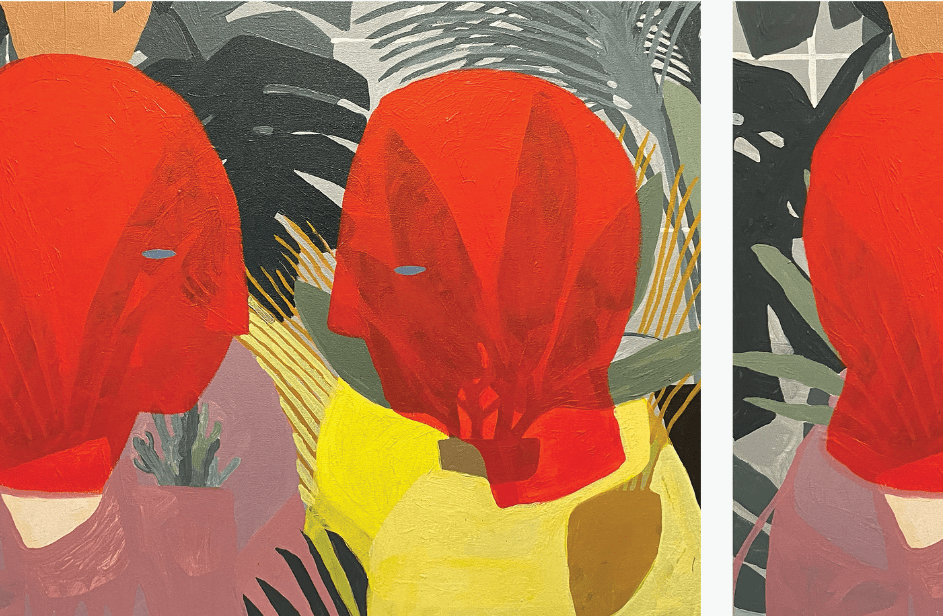
Yet, as another viewer remarked to me, there are also more serious themes. The painting “Black Cat” depicts a mother’s difficult daily life, and “Crocodile” shows a woman seated at a table, with a man’s shadow in back, and that fearsome creature behind them. There is also “Fire Heads,” two red heads in opposition, which brings to mind an argument.
The style is interesting. I was reminded of Picasso and Modigliano’s primitivism as well as Viljandi’s own Paul Kondas, the godfather of naïve art. But Kangilaski herself can’t say exactly what style it is or what inspired it. “I’m especially inspired by different arrangements or compositions that happen appear before me,” she says. “And I have always loved colors,” she adds. “Inspiration is drawn from everything around me.”
Kangilaski agrees that the current colorful exhibition does leave one feeling as if they’re in the jungle. And in the jungle, one can experience all kinds of emotions. The artist has even considered bringing some palm trees to the gallery next time she has an exhibition and I have agreed in principle to help her move them. When she is not out looking for palm trees in Estonia, Kangilaski paints on. As an illustrator, she is just about to begin a new book project.
An Estonian version of this review appears this month in the Estonian magazine Edasi.
COLDPLAY WERE BOOKED to perform at the Viljandi Folk Music Festival. And not only just perform, but to headline it, with their concert scheduled for the festival’s last evening. I’m not sure whose brilliant idea this was, but I suppose that after NÖEP performed in the same slot in 2025, the door was wide open for the likes of Coldplay and their “Adventure of a Lifetime.”
I was in the press office as usual right before they went on, but an older amber-haired woman, whom I understood was my wife, was there with me. She was a steadfast supporter of the band and had bought Parachutes after “Yellow” started getting played on MTV. But she wanted more than just to see Coldplay play Viljandi. She wanted me to make love to her during the concert. This seemed to be physically impossible: where would we find a proper spot? Her solution was an old ironing board. “See, I’ll just put my elbows here, like this,” she demonstrated to me during a break in their sets. “And then, when they play ‘Yellow’ and it peaks you can take me from behind.” “You’re crazy,” I told her. “I’m not having sex with you during a Coldplay concert!”
While we discussed the matter, Chris Martin led the crowd in a singalong of one of their blasé, forgettable songs. Not from the earlier catalogue, some album track from 2015 or so. The entire band, including Martin, wore those rain ponchos that are so popular at Folk, and it was raining. The band reclined on an old beige couch, plucking their instruments, tapping their drums, while Martin held up an umbrella and sang. Visually, it was stunning, but the music still didn’t find its way into my heart. Meantime my wife was demanding that I help her to climax during “Yellow.” I felt alone there standing next to that ironing board. “Please,” she whispered.
***
While all of this was happening, Klaudia was waiting for me on a beach. She was wearing a red swimsuit that highlighted her ample bust and the salt from the sea had teased her hair into a bouquet of sunshine. She was wearing sunglasses and saying, “You are going to have to choose, you know. You are going to have to choose between her and me. You must choose between her and me.” I could see myself reflected in Klaudia’s sunglasses, which meant that I was on the beach even though I was at the festival. “Which of us two will you choose now? Which one?” Grains of sand were in my eyes, grains of time, the sky above was pastel blue.
***
I guess I caught the rest of Coldplay’s performance. I remember Chris Martin took his shirt off, only to reveal his body had been tattooed in Celtic symbols. Before the encore, he also came over to me on the side of the stage and asked me how they had done. I told him it had been a wonderful show. Later, The Who came on, as a special mystery guest, and began to warm up the crowd. Keith Moon told me that if I wanted to hear their set better, it would make sense to go up one of the towers on the edge of the stage. That way my ears wouldn’t bleed when they were done serving up Maximum R&B. Up the steps I went. When I got to the third floor of the stage tower, I found myself in a room full of Estonian women dressed in traditional costume, with red headscarves. One of them was a younger, dark haired woman whose name was Mai. I knew Mai from the streets of Viljandi. We had shopped at the same Konsum.
“What’s wrong with you?” Mai said. Her gray eyes peered out at me from beneath the red scarf. “You look as if you’ve just seen a ghost.” “Two women are after me,” I said. I felt an outlaw bandit or robin hood. Always on the run from women and ironing boards. Then, glancing down at her in her red skirt, I asked, “Can I hug you?” “Muidugi!” she said. “Of course, you can!” “You mean you’re not afraid of me?” Mai just embraced me, warmly, softly. She was a robust, loving country woman. She helped take the pain away. “Why should I be afraid of you?” she said. “Besides, it’s not my fault I’m so sexy and young!”
After that, I think we kept on hugging. I held onto Mai like she was flotsam from the Titanic. The Who played their set.
I WAS INVITED to give a talk at the new community center in Tartu, across from the Lõunakeskus shopping center. There I stood, in a small modern classroom, lecturing on the fate of the Eastern Algonquians to a small class of perhaps a dozen curious Estonians, an American flag hanging in the corner, when a middle-aged man who looked like Flava Flav in a blue jumpsuit walked in and began shouting slogans. “We have to get behind Trump!” he said. “To own the libs and end woke!” The students backed away, not knowing what to do. Then in walked Obama, calmly, coolly, boldly. He stood at the center of the classroom dressed in desert khakis, like a soldier from Operation Desert Storm and said, “Please go ahead with your presentation. I for one found it to be most informative and, in my opinion, quite patriotic.”
After Obama and the man who looked like Flava Flav left, I walked home, whistling, hands in my pockets. How could it be that Obama was in Tartu? What was he doing here? Later I found out that, under pressure in the US from the Trump administration, the Obamas had decided to rent a house on the periphery of Tartu. Obama had been to Estonia several times and found it a most welcoming place. He was particularly impressed by its sauna and singing culture and enjoyed a mouthful of moose pasteet. Obama and Michelle would cycle to the market in the warmer months to inspect the eye-watering array of cucumbers, tomatoes, and berries. In the cooler months, Michelle would fill her basket with handfuls of glorious chanterelle mushrooms and prepare at home for Obama his favorite dish, chanterelle sauce with potatoes, laden with dill. Obama would smack his lips. “Michelle, baby,” he would say, wrapping an arm around her waist. “You’re the greatest woman who ever lived. This kukeseenekaste is just perfection.”
The Obamas became a fixture of Tartu life after that. Somehow, even though he was from Hawaii, or Indonesia, or Kenya, or Chicago, or wherever he was from, he fit right in to the city’s free and inventive-thinking population. He would wave at university students as he rounded the turn onto Kroonuaia Street, his arm lifted joyously in the air. He took part in fencing matches at EÜS. Michelle could be seen at H&M in Kvartal, digging through the sock bin, or weighing deals on cosmetics at Tradehouse and Douglas. They were true Tartu lovers.
Then it so happened that I was dispatched to the house of a soothsayer or witch on the opposite side of the River Emajõgi, set back deep in the pine and birch forests. I went there to undergo something called constellation therapy. When I got to the house, a white colonial built at the top of a hill, something immediately felt off. It was winter by then, the snow hardened and iced over, and there was an eerie stillness, even in the light of a February day. The front door to the house was ajar. As I approached it, I began to hear the cries of wolves coming from the woods. Not knowing what to do, I went inside. Its interior was full of expensive lifeless furniture, the kind that wealthier people acquire not knowing what else to get. White couches and dark wooden tables. Some tasteless art beside the cold fireplace.
At its back though, I encountered an old university friend, Chas Flaubert, an architect from Charleston, South Carolina, who had gone to high school with Stig, an Estonian expatriate. Small world indeed. Chas informed me that, during his time in South Carolina, Stig had lived his life as a gay man, but had a sort of reverse coming out experience, suddenly discovering at the age of 20 or so, that he was a robust heterosexual, and that he only had feelings for women. After that, the posters of Fabio, Madonna, and Ricky Martin in his teenage bedroom came down and were replaced by pinups of Farrah Fawcett, Sally Field, and Miss Cheryl Tiegs. “I’m not sure how that happens,” said Chas in his molasses drawl, while puffing on a marijuana cigarette, “but that’s the truth.” “It’s very funny, because Stig is probably the straightest hetero I know,” I said. A suave, one-man nightclub variety show act nicknamed “the gray fox” for his striking hair, Stig Sandbrook was known to have lain with women from Lake Tamula to Lake Titicaca. “He’s more hetero than hetero,” I went on. “Do you mind if I hit that joint, Chas?”
Our conversation was interrupted by the howls of the wolves. Looking out the window, we could see three or four of the shaggy sinister beasts beat a line toward the backyard. “We’re done for,” I told Chas. “Once they get inside, they’ll eat us all for dinner!” We stood there at the windows, awaiting our certain doom. There came a loud crackle and a kind of zipping sound. One of the wolves toppled over, then the next. After four crackling sounds, they were all dead.
It was then that I saw who had shot them. Obama descended the slope in winter hunting gear, rifle in hand. He waved to us. “God bless that Obama,” said Chas. “Where would any of us be without him?” “In the belly of those wolves,” I replied. Obama whistled and a flatbed truck came down the slope. With an Estonian friend, he loaded in the wolf corpses. After sharing a smoke with the driver and some chit chat, Obama climbed into the truck and they drove off.
THE FIRST BUS dropped me off in the center of the city, somewhere near the New York Public Library. There were a lot of people there, I think there had been more demonstrations against the government. I could see the blue uniforms of the police and the street camoflage of the federal agents. The air smelled of tear gas and fries. Somewhere, a Salvation Army Santa Claus was ringing a bell. Out of this mess of faces and catastrophe, Celeste and Berglind emerged, both walking in the same direction, which on the real map of Manhattan would have been toward Bryant Park, but here became a sort of long, white corridor that led back to their apartment in a sparkling white dormitory. Along they sauntered, in a carefree, unfazed way.
“If you want, you can stay at our place,” said Berglind. “That way we can play all night.” Celeste and Berglind were about eight or 10 years younger than me, but seemed much younger now, in their colorful Moomin pajamas. Each dragged along a dolly and yawned as they did it. Celeste looked especially lovely with her chunks of curly red-gold hair. At some point, midtown Manhattan turned into Kalamaja. When we got to their apartment, I had second thoughts. I looked at the two women with their pajamas and dollies. They looked like little girls. I was too old now to spend the night with them. I had my own bed and that’s where a man like me belonged. Besides, I figured Celeste and Berglind would have a better time together without me.
I kissed them both goodbye.
On the way home, I stopped to think about Celeste. I leaned against a bank façade and thought of how I had missed her in my bones, in my soul, in my blood. Years and years had gone by, and nothing seemed to rid my spirit of hers. A thousand blurry kisses in a thousand blurry doorways couldn’t wash her residue away. She was stuck to me like salty barnacle grime. Nothing to do about it but leave her be with her dolly and her friend and her dormitory room. I kept walking through the city, until I saw something unusual on the next street.
My daughter was there and she was standing outside a second bus. My eldest daughter, who I hadn’t seen in ages. She was about 18 years old now and wearing a blue top and her hair was back in a ponytail. Beside her, there was a tall blonde girl, about the same age, dressed in about the same way. Her name, she said, was Oksana, and she was from Ukraine. My daughter and Oksana said they had stolen this second bus. I had no idea why. They didn’t know either. “The thing is,” my eldest daughter said, while biting her lip. “Neither of us even knows how to drive a bus!” I observed the vehicle from head to end. It was a vintage blue bus, probably made more than half a century ago by some Swiss or German manufacturer. What was it doing here?
I climbed the steps to the spacious driver’s chair, took a seat behind the wheel, which was so big it looked like it could have been used to pilot the Titanic. I felt a little like Captain Smith. My daughter and Oksana got on, and soon we were cruising along while Tallinn became New York again and Tööstuse Street turned into Amsterdam Avenue. I didn’t even bother to wonder where I was anymore, or where I was going. Where we were going. The windows were open and the sky was a dense, otherworldly gold and pink. The wind was in our hair. I felt just fine.
AT SOME TIME IN THE 1920s, a small contingent of Estonians arrived on the shores of British Columbia and set up a trading post on a rocky island off the coast, somewhere between Vancouver and Vancouver Island. The Estonians befriended and intermarried with the Coastal Salish people, and the city of New Tartu was constructed at the head of a clear, deepwater bay. The whole island was renamed New Estonia.
This amused old Estonians to no end, as not only was Estonia pancake flat (mostly), but Tartu was a river city, not a seaport city. But if Halifax, a country town southwest of Leeds, could in the new world be remade into the pearl of Nova Scotia, so too could New Tartu become a busy port, with cargo destined for the dockyards of Singapore, Tokyo, and Freemantle, Australia.
It was there, at New Tartu Regional Airport, that our Air Canada plane touched down and I disembarked after a long trip abroad. At the airport café — a brightly lit place, made out of fresh pine — I went to buy a riisipirukas and coffee, but discovered that my wallet had disappeared and my old 2018 Samsung phone, which I had pledged to use until it broke down, had at last disintegrated. The screen had come unglued and the frame had frayed. There was no way to pay for my food and there was no way to pay for a taxi for the ride back home.
I convinced the Bolt driver that my wife would pick up the tab when we got to the house, but when we got there, she was livid with me. “What kind of man uses the same phone for eight years?” she scolded me. “You always expect me to bail you out. Here,” she said, paying the driver. The children were sleeping on the floor in the kitchen when I came in and I was so tired that I went to sleep right next to them on the gray carpet.
***
Sometime later, I took my two oldest daughters to Montreal. We went to visit the old brass foundry that my great great grandfather, Aloysius Desjardins, had run in the city, only to learn that all the old houses along Cadieux Street had long since been demolished and taken over by red light district brothels, Chinese restaurants dangling roasted Peking ducks, and UQÁM.
Cadieux Street was now a canal, and there was an elevated train that ran above it, so that we stood along the manmade waterway, its murky waters fed by the Fleuve Saint-Laurent, waiting for the elevated train to take us back to our bed and breakfast, which was somewhere in an apartment block nestled in the sprawl on the opposite side of the city. Just then, I told my daughters, “If we’re in Montreal, we might as well go visit the graves of my great great grandparents Aloysius and Oona Desjardins. They’re buried in Mont-Royal.” My older daughter shook her head. “I didn’t come all the way to Montreal to go and visit dead people,” she said. “Yeah,” affirmed my second daughter. “Who cares about Canadian cemeteries and dead Québécois?”
They were right, but I still tried to sell them on the excursion. “Mont-Royal is a very trendy neighborhood, girls. There are a lot of crêperies!” They weren’t having it. What I think happened after that is that they went back to the bed and breakfast together and I decided to go visit old Aloysius and Oona Desjardins alone in the cemetery in Montreal. I don’t remember ever getting there though. The next thing I knew, I was waking up on Toomemäe in Tartu, the real one in Estonia, face down in the January snow. The snow had a refreshing, minty taste.
***
I wondered if I had been assaulted. Maybe someone had struck me on the back of the head and that’s how I passed out? Or maybe this was what had happened before? Is that how I lost my wallet? How Mont-Royal and Toomemäe had been fused together was beyond my powers of comprehension. Or perhaps we were still in Montreal, and Estonians had settled here too? It looked remarkably like Toomemäe though. Kristjan Jaak’s statue was over there, the cathedral ruins were visible through the icy mist. I began to hear voices, two boys talking in Estonian, and I hid behind a small snow dune until they passed by. Then more Estonian boys came, on skis, sleds, snowboards. I was amazed by the gusto with which they approached their descents. Down they went, flying high through the air, landing fine, crying and whooping in celebration.
I began to stroll toward Näituse Street, where it terminates at Kassitoome, and there discovered a small, familiar cottage, built halfway into the hill. Inside, a blonde Estonian woman was baking bread. She was wearing an old-fashioned apron and I could have sworn we had met before, but her name eluded me. No doubt, she was a Liis, Triin, or Tiina. She had lovely golden hoop earrings that dangled in the light of the kitchen. Who was she? She seemed to know me just fine. A moment later, we were joined together on the kitchen floor. When I raised my head, I could see the loaves of black bread rising in the hot oven.
I said something awful like, “I am going to now do to you everything I have ever wanted to do,” and she looked up over her shoulder and said something wonderful like, “Yes, please. Please do everything you have ever wanted to do to a woman with me.” This is what she had been waiting for in her heart. She had been yearning for just this kind of trouble. It was like the sweet and yummy cloudberry jam at the bottom of a cup of Alma yogurt. “Please,” she said again. “Please be as horrible with me as you wish.” And that’s how that part of the story ended, on a Tartu kitchen floor. Or were we in Montreal? Had I passed through a time loop in that cemetery? The Estonian woman sighed such musical sighs. Such sighs of kitchen ecstasy. The black bread loaves kept rising.
I WAS DISPATCHED to cover the Greenland Summit, which would take place in Narva, Estonia, of all places. Delegates from the Kingdom of Denmark, the autonomous territory of Kalaallit Nunaat, the Republic of Estonia, and the United States of America were to descend on the old castle of Narva to feel each other out. At the last moment, it was announced that Vice President Vance would also be joining the Narva Greenland Summit. I drove up there through the pines of Ida-Virumaa and parked my car at the foot of the ancient fortifications.
But it was here that I encountered Els Stenbock, the poetess and repeat winner of the annual Lydia Koidula Prize, as well as the recipient of much Estonian Cultural Capital largess. She was sprawled out on a knit blanket in the snow by the castle, eating an apple and reading a book, clad in a light blue summer’s dress. “Oh,” she said, cocking an eye at me. Her amber hair was braided and her fair skin shined like the snow. The cold wind lifted her dress. How she wasn’t cold when yr.no, the Norwegian meteorological website, had predicted temperatures of -15 degrees Celsius was hard to understand, but she looked as lustrous as a patch of summer sunflowers. “Come here,” Els Stenbock said. “Let’s read some of Koidula’s poetry together.”
Soon we were kissing, long, sumptuous, lingering kisses. I had forgotten all about Lars Løkke Rasmussen, Marco Rubio, and JD Vance. But Els Stenbock was not satisfied with me. “Next time we meet in Narva, you should really wear some clean socks,” she said. “I’m sorry, I didn’t know I would wind up kissing the best poetess in Estonia today.” “Mmm,” she said. “But your socks should always be clean, just in case you do.” Didn’t she have a husband? Or at least a domestic partner? But these Estonian women, they knew no loyalties. They were only loyal to their present whims, how they felt at that moment. She felt like this. “Kiss me more,” Els whispered. Her light blue eyes attained a kind of supernatural effect. “More, more, more.”
Supposedly there was also a farmer’s market taking place in Narva, to coincide with the Narva Greenland Summit. But I could not find it. I walked along the river later and turned up a road, but when I got there, I only found dilapidated farmhouses and it was getting dark already. This area by the river scared me, not because of the risk of being kidnapped by marauding Russians, but because it supposedly was stalked by a werewolf of some kind, which had devoured several pedestrians. Up the hill, I saw some lights by the old Lutheran church, and headed up that way, expecting to find the market. Maybe they were also selling Narva Greenland Summit merch? But when I got to the church, it was empty and there was no one there at all. There I stood, watching the flakes tumble down. Slowly, slowly the snowflakes fell into winter bleakness.
At the foot of Narva Castle, Els Stenbock was still waiting patiently on her blanket. She had a little picnic basket with her. Some Russians or Ukrainians were milling around nearby, and so I went over to them and asked about the Narva Greenland Summit farmer’s market. To my surprise, they responded in Estonian, but said it was being held in an adjacent town. Maybe Narva-Jõesuu. I returned to the poetess and lied beside her. “Is it true that you got all of last year’s cultural capital budget?” I asked. “To publish 10 volumes of poetry?” Els looked up at me with her hungry blue werewolf eyes and said, “Shut up and kiss me, lollpea. More, more, more.”
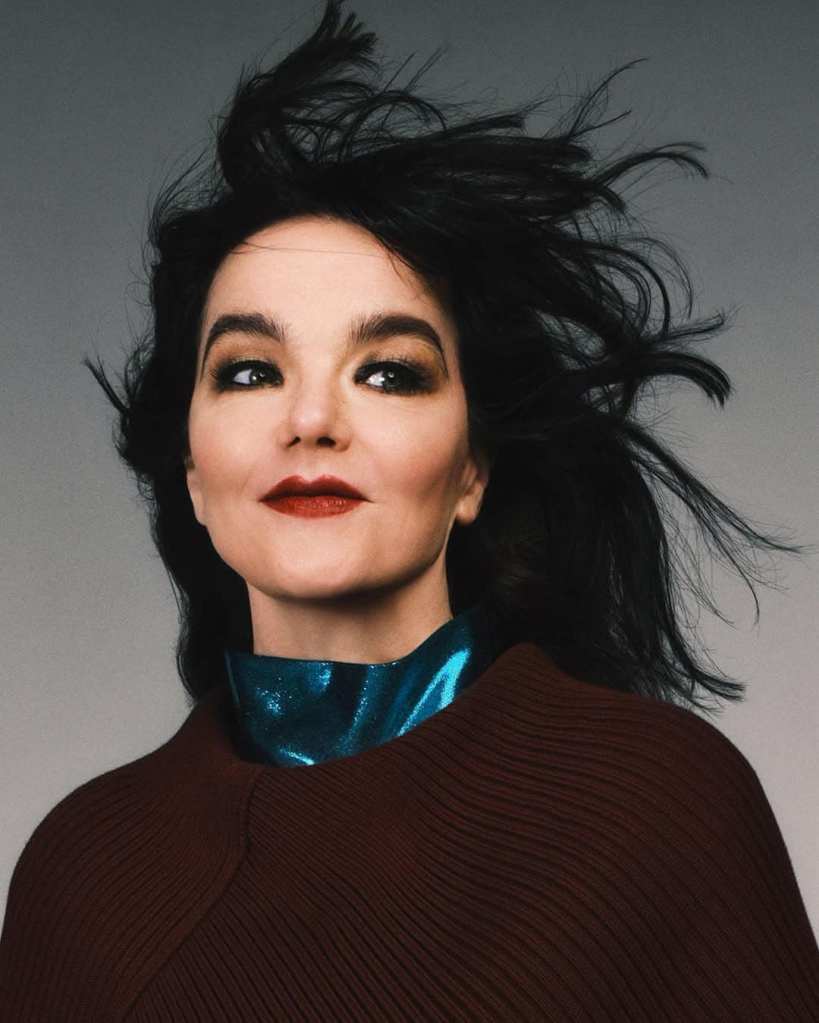
RECENTLY, AN ICELANDIC SINGER by the name of Björk Guðmundsdóttir turned 60. Her birthday is the day after mine, which is why I know. We’re similar in that way, although she is 14 years older than I am. When I appeared in this world, she was already out in the streets of Reykjavik partying with other young Icelandic punks. When I turned 14, she released her debut solo album, which was named … Debut.
I’ve always felt that we were from the same generation, only that she is from the older part of it and I am from its last dregs. Which means that anything that happens to her will eventually find its way to me.
If Björk can turn 60, I might be headed for the same kind of fate.
There are plenty who have recently surpassed 60. Keanu Reeves is already 61. Brad Pitt is still, as of my writing this, 61. Johnny Depp just turned 62. How can it be? I think. Johnny Depp could retire soon? But he didn’t he used to be youthfulness itself?
For my generation, the stars of the golden sixties have always been old. They always belonged to another time. Mick Jagger has always been old. Even if he is a bit timeless, whether he’s 46 or 82 (this summer, Jagger will turn 83). He better be older than me, because I just turned 46!
It’s as if those stars of the sixties were born when dinosaurs still roamed the earth. A time before man had arrived to the cosmos. When rock and roll was something completely new, even in America. For my generation, their youth always seemed abstract. They didn’t even have black-and-white television when they were born!
I once met with the Icelandic scientist Kari Stefansson, who reminded me that when he was born in 1949, there were still houses in Reykjavik that had sod roofs. Maybe it was something like my generation’s internet-free childhood. It’s hard to describe it to the teenagers of today. They understand, theoretically, that once upon a time, there was was no internet, but it’s still hard for them to fully imagine how it could be possible.
But yesterday’s youths are now turning 60. Björk, Keanu, Brad, Johnny. For those of us getting closer to 50, like myself, it’s somehow refreshing. Because today’s 60 year olds are so active. They are planning new movies and putting out new albums that are full of new and fresh ideas.
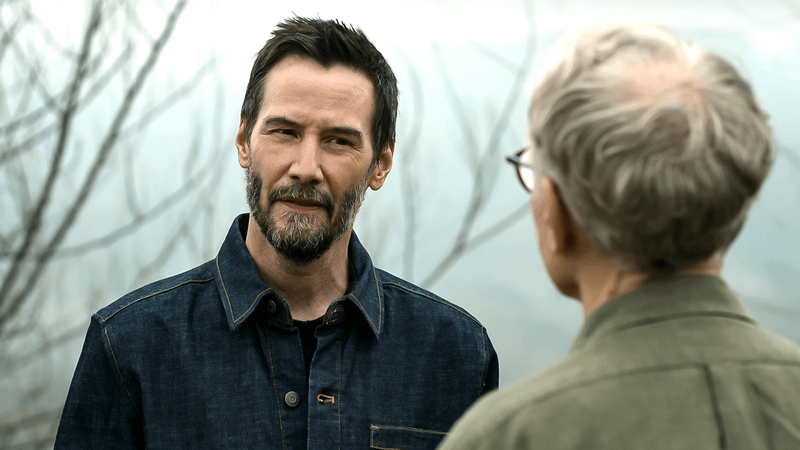
I recently watched the Netflix series Ancient Apocalypse, which tells of various theories of history. And there he was, Keanu Reeves, a special guest. He’s not some slouching old geezer. Quite the opposite, he appears to be in excellent shape. I thought, “I would like to be like that when I turn 61. Alive, in good shape, open to the world. Curious, smart, creative. And hopefully still not bald.”
According to the Cult of Youth, youth is the sweetest part of a person’s life. When we get old, we’re supposed to sit around a table and talk about our youths. And nothing else interesting happens to us. But from our cultural idols like Keanu, Björk, and Brad, I have learned that age doesn’t actually mean very much. They just keep busy, no matter what year it is or how old they happen to be.
I’ve started to feel the same way. I don’t want to carry too much weight on my shoulders. I want to move forward. I have also seen how some people get to a certain level in life and then just stay there. They don’t move an inch forward. They sit there, watching TV or scrolling on their phones. And nothing changes. Time stands still. It’s as if their lives are already over, even if they still have to sit there, peacefully, for another 10 or 30 years.
Because of that, I am grateful to the current cadre, the ones born in the golden sixties, who are showing me and others the way forward, so that we also don’t get tangled up in the years.
Of course, I do look back now and then. Not with nostalgia, but to understand how we all got here. I recently wrote a novel, which still has not been published, which takes place in part in the summer of 1965 in Estonia, Finland, and Sweden. When I started writing it, I thought it would be easy. I would just have to remember my childhood from around the year 1985 and subtract 20 years. But soon I learned how different things really were. You had to wait in line at payphones, the television only showed a few channels. I thought how strange that world looked from the vantage point of today. And I didn’t really understand how things worked.
I discussed it with esteemed writer Jaak Jõerüüt. He finally got tired of my questions and advised me not to even try. “Imagine that you’ve never seen water, and then I take you to the bottom of the ocean in a submarine,” said Jaak. “Then you might understand what it would be like for you to step back into Soviet Estonia in the summer of 1965.” Jaak should know. He was 17. “You should write it as you imagine it was,” Jaak continued. “That would be far more genuine.”
You can still explore the material world of that time at the Vabamu museum in Tallinn or in leafing through old newspapers. To be honest, when I first stepped foot in Estonia in 2003, there were plenty of places that hadn’t been renovated since the 1960s. Imagining the inner worlds of people is something else. What was on their minds? What were their hopes?
I understood during the project that the young generation of 1965, those who were 25 that summer, had seen the Second World War as children. They had lived through the deportations of 1941 and 1949. They remembered the death of Stalin. They had seen so much in those first 25 years of life, that it’s hard to compare their youths with another generation. The generation of Estonian stars like Ada Lundver or Eve Kivi was very different in terms of values and outlook.
I think the 1960s are remembered as being golden today because of what had happened before the 1960s, which was so terrible, severe, and ugly. It seems to me that the breath of relief that was first exhaled by the youth of the 1960s is still blowing around the world to this day.
Unfortunately, there are fewer of those young 25 year olds from the summer of ’65 each day. If a few of them could stay a while longer, that would be nice. Then we could hear more of their stories. How the poet Paul-Eerik Rummo was once a young superstar, or how before ETV there was something called TTS, or Tallinna Televisioonistuudio. Which I only know from writing my book. That was a time when everything was different, way back when in the golden sixties.
Who is Justin Petrone?
Justin Petrone (46) has lived in Estonia for a long time. He was born in New York and studied journalism and European politics in Washington and Copenhagen. He came to Tallinn in the summer of 2002, when he was still just 22. He was married to the writer Epp Saluveer from 2003 until 2016 and they have three daughters Marta (born in 2003), Anna (born in 2007), and Maria (born in 2011). He has written, at last count, 11 books and his stories have appeared in the publications, Edasi, Eesti Ekspress, Postimees Arter, Anne ja Stiil, Tervis Pluss, Hingele Pai. He works as a journalist and plays bass guitar in different groups. He has lived in Viljandi, the city of cafes, since spring 2017 and is writing there now as you read this.
An Estonian language version of this article appeared in the January 2026 edition of the magazine 60+, which is intended for older readers.



 north!