back seat

THERE SHE STOOD in her overcoat on a cold day in the countryside, surrounded by friends and family. I don’t know why I happened to be there, or why I happened to be seated in the back seat of my own car. Her husband was there, their children, and plenty of other neighbors, colleagues, employees, and diverse hangers-on. Soon there was a knock at the car door, and I opened it. “We really need to talk,” she said. I could see, through the opening to her tan winter’s coat, a white dress, almost the kind that a bride would wear at a wedding. Her strawberry hair was pulled back in a thick braid and steam came from her lips when she spoke.

I moved over in the back seat and she got in. “What do you want to talk about?” I said. “This,” she answered. Then we began to kiss passionately. We had wanted to kiss each other for so long, and the moment had arrived. Instinctively, I fondled her breasts, feeling their full heft in my hand. Her skin was soft, milk white, and I began to pull at the material. “No, no,” she said. “We can kiss, but let’s not get …” “Too late!” I said, and began licking her. She had lovely dark nipples, which stood out against her flesh. I had heard rumors about her from other women. Even they had been aroused by the sight of her in the sauna.

Just then, we heard her husband calling her name in the distance. He called to her as if he was seeking a lost dog. I could hear the echo. I kissed her again on the lips and whispered, “Go and be with your family. Don’t worry about this. From now on we shall just have this little secret.”

the adventure of the snake

I HAD AN APPOINTMENT at the salon. I was scheduled for a trim by Juula, my favorite hairdresser, at precisely 1 pm. When I arrived there on bicycle, I saw there was a line out the door and many of them were speaking other languages, one of which was certainly German and another one was probably Latvian. I am rarely able to recognize Latvian, but it’s become the default “other language” I use in such cases. Some Latvian teenagers were talking to each other and I realized I would have to wait. They were beautiful girls in puffy winter jackets.

At the door there were two other surprise guests, Rhys Jonathan and Salil, schoolmates from Sconset High. They had certainly put on weight over the years, resembling Tweedledee and Tweedledum from John Tenniel’s 19th century illustrations. Rhys Jonathan’s throat was strange though, and upon inspection, I saw that it had been sliced open during some kind of sword fight, but was sutured with safety pins, like Clancy Brown’s Kurgan character in Highlander. “Don’t mind this, old friend,” Rhys Jonathan said, gesturing at his neck. “It’s a minor wound.”

Later we went for a stroll and Rhys Jonathan and Salil updated me on their adventures, the most titillating of which was Salil’s run-ins with a snake. Salil had been cohabitating with a sort of nightmare hippie witch woman who had turned him on to prostatic stimulation using a real-life serpent. This was a tiny golden tree snake that she had trained specifically for such male-pleasuring purposes. I found the whole story unbelievable, but Salil insisted it was true and took us to his home, which was in one of those cellar apartments in an old rowhouse, the kind you find in Washington, DC, scattered around up in Dupont Circle and in Georgetown.

His girlfriend was there, her hair was matted and dry but she had not yet started on dreadlocks. She had on a black tank top and ripped jeans and certainly did look a bit mischievous and evil looking. At the same time, her sex appeal was undeniable, and I found myself wondering if, had she seduced me, might I also be convinced to undergo the snake treatment. “But isn’t it odd to have a living creature in your ass?” I asked Salil. “It’s giving me low-key Richard Gere vibes.” “Don’t knock it until you try it,” Salil said. It was hard to imagine this otherwise laidback and civil Indian archaeologist in the throes of true snake ecstasy.

His girlfriend then displayed the snake in a jar, which slithered from side to side, it’s tongue darting in the air. She never said a word the entire time we were there, but her dark round eyes had all of us captivated, especially as she paused to roll herself a new marijuana cigarette.

Just then there was a mortar attack and someone shouted out, “Russians!” A loud blast followed, a stunning light, followed by thick and harsh gray smoke. When it cleared, I could see the snake on the ground, its glass jar shattered. Its yellow skin had turned black. The snake was dead and Salil’s girlfriend had disappeared. Salil crouched over the snake and seemed moved by its loss. “It was a good snake,” he said. “Come on,” Rhys Jonathan said. “Let’s leave.”

After the war started, I returned to Viljandi, where I found three Amazon packages outside my door, one of which had already been opened. These were full of organic granola bars and small candied citrus fruits, pears and apples. Foodstuffs that would come in handy during the conflict. Some of it had already disappeared and there were wrappers strewn around. Then my daughter came out of the house, munching on something. “I hope you don’t mind,” she said. “I was hungry.” “Take the boxes and go back into the house,” I yelled. “The Russians are coming!”

My daughter retreated into the house and at that moment Rhys Jonathan and Salil arrived on bicycles with a third friend, Kutsukalli, a Dutch-born academic and lover of dogs. “Kutsukalli is an expert on Stalinist interrogation techniques,” Rhys Jonathan said. “He will help us as we organize resistance against the Russians.” I looked up at Salil, who had lost his beloved ass snake, as well as his nightmare hippie girlfriend. We knew they must be avenged and that my daughter and her hoard of granola bars must be protected. Retrieving my bicycle from the wood barn, I mounted it in a cavalier way and we cycled ahead to reconnoitre the enemy.

the best coffee in los angeles

THIS IS THE CITY, Los Angeles. But rather than being down in that sprawl that stretches across the hot desert belly of California, we were up in the impressive heights around Hollywood that somewhere connected via a patchwork of canyons and elevations to Malibu and the waves that smash against the rocks. It was here that we, after disembarking at LAX, stepped onto a train that traveled the heights. The cliffs were astonishingly, breathtakingly steep. In fact, as we were told by the train conductor, accidental falls were a leading cause of mortality throughout Los Angeles, as tipsy aspiring actors and actresses were prone to defenestration. As the train rolled along, we saw a woman tumble out of a condo to her death. I remember her black hair, the way the wind pushed against her, the sparkle of her dress.

Later I went out for a stroll, leaving the rest of our tour group behind. At some intersection downtown, I encountered Jõehobu, the elite Estonian diplomat, whom I was convinced was secretly running the state, though he brushed away all insinuations of being a deep state actor. “Jõehobu?” I said. “But what are you doing in Los Angeles? I didn’t notice you on the plane.” “I arrived yesterday,” he said. Even though it was a hot day, he still had on his sweater and his gray hair was meticulously combed to one side. His gray stubble was at its standard length. His wise blue eyes smarted behind pince nez glasses. He carried a book of Bertolt Brecht’s plays. “Come with me,” he said. “Welcome to LA! I know where we can get the very best espresso!”

So we went to a small café somewhere in the jungle of LA. An older woman was working at the counter when I placed my order in Italian, and she answered me back in a halting way. Then a man arrived, delivering my drink. He was a black-haired fellow in a white chef’s coat. Parli Italiano? I asked him. Un po, he responded. “What the hell do you mean, un po? This is an Italian café! You have the best espresso.” He then began to speak to the woman and to Jõehobu, who was already sipping his coffee at the bar. He was speaking to them in Estonian. “Don’t you know we’re in the Estonian House?” Jõehobu said. He was reading a two-day old edition of The Los Angeles Times. “But you said they have the very best espresso.” “They do,” he said. “Just try it, man.” I stared down into the black liquid and lifted it. “This better be good,” I said. Jõehobu only nodded. “Trust me. Why would I lie? This is the best coffee in Los Angeles.”

‘the bat is in the tree’ by stuart ironside

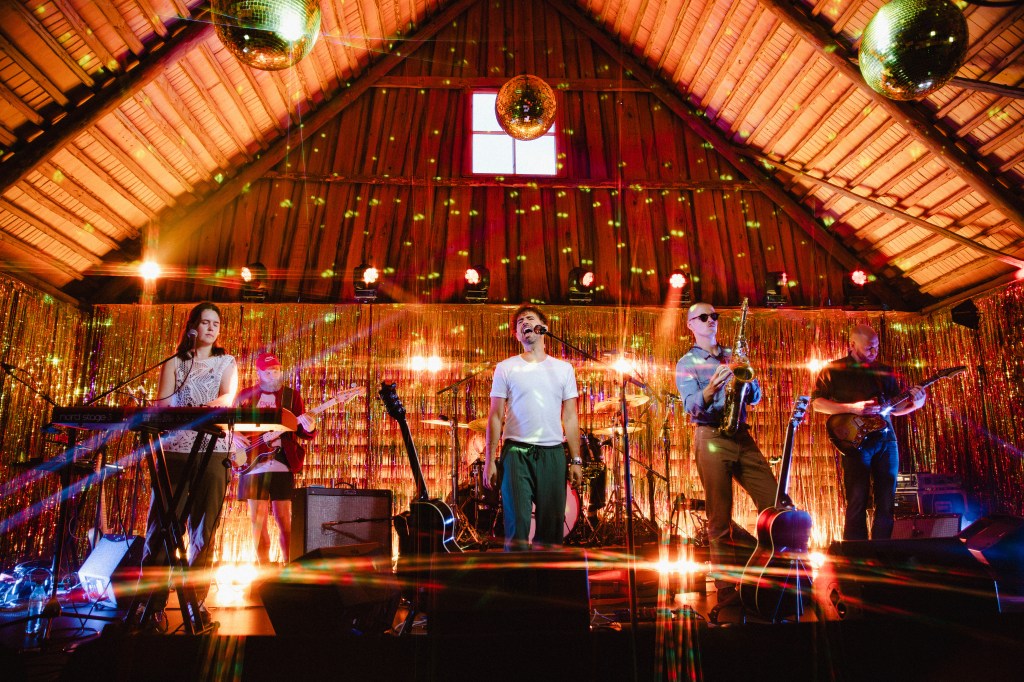
AND NOW FOR SOMETHING COMPLETELY DIFFERENT. I had the good luck to see the guitarist Stuart Ironside perform at the Pärimusmuusika Ait in Viljandi, Estonia, at the very end of November. This is the one song that I took home with me, or the one that wouldn’t leave me alone. There it was, watching me. It was hovering and flitting around me like …

… like a bat in a tree.

Ironside — yes, that’s his real name — is originally from Oxford and came up playing classical music, Oasis, and Radiohead like a loyal Briton. But he’s since ventured into something that might be called “minimalist ambient meditative guitar.” In particular, he’s drawn, especially in Estonia, to being in the presence of and reacting to nature. He goes out into the woods with his instrument and listens to the trees talk and he talks back at them with his strings. There’s an almost monastic devotion to this experiment, as he communes in his sensitive, musical way. As such, the forest sounds on this recording, available on his new record Music from Somewhere Else: The Enclosure, were recorded in Vääna-Jõesuu, a beachside village to the west of Tallinn. Ironside recorded “The Bat is in the Tree” and other songs in a sauna there. This is not music designed to sound like something. It is that something, captured in the raw.

Ironside made a first attempt at the song in London in 2023. “I had the main riff at the start of the song for a few months, but didn’t know where it would go,” he recalls. “I refined it over a few years and live performances, with an emphasis on trying to ring as much emotion out of as few notes as possible.” Ironside also tried to emulate West African lutes like the xalam and koni for “The Bat is in the Tree,” but also drew upon both British and Estonian folk. The result is a satisfying and pretty listening experience. This is the kind of music you listen to at the start or end of the days, when you put your legs up on the bed, breathe out, stare at the ceiling and close your eyes, trying, perhaps in vain, to forget the tiring agony of the world.

middle america

I TOOK A GREYHOUND, deep into Middle America. Through green hills, corn fields, byways and highways. For whatever reason, I was heading for Wheeling, West Virginia. From there, I was supposed to connect to a bus that would take me to Reading, Pennsylvania. However, I believe my departure point was Portsmouth, Virginia. At least that’s what it said on my ticket.

When I got to Wheeling, I disembarked and decided to go for a stroll. We had about a two-hour layover in West Virginia. I came up the main drag, there were small crowds of men and women standing around, as if they were all unemployed. They were dressed as if it was still the 1930s, and the place had a Great Depression feel. Their trousers and skirts flapped in the wind.

Walking along those streets, I remembered that there was a mass shooting in America almost every day now, and that it was best not to get too close to large crowds of people. Instead, I walked by the facades of buildings, always thinking of where I could hide myself if there was an active shooter. The First National Bank had wide columns that would make a fine hiding place.

Somewhere up ahead, I turned left, along an old river canal. Here the bridge was badly in need of repair. There were clumps of dark weeds sprouting up through the cracks in the sidewalk. There were some old garages and shanties along the canal, and when I peaked inside one, I could see Americans sleeping on the dirty floor, maybe half a dozen to a dark room, in sleeping bags and old cots with their mouths ajar. They all had those rosy Normal Rockwell cheeks.

I came back to the bus station, thought I might get a bite to eat before the long bus ride to Reading. A woman came out of the station at that moment, heavy set with short brown hair and said, “Hey, I know you. We bought your book when we were in Tallinn last summer on a cruise!” “You did?” I said. I was suspicious. How could it be that people in Middle America knew who I was? “We all know you,” she said. “We’re all fans of Estonia. It’s a lovely little country.”

pärnu police

AN ARREST WARRANT was issued for me due to an unpaid parking ticket in the Pärnu Beach area. I went to the police headquarters and turned myself in to await the outcome, and was told to head downstairs. The punishment would be about a night’s incarceration, and I figured there were worse fates than to spend a night in a Pärnu jail in December. While not a deluxe Danish facility, they had comfortable bunk beds, and surely I could get some reading done.

Once I got downstairs though, I discovered that there was no one there and nobody came. After about half an hour of waiting, I decided to leave the building. Again, nobody was watching me as I walked off toward the Port Artur shopping center, where I ordered some Hawaiian food from a very complex menu. “Did you want the spam with plain rice or with fried rice?” the woman at the counter asked me there. For reasons unknown, my parents were with me and they also wanted some Hawaiian food. My father was glum about the whole police situation. “You know you’re going to have to go back to jail,” he said. “It’s only a matter of time.”

Later, I went with my family to a new adventure park that had drawn upon East Coast maritime themes. There was an old whaler’s church, for example, and a series of Algonquian wigwams made of fresh birch. My wife and I went into the picnic area with our children and had something to eat. By this time, I had forgotten all about the Pärnu police and that they wanted me to do hard time for the parking infraction. But then a police officer turned up at the adventure park and announced my name through a bullhorn. He said that I had to return to Pärnu police headquarters at once, that I still needed to serve out my one-day sentence.

Not knowing what to do, I kissed my family goodbye and headed toward the tip of the peninsula, where I found my old friend Annikki selling crafts at a fair. She was there and her mother Liivika was there, and her three children were climbing all over her. I bought a coffee from a vendor and complained loudly of my plight to some Estonian journalists I knew, one of whom had been just recently posted to Kyiv, and so had seen far more in his time than I had in mine. Here was a man who has seen the charred bodies of drone attack victims, and I was crying about spending a night in the Pärnu police station. “Your father was right,” he said, while biting into a powdered donut in the concessions area. “You have to go back to jail.”

Just then I noticed some police officers approaching, and I took Annikki by the hand. We hid beneath a blanket, and I watched her breasts rise and fall with her breath. She was wearing a skirt and a black top. Annikki smelled quite nice, maybe of lavender, and I was surprised that I had never noticed her scent before. Her mother Liivika came walking by and noticed our legs sticking out from beneath the blanket. “What do we have here?” she said. “We’re just talking about Annikki’s handicrafts business,” I told her. Annikki was happy to hold my hand, but just that. She wasn’t ready for any below-blanket hanky-panky. “I expect much more from a man than holding hands below a blanket,” said Annikki. She had very blue eyes and very platinum hair and was very beautiful. “Especially a man who is being pursued by the Pärnu police.”

They started to pack up their wares from the festival and Annikki was loading boxes of goods into the back of her car. They were set to go to Tallinn to another festival. Her children were climbing all over a nearby playground like happy woodland squirrels. I kissed Annikki on the cheek and began walking along the bluffs overlooking the seashore toward the bus station. I came down long, sandy lanes dotted with pines and hedges. At the intersection of two streets, a young man was out selling a whole house full of handwoven traditional baskets. It was really just the bones of the house filled out by long shelves, stacked up with his goods. I tried to take a picture of it, but by the time I got my phone out, he had begun putting the baskets away.

I looked down at the sea and noticed how strange the coastline looked. There were large underwater knolls in the water, and I could see how vegetation had grown up and down the sides of these features, and how little whirlpools had formed between them. Down the way, I came into a seaside tavern, and then was ushered into a back room, where a group of Estonians had assembled to sing traditional songs. They began to sing together and as they did, I looked through my bag, only to realize I had left my journal with Annikki! My prized journal, full of all of my darkest secrets, brimming with compromising material. I left the singing room and called her at once. Annikki picked up. “I know everything now,” she said.

“For your own sake, please don’t read any more,” I told her. “I’ll come up to Tallinn to retrieve it. Just don’t read any more of my journal.” “I saw what you wrote about that girl,” she said. “You said you wanted to …” “Oh, this is just horrible!” I said and hung up. What a day, pursued by the Pärnu police and now a missing journal? At the tavern I was approached by some Indian students, three or four of them. “Don’t you recognize us?” one of them said. “No,” I answered. “We’re studying at TalTech, you wrote an article about us last year.” “I did?” “Yes, it was about our new steam apparatus.” “It was?” They all looked at each other. How could this journalist have forgotten everything in so short a time? “Are you okay, man?” one asked. “You don’t look so good. Let us buy you a beer!” “It’s the Pärnu police,” I said. “They’re after me.” “Even more reason to start drinking,” one of the students said. The singing room was just letting out and one could hear the lovely chiming sounds of kannel music playing gently in the background.

klaudia’s home improvement

AFTER I ELOPED with Klaudia, I was thrust into a home improvement job. I knew it was coming, it was all too expected, but at that glowing, early moment in the relationship, I was in a tender, giving mood indeed, and felt fine about sawing some wood or painting some windows. We went to a home improvement store in Estonia, which could have been Bauhof or Decora, to get some supplies, and Klaudia engaged in some friendly banter with the cashier, another woman who, like us, was inarguably middle aged. Klaudia was in a swell mood that day and she looked quite beautiful with her plume of blonde hair and red winter outfit. One could say there was an irrepressible five year old locked inside. I did admire this childlike side of her.

“And he’s going to renovate it all!” I remember her regaling the cashier, who typed all her orders up hotly with freshly manicured nails. Klaudia was standing on a chair, gesturing wildly. Someone had given her a mug of Decora coffee and she was taking tasty sips from it. At this moment, I said, “Stand right there, just like that!” I lifted up Klaudia’s red sweater and licked both of her breasts. This was done in plain sight of all the other shoppers. There was something wonderful about the contrast of Klaudia’s warm pink nipples and the harsh light of Decora. Or wherever we happened to be. Rather than feeling exposed or humiliated, Klaudia’s mood only soared. She laughed like a child and her blue eyes smarted with breast-licking joy.

“Men are wonderful,” said the cashier, typing away. “They lick your breasts and work for free!”

After we picked up our supplies from the back of the home improvement store, we went home, and Klaudia disappeared behind a door to discuss something important with her mother with whom she consulted on all important things. I looked around the room I was set to renovate. It looked as if it hadn’t been touched in 40 years. There were even old posters for Return of the Jedi on the walls. Dust on the windows, on the walls, strangling out the air. “Klaudia,” I called out to her. “Is it okay if I open the windows in here? I can’t breathe.” No response. They were still on the other side of the door. I only heard muffled voices. What were they talking about?

I began to move things out into the hallway to make room for the renovation. Slowly, devotedly. The first was a long plank of wood which might come in handy for a shelf later. I moved it out into the hallway, unfortunately scratching the old 1980s vintage wallpaper in the process. But when I set it down in the corridor, Köler, an old Viljandi dissident, turned up in his work clothes and snatched it at once. He wanted to use it for his own renovation project! Old Man Köler has been working on that pizza parlor on Tallinn Street for a decade now. I watched him disappear down the hall with Klaudia’s wood. I called out to her again, but she was behind the door, discussing something passionately with her mom. Would they ever stop?

the death of maple leaf

MAPLE LEAF was one of Estonia’s top drummers. His real name was Vahtraleht, which means “maple leaf” in Estonian, but his nickname was Vaht, which means “foam.” He was, by his 39th year, a seasoned and accomplished percussionist, who had once jammed with Tony Allen, Fela Kuti’s drummer, and Damon Albarn, albeit on congas. He had lived in several communes and had even spent a stint in Trenchtown. His hair was long and maple-colored, as was his beard, and his skin a flawless milk white. Because of this, he was nicknamed “Mormon Jesus” by some of his American friends. He played in three or four ensembles. He changed girlfriends like lightbulbs. It’s not easy to go steady with a mercurial character like Estonia’s own Maple Leaf.

But then he died. It was in a terrible car crash in Germany. Every single vehicle in the crash was German made. I think a BMW collided with his little white Volkswagen. Surprisingly, he survived the impact, but then crawled out onto the autobahn, where he writhed in pain for some time, pleading with God. “No,” he cried. “No!” Then, with a final tapping of his fingers, he expired from this life, and attained musical immortality. His was the kind of face that was spraypainted on the facades of old buildings in Tallinn, Tartu, and Viljandi. The Estonians had always yearned for their own Viktor Tsoi and in Maple Leaf, this had at least been achieved.

In honor of Maple Leaf and his dramatic end, I decided to bake a kind of maple sugar cake. I brought it into the temple that had been erected in his honor. This had been constructed in the same pattern of an ancient Indian temple. I found it incredibly sad that Maple Leaf would no longer play drums anymore. And to die in a car crash in Germany, of all godforsaken places. But nobody ate my cake at the Indian temple. I guess they were just too consumed with grief.

the musical floor

THE THIRD FLOOR of the psychiatric clinic was the musical floor. It was here that different patients were enrolled in a new kind of orchestral therapy. Nobody knew much about it, but Rory Lapp said that he just had to see it. “I think it might give me some inspiration,” he said.

Because of this, we broke into the hospital.

The first obstacle was the chain-link fence, which was easily overcome. Someone had forgotten to attach two pieces of fencing, and we slipped between them. Then came the highly guarded doors to the clinic. But an absent-minded orderly had left one of these ajar on a smoke break. We entered the building and began to climb the white stone steps. At times we were passed by mental health professionals in white coats, but they were so lost in their work, staring at the files of some patient, whether on a clipboard or a tablet, that they didn’t notice the two Estonian writers creeping around the highly off-limits clinical musical therapy ward.

At last we reached the top floor. Here the patients indeed roamed the halls, but some clenched violins, violas, and cellos. So this was the musical floor of the psychiatric hospital? And this was musical therapy? We looked around. “You know, I really have to say that I’m disappointed,” Rory said. “They don’t play or anything. I was expecting a concert.”

At this moment, an alarm began to sound to alert the hospital that it had been breached. We ran down the stairs and out a back door, into a crowd of local citizens. The back side of the hospital opened out onto the walking streets of a city that looked very much like Tartu. Police sirens could be heard nearby, and I understood that the entire hospital was being cordoned off. Lauri and I quickly stole some tan jackets from a coatrack outside of a riverside café and blended away into the crowds.

stockholm swing

A NEW FORM OF TRANSPORT, the Stockholm swing. It functioned as a kind of ski lift, except nobody was there to ski. Rather it glided along a set route through the city, like a funicular or cable car. Each swing could fit three people. Upon arriving to Stockholm, I shared my swing with Rory and Ella. We were lifted over the city, and Ella disembarked somewhere in Norrmalm to hunt for shoes for her collection. Ella owned at least a hundred pairs of shoes.

Rory had set up an interview with a local literary journalist. A young woman who must have been in her first year of university, and whose questions were delivered with a trembling uncertainty. I sat there outside a bakery with a coffee, naturally, answering her questions, as if I even knew the answers to them. The young woman wore simple, dark clothes. She had her brown hair pulled back into a ponytail. She was Swedish. I have no idea how Rory knew her.

There must have been something in my drink, because I became incredibly sleepy after that, and was invited back to the journalist’s apartment, where I promptly fell asleep on her wide bed. During my sleep, I was awakened by a bouncing, and opened one eye, only to see Rory rather aggressively making love to her about a foot away from my elbow. She naturally surrendered, letting out light, excited gasps. I closed my eyes and pretended it was a dream.

Later, after Rory and the young Swedish literary journalist had parted ways in a Stockholm street, I confronted him. “She was only eighteen,” I told him. “Just a young woman of eighteen! Consider it, a man of your age. You should be ashamed of yourself!” Rory was impeccably dressed and feigned confusion. “What are you talking about?” he shrugged, his blue eyes smarting, as if he was entirely perplexed, baffled. “It was just a bad dream. You were dreaming,” he said. “She was just eighteen,” I repeated. “A bastard like you had to take advantage of her!”

After that, I suppose you could say Rory Lapp and I had what later would be termed “a disagreement.” He went his way and I went mine. I caught a passing Stockholm swing and rode it all the way to the harbor. The ships to Estonia left from a pier near an old imperial fortress. It had long since been abandoned, but in recent years had been repurposed with cafes and boutiques. Such were the ways of effete Europeans. It occurred to me there, descending the steps toward my ship, that I had once been married, and had walked these same steps with another person. A person whom the world would have called “my partner.” But I was all alone now. Ella had her shoes, Rory had his young Swedish journalist. I just had my old knapsack.

What a sad feeling.