THE FIRST BUS dropped me off in the center of the city, somewhere near the New York Public Library. There were a lot of people there, I think there had been more demonstrations against the government. I could see the blue uniforms of the police and the street camoflage of the federal agents. The air smelled of tear gas and fries. Somewhere, a Salvation Army Santa Claus was ringing a bell. Out of this mess of faces and catastrophe, Celeste and Berglind emerged, both walking in the same direction, which on the real map of Manhattan would have been toward Bryant Park, but here became a sort of long, white corridor that led back to their apartment in a sparkling white dormitory. Along they sauntered, in a carefree, unfazed way.
“If you want, you can stay at our place,” said Berglind. “That way we can play all night.” Celeste and Berglind were about eight or 10 years younger than me, but seemed much younger now, in their colorful Moomin pajamas. Each dragged along a dolly and yawned as they did it. Celeste looked especially lovely with her chunks of curly red-gold hair. At some point, midtown Manhattan turned into Kalamaja. When we got to their apartment, I had second thoughts. I looked at the two women with their pajamas and dollies. They looked like little girls. I was too old now to spend the night with them. I had my own bed and that’s where a man like me belonged. Besides, I figured Celeste and Berglind would have a better time together without me.
I kissed them both goodbye.
On the way home, I stopped to think about Celeste. I leaned against a bank façade and thought of how I had missed her in my bones, in my soul, in my blood. Years and years had gone by, and nothing seemed to rid my spirit of hers. A thousand blurry kisses in a thousand blurry doorways couldn’t wash her residue away. She was stuck to me like salty barnacle grime. Nothing to do about it but leave her be with her dolly and her friend and her dormitory room. I kept walking through the city, until I saw something unusual on the next street.
My daughter was there and she was standing outside a second bus. My eldest daughter, who I hadn’t seen in ages. She was about 18 years old now and wearing a blue top and her hair was back in a ponytail. Beside her, there was a tall blonde girl, about the same age, dressed in about the same way. Her name, she said, was Oksana, and she was from Ukraine. My daughter and Oksana said they had stolen this second bus. I had no idea why. They didn’t know either. “The thing is,” my eldest daughter said, while biting her lip. “Neither of us even knows how to drive a bus!” I observed the vehicle from head to end. It was a vintage blue bus, probably made more than half a century ago by some Swiss or German manufacturer. What was it doing here?
I climbed the steps to the spacious driver’s chair, took a seat behind the wheel, which was so big it looked like it could have been used to pilot the Titanic. I felt a little like Captain Smith. My daughter and Oksana got on, and soon we were cruising along while Tallinn became New York again and Tööstuse Street turned into Amsterdam Avenue. I didn’t even bother to wonder where I was anymore, or where I was going. Where we were going. The windows were open and the sky was a dense, otherworldly gold and pink. The wind was in our hair. I felt just fine.
AT SOME TIME IN THE 1920s, a small contingent of Estonians arrived on the shores of British Columbia and set up a trading post on a rocky island off the coast, somewhere between Vancouver and Vancouver Island. The Estonians befriended and intermarried with the Coastal Salish people, and the city of New Tartu was constructed at the head of a clear, deepwater bay. The whole island was renamed New Estonia.
This amused old Estonians to no end, as not only was Estonia pancake flat (mostly), but Tartu was a river city, not a seaport city. But if Halifax, a country town southwest of Leeds, could in the new world be remade into the pearl of Nova Scotia, so too could New Tartu become a busy port, with cargo destined for the dockyards of Singapore, Tokyo, and Freemantle, Australia.
It was there, at New Tartu Regional Airport, that our Air Canada plane touched down and I disembarked after a long trip abroad. At the airport café — a brightly lit place, made out of fresh pine — I went to buy a riisipirukas and coffee, but discovered that my wallet had disappeared and my old 2018 Samsung phone, which I had pledged to use until it broke down, had at last disintegrated. The screen had come unglued and the frame had frayed. There was no way to pay for my food and there was no way to pay for a taxi for the ride back home.
I convinced the Bolt driver that my wife would pick up the tab when we got to the house, but when we got there, she was livid with me. “What kind of man uses the same phone for eight years?” she scolded me. “You always expect me to bail you out. Here,” she said, paying the driver. The children were sleeping on the floor in the kitchen when I came in and I was so tired that I went to sleep right next to them on the gray carpet.
***
Sometime later, I took my two oldest daughters to Montreal. We went to visit the old brass foundry that my great great grandfather, Aloysius Desjardins, had run in the city, only to learn that all the old houses along Cadieux Street had long since been demolished and taken over by red light district brothels, Chinese restaurants dangling roasted Peking ducks, and UQÁM.
Cadieux Street was now a canal, and there was an elevated train that ran above it, so that we stood along the manmade waterway, its murky waters fed by the Fleuve Saint-Laurent, waiting for the elevated train to take us back to our bed and breakfast, which was somewhere in an apartment block nestled in the sprawl on the opposite side of the city. Just then, I told my daughters, “If we’re in Montreal, we might as well go visit the graves of my great great grandparents Aloysius and Oona Desjardins. They’re buried in Mont-Royal.” My older daughter shook her head. “I didn’t come all the way to Montreal to go and visit dead people,” she said. “Yeah,” affirmed my second daughter. “Who cares about Canadian cemeteries and dead Québécois?”
They were right, but I still tried to sell them on the excursion. “Mont-Royal is a very trendy neighborhood, girls. There are a lot of crêperies!” They weren’t having it. What I think happened after that is that they went back to the bed and breakfast together and I decided to go visit old Aloysius and Oona Desjardins alone in the cemetery in Montreal. I don’t remember ever getting there though. The next thing I knew, I was waking up on Toomemäe in Tartu, the real one in Estonia, face down in the January snow. The snow had a refreshing, minty taste.
***
I wondered if I had been assaulted. Maybe someone had struck me on the back of the head and that’s how I passed out? Or maybe this was what had happened before? Is that how I lost my wallet? How Mont-Royal and Toomemäe had been fused together was beyond my powers of comprehension. Or perhaps we were still in Montreal, and Estonians had settled here too? It looked remarkably like Toomemäe though. Kristjan Jaak’s statue was over there, the cathedral ruins were visible through the icy mist. I began to hear voices, two boys talking in Estonian, and I hid behind a small snow dune until they passed by. Then more Estonian boys came, on skis, sleds, snowboards. I was amazed by the gusto with which they approached their descents. Down they went, flying high through the air, landing fine, crying and whooping in celebration.
I began to stroll toward Näituse Street, where it terminates at Kassitoome, and there discovered a small, familiar cottage, built halfway into the hill. Inside, a blonde Estonian woman was baking bread. She was wearing an old-fashioned apron and I could have sworn we had met before, but her name eluded me. No doubt, she was a Liis, Triin, or Tiina. She had lovely golden hoop earrings that dangled in the light of the kitchen. Who was she? She seemed to know me just fine. A moment later, we were joined together on the kitchen floor. When I raised my head, I could see the loaves of black bread rising in the hot oven.
I said something awful like, “I am going to now do to you everything I have ever wanted to do,” and she looked up over her shoulder and said something wonderful like, “Yes, please. Please do everything you have ever wanted to do to a woman with me.” This is what she had been waiting for in her heart. She had been yearning for just this kind of trouble. It was like the sweet and yummy cloudberry jam at the bottom of a cup of Alma yogurt. “Please,” she said again. “Please be as horrible with me as you wish.” And that’s how that part of the story ended, on a Tartu kitchen floor. Or were we in Montreal? Had I passed through a time loop in that cemetery? The Estonian woman sighed such musical sighs. Such sighs of kitchen ecstasy. The black bread loaves kept rising.
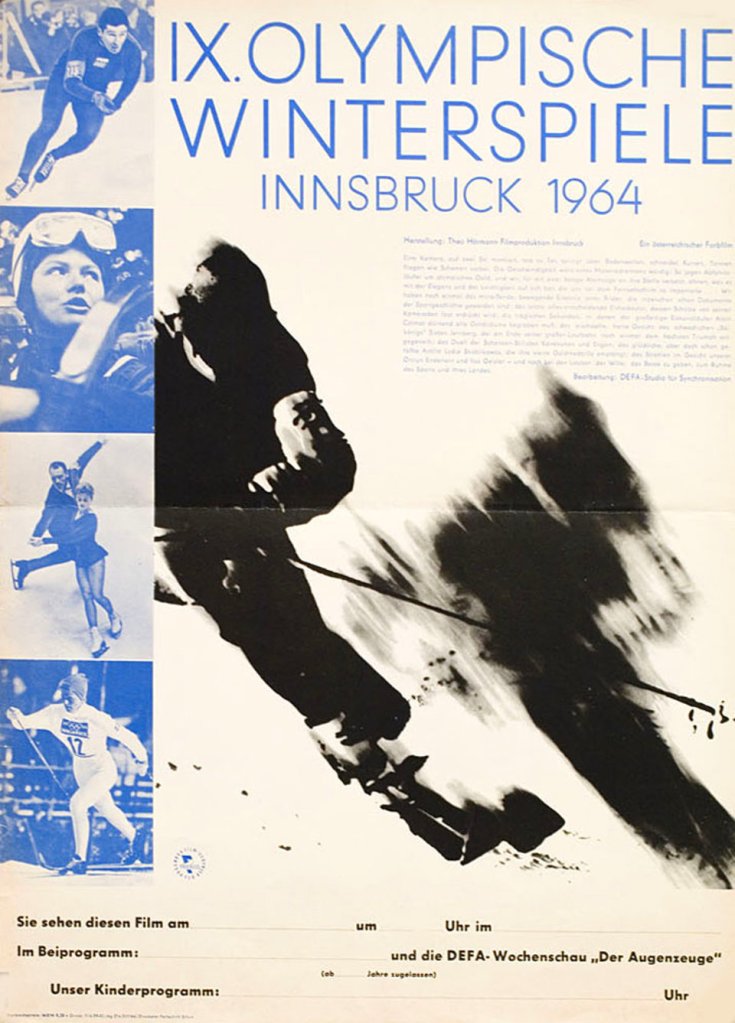
AMERICAN COUNTRY GENTLEMAN Johnny Cash was feeling particularly aggrieved in 1964 and wishing to highlight the struggles of indigenous peoples in the United States, so he recorded a whole album of songs called Bitter Tears: Ballads of the American Indian. The resulting record, released on October 1 of that year, less than a year after President Kennedy was killed in Dallas, and a month before Lyndon Johnson won a landslide victory against Barry Goldwater, is often a kind of side note. I don’t remember if it came up in Walk the Line. He didn’t mention it in A Complete Unknown either, even though it had just been recorded.
But it’s a beautiful collection, with spare, percussive musical accompaniment by the Tennessee Three, Cash’s backing band, which included Luther Perkins on guitar, Marshall Grant on bass, and WS Holland on drums. Session musicians Norman Blake, who is still alive (aged 87) and Bob Johnson helped out on guitar. The best parts of the songs are the lovely backing vocal contributions of The Carter Family. I had a hard time figuring out who was singing, but certainly Johnny’s future wife June Carter was in the lead, along with Maybelle, Helen, and Anita Carter. You can hear their sublime harmonies on “As Long As The Grass Shall Grow.”
“Custer” though might be my favorite on this record, if only for Johnny Cash’s dry and comic delivery. “Custer split his men / well, he won’t do that again.” We forget that for most of the time after George Armstrong Custer‘s defeat at the Battle of the Little Bighorn in 1876, he was considered to be an American military hero. But in the 1960s, the Lakota version of events started to win out (Custer’s widow Libbie, by the way, lived until 1933, which shows you how recent this history was.) Cash makes fine work of the legend here, though he didn’t write the song. Peter La Farge, a Greenwich Village folky regular, penned most of the songs on Bitter Tears. La Farge recorded several records of music with Native American and Western themes for Folkaways Records. La Farge died the year after Bitter Tears was released of an overdose.
Probably one of the most contentious aspects was Cash’s claim of Cherokee ancestry and accusations of being a Pretendian. On the cover of the album, his fist can be seen lifted in solidarity. Cash wears a headband, which makes him look just a little like Charlie Sheen’s character in Hot Shots. His claims of Cherokee identity were later debunked by Cash himself. He had no documented Cherokee ancestry. However, claims that he was purely of Scottish or British Isles descent are also false. A DNA test by his daughter revealed that she had African ancestry on both sides of her family, meaning that somewhere in Johnny’s “pure Scots” woodpile were some Africans. Note that this ancestry wasn’t documented either. And on Geni, at least some claim that Cash’s Hagler family from South Carolina might be linked to the Catawba Chief Hagler. So maybe Johnny was Catawba and not Cherokee. It’s certainly possible. This great record is the subject of a documentary and a tribute album too. “Custer” at two minutes and twenty-one seconds is not, maybe, the standout track, but it’s just perfect.
I remember that when Cash died in 2003, I said to a friend at that time, “But he was young, just 71 years old.” And the friend said, “But he had lived his life. He packed as much as he could into those 71 years.” I suppose after he lost June, just a few months prior, he had no reason to keep on living. But you are missed, Johnny Cash. We’re still listening to your music every single day.
I WAS DISPATCHED to cover the Greenland Summit, which would take place in Narva, Estonia, of all places. Delegates from the Kingdom of Denmark, the autonomous territory of Kalaallit Nunaat, the Republic of Estonia, and the United States of America were to descend on the old castle of Narva to feel each other out. At the last moment, it was announced that Vice President Vance would also be joining the Narva Greenland Summit. I drove up there through the pines of Ida-Virumaa and parked my car at the foot of the ancient fortifications.
But it was here that I encountered Els Stenbock, the poetess and repeat winner of the annual Lydia Koidula Prize, as well as the recipient of much Estonian Cultural Capital largess. She was sprawled out on a knit blanket in the snow by the castle, eating an apple and reading a book, clad in a light blue summer’s dress. “Oh,” she said, cocking an eye at me. Her amber hair was braided and her fair skin shined like the snow. The cold wind lifted her dress. How she wasn’t cold when yr.no, the Norwegian meteorological website, had predicted temperatures of -15 degrees Celsius was hard to understand, but she looked as lustrous as a patch of summer sunflowers. “Come here,” Els Stenbock said. “Let’s read some of Koidula’s poetry together.”
Soon we were kissing, long, sumptuous, lingering kisses. I had forgotten all about Lars Løkke Rasmussen, Marco Rubio, and JD Vance. But Els Stenbock was not satisfied with me. “Next time we meet in Narva, you should really wear some clean socks,” she said. “I’m sorry, I didn’t know I would wind up kissing the best poetess in Estonia today.” “Mmm,” she said. “But your socks should always be clean, just in case you do.” Didn’t she have a husband? Or at least a domestic partner? But these Estonian women, they knew no loyalties. They were only loyal to their present whims, how they felt at that moment. She felt like this. “Kiss me more,” Els whispered. Her light blue eyes attained a kind of supernatural effect. “More, more, more.”
Supposedly there was also a farmer’s market taking place in Narva, to coincide with the Narva Greenland Summit. But I could not find it. I walked along the river later and turned up a road, but when I got there, I only found dilapidated farmhouses and it was getting dark already. This area by the river scared me, not because of the risk of being kidnapped by marauding Russians, but because it supposedly was stalked by a werewolf of some kind, which had devoured several pedestrians. Up the hill, I saw some lights by the old Lutheran church, and headed up that way, expecting to find the market. Maybe they were also selling Narva Greenland Summit merch? But when I got to the church, it was empty and there was no one there at all. There I stood, watching the flakes tumble down. Slowly, slowly the snowflakes fell into winter bleakness.
At the foot of Narva Castle, Els Stenbock was still waiting patiently on her blanket. She had a little picnic basket with her. Some Russians or Ukrainians were milling around nearby, and so I went over to them and asked about the Narva Greenland Summit farmer’s market. To my surprise, they responded in Estonian, but said it was being held in an adjacent town. Maybe Narva-Jõesuu. I returned to the poetess and lied beside her. “Is it true that you got all of last year’s cultural capital budget?” I asked. “To publish 10 volumes of poetry?” Els looked up at me with her hungry blue werewolf eyes and said, “Shut up and kiss me, lollpea. More, more, more.”
RECENTLY, AN ICELANDIC SINGER by the name of Björk Guðmundsdóttir turned 60. Her birthday is the day after mine, which is why I know. We’re similar in that way, although she is 14 years older than I am. When I appeared in this world, she was already out in the streets of Reykjavik partying with other young Icelandic punks. When I turned 14, she released her debut solo album, which was named … Debut.
I’ve always felt that we were from the same generation, only that she is from the older part of it and I am from its last dregs. Which means that anything that happens to her will eventually find its way to me.
If Björk can turn 60, I might be headed for the same kind of fate.
There are plenty who have recently surpassed 60. Keanu Reeves is already 61. Brad Pitt is still, as of my writing this, 61. Johnny Depp just turned 62. How can it be? I think. Johnny Depp could retire soon? But he didn’t he used to be youthfulness itself?
For my generation, the stars of the golden sixties have always been old. They always belonged to another time. Mick Jagger has always been old. Even if he is a bit timeless, whether he’s 46 or 82 (this summer, Jagger will turn 83). He better be older than me, because I just turned 46!
It’s as if those stars of the sixties were born when dinosaurs still roamed the earth. A time before man had arrived to the cosmos. When rock and roll was something completely new, even in America. For my generation, their youth always seemed abstract. They didn’t even have black-and-white television when they were born!
I once met with the Icelandic scientist Kari Stefansson, who reminded me that when he was born in 1949, there were still houses in Reykjavik that had sod roofs. Maybe it was something like my generation’s internet-free childhood. It’s hard to describe it to the teenagers of today. They understand, theoretically, that once upon a time, there was was no internet, but it’s still hard for them to fully imagine how it could be possible.
But yesterday’s youths are now turning 60. Björk, Keanu, Brad, Johnny. For those of us getting closer to 50, like myself, it’s somehow refreshing. Because today’s 60 year olds are so active. They are planning new movies and putting out new albums that are full of new and fresh ideas.
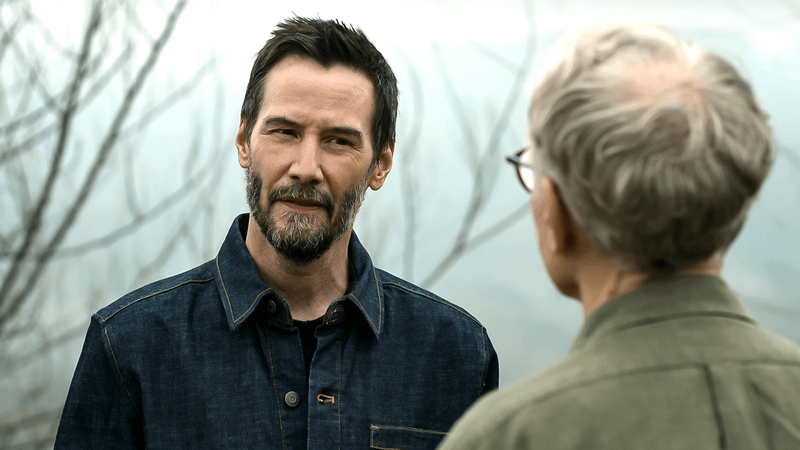
I recently watched the Netflix series Ancient Apocalypse, which tells of various theories of history. And there he was, Keanu Reeves, a special guest. He’s not some slouching old geezer. Quite the opposite, he appears to be in excellent shape. I thought, “I would like to be like that when I turn 61. Alive, in good shape, open to the world. Curious, smart, creative. And hopefully still not bald.”
According to the Cult of Youth, youth is the sweetest part of a person’s life. When we get old, we’re supposed to sit around a table and talk about our youths. And nothing else interesting happens to us. But from our cultural idols like Keanu, Björk, and Brad, I have learned that age doesn’t actually mean very much. They just keep busy, no matter what year it is or how old they happen to be.
I’ve started to feel the same way. I don’t want to carry too much weight on my shoulders. I want to move forward. I have also seen how some people get to a certain level in life and then just stay there. They don’t move an inch forward. They sit there, watching TV or scrolling on their phones. And nothing changes. Time stands still. It’s as if their lives are already over, even if they still have to sit there, peacefully, for another 10 or 30 years.
Because of that, I am grateful to the current cadre, the ones born in the golden sixties, who are showing me and others the way forward, so that we also don’t get tangled up in the years.
Of course, I do look back now and then. Not with nostalgia, but to understand how we all got here. I recently wrote a novel, which still has not been published, which takes place in part in the summer of 1965 in Estonia, Finland, and Sweden. When I started writing it, I thought it would be easy. I would just have to remember my childhood from around the year 1985 and subtract 20 years. But soon I learned how different things really were. You had to wait in line at payphones, the television only showed a few channels. I thought how strange that world looked from the vantage point of today. And I didn’t really understand how things worked.
I discussed it with esteemed writer Jaak Jõerüüt. He finally got tired of my questions and advised me not to even try. “Imagine that you’ve never seen water, and then I take you to the bottom of the ocean in a submarine,” said Jaak. “Then you might understand what it would be like for you to step back into Soviet Estonia in the summer of 1965.” Jaak should know. He was 17. “You should write it as you imagine it was,” Jaak continued. “That would be far more genuine.”
You can still explore the material world of that time at the Vabamu museum in Tallinn or in leafing through old newspapers. To be honest, when I first stepped foot in Estonia in 2003, there were plenty of places that hadn’t been renovated since the 1960s. Imagining the inner worlds of people is something else. What was on their minds? What were their hopes?
I understood during the project that the young generation of 1965, those who were 25 that summer, had seen the Second World War as children. They had lived through the deportations of 1941 and 1949. They remembered the death of Stalin. They had seen so much in those first 25 years of life, that it’s hard to compare their youths with another generation. The generation of Estonian stars like Ada Lundver or Eve Kivi was very different in terms of values and outlook.
I think the 1960s are remembered as being golden today because of what had happened before the 1960s, which was so terrible, severe, and ugly. It seems to me that the breath of relief that was first exhaled by the youth of the 1960s is still blowing around the world to this day.
Unfortunately, there are fewer of those young 25 year olds from the summer of ’65 each day. If a few of them could stay a while longer, that would be nice. Then we could hear more of their stories. How the poet Paul-Eerik Rummo was once a young superstar, or how before ETV there was something called TTS, or Tallinna Televisioonistuudio. Which I only know from writing my book. That was a time when everything was different, way back when in the golden sixties.
Who is Justin Petrone?
Justin Petrone (46) has lived in Estonia for a long time. He was born in New York and studied journalism and European politics in Washington and Copenhagen. He came to Tallinn in the summer of 2002, when he was still just 22. He was married to the writer Epp Saluveer from 2003 until 2016 and they have three daughters Marta (born in 2003), Anna (born in 2007), and Maria (born in 2011). He has written, at last count, 11 books and his stories have appeared in the publications, Edasi, Eesti Ekspress, Postimees Arter, Anne ja Stiil, Tervis Pluss, Hingele Pai. He works as a journalist and plays bass guitar in different groups. He has lived in Viljandi, the city of cafes, since spring 2017 and is writing there now as you read this.
An Estonian language version of this article appeared in the January 2026 edition of the magazine 60+, which is intended for older readers.
WE WERE IN TARTU at the intersection of Riia Street and Puusepa Street, across from Tammelinn and the Oskar Luts Home Museum. But on the other side of the road, where Tammelinn should have been, there was just forest leading down to a pristine lake. There I was, walking along a muddy dirt path through what I suppose in the future would become Tammelinn with Stig and Riken the mountaineer. We all had on rubber boots and there was a black animal trailing us. Later, it occurred to me that this was the hellhound of blues yore, of which Robert Johnson sang so sorrowfully in 1937’s “Hell Hound on My Trail.” At times it would try to nip at our boots. I was afraid it had rabies, but I was told not to worry. “He’s completely harmless,” Stig said. He was fiddling with his slingshot. Where were we even going? Hunting? Or maybe this was an impromptu berry foraging expedition?
Later, the Russians attacked Tartu with drones, but having run out of real drones in Ukraine, they were forced into lobbing old couches and rusty oil tankers. I looked up as a rusty oil tanker drone descended in the starry winter sky toward the greenhouses at Luunja, but before it obliterated all of those tasty cucumbers, it was neutralized in mid-air by the Estonian air defences. It looked something like a spectacular series of fireworks as it burned out against the skyline of Tartu. My wife in the meantime had been trying to convince me that we should go and hide out in Ukraine. I told her she was crazy. Her logic was they would never look for us there. “Think about it,” she said. “If we hide in the occupied parts, they won’t notice us because they’re trying to conquer Paris!” It seemed like a long journey to avoid rusty oil tanker drones. I imagined us at the shadowy Polish-Ukrainian border with a loaded car and lots of passports. No thanks.
We sought refuge in a new hotel and conference center instead, and I recalled there, while my paperwork was being inspected at the entrance, and I was talking to a woman in line, that I had once been at that same center as a journalist and covered a scientific conference there. She had been at the same conference, she said. Remember, Kersti Kaljulaid gave the day’s keynote speech? We all watched sadly then as a single bomb-sniffing Starship Technologies robot swept across the foyer of the hotel. “Like R2D2,” I said. It reminded us of simpler times.
UPON ARRIVAL TO BUCKINGHAM PALACE, we stood in line to meet the queen. Apparently, reports of her death had been greatly exaggerated. The interior of the palace reminded one of the toy department of a major Manhattan department store. Christmas decorations were strung from the ceiling and in the distance, I could see the small, white-haired woman seated in a comfortable chair like a storefront Santa. She wore an elegant, silver crown on her head, and one of her arms was raised aloft, holding a cigarette. It was a Crown Filter, quite naturally.
“I didn’t know she smoked,” I said to her private secretary, an unctuous, well dressed man with oily hair and a thin mustache, who said, “It is a well-kept secret that the queen is a smoker.”
Across from the Queen, a petite and proper British girl was seated. The Queen was patiently receiving her imperial Christmas wish list. I overheard something about Harry Potter and the Falkland Islands. Ahead of us in line, there was a group of Mohawk Indians from the Akwesasne Reserve, who had come to plead their case with the Great White Mother. My daughter and I waited there patiently as the Queen received the Mohawk and listened to their imperial Christmas wish lists. Then she saw them off and left.
“Next!” the private secretary called out to us. My daughter and I approached the plush palace Santa chair. We were disheartened to see that Her Excellency had been replaced by Camilla, the royal consort of Charles. Camilla leaned across to welcome us. My daughter looked up at the private secretary. “But it’s not her,” she said. “Well, the Queen has a very busy schedule,” the private secretary said. “She can’t hear everyone’s imperial Christmas wish list.” “That’s all fine and good,” I told the private secretary, “but we didn’t travel all the way to Buckingham Palace to meet Camilla, the royal consort.” I looked over at Camilla in her chair. Her hair had become fully gray and she had put on a little weight under her sweater over the holidays. I suppose there was nothing wrong with her per se. But if you get an opportunity to meet the queen, you take it.
“What are we going to do, daddy?” my daughter asked. Camilla smiled politely to us. “It’s simple,” I whispered down to her. “We’ll just have to wait until the real queen comes back.”
I INHERITED FROM MY GRANDMOTHER a house on the coast overlooking the bay. For some reason, it took 10 years for the estate to be parcelled out, but one day I drove up to the modern, two-storey, three bedroom structure and entered from the side door. It seemed odd to me that my grandmother could have kept this in her possession for so many years without me knowing about it, but she was always tight-lipped about such things and it had wonderful views. Its spacious second floor with its wide windows looked strangely like my childhood home on Long Island. “This,” I thought, “will be the perfect place to get some writing done.”
Downstairs though I heard some clanging and loud voices. Upon descending the steps, I encountered two well-dressed older men, who bore a resemblance to Robert Davi and Joe Pantoliano, who played the Fratelli brothers in The Goonies. One of them was wearing a white, button-down shirt, open at the collar. “What are you doing here?” he said. “Are you a customer?” I looked around the room and could see there was a massage table, along with a stand of various creams and essential oils. “What are you doing here?” I responded. “This is my grandmother’s house, I inherited it. It was a part of her estate!” “We’ve been running a health and wellness center here for years, kid,” he replied. Quickly, it became a shouting match.
I stormed out to visit my lawyer, an older Japanese man named Ushikawa, but his office was a mess. There were pieces of potato chips all over the carpet and crushed cans of Coca Cola. He shrugged at my problem. “What do you want me to do about it?” my attorney said. “Do you think I can personally evict them?” Looking over the old Japanese man with his gray hair, I realized that he was right, and that the police would be needed. Back at the house, I gave the Fratellis another warning and told them to leave. But they again dismissed me. “You go and call the cops,” the brothers told me. “See if either of us cares.” Bunch of arrogant pricks, really.
I did call the police, but the phone rang and rang, and in the end, nobody came to help me.
Later, I wound up at Constantine Kim’s house in some other part of this leafy, island suburbia. I was sitting on his couch and trying to learn “Hey Joe” by Jimi Hendrix on the guitar, especially the introduction. This I paid special attention to. There I was, figuring out Jimi’s moves, when Constantine said that we had to go to an important function (maybe a class reunion?) and I would have to put on some better clothes. “You can’t go looking like that,” Constantine said. “When you see the world, the world sees you.” He had matured into a proper gentleman, I thought, in the intervening years. All suit and tie. Gone was that rambunctious Korean kid with a bowl cut, I once knew. I got cleaned up and went outside in my finest (and only) jacket. At that moment, Benji Rosario came walking by dressed like a postal worker. He had grown his yellow hair out, but otherwise looked just as he had in high school. I greeted him and we got on swell, just like old times. It was good to see Constantine and Benji after all of these years. But what was Benji doing here? What was I doing back in suburbia on Long Island? What about my grandma’s house? Maybe, if we worked together, we could take it back from the Fratellis?





 north!