childe harold revisited

HAROLD AWOKE IN BED. He was naked and there was another man beside him. The man was young and thin and vaguely resembled a young Rob Lowe. He was kissing his arm. “So glad you finally came,” he said, nibbling away. A sense of dread and unease passed over Harold, for he could not recall how he wound up in bed with Rob Lowe and was even more put off by the idea of staying there in those sheets. “But I can’t have sex with you,” Harold told the man. “Why not?” he said, kissing his forearm. That’s what we’re here for.” Harold glanced at the man’s tight, hairy chest. Just the sight of it disgusted him. There was an utter revulsion at the chest and Harold cried aloud, “But you don’t have any breasts!” The man looked up at him suggestively and smiled. “I have a very lovely chest,” the man said. “What are you on about?”

After that, Harold fled. He collected his clothing from the floor and put on his shoes in the entrance way. Just looking at the man’s enormous, canoe-like masculine shoes made vomit inch its way up his throat. He did not like that he felt such disgust at the idea of it but, alas, the life of a young Lord Byron was not his. The man called out after him as he slammed the door.

***

The sick feeling haunted him all through the city, where he had strange encounters. He could not especially say what city it was, but it was hot and there were palm trees. It reminded him vaguely of Bangkok, for people were making food right on the street. Mango vendors, coconut vendors, fish soup vendors. One man, an American expat in a Hawaiian shirt, was stirring a cauldron of linguine, but washing his trousers in it at the same time. “It’s really too bad,” he told Harold, stirring. “The pants have been clean for a while, but the pasta still isn’t al dente!” Harold tried the trouser pasta but the American was right. The linguine still wasn’t ready.

Harold also encountered some urban DJ types perched around the fire escape to an apartment building. There followed some friendly banter about Radiohead and the Pharcyde, and how 1990s hip hop and alternative rock were actually two prongs of the same musical movement. “Which is why if you play ‘Passin’ Me By’ followed by ‘Creep,’ you’ll notice they’re absolutely seamless,” Harold said. The weird scenarios and discussions of the city were nice. They took his mind off the Rob Lowe Incident. But the trail of disgust followed him everywhere, a sad ominous cloud. He searched through the floors of his own subconscious. But on the topic of Byron’s Greek love, Harold could only find an innate distaste for the taste of his own kind.

***

Eventually his wandering brought him to an old windmill on the edge of town. Perched among the reeds of an inlet, he knew he was somewhere along the Atlantic coast, whether it was on Long Island or Massachusetts, or perhaps somewhere even farther north. He went into the old mill and was at once blinded by a warm, sun-like light. In its center, on the floor, sat a nude blonde woman. Her skin was a natural tawny color. At once, he fell into her big-bosomed embrace, and began to feel, for the first time since he was a small boy, a large and complete love, a love that was in harmony with the twirling spheres of the cosmos. He was naturally aroused, but again felt ashamed, for he did not know the voluptuous windmill lady. Or did he?

“Everything is wonderful,” she whispered to him, in a silky, almost inhuman voice. “Everything is fine, Harold Childe.” Harold then began to kiss the woman’s enormous breasts which, to his surprise, were tender and swollen. A delicious sweet milk began to run from her nipples, like birch juice runs from a springtime tap, and he lapped it. But how could she have milk? Was the woman pregnant? Or had she recently given birth? Again anxiety swirled around him. “I sincerely hope,” Harold whispered to the woman, “that you are not my mother.” The woman kissed him and said, “But I am the mother of everyone and everything. For I am fertility itself.”
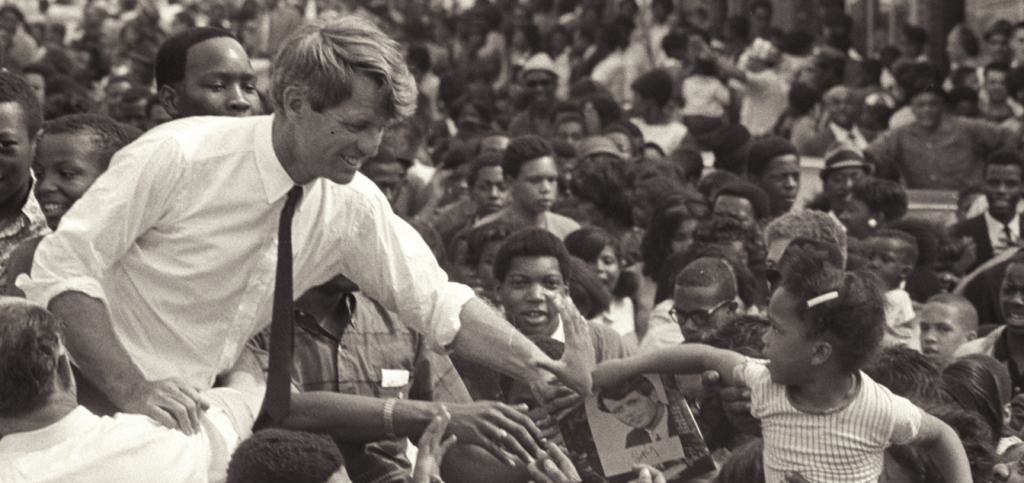
‘robert f. kennedy’ by the ethiopians

I HAVE DECIDED to create a new series that I call New Track. I was going to call it New Track of the Week, but I am not sure if I will write about a new track every week. What if I want to write about one every two weeks? Or if I want to write about two new tracks in one week? New Track of the Week would be limiting. That’s why this series is just called New Track.

New Track features a new track. It’s a new song I have discovered that I would like to write about and share with the world. In this way, I can feature all kinds of music. In particular, I would like to write about local artists in Estonia who are connected to Viljandi in some way, but not exclusively. Rather, I’d just like to write about whatever I happen to be listening to. And today’s new (inaugural) track is Robert F. Kennedy by a Jamaican outfit called The Ethiopians.

How did I discover this track? I was in a record store in Amsterdam and was looking at a Don Drummond record. Don Drummond was a Jamaican ska trombonist and integral member of the famous group The Skatalites. A lot of great Jamaican recordings from the 1960s were released as 45s, and so many are now available in various compilations. So, it was through exploring these compilations that I came upon this breezy recording, “Robert F. Kennedy.”

Learning about Jamaican groups can be complex. Often I try to find out who the bass player was on some sessions only to be led down the rabbit hole. This 2:04 song was recorded about a year after the assassination of Robert F. Kennedy (who would have been 100 years old on November 20, which also happens to be my birthday). The song is also credited to the Sir JJ All Stars. The Ethiopians were a popular vocal harmony group in Jamaica and in 1969 released an album called Reggae Power on the Sir JJ label run by producer Karl Johannes “J.J.” Johnson. “Robert F. Kennedy” is an instrumental track off that record.

But who was in the Sir JJ house band? It consisted of Bobby Aitken (guitar), Winston Richards (drums), Vincent White (bass), Alphonso Henry (alto sax), Val Bennett (tenor sax), Dave Parks (trombone), Mark Lewis (trumpet), Bobby Kalphat (keyboards), and someone called “Iron Sprat” (bongos). At least I think it did. Of the group, at least Vincent White is still around and playing. Here’s an interview with him recorded in July.

the death of maple leaf

MAPLE LEAF was one of Estonia’s top drummers. His real name was Vahtraleht, which means “maple leaf” in Estonian, but his nickname was Vaht, which means “foam.” He was, by his 39th year, a seasoned and accomplished percussionist, who had once jammed with Tony Allen, Fela Kuti’s drummer, and Damon Albarn, albeit on congas. He had lived in several communes and had even spent a stint in Trenchtown. His hair was long and maple-colored, as was his beard, and his skin a flawless milk white. Because of this, he was nicknamed “Mormon Jesus” by some of his American friends. He played in three or four ensembles. He changed girlfriends like lightbulbs. It’s not easy to go steady with a mercurial character like Estonia’s own Maple Leaf.

But then he died. It was in a terrible car crash in Germany. Every single vehicle in the crash was German made. I think a BMW collided with his little white Volkswagen. Surprisingly, he survived the impact, but then crawled out onto the autobahn, where he writhed in pain for some time, pleading with God. “No,” he cried. “No!” Then, with a final tapping of his fingers, he expired from this life, and attained musical immortality. His was the kind of face that was spraypainted on the facades of old buildings in Tallinn, Tartu, and Viljandi. The Estonians had always yearned for their own Viktor Tsoi and in Maple Leaf, this had at least been achieved.

In honor of Maple Leaf and his dramatic end, I decided to bake a kind of maple sugar cake. I brought it into the temple that had been erected in his honor. This had been constructed in the same pattern of an ancient Indian temple. I found it incredibly sad that Maple Leaf would no longer play drums anymore. And to die in a car crash in Germany, of all godforsaken places. But nobody ate my cake at the Indian temple. I guess they were just too consumed with grief.

the musical floor

THE THIRD FLOOR of the psychiatric clinic was the musical floor. It was here that different patients were enrolled in a new kind of orchestral therapy. Nobody knew much about it, but Rory Lapp said that he just had to see it. “I think it might give me some inspiration,” he said.

Because of this, we broke into the hospital.

The first obstacle was the chain-link fence, which was easily overcome. Someone had forgotten to attach two pieces of fencing, and we slipped between them. Then came the highly guarded doors to the clinic. But an absent-minded orderly had left one of these ajar on a smoke break. We entered the building and began to climb the white stone steps. At times we were passed by mental health professionals in white coats, but they were so lost in their work, staring at the files of some patient, whether on a clipboard or a tablet, that they didn’t notice the two Estonian writers creeping around the highly off-limits clinical musical therapy ward.

At last we reached the top floor. Here the patients indeed roamed the halls, but some clenched violins, violas, and cellos. So this was the musical floor of the psychiatric hospital? And this was musical therapy? We looked around. “You know, I really have to say that I’m disappointed,” Rory said. “They don’t play or anything. I was expecting a concert.”

At this moment, an alarm began to sound to alert the hospital that it had been breached. We ran down the stairs and out a back door, into a crowd of local citizens. The back side of the hospital opened out onto the walking streets of a city that looked very much like Tartu. Police sirens could be heard nearby, and I understood that the entire hospital was being cordoned off. Lauri and I quickly stole some tan jackets from a coatrack outside of a riverside café and blended away into the crowds.

stockholm swing

A NEW FORM OF TRANSPORT, the Stockholm swing. It functioned as a kind of ski lift, except nobody was there to ski. Rather it glided along a set route through the city, like a funicular or cable car. Each swing could fit three people. Upon arriving to Stockholm, I shared my swing with Rory and Ella. We were lifted over the city, and Ella disembarked somewhere in Norrmalm to hunt for shoes for her collection. Ella owned at least a hundred pairs of shoes.

Rory had set up an interview with a local literary journalist. A young woman who must have been in her first year of university, and whose questions were delivered with a trembling uncertainty. I sat there outside a bakery with a coffee, naturally, answering her questions, as if I even knew the answers to them. The young woman wore simple, dark clothes. She had her brown hair pulled back into a ponytail. She was Swedish. I have no idea how Rory knew her.

There must have been something in my drink, because I became incredibly sleepy after that, and was invited back to the journalist’s apartment, where I promptly fell asleep on her wide bed. During my sleep, I was awakened by a bouncing, and opened one eye, only to see Rory rather aggressively making love to her about a foot away from my elbow. She naturally surrendered, letting out light, excited gasps. I closed my eyes and pretended it was a dream.

Later, after Rory and the young Swedish literary journalist had parted ways in a Stockholm street, I confronted him. “She was only eighteen,” I told him. “Just a young woman of eighteen! Consider it, a man of your age. You should be ashamed of yourself!” Rory was impeccably dressed and feigned confusion. “What are you talking about?” he shrugged, his blue eyes smarting, as if he was entirely perplexed, baffled. “It was just a bad dream. You were dreaming,” he said. “She was just eighteen,” I repeated. “A bastard like you had to take advantage of her!”

After that, I suppose you could say Rory Lapp and I had what later would be termed “a disagreement.” He went his way and I went mine. I caught a passing Stockholm swing and rode it all the way to the harbor. The ships to Estonia left from a pier near an old imperial fortress. It had long since been abandoned, but in recent years had been repurposed with cafes and boutiques. Such were the ways of effete Europeans. It occurred to me there, descending the steps toward my ship, that I had once been married, and had walked these same steps with another person. A person whom the world would have called “my partner.” But I was all alone now. Ella had her shoes, Rory had his young Swedish journalist. I just had my old knapsack.

What a sad feeling.

the treasury department

AFTER HIS COMPLETION of the Epstein Ballroom, President Donald J. Trump went to work on a new building to house Scott Bessent’s Treasury Department. The old Federal and Georgian-style Treasury Building, the central and east wings of which were erected in 1835 through 1842, was reduced to rubble and a new castle-like fortress was constructed on its foundation, as tall as the Sagrada Familia. This, strangely, contained elements of New York City’s Trump Tower, and its walls, escalators, and stairwells shined with gold-coated plates.

I was one of the first journalists allowed into the new Treasury Building, escorted inside with a North Korea-style sightseeing group. We were led up the stairs, which were gleaming with gold, to the second floor, which had the décor of an ancient Scottish castle, with moist, dripping stone walls and antique tapestries. Trump was there himself, bedecked in a Highland Tartan, and several other Scotsmen and women sat around an open fire. Trump seemed preoccupied with something and stared intensely into the air. He was whispering to himself and his blue eyes reminded one of a beached fish running out of oxygen. The Scottish guests only stoked the fire and talked loudly about how they felt comfortable in the new Treasury. “Aye, it’s not too opulent,” a bald man in a sweater said. “Only parts are covered in gold! What’s the fuss about?”

Downstairs, I discovered that a food court had opened. There were people sitting all around on wooden benches, the kinds that you might find at an ice skating rink. Here I encountered some Trump supporters in winter coats who were boasting loudly about how decisive their leader was. “Biden could never make up his mind,” one jeered. I intervened and said that, in reality, their president changed his mind almost every day if not minute. “Yes, I will give the Ukrainians Tomahawk missiles. No, I won’t. Yes, well, actually I will. Let’s see what Putin says.” For daring to bring this to their attention, I was cursed out, but I didn’t care. “The only thing Trump’s consistent about,” I shouted at his supporters as they dispersed, “is his love of tariffs!”

Down the gold escalator rode my old friend Eamon O’Toole next, with his loving Irish grin. He was dressed in a white sweater and gold chain, as if he had just got back from a wild house party with Kid and Play. The first thing Eamon O’Toole did upon meeting me in the new Treasury Building was laugh and say, “Well, well, well. Fancy meeting you here!” He had sprouted a slight red beard in the meantime, and there was a crazy gleam in his eyes. I told him about the Trump supporters and the tariff comment. Eamon O’Toole only laughed more. “All of these people suck,” was all Eamon said with an irrepressible delight. “I hate them all.”

We were then interrupted by Rory Lapp, an Estonian writer and poet and coffeehouse ghost who said, “Excuse me, but do you know where a bestselling author might get a decent espresso?” We went over to the coffee machine, but the first cup was full of a strange, milky liquid, and we realized the machine was cleaning itself, so we pushed the button again. Rory stood there in his black button-down shirt, waiting patiently to taste his first Treasury coffee. Funny that I would rendezvous with some of my best friends in such a gilded, tasteless place.

I noticed then a small gray mailbox by the coffee machine and opened it. Inside, I found a single letter, addressed to me, which I opened as well. It was a postcard with a picture of Ronja Rippsild, a prominent Estonian photographer. She was standing there, in her red shirt and green coat, a winter’s hat on her head. She was as pale as ever — I don’t think Ronja was capable of getting tan — and her dark hair hung around her shoulders. The note read, “Goodbye Justin,” and I scanned it intently, hoping that Trump’s demolition of the Treasury Building hadn’t caused my Estonian friend to commit suicide. Instead she said that she had had enough of the world’s problems and was going on a pilgrimage of sorts, which she intended to wrap up by the year 2049. “By that time, I’m sure we can live happy lives again,” Ronja had written. In the meantime, she planned to embark on a global Camino de Santiago.

“Well, that’s one way of coping,” I said to myself. I was going to miss Ronja while she was away. I sighed and returned to the coffee machine, where some loud Trump bashing was underway.