WHEN I MOVED out of the apartment, I discovered the extent of my hoarding over the years. No matter how many boxes of books I moved, no matter how many armfuls of coats and shirts I extracted, the task was endless. I worked day and night and still got nowhere with the thing.
The apartment was in some up-and-coming residential area in Tallinn, like Noblessner maybe, but farther inland, though no place is very far inland in Tallinn. I had outgrown the neighborhood though, it being taken over by hipsters 20 years my junior with tech jobs.
While doing the move, I stopped and helped myself to some refreshing water flavored with effervescent mint at a café bar in the building’s food court. Some kid in a flannel shirt called me an old man for sitting there. ‘Next you’re going to start talking about the Eighties,’ he said.
Outside, I paused in the courtyard to breathe beneath the palatial, intergalactic, honeycomb looking apartment terraces and balconies, made of brick, glass and iron. And that’s when I heard it, the unmistakable sound of the early Stones. The fuzz of the guitar, that stark beat.
But something was strange about this song, for I had never heard it before. It was a bit like ‘Tell Me’ crossed with ‘The Last Time.’ How could it be that I had never heard it? Surely it had popped up in some anthology. But no. Looking up at the brick work, I could see the band, projected high in black and white. Mick Jagger was up there singing, holding the microphone.
Then it occurred to me. This must have been one of Brian’s songs. Andrew Loog Oldham had said that Brian Jones had written a few songs that Jagger and Richards, the primary songwriting team, had snubbed. By Oldham’s telling, Jones’s output had been worthless junk. But girlfriend Linda Lawrence recalled otherwise. She said that Brian’s songs were brilliant.
This must have been one of those lost songs, leaked from the vaults at last, played by Tallinn hipsters from some upper floor pad in the digital future. They were still cool. I was old and in the way, but the Stones were young. Mr. Brian Jones, 57 years dead, still lived on, his music played and played. Some consolation it was to hear the Rolling Stones on that sad day.
I SAW THEM ALL on stage, a smaller auditorium, standing only, playing just a few feet off the ground. This was the classic line up, and after the show, one of the singers came over. I couldn’t tell if her face was really melting off or if I had been dosed again. She had a doll-like yellow wig, which could have been her real hair, and her features looked sculpted, contorted into a menacing grin, and not quite human, like one of those shamanic masks from the Pacific Northwest. She wore loose, Tibetan-looking robes. She handed a large witches hat, about three feet high, to the woman next to me, and said. “Thank you for coming to the concert.” When the hat was opened, a pomegranate-like fruit protruded, with red flesh between its stiff membranes. The woman beside me said it was delicious. “Like persimmons mixed with honey.”
Next another singer in the band presented me with my own reward, a green hat of about the same size. It was made of unfamiliar textile, smooth and yet fuzzy, a bit course to the touch. The singer’s brown hair was long and he was dressed in Renaissance clothing. “Thanks for coming to the show, man,” he said. I pulled open the hat and devoured its sticky contents.
Later, I found myself on the second floor of a warehouse in New York. My great grandmother was there sitting at a table, dressed in a white youthful dress of the time, something circa 1914. She was sitting there staring off into space and someone was taking her photograph. Everything was black and white, and each time the camera flashed, I could see a dark negative of a child inside her. Not a baby, but a girl of maybe three or four years old, sitting peacefully there, in her own white dress. What even was this? Why was I being shown the past and the future? My great grandmother still didn’t notice me in the warehouse. She sat there quite still.
Downstairs, at a café, I waited in line to place my order. The seller told me that the cake I wanted was too strong for my needs. “If I give you this cake, and you digest it, it will change you, it will make you into a real monster,” he said. “I recommend this cinnamon bun, over here.” I took the cinnamon bun and noticed that Violette was sitting below the window in the sunshine. She was sitting there, watching me, with the sun in her red curls and Lata was by the counter, standing tall and erect, watching me. Lata also looked like she had no idea what she was doing in the café. I looked over at Violette. She smiled at me and winked. Lata’s brown hair was pulled back in a braid, she wore a white jacket and trousers, and her light eyes looked alert and alarmed. “So,” she said while waiting for her matcha latte. “Fancy meeting you here.”
ONE THING that has always impressed me about resident Viljandi Argentine musician José Manuel Prieto Garay, better known as Pepi, is his sincerity. It can be disarming at first, it can even make you a little suspicious, put you on guard. For how could a modern person be so sincere? At what point does such sincerity become an act? But his façade of sincerity is so durable and resilient that no matter what you throw at it, it just won’t stick. There’s no winking at the camera here, no hidden double meanings, no metamodernism. Everything is what it is.
This is sort of how I approach the new song by his group Araukaaria, too. “Canto Oscuro” is disarmingly sincere. It has a cinematic quality to it — it would make a good backing track to a montage about a religious pilgrimage. Considering the story behind it — the loss of Pepi’s father, a trip to Palestine — that’s not far off the mark. Pepi recounts a roadtrip between Chile and Argentina before his father passed away years ago in telling the story. His father was very ill at that time, and could barely make the trip. This song, “Canto Oscuro” (Dark Chant) is kind of like the soundtrack to that trip composed after the fact. It passes along like a mountain road at night.
Shadowy, lofty, winding, introspective.
“I think it was clear from the beginning of the song that it was some kind of lament or requiem,” says Pepi of the song. “I wanted to visualise the journey I lived with the music and lyrics.”
Supposedly it takes about 16 hours to drive from Santiago to Buenos Aires. “Canto Oscuro” is only about six minutes long, but it feels like it could be 16 hours long. There’s enough packed in, a flute motif by Rauno Vaher at its opening, atmospheric guitar playing by Viljandi virtuoso Norbert de Varenne, backing vocals by his sister María Julia Prieto Garay and keyboardist Lisanna Kuningas, and solid contributions by Fedor Bezrukov on bass and Johannes Eriste on drums, the rhythm section of an earlier incarnation of Araukaaria. Araukaaria is one of those bands like Nine Inch Nails, that revolve around a principal songwriter and musician, but that have a revolving cast of characters, some of whom return after various scrapes and adventures (Rauno Vaher was the original drummer, and the last time I saw them, he was back on drums).
“I like to work with different people and in particular here in Estonia most of the musicians are involved in three or four projects which makes it hard to schedule and coordinate,” says Pepi. “As the project is quite a live band project, having different people always brings a new flavor.”
One of these players is Lee Taul, also of Don’t Chase the Lizard, Black Bread Gone Mad, and the Songs and Stories from Ruhnu Island project, who provides epic sweep with her violin. And another is — surprise, surprise — Tomás del Real, another Viljandi Latin American musician, this time from Chile, who helps out on something called the charango, a “small Andean stringed instrument of the lute family,” as Wikipedia informs me. He hadn’t played it in years, he says. But here it is, filling out “Canto Oscuro,” fusing Estonian and Latin elements.
“One day I was working on some other stuff and Pepi rang me up and asked, ‘Do you have time today to help me with something? I need you to record a charango in two hours,” recalls del Real. “I hadn’t played in a while but I went over there and we locked in the studio for a little bit and I made what I could,” he says. “I knew that the song was important to him and that Chile in a way plays a part, this connection between his life here and there, so I guess I was one of the pieces he needed for that track.”
As a person who also lives a life bridging continents, I know that sentiment well. At times, in the air between Europe and the Americas, I have often thought of myself as pulling thread with a needle, trying to sew two lives, one here, one there, together. It’s this sense of disorientation, of displacement that lurks in the obscured background of “Canto Oscuro.”
It is felt, even if not expressed.
“Pepi has an ability to put images in music that the listener can understand without even understanding the lyrics,” says Kuningas. “A lot of his lyrics are very visual, and he is able to put these pictures in your mind.”
Most of the song was recorded in one live take, though a few elements — the backing vocals, the charango, classical guitar — were added later. Martin Mänd of Kopi Luwak recorded “Canto Oscuro.” It was mixed and mastered by Mattias Pärt. Animation to accompany the video was created by Pepi’s sister Camila. Pepi decided to release it on February 12, his father’s birthday. “This song is connected directly to my life, my story,” he says. “It’s a snapshot of that period of my life and has helped me to heal and to let go of a very big emotional burden.”
SOMEHOW, SOMEWAY this track crossed my desk and ears. I’ve never really known what to make of Kula Shaker. I think I heard their cover of “Hush” here and there when it came out way back when, and I had a promo copy of 1999’s Peasants, Pigs, and Astronauts that was in heavy rotation in my car when I was about 20 years old. These were the Britpop days, and Kula Shaker is an unmistakeably British band, with their raga influences about as ubiquitous as a curry shop in East London. So in a way, they are eternally linked to Oasis and Blur, even if they sound nothing like them. They arose during a creative, memorable period in British music.
Those were also the grim Radiohead days, the “Karma Police” days. For me, Peasants, Pigs, and Astronauts was a reprieve from all that seriousness and foreboding. It’s linked in my mind with the first Austin Powers film, and I do think some fembots make an appearance in the “Mystical Machine Gun” video. They were a fun band and the lyrics were just a part of the vibe. That’s nice that guitarist and singer Crispian Mills had something spiritual to say, but after could he please play that tasty guitar part again? In a way, they were a nice follow-on to Primal Scream in the “Rocks” era. Badly needed groove music penetrating the merciless Yorkean gloom.
My understanding is that Crispian caught some flak for being what we would call a nepo baby because his mother was in The Parent Trap (and I am old enough to have seen the original without having to look it up). For me, this only helped sell the band more. What better fate for the son of Hayley Mills than to become a psychedelic bard? While his name recalled Henry V’s speech at Agincourt, the rest of the band — Jay Darlington (organ), Alonza Bevan (bass), and Paul Winter-Hart (percussion) sounded like characters from an Evelyn Waugh novel. There was very little not to like about this group, and yet they remained a cultural outlier.
Which brings me to this track, “Charge of the Light Brigade,” the third on their new album Wormslayer, released at the end of January. The production is thick, dense, yet shimmering, lively. The sound comes up at you from every angle. According to the band, the whole album — which sounds like a D&D character, but is a spiritual reference to conquering negative energy — was recorded on two-inch tape. They laid this song down “Street Fighting Man” style, with just acoustic guitar and drums at first, with bleed over between both, the rest added later.
The changes are addictive and insistent and the lyrics are a shade darker. “They were all drinking blood in the shadows / drinking your blood and draining away / don’t turn your back on the shadows” and “they’re breaking the law / these masters of war / they come from behind / they don’t knock at the door.”
“The Charge of the Light Brigade was a famous 19th Century poem referring to a famous British military blunder during the Crimean War,” said Crispian Mills of his inspiration. “However, I morphed the meaning of lyrics to make it about rallying the ‘poets of light’, in a hopeless but valiant charge against the forces of darkness.”
This ain’t, “You’re a wizard in a blizzard of mystical machine gun.” This is serious ’26-level stuff. As noted, the band sounds great. The drums are spare, the bass is buoyant, flawless. The organ holds everything together in a warm glow. Mills is an underappreciated guitar player, too. Naturally, the video is recorded in an old castle or church of some kind, maybe that one on the cover of Temples’ Sun Structures. Maybe all the psychedelic cats hang out there these days?
Some friends are not yet sold on the Kula Shaker renaissance. They are skeptical of the band’s output. But with a song like this, it’s just impossible to argue that it’s not good, because it is. It’s just a good song. The best part is this: there is no self-indulgent solo. This song’s tight. Three minutes and five seconds and they’ve said what they’ve come to say and they’re done.
COLDPLAY WERE BOOKED to perform at the Viljandi Folk Music Festival. And not only just perform, but to headline it, with their concert scheduled for the festival’s last evening. I’m not sure whose brilliant idea this was, but I suppose that after NÖEP performed in the same slot in 2025, the door was wide open for the likes of Coldplay and their “Adventure of a Lifetime.”
I was in the press office as usual right before they went on, but an older amber-haired woman, whom I understood was my wife, was there with me. She was a steadfast supporter of the band and had bought Parachutes after “Yellow” started getting played on MTV. But she wanted more than just to see Coldplay play Viljandi. She wanted me to make love to her during the concert. This seemed to be physically impossible: where would we find a proper spot? Her solution was an old ironing board. “See, I’ll just put my elbows here, like this,” she demonstrated to me during a break in their sets. “And then, when they play ‘Yellow’ and it peaks you can take me from behind.” “You’re crazy,” I told her. “I’m not having sex with you during a Coldplay concert!”
While we discussed the matter, Chris Martin led the crowd in a singalong of one of their blasé, forgettable songs. Not from the earlier catalogue, some album track from 2015 or so. The entire band, including Martin, wore those rain ponchos that are so popular at Folk, and it was raining. The band reclined on an old beige couch, plucking their instruments, tapping their drums, while Martin held up an umbrella and sang. Visually, it was stunning, but the music still didn’t find its way into my heart. Meantime my wife was demanding that I help her to climax during “Yellow.” I felt alone there standing next to that ironing board. “Please,” she whispered.
***
While all of this was happening, Klaudia was waiting for me on a beach. She was wearing a red swimsuit that highlighted her ample bust and the salt from the sea had teased her hair into a bouquet of sunshine. She was wearing sunglasses and saying, “You are going to have to choose, you know. You are going to have to choose between her and me. You must choose between her and me.” I could see myself reflected in Klaudia’s sunglasses, which meant that I was on the beach even though I was at the festival. “Which of us two will you choose now? Which one?” Grains of sand were in my eyes, grains of time, the sky above was pastel blue.
***
I guess I caught the rest of Coldplay’s performance. I remember Chris Martin took his shirt off, only to reveal his body had been tattooed in Celtic symbols. Before the encore, he also came over to me on the side of the stage and asked me how they had done. I told him it had been a wonderful show. Later, The Who came on, as a special mystery guest, and began to warm up the crowd. Keith Moon told me that if I wanted to hear their set better, it would make sense to go up one of the towers on the edge of the stage. That way my ears wouldn’t bleed when they were done serving up Maximum R&B. Up the steps I went. When I got to the third floor of the stage tower, I found myself in a room full of Estonian women dressed in traditional costume, with red headscarves. One of them was a younger, dark haired woman whose name was Mai. I knew Mai from the streets of Viljandi. We had shopped at the same Konsum.
“What’s wrong with you?” Mai said. Her gray eyes peered out at me from beneath the red scarf. “You look as if you’ve just seen a ghost.” “Two women are after me,” I said. I felt an outlaw bandit or robin hood. Always on the run from women and ironing boards. Then, glancing down at her in her red skirt, I asked, “Can I hug you?” “Muidugi!” she said. “Of course, you can!” “You mean you’re not afraid of me?” Mai just embraced me, warmly, softly. She was a robust, loving country woman. She helped take the pain away. “Why should I be afraid of you?” she said. “Besides, it’s not my fault I’m so sexy and young!”
After that, I think we kept on hugging. I held onto Mai like she was flotsam from the Titanic. The Who played their set.
“HERE,” HE SAID. “If you need a place to stay for a while, you can go to Ghislaine Maxwell’s apartment in Peconic City.” My father placed the set of keys into my hands and told me the address, which was 9 Nantucket Avenue, and drove me to the station. The trip out to Peconic City wasn’t long. He told me that the house was located next to a money broker. Atlantic Union, I believe. When I got out into the station, I turned left, as I had been instructed and found myself in a kind of shanty town made up of small shacks set up inside the building. “It’s not much,” I recalled my father telling me, “but no one will look for you there.” Was this “Nantucket Avenue?” I walked by the shanty town, where indigent women were out selling flowers and other things. I asked an old flower seller how to get to Nantucket Avenue, and she told me I had to go outside the building, through the station’s back entrance, and turn right.
I checked my possessions. A single gym bag full of clothes, my phone, my wallet, a paperback. I walked through the central atrium of the station and out the back entrance, just as instructed, and walked down a sidewalk to the right until I saw a series of modern homes set back from the road with green lawns, even in winter. Down one of these lawns, a whole parade of media figures and cameramen came in my direction, one woman speaking loudly in those clipped, made-for-broadcast tones about the plight of Ghislaine. At that moment, I wondered how my father had even had come to possess Ghislaine Maxwell’s keys or why he had sent me there.
Even at a distance, I could read the words “Nantucket Avenue” on one of the houses, all of which had peaked roofs and were built to incorporate Puritan architectural elements, a sort of House of Seven Gables for the big money age. Did my father really think this was a good place for someone like me to hide out? In front of one of the houses, someone had strung up some effigies of Jeffrey Epstein and Donald Trump, except had given them vampire fangs that dripped red blood. “Death to the Rich,” a sign read. Some yellow-toothed vagrants stood around the Epstein and Trump vampire effigies, panhandling, hoping to get a dime out of me.
The interior of the house was dull and contemporary and all of the walls were covered with large photographs of Ghislaine and Epstein vacationing in the Caribbean, wearing bleached white shirts that were so bright they made your eyes ache, khakis as crisp as morning toast, blue jeans that were so blue, they looked as if they had only been worn once and then tossed away. Epstein’s gray hair was always that unruly mop, trimmed to a desired, specified length. Ghislaine looked like she had once starred in a 1990s Bond film, perhaps as the sexy villainess who gets killed in the end. One picture though made my heart sink. It showed Epstein, Ghislaine, and British diplomat Peter Mandelson clustered around the deck of a yacht as Jorma Kaukonen played guitar. They were on the sea somewhere, drenched in a pink orange sunset.
Jorma was in on it too? Later, when the revelations came out, Jorma Kaukonen, the white-bearded, Finnish Hemingway-looking ex-lead guitarist of seminal San Franciscan psychedelic rock group Jefferson Airplane, who had transitioned into the rough-and-tumble bar room blues act Hot Tuna in the 1970s, denied all wrongdoing. Instead, he said that Epstein had been a fan of Hot Tuna, and that he had performed for him and his guests on occasion and was always well paid. “I’m just a blues musician,” Jorma said. “Simple as that.” When asked what Epstein’s favorite Hot Tuna song was, Jorma acknowledged that it was “Hesitation Blues.” “Epstein made me play it two times during every set,” Jorma had said in a beachside interview. “It started to annoy me.”
In the interview, Jorma wore his white fisherman’s sweater and seemed at ease in his skin. He had his glasses on and his arms were at his sides and he seemed to be hiding nothing. It was hard to believe that he had ever been anything other than a minstrel to the evil rich.
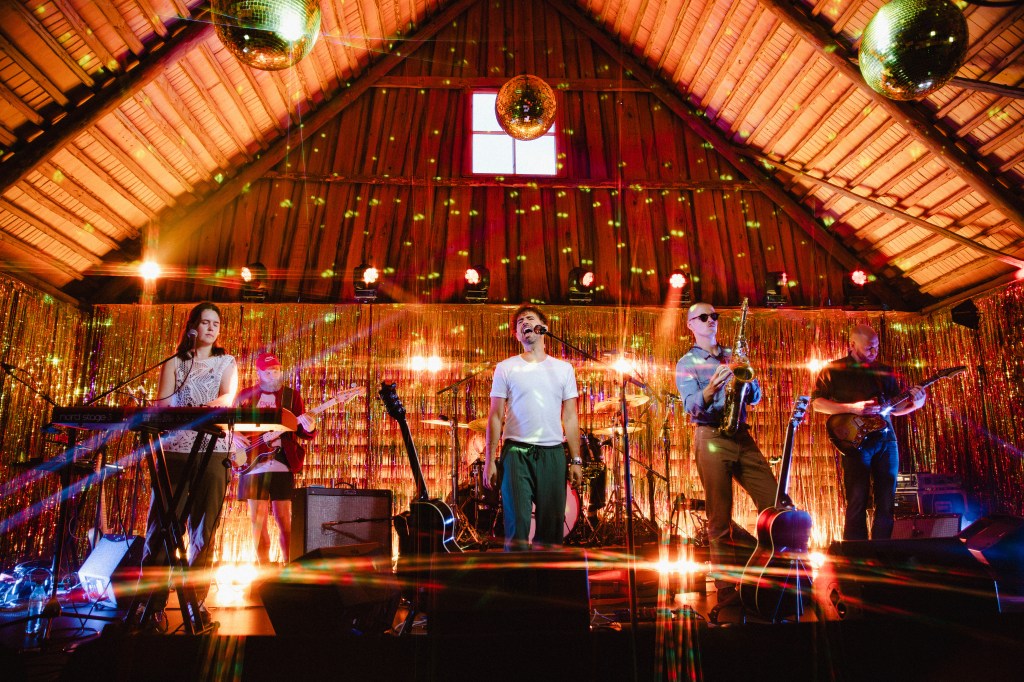
I WAS HAPPY TO CATCH the most recent loft concert at Tomás del Real’s house in Viljandi this past Saturday. He calls these intimate musical events the Viljandi Home Sessions, or VHS. This one was VHS Volume 5. I have been to every single session. The last session, about two weeks before Christmas, featured Lonitseera band members Kaisa Kuslapuu and Kristin Kaha doing renditions of obscure Estonian holiday songs. That was undoubtedly the most unique and chaotic session, as there was a dog present and the electricity went out. In my opinion, they undersold themselves. Kaisa’s keyboard playing was fun and unorthodox, her singing is always great, and Kristin has some alarming and impossible notes stored away in her vault of a mouth. There were certainly a few “holy shit” moments. But, in true Estonian fashion, when I complimented them on their performance they sort of shrugged and said, “Eh, it was okay.”
This session had more of the cuddly folkie feel that Tomás was probably going for when he dreamed it up. No dogs or babies were present, and no electrical outages occurred. A fox did visit Tomás on the day of the session, maybe to provide him with some luck. A singer songwriter from Chile, Tomás has lived in Viljandi for some years now. He opened with some of his songs, including a new one, “Algún día,” which I felt innovated on the material he recorded for Principios de Declaración and Notas Rotas. I wouldn’t say it was better, but there were some changes and melodies in there that surprised me. Some new landscapes emerging from familiar terrain. Then came Lisanna Kuningas, who played three of her own songs on the guitar. Lisanna is also the keyboard player for Araukaaria, and did a wonderful session with the band’s singer and guitarist Pepi Prieto in November. These were really fun and enjoyable.
And then there was Anett Tamm, performing songs from her 2025 album Compass under her artist name Alonette. I personally found the melodies to be interesting. Every time I thought I knew where a song was going, she turned it around and went sailing off in another direction. I’m a taller, larger person, and when I am at these sessions, I like to lie in the floor in the back. It’s just more comfortable for me. There’s a nice strobe light employed, and so when I look at the ceiling back there, as the performers play, it’s almost as if I am staring up at the stars as they shoot over me. Because of this effect, while listening to Alonette, I had the sensation that I was drifting through space. Her songs have an amorphous quality to them, they expand and contract, and so I started to feel like I was watching the aurora borealis. At one point, I looked over at Tomás as if to say, “She is great, isn’t she?” Tomás just nodded as if to say, “I know.”
Thanks for the music and thanks for the photos Tomi Palsa.
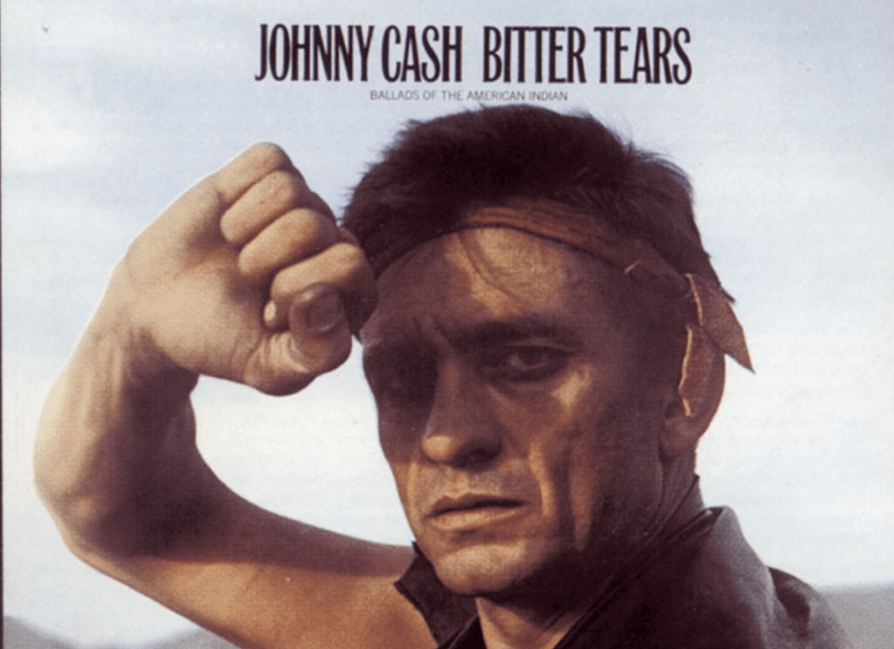
AMERICAN COUNTRY GENTLEMAN Johnny Cash was feeling particularly aggrieved in 1964 and wishing to highlight the struggles of indigenous peoples in the United States, so he recorded a whole album of songs called Bitter Tears: Ballads of the American Indian. The resulting record, released on October 1 of that year, less than a year after President Kennedy was killed in Dallas, and a month before Lyndon Johnson won a landslide victory against Barry Goldwater, is often a kind of side note. I don’t remember if it came up in Walk the Line. He didn’t mention it in A Complete Unknown either, even though it had just been recorded.
But it’s a beautiful collection, with spare, percussive musical accompaniment by the Tennessee Three, Cash’s backing band, which included Luther Perkins on guitar, Marshall Grant on bass, and WS Holland on drums. Session musicians Norman Blake, who is still alive (aged 87) and Bob Johnson helped out on guitar. The best parts of the songs are the lovely backing vocal contributions of The Carter Family. I had a hard time figuring out who was singing, but certainly Johnny’s future wife June Carter was in the lead, along with Maybelle, Helen, and Anita Carter. You can hear their sublime harmonies on “As Long As The Grass Shall Grow.”
“Custer” though might be my favorite on this record, if only for Johnny Cash’s dry and comic delivery. “Custer split his men / well, he won’t do that again.” We forget that for most of the time after George Armstrong Custer‘s defeat at the Battle of the Little Bighorn in 1876, he was considered to be an American military hero. But in the 1960s, the Lakota version of events started to win out (Custer’s widow Libbie, by the way, lived until 1933, which shows you how recent this history was.) Cash makes fine work of the legend here, though he didn’t write the song. Peter La Farge, a Greenwich Village folky regular, penned most of the songs on Bitter Tears. La Farge recorded several records of music with Native American and Western themes for Folkaways Records. La Farge died the year after Bitter Tears was released of an overdose.
Probably one of the most contentious aspects was Cash’s claim of Cherokee ancestry and accusations of being a Pretendian. On the cover of the album, his fist can be seen lifted in solidarity. Cash wears a headband, which makes him look just a little like Charlie Sheen’s character in Hot Shots. His claims of Cherokee identity were later debunked by Cash himself. He had no documented Cherokee ancestry. However, claims that he was purely of Scottish or British Isles descent are also false. A DNA test by his daughter revealed that she had African ancestry on both sides of her family, meaning that somewhere in Johnny’s “pure Scots” woodpile were some Africans. Note that this ancestry wasn’t documented either. And on Geni, at least some claim that Cash’s Hagler family from South Carolina might be linked to the Catawba Chief Hagler. So maybe Johnny was Catawba and not Cherokee. It’s certainly possible. This great record is the subject of a documentary and a tribute album too. “Custer” at two minutes and twenty-one seconds is not, maybe, the standout track, but it’s just perfect.
I remember that when Cash died in 2003, I said to a friend at that time, “But he was young, just 71 years old.” And the friend said, “But he had lived his life. He packed as much as he could into those 71 years.” I suppose after he lost June, just a few months prior, he had no reason to keep on living. But you are missed, Johnny Cash. We’re still listening to your music every single day.
THERE IS A DANGER when it comes to catchy Estonian songs. The danger is that they might become too popular. Then children’s choirs will start singing them, and they will become old ladies’ ringtones, which you overhear on trains, maybe in some place like Käru, and before you know it, you are pushing a cart down the aisle in an Estonian supermarket and you are wishing you never heard the goddamn thing! “Turn that shit off!” But, no, there shall be no such relief.
I shall not list the Estonian songs that have attained such a status, because you know exactly which ones I am referring to. But it is my sincere hope that “Igavene” by SADU never gets so far, but remains right where it is. I was sort of aware of SADU because its cofounder Sandra Sillamaa and I travel in the same circles and I was aware she was posing in various photos with the other cofounder, Sofia-Liis Liiv, but to be honest, they might as well have been promoting a lifestyle plan or deluxe shampoo. Who can pay attention to anything in this Instagram world?
But then one day I was at a friend’s house and this song came on. “Oh my god,” I thought. “It’s really good.” I have this memory of when I was about 12 years old and Achtung Baby had just come out. My friend had a small radio in his bathroom, and I slept over the house. “Mysterious Ways” came on the radio and I was hooked from those first sounds of The Edge’s guitar. I still listen to that song just to remember how tasty that guitar was the first time I heard it. Something about “Igavene” reminds me of that feeling. It’s like a delicious flavor of ice cream.
When I tried to describe the song, the words that came to mind were pop, world music, and Estonian folk. Then I read their Wikipedia entry, which states, in Estonian, “SADU is an ensemble that combines elements of folk, pop, and world music.” I am just saturated in Estonian folk music, living where I live, and honestly the runo song call and response template can get tiring, but this song reminded me of what I liked about world music, and even got me thinking about how world music leaked into the pop world. Fleeting memories of Paul Simon and his album Graceland, but also of Deep Forest (remember them?) Let’s put it this way, you could slide “Igavene” into a play list including “The Boy in the Bubble,” “Sweet Melody,” and “Norwegian Wood” by the Beatles, and it would fit right in. There is something refreshing about new sounds. “Igavene” manages to make something that was familiar sound fresh.
According to Sandra, she decided in 2024 to do something new, “something with female power up front.” She began to work with Frederik Küüts on some music, partnered with Sofia-Liis Liiv, and SADU was born. “Igavene” was one of the first songs they wrote for the project. It emerged from some lyrical ideas. “Life goes by so fast and people should be bolder,” says Sandra of the song’s concept. “Igavene” by the way translates as “eternal, everlasting, perpetual, or endless.” I guess “eternal” would be the best pick. But “Everlasting” sounds fine too. The song is included in their debut album Probleemid Paradiisis (“Problems in Paradise”). The record was released in September 2025.
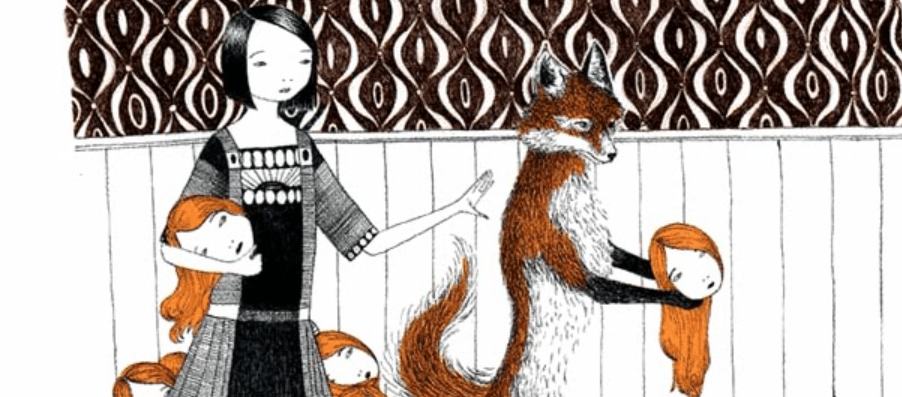
I WAS COMING OUT of the woods yesterday, when a plump red fox ran before me. It was less than 10 feet away, unaware (or aware) of my presence, and went ahead through a snowed-over field toward another patch of forest by the lake. I’ve seen foxes quite a few times in recent years, and have developed a kind of rapport with them. I would not yet claim them as a spiritual animal, but they are contenders. They are intelligent, cunning creatures, true friends.
The run-in with the fox reminded me of Neko Case’s outstanding 2006 album, Fox Confessor Brings the Flood. In the year ’06, I would harvest new albums from the library and then rip them (or their best tracks) to my PC, and then upload the MP3 to a first-generation iPod, I think. It doesn’t seem like a very long time ago in my memory, but it was almost 20 years ago. I would listen to that album on the way to and from work in Lower Manhattan. I recall cold December evenings walking in the darkness in New York and listening to my favorite song, “Star Witness,” which according to Neko Case, is about witnessing a shooting in Chicago. Somehow the song’s topic never got inside of me, it was those lovely chords and vocals.
(Sometimes I would go out and walk on the beach, with the cold sea beside me, listening to this song. I went out for such a walk when I found out my second daughter was coming.)
The song has followed me. Consider the refrain, “Hey there, there’s such tender wolves ’round town tonight.” But this is my real life. There are tender wolves lurking in the woods in Estonia. There’s something deeper at work here. Something involving foxes, wolves, and Neko Case.
The record itself was recorded in Arizona. Garth Hudson (yes, of The Band) played on it. The title was inspired by a Ukrainian folk tale. It seems Neko is one of these musicians who puts a lot of thought (or afterthought) into her song and album titles. But it’s worth reminding readers that Neko herself is of Ukrainian ancestry. I have to say, she always struck me as incredibly intimidating. Women who are about 10 years older than me are these soul-scarred, battle-hardened characters, and it’s not so easy to get close to them, because they’re like, “Then I started living on the streets and busking, after I was legally emancipated at the age of 15.” And I’m like, “Uh, can I get you a cup of coffee? Anything else I can get you, Miss Case?” Tried every drug known to man, survived scrapes with the law, leather tough. Or at least, that’s my image of her. Maybe Neko Case is marshmallow soft, but with that kind of voice, I doubt it.






 north!