sketches of estonia

Sketches-of-Estonia-_-kaas-220x322 I HAD A NEW BOOK come out over the summer called Sketches of Estonia. This is the English version of the material that was published in 2016 as Kirju Eestist. The title is in homage to Miles Davis’s 1960 album Sketches of Spain and Jack Kerouac’s Book of Sketches.

My beatnik leanings are no secret, but this book is really a collection of not only interesting short stories about Estonians and Estonia, but an exercise in literary styles. The pieces in the book — there are 24 chapters — were written at different times, and have diverse influences.

Some were pieces that were drawn up or held over from the My Estonia 3 or Minu Eesti 3 project. Originally, I wanted to write a similar collection of shorts for that book, which came out in 2015, but quickly recognized that the book demanded some kind of linear story line, and that there was simply too much material to pack into another My Estonia book.

The first two books are entirely linear and carried by a narrative. However, they covered roughly 18 months in my life in 2002-2003. My Estonia 3, however, covered 2007 to 2013, which made such an approach difficult. I wanted to cover this period as a general memoir, along the lines of Ernest Hemingway’s A Moveable Feast. However, while I was doing it, I noticed that the book demanded a narrative. So pieces that were originally written for the My Estonia 3 project were set aside if they were superfluous to the narrative. These formed the foundation for what later became Sketches of Estonia.

Chapters like “Kid Sirts and Surfer Taavi,” “Tea with the Icebreaker,” and “Drinking in Tallinn” came out of that time period. They were largely written in 2013 and 2014 at Aldo’s Coffee House in Greenport, Long Island.

Some of the other chapters here are even older though, and these are in my opinion quite personal. “Tree Balsam,” “How Romet Became a Clown,” “Gold Fish,” “Vastlapäev Arithmetic,” and “Gypsy Vika” were written in the 2011-2013 time period when we were living in Viljandi. I think I wrote “Tree Balsam” in Setomaa on a laptop set up on the porch. I would work and then come back to the laptop and write down my thoughts and then return to working on the country house.

Some of the pieces are quite different though. I had always wanted to write a new journalism-style profile about Andres Metspalu, and “Metspalu’s Elevator Speech” is absolutely one of my favorite chapters in this book. I took a similar approach when constructing my “Kuressaare Tropicalists” chapter. I also experimented with some modernist approaches in chapters like “Chaos and Spirits,” where I inserted “images” into the text, to allow the readers to imagine what these images looked like. I happened upon this approach once while copying something from Wikipedia. It preserved a space marked IMAGE and then the caption, but the actual images did not copy over. I realized that one could invent all kinds of images this way, ie. [IMAGE: Björk meeting with the Dalai Lama]. Ask yourself, what was Björk wearing when she met with the Dalai Lama?

It is fun, right?

The newer material in the book dates back to the 2014-2015 time period. “Pärnu After Christmas” has been readers’ favorite. It was written in Pärnu, after Christmas, in 2014. Two of the pieces were written in an ashram in India though. “Karksi House,” and “With Kaplinski at the Supermarket” were both written at Sai Baba’s Ashram in Puttaparthi in November 2015. I like these chapters because they were not heavily rewritten, and are largely untouched from what I put down working there in that peaceful state of mind. The Kaplinski chapter was later amended to include a note from the man himself!

I think I am really proud of the final chapter though, “The End of the World.” I like that I was able to get so many images into the beginning, without them being directly related, perhaps only by time. Somewhat fittingly, I can’t recall how or when I wrote it. I imagine it was finished up in Lanzarote, in the Canary Islands, in March 2016, when all of the chapters underwent editing ahead of their publication as Kirju Eestist.

Before I go, I wanted to thank Kerttu Kruusla and Signe Valdmäe for helping me with the cover of the book. Kerttu photographed the image at the Rohelise Maja Kohvik in Viljandi, and Signe wrote out the text on the same board they use to advertise their daily specials. I also thank Epp Petrone for assisting greatly in the editing and revision of the pieces, and Kristopher Rikken for his editing work, noting discrepancies in the details, or things that might not be obvious to a person not immersed in Estonian culture. Taken all together, I believe that Sketches of Estonia is solid and very much worth your time.

president kersti

presidentkersti
“I’d been dealing with all kinds of stodgy males my entire life: Reagan, Gorbachev, Ansip. Yet never did I feel some kind of camaraderie or solidarity on the basis of our gender.”

When my daughter Anna returned home from school on the day of last year’s historic presidential election, she asked me, “Is it true? That Kersti is our president?”

At first it was hard for me to understand her pride, her joy, that a ‘girl’ like herself had been selected by the Estonian parliament to be the next president. I’d been dealing with all kinds of stodgy males my entire life: Reagan, Gorbachev, Ansip. Yet never did I feel any kind of camaraderie or solidarity on the basis of our gender. If you had asked me as a child what I had in common with President Reagan, I might have said nothing. He was old, I was young. He was an actor, I was a student. He was from California, I was from New York. He wanted Gorbachev to tear down the wall, I wanted to listen to Pink Floyd’s The Wall. I never thought, ‘There goes Ronald Reagan. He’s my boy! One of us!”

(This changed slightly when Justin Trudeau became prime minister of Canada though, if only because I can now say, ‘Justin. Like Trudeau,’ when I check into hotels, instead of being taunted by little Estonian children who call me, ‘Justin Bieber, juustuviiner*!’)

From my daughter’s perspective, however ‘President Kersti’ was already part of the tribe, one of their own. They loved her without hesitation. I’ll never forget how President Kersti came to Viljandi in the winter to meet her citizens and skate on the lake. Some girls even followed her to the down to Lake Viljandi, just to see President Kersti on ice.

Estonia’s first woman president! It touched me in a way, made me feel connected to her. My daughter had gained a new positive role model overnight. 

Not that it’s all ice skating and adulation. Sometimes when I imagine the president trotting about the halls of Kadriorg though I can’t help but think about  that old Communist poet Johannes Vares-Barbarus who shot himself in the hall toilet in 1946. There’s something about that image, the ghost of Vares hunched over in a water closet in the presidential palace, that hints to the mystery of Estonian political power. The secrets, the intrigue. Who really knows what goes on behind the windows of Kadriorg when power is involved. Who really knows what else has happened within those pink walls.

President Kersti is appealing anyhow. When she was elected, after much intrigue and sauna whispers, there was a sigh of both relief and astonishment. After Lennart Meri, that old school adventurer with his deep connections to the prewar state, including a diplomat father; or Arnold Rüütel, who rose through Soviet politics, only to pivot in old age and oversee EU accession: or Toomas Hendrik Ilves, the emigre returnee with the bow tie, Swedish birth certificate, and American diploma; we suddenly had one Kersti Kaljulaid, who was born in the final month of the 1960s, a mother of four, auditor, and bureaucrat.

Could it be that the next Estonian president would just be some tubli Estonian person?

I only glimpsed her through the dark window glass that day during her wintertime visit to Viljandi, saw her silhouette as it leaned over her goat cheese salad or whatever she had for lunch. Those telling bangs and mop of hair. The fierce and intelligent presidential eyes. The heads of all her special guests turned in her direction. Anyone who walked past the Rohelise Maja Kohvik that day had to pause and look through the windows. The Viljandiers were so curious to see their Kersti. Especially the little girls.

*Juustuviiner — a cheese sausage.

never in america

Foto: Liis Reiman
Foto: Liis Reiman, Müürileht.

The annual Viljandi Folk Music Festival retains a haunting and cinematic quality, especially at its peak on Saturday night, when the Tallinners swarm into town in their old-fashioned linen shirts in search of Curly Strings, beer, and kebab.

Crowds form around the street performers — violinists, bagpipers, a washtub bass — and the sounds of exuberant conversations grow intoxicating beneath the lush green foliage.

Under the watchful spire of Saint John’s Church, scores of children occupy themselves with entertainment set out just for them. A giant game of tic-tac-toe, a small stage decorated with a sign reading Lastelava, “Children’s stage,” and colorful curtains that the children wrap themselves in. Finally, there is a maze constructed from the rough wooden pallets used to transport goods. Dozens of youths, their clothes stained by mud and dripping ice cream, filtered into the maze, only to get lost here and there, with others trying to hop the walls to escape while exhausted parents like myself looked on, happy just have a break, to sit and observe the scene. As the clocked ticked closer to midnight, and the fun showed no sign of end, it did occur to me.

This would never happen in America.

First of all, children were allowed into Viljandi Folk for free. Provided they could prove their age, they were given a special bracelet that gave them permission to enter. Back in my home country though, anything this good would certainly come with an admission price. Any kind of childhood entertainment would likely be fenced off, and that rough wooden maze over there? That would probably be constructed out of some kind of rubber synthetic material to minimize the chance of injury. In America, the organizers would do so not only out of concern for the well-being of the playing children, but out of fear of hungry personal injury lawyers eager to make a few bucks. Taken together with the disapproving looks of worried parents — Do they know how dangerous that is? They could get a splinter! — the play area of Viljandi Folk would no doubt be closed.

It wasn’t always that way in the United States. Even when I was a child, we would disappear for hours into the woods. I got into my share of scrapes and still have the scars to prove it, and yet I am grateful for those times, totally convinced that if I was ever shipwrecked on a deserted island, I could set to work constructing a livable shelter from some young trees, just as I did when I was a boy. Piece of cake! That was only 30 years ago when I could roam free like the children of Viljandi Folk. Only 30 years!

But then something happened. A cloak of ‘safety first’ descended on the great land of freedom. Most child-related activities became intensely supervised, and children of responsible parents were not allowed to leave the confines of their suburban castles unless encased in a suit of protective plastic armor, or accompanied by a tough, eagle-eyed adult guide on the lookout for falling tree branches and sexual predators. The classic American childhood, epitomized by literary gems like Mark Twain’s Tom Sawyer or Huckleberry Finn became something you could only read about in an old book, watch in a film, or experience during a ride at Disney World. You could watch characters have real childhoods in the movies, but you couldn’t actually have one yourself.

Too risky.

I learned this first hand years ago when we lived in the US for a school year. It was a pretty, pristine place at the end of an island, with woods and beaches that begged to be explored, and long country roads with little traffic. It seemed like the perfect spot for a classic childhood, and yet no adventurous youth ever came to our house on a bicycle, none ever knocked at our door unaccompanied to see if one of our children could come out and play. Instead, all so-called “play dates” were prearranged, even though the parents would, at times, while we were exchanging children, fess up to the antics of their own wild childhoods long ago, which were chaotic and joyful and free. Kids who had once carried slingshots, sped around on skateboards, and robbed candy stores had grown into cautious adults happy to embrace and enforce “safety first.” It was hard to believe.

If you asked them why it had happened, they would tell you that things had simply changed. “Just look at the news,” they would say, pointing to the steady stream of sensationalized stories about child abductions and murders. Sometimes I wondered how safe American youth had actually been in earlier eras, the Industrial Revolution perhaps, or the Great Depression, yet this line of questioning went nowhere. The culture of worry had fallen on us. It was senseless to struggle against it. Like the other parents I went along with it, even though I sensed something was amiss. There are some in the US, of course, who have tried to steer the culture back the other way, with a free-range parenting movement set to raise a new generation of independent kids, parents who risk interference from social workers to let their kids go to the woods or ride the metro alone.

The fact that the last hope for American childhood is a book, or a movement, or a website, only deepens my sense that something has been lost and cannot be replaced.

To be honest, among my fellow countrymen there are those who would view my lifestyle with some contempt. I have certainly been denounced by a few for living what they see as a shiftless, libertine, decadent European life, where I while away the days writing in cafes. Some say they have no respect for me, others have accused me of running away. Yet as I watch my children laugh as they tear through a wooden maze under the watch of a medieval church at midnight, I have to respond: Can you really blame me?

ti jean

Downtown Northport, Long Island, just a week ago. Gunther’s Tap Room, Jack Kerouac’s famous watering hole, burned down not too long ago (and Pete Gunther, the bartender who served him, died suddenly too). Gunther told me in an interview that Ti Jean once paid his tab with an autographed copy of Tristessa, his 1960 novella about his Mexico City junkie girlfriend, which Gunther attempted to read and then quickly discarded, perhaps to the trash. While Kerouac and his bartender are both now gone, someone has affixed Jack’s ghostly image to the bar, anticipating his inevitable future Christ-like return.

Kerouac’s mother Gabrielle owned a home in Northport in the late 1950s and early 1960s. The town is referenced in his 1962 novel Big Sur (page 5, “so I had sneaked into San Francisco as I say, coming 3000 miles from my home in Long Island (Northport) in a pleasant roomette on the California Zephyr train watching America roll by …”) The writer complained about beatnik wannabes climbing over the backyard fence. This was a good two and a half decades before I started school at Saint Philip Neri, just up the hill from Gunther’s on Main Street, unaware of the drunken literary great who had walked its ways.

wrembel at barbes in brooklyn

On Sunday evening, I took a train into the Atlantic Terminal in Brooklyn, and then walked the N blocks to a bar called Barbes on 9th Street to see Stephane Wrembel, who is in my opinion, the best gypsy jazz guitar player today. There are many great players out there, most of whom are dexterous, proficient, and skillful, but great jazz guitar playing is not just about technique, it’s about grease, that hidden slick element that makes the same song sound compelling when played by one guitarist and clinical when played by someone else. My phone camera captured these darkblurred images of the room, where I took a front seat before the players. Later, I had Wrembel autograph my copy of Scott Fitzgerald’s latest and last collection, I’d Die for You and Other Lost Stories.  “You want me to sign your book?” Wrembel asked. “He’s dead,” I told him. “But you’re still alive.”

rapla witch

Rapla-Selver
A place where nothing, nothing ever happens.

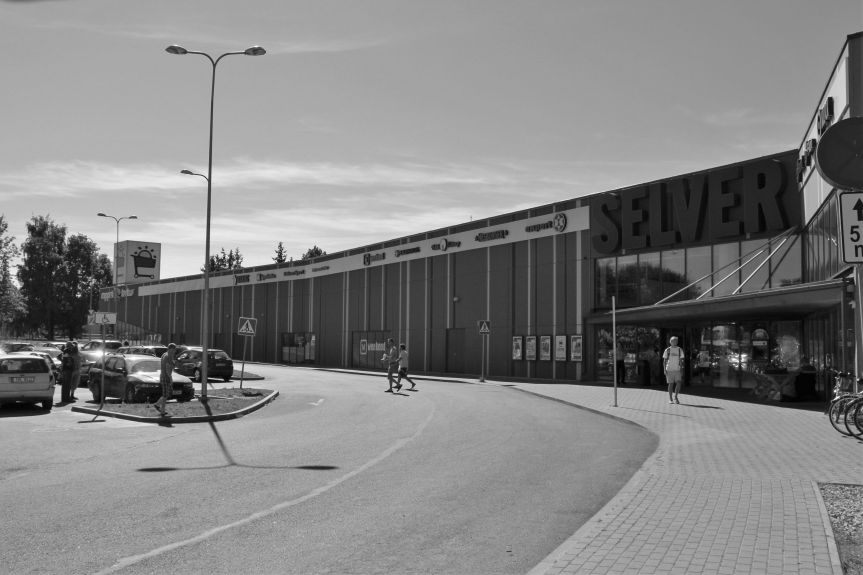
IT WAS A SUNNY COOL DAY and Rapla seemed almost too peaceful, just like heaven, if heaven really is a place where nothing happens. I stood outside a shopping center, buying some Greek strawberries to bring to the healer or ravitseja Ivika. The doors opened and shut, motorcyclists arrived and departed with a dream-like lull. Always departed, because who really stays in Rapla? It’s a remote place. Its people are so proud that Kristiina Ehin and Vaiko Eplik are from here, but it doesn’t surprise me. Rapla is beyond the grasp of the real. People from such a town have no choice but to turn within.

Ivika’s home is down a dusty dirt road. When I arrived, two strange older country gentlemen stood in its garden eyeing the foreigner from beneath the apple trees and I felt immediately that I had entered into new territory. The woman herself met me at the door, a country woman with long black hair and the epicanthal fold, skin that comes down over the corners of the eyes that connects the Estonians with kindred peoples in the east, traversing the ice to Alaska, down the spine of the Americas to Peru. The Estonians are only Europeans in part, of this I am now certain. They know other things.

“Your problem,” Ivika announced to me in her room in Estonian, “is that you are trying to be someone else.”

Of this I had no doubt, yet it was reassuring to hear it again in the country people’s language.

“Once you relieve yourself of this contradiction, all of your health problems will fall away.”

Ivika stood before shelves of Orthodox Christian icons and other symbols and for a moment I thought of what the good monks of Mount Athos in Greece, or Pope Francis himself might think of me, a supposed Christian, submitting to the care of country healer. Yet Rapla felt so far away from Greece’s sun-kissed chapels. There, Christianity seemed to grow naturally out of the rocky Mediterranean soils. Here, it was still a foreign import, imposed by sword or staff. Among the maarahwas, the Estonian country people, especially, Christianity still feels a little out of context. What could any of it mean to an apple orchard or a golden field of rapeseed? It has felt far away for me too as my mind succumbed to the Estonian way of thinking, much the same way that I silently intuit its grammar and even make mistakes in English when I tell someone to “put the door closed” — pane uks kinni — instead of to “close the door.” My dreams seem more profound here in Estonia, my longings, urges, and desires more meaningful, all connected to something the locals chatter on about called “energy.”

Energy. This is the crux of the matter: to have one’s energy cleared. Hence, people turn to healers like Ivika.

I wasn’t there for a miracle cure or a quick fix though, and I didn’t want her to tell me my future. I went there because I saw a tiny white spot at the end of a tunnel. I sensed that by liaising with her I might get closer to where I needed to be. It does take courage to accept that though. It takes the courage to surrender to her presence. It takes courage to abandon your defenses and let her understand you. You have to be willing.

When Ivika began to speak, her eyes became as distant and as hazy as two far-off islands. She spoke and I suddenly understood what aspect of my life was in focus. She kept talking about my daughters, but she didn’t specify which one, so I had to determine to whom she was referring. It was a fun kind of game. Rewarding. Her observations were so precise though that I had to laugh, a heavy chuckle that wouldn’t go away. I stared up at a poster on the wall of a lake in Alaska, with mountains around it, and I imagined that I was on the shores of this lake, and that every bear in the Alaskan mountains could hear my laugh. “You are really smart,” I told her.

She was still somewhere else.

“You are stuck between two lives, and are afraid to come out of the old one,” said Ivika. “But don’t worry about the others. They have their own lives too and will grow into them. You won’t lose your connections with them.”

At the end of our meeting, I tugged the box of Greek strawberries nervously from my bag. There are all kinds of Estonian social customs to which I am still oblivious. Sometimes it is rude not to give a gift upon visiting someone, sometimes it is unnecessary, which might as well be rude. Estonians don’t care for unnecessary things.

When Ivika saw the strawberries, she squinted at me ruefully and I was afraid I had offended her. Who wants to be on the bad side of a healer? “You like to be liked, don’t you?” said Ivika with her hands on her hips. “But you don’t need to be liked! You need to love yourself first!” Then she accepted my gift and even laughed and gave me a hug. It was such a good feeling and I felt that she was a friend. Whether the experience could be called real or surreal was immaterial.  What was important was that I felt like I had gotten somewhere.

södermalm

I first came to Stockholm when I was a month shy of 22, took a room in a hostel in Zinkensdam on Södermalm, the city’s fashionable southern district, wandered its streets. I never would have thought that I would return to this place so many times in my life, or that it would continue to fertilize my spirit with its custard- and mustard-colored houses, yellow-headed pretty people, green parks, Indian curries, long-playing vinyl, bell-ringing bicycles, high cliffs, and soothing cool harbor sea air. 

the last bit of mourning

last leafPEOPLE WANT ME TO SAY SOMETHING intelligent about divorce. I have nothing intelligent to say. This is not because I am one of these stiff-upper-lip characters who try to shrug off the greatest changes in their lives. Far from it. If I could articulate it, get it down good on the page, I would do it.
“You should just write it all down and be done with it,” a good friend told me over coffee in Viljandi. “You can should call it the last bit of mourning, the ‘viimane leina tükk.'”

I don’t know if I can even mourn anymore, but I do know that I have at last reconciled myself to the changes in my life. This wasn’t always the case. I remember how angry I was when I read Jaan Tätte’s book, Vaikuse Hääl – The Sound of Silence — just a few years ago. I remember where I was exactly, in Haapsalu, how from a high window I watched a lone truck driving along the Suur Viik with the autumn sun setting behind it, the book open in my lap. “Monogamy is not encoded in us, it is but a cultural recommendation,” wrote Tätte. “No one belongs to another,” he said. “We all die alone when our time comes.”

Such was Jaan Tätte’s grim prognosis for the married life.

As Estonia’s principal renaissance man, a sailor-adventurer type with a guitar, wispy hair and those steely eyes, it was hard to be angry with Tätte. But I was furious with the man.

Mostly because I knew he was right.

Divorce is something that illustrates his idea well, I think. We cling to the illusion of stability, to permanence, but when it ends, things do get windy. It’s like an airplane door being opened mid-flight, creating enough pressure to suck the passengers out and into the air where they float, vulnerable.

Sometimes I think of two mountain climbers roped together, suspended over an icy crevasse. One slips and is pulling the other one down, so the top climber pulls a knife out and then decides to cut the rope and let the other one fall.

It’s not the fear of colliding with the ground and dying that scares you, but that recognition that you are in free fall, that exhilarating and death roes sensation of being left loose in the air, that moment when you realize that you really are on your own and there is no one there to catch you. There is such wind all around that your lungs feel heavy and hurt deep.

It’s like ozone poisoning.

For months that sensation of falling would revisit me. I would feel it in the supermarket, or while I was driving. I would read sometimes or listen to music just so that wind would die down. Another friend promised it would get less windy. Maybe there would be a gentle breeze? I hoped he was right.

Sometimes I really felt like someone had died and I felt like mourning. But we both survived, fortunately, and there was no one to blame for what had happened, because nobody can control the wind. Only in recognizing your loneliness can you at last look across the line and empathize with the other person, who probably felt as much in free fall as you did. You must mourn, you must feel sad. Then you must decide to let go.

This is something you must decide to do.

When my Viljandi friend mentioned mourning, a final image came to me: a solitary tree with one last leaf. We have all seen these autumn trees, how those last few leaves cling. Until another stronger wind comes along and frees them and they float slow and elegant to the crisp piles on the ground.

And then it’s done, just like that: the last bit of mourning.

The “viimane leina tükk.”

the breaking point

ice

IT MUST HAVE HAPPENED SOME TIME AGO, around the time that Fred Jüssi, the naturalist, pulled me aside in Tallinn and asked me how old I was. It was at a library. He had come to read from one of his favorite books. He must have known something was going on with me. But what was it?

“Thirty-five,” I told him. I was at the time.

Jüssi has a solid countenance — you could chisel that old face into rock — but when I answered him, he winced a bit, as if I had shown him a flesh wound. “Thirty-five?” he said. “That’s tough.”

When I asked him why, he gave me his rundown on life. “The thirties are hard on everybody, but they are especially hard on men,” said the venerable Jüssi. “At some time during this decade, you will reach your murdeiga — breaking point.” He clasped me on the shoulder with a heavy hand.

“Breaking point?” It sounded ominous. “What does that mean?”

“Everything that once mattered to you will soon become meaningless,” said Jüssi. “And suddenly things that meant nothing to you will become the most important to you and mean a great deal.”

With that Fred released his stone grip and headed along on his way. Jüssi is in his eighties now. He knows.

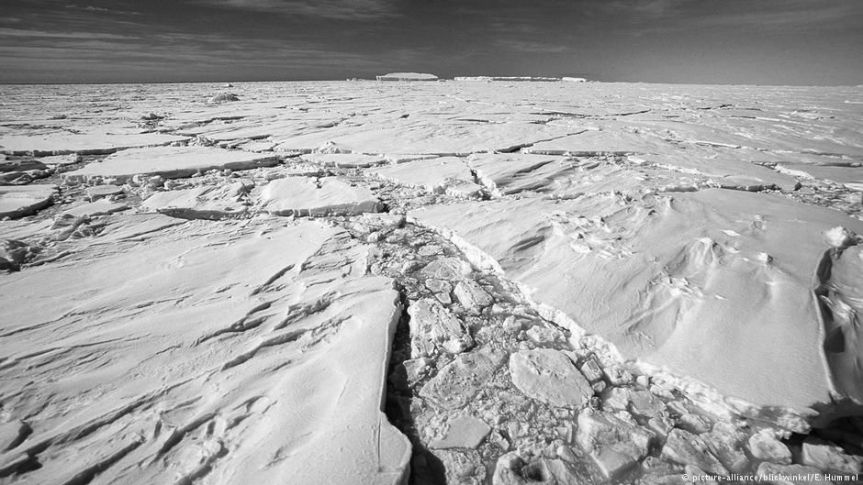
I think of Jüssi’s words now that I am on the other side of this imaginary breaking point. At least, I better be on the other side of it. It’s hard to even imagine or conceptualize such a break. A fissure in the ice? A fracture in the bone? A darkening horizon? Whatever it is, it makes sense. You begin life as an idealist or optimist, and so you remain, deep into your twenties, when decisions are made and paths selected.

By your mid-thirties though, there is a breaking down, a diminishing, an unraveling of the dreams. Reality trickles in with those first few gray hairs, those divorces and drama. You live through it, true, maybe even feel tougher for weathering the storm. What is harder though is to see others, male and female, a little younger or older, entering their own eras of upheaval, their own hurricanes of discontent, and then being asked to take on the role of Jüssi, to grip them by the shoulders, give them the wise old man talk, tell them it will be all okay when nothing is for sure.

Each of my friends’ stories is different, but they do a share a common theme — a loss of interest, a diminishing appetite for life after some kind of setback. It is that awesome moment of awakening, arriving on time, as Jüssi said, in your mid-thirties when you learn what people are really capable of, that leaves only emotional devastation and confusion in its tsunami wake. With all great hopes dashed, life’s beautiful chaos floods in, sinking once reliable philosophies and belief systems. There is no faith anymore, there is only heavy water. It rushes in and commands you to swim in it.

This is the real breaking point, the breaking of the waves on the shore, that moment of clarity when you understand you absolutely must swim. You must. The only alternative is drowning, and we have seen too many people do just that. So you leave behind your old self, you suffer a tiny death, you must use muscles you never even knew existed only to propel yourself forward. There is a kind of majesty to these kinds of life changes and Jüssi’s words ring out true. Everything that once was was, and everything that will be will be. What else is there to do but swim on, happily.

an uncomfortable question

saunaTHERE CAME A POINT during this year’s European Sauna Marathon, which was held in and around Otepää and had about 900 participants, that I had to turn to my teammate Allan and ask him an uncomfortable question.

We were standing outside the maasaun overlooking a frozen pond that, fortunately, did not have a welcoming ice hole awaiting one of our team members. I was the first team member to go into the ice hole at the Kekkonen Sauna at the start of the day in Kääriku. We weren’t permitted entry into the sauna until one of us went in. Down I went, down the ladder, thrusting myself into the chill water until it covered my shoulders. I came out blinking and cursing, feeling like I had just been baptized. But baptized by what I wondered? Tradition? Stupidity?

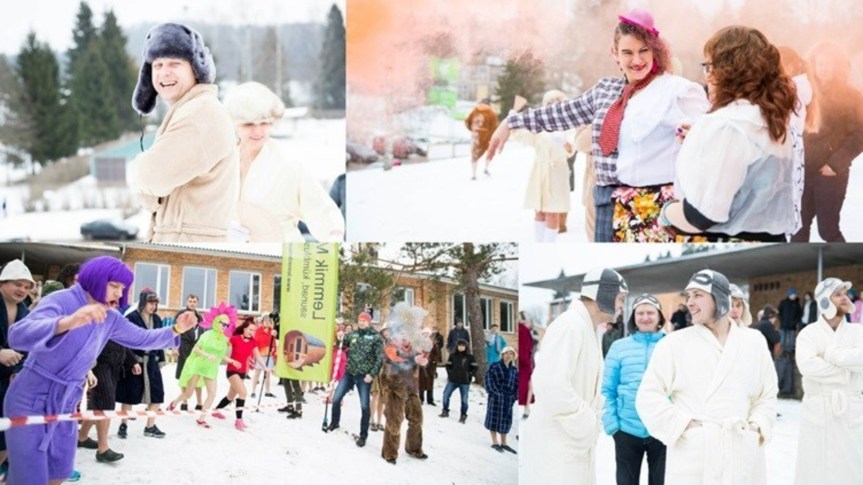
At the maasaun, we stood about with the other teams. Four grown men from Germany dressed in matching lederhosen and sauna hats. We saw their truck — which had a German flag painted on the side — at most of the saunas. There was a Mexican team, too, with sombreros, and a Danish team with Viking helmets and the red and white Danish flag, supposedly gifted to their countrymen during a siege of Tallinn in the 13th century. Yet it was the Estonian teams that were by far, the most varied and bizarre.

Some came in Spider-Man pajamas, others wore what looked to be their grandmothers’ bath robes. One team wore matching silver helmets, another wore fluorescent wigs and little else. There was a man in a full-body pig costume. I think I saw a man dressed up like a sheep at the indiaanlastesaun — a sauna located in a giant tee pee in the hills outside Otepää — but I am not sure. It was really smoky in there. There were the female teams dressed in bikinis with glittery tassels, like exotic dancers from space. They gathered around a karaoke machine at one point to sing along to the Estonian classic, “Viska Leili.”

Viska leili! Küll on mõnus, soe, ja hea! Viska leili! Viska leili!

This song was originally called “In the Navy,” and recorded by The Village People, a (mostly) gay disco group in 1978. Yet somehow the Estonians took a song about gay sailors and turned it into an anthem for tossing water onto the hot stones of the sauna. That’s not all they tossed on the rocks. At one sauna, marathon participants apparently ran out of water. Someone had peed on the rocks instead. We called this one the pissisaun.

Outside, dudes named Juss and and Janar were skating around on a frozen tiik in nothing but their swim suits and drinking beer. “Hey, Juss, would you throw me another can?”   

That’s why I had to ask my uncomfortable question at the maasaun.

“Allan,” I said. “Did you ever think that the Estonians are a little, you know …” I put a finger to my temple and twisted it back and forth.

“What?” he asked. Allan’s Estonian himself, tall, big, and blonde with decades of sauna experience, especially at his country house’s sauna, which he insists is the very best.

“You know, when a man marries his sister and they have a kid. What do you call it?”

“What? Hmm. I don’t think we have a word for that in Estonian,” Allan replied.

“Oh well,” I pushed my freezing hands deeper into my wet pockets and thought of another way to present my question. “Have you ever thought that you Estonians are a bit crazy?”

Allan just laughed. “Not so much up in North Estonia,” he said. “But down here in South Estonia,” he cast an eye at some of the other, strangely dressed sauna goers and sighed. “The people down here are a little cuckoo, yeah.”