
THAT WAS A DAY. It was the seventh of May. It was gray, mildly humid, the exhausted underbelly of a spring that had otherwise been pined after all winter. I know the date because I sent a letter on May 7. It read, “I’m sitting here in Tartu at her cafe, it has been completely redone.” There was more on top, but some of it is too incriminating to go into, even in this kind of story.
How had I even arrived at the place? My path was certain, to cut across one street, then another. In Tartu, the streets are wide and obvious. Follow them down to the bus station. If you have time to spare, wander through the market and along the river, take a picture, mind your own business. But while my mind was minding its own business, my feet carried me in another direction, here.
Why did I come here? She probably drank coffee in this cafe every day. Multiple times, in fact.
“I once sat right here with Fred Jüssi,” I wrote to my friend. “Just like this. And he took me aside, and said, ‘All of the things you think are so important in this life actually aren’t.’ Or something like that.” The old naturalist had told me other things, like how he knew when to initiate love and when to break it. “When it’s time to burn it all!” I wondered why Jüssi had told me those things.
But this was a love that didn’t seem burnable. It outlasted others. She was the woman you think about when you are in the arms of other women. You stare at the ceiling, her name on your lips.
I had gone to the cafe because I knew she worked there. There was thus a chance I might see her. “Admittedly stalkerish,” I wrote. “At the same time, I just wanted to cross paths with her, or more like put myself in her path, just to see what happens. I am curious.” This was my reasoning.
I wasn’t really dangerous, anyway, I thought. I was just sitting there drinking carbonated water.
Someone decided to play the Bee Gees at that moment, as if the whole pathetic scene couldn’t get any more weird and ridiculous. It was “More Than a Woman.” “But she is more than a woman,” I typed. I imagined her appearing in slow-motion, her hair glistening like the cosmos.
“She is young, but she knows that I like her and seems unfazed by it,” I wrote away in the cafe. “And I specifically like her for that reason. No need to discuss anything. It’s been understood.”
Or so I imagined, because she wasn’t there that day, and I didn’t have the nerve to seek her out.
I left the cafe thinking about that scene in Tender is the Night where Dick follows Rosemary to the set of her latest film and calls her from a phone booth from around the corner. Where every sane, sober-thinking man would have said no, he said yes, on total impulse. I knew that story was true, at least at heart, and was really about F. Scott Fitzgerald and the actress Lois Moran. “I went there because I knew Fitzgerald would do exactly that,” I later confided in my friend. “Because Fitzgerald wasn’t always a good person, but at least he was alive. Fitzgerald would have gone.”
*
When did life become literature? Or had it always been this way? I remember when she first emerged into view, lurking at first on the periphery, just another cafe girl. But slowly, she took shape, the eyes, the lips, the fingers with their silver rings. I could sense her when she brought me my drinks. I didn’t even have to look up, and sometimes when I did, her cheeks were rosy. I measured my affection for her in the reams of sentences these moments produced. My notebook served as a kind of romantic barometer; the better the writing, the deeper the feeling. Fitzgerald would have approved, I thought. Somewhere he was looking down at me, or up at me. Scott. Somewhere he was scribbling into his notebooks about some lovely young woman just like this.
And then one day, while marching back into town, I stepped into the cafe and demanded to know her name. Sometimes I wonder where that impulse came from. She told me her name, of course. This was a name I learned to take very good care of. I would never say it. I kept it hidden away.
Scott Fitzgerald emerged into my world in a similar way. First he was a wispy apparition, later he took full form. The Great Gatsby was compulsory reading in any high school literature course. There, in the halls of a brick high school, deep in the Nineties, our teacher, Mr. O’Connor, who refused to retire, taught us about Fitzgerald, Hemingway, and the Lost Generation. But I know these faces, I thought. These are people like us. When I looked around the room, I could see them sitting there. It wasn’t hard to imagine Hemingway as the brooding student to my left, with the smart answers. It wasn’t hard to imagine Fitzgerald by the door, a well-dressed preppie, always ready with a poetic line. I knew Fitzgerald before I knew him. He had just been waiting.
After Mr. O’Connor’s heart attack, we had a succession of substitute teachers. One of them, a gray-haired woman who wore a red turtleneck, started to call me “F. Scott” because of my style. I took it as the greatest compliment. To be a proper F. Scott, one needed a Zelda, a lifelong muse. Wasn’t it Scott Fitzgerald who taught me that people were material? That experiences were to be transformed into story? Scott shamelessly stole from his wife’s diary, sometimes word for word. There’s the “beautiful little fool” line that he smuggled into The Great Gatsby. But supposedly whole sections of 1922’s The Beautiful and Damned were lifted from Zelda Fitzgerald’s diary.
Scott was outraged when Zelda published her own book, Save Me the Waltz in 1932. She had used up all the material that he had been harvesting for his novel in progress Tender is the Night.
As Zelda, who provided counterpoint to Scott’s story arc, wrote, “Plagiarism begins at home.”
One day, as I was passing the cafe in autumn, I saw her in the window. When she looked up, there was a kind of oceanic shift in all the big waters around me. Sometimes I would write all day there by the window, and she would work too. “Well,” I would say, “hakkab jälle pihta.” “Jõudu tööle,” she would whisper and float off. Sometimes I would see her wandering around town, wearing sunglasses, listening to music. She would disappear around a corner, and I would watch her reflection in the windows she passed, until she vanished completely. But I was happy.
*
Then there was that day on the bus, the bus day, which happened at the end of August one summer when we were both heading to Tartu. I had disavowed any hopes of pursuing her, or anyone for that matter, but there she was. She sat across from me. I was too nervous to move. I wouldn’t even move my head. But other than greeting her, I felt her presence the entire way. I heard her munch on her damned juusturoll, acquired from a supermarket bakery (I often saw her in supermarkets) and the crumpling of the greasy paper in her hands as she took another bite. I could almost taste the crumbs as she did. I could make out just at the periphery of my vision, the whiteness of her shoes. She always wore those shoes. So many Estonians had shoes like those.
She was so ordinary in every way, and I would see women from behind everywhere who looked just like her. But none of them were her. She was sitting right there and all I could do was hide in my notebook, writing about her. What do you say to a woman who inspires you to write? Do you give her your messy first drafts? When we exited into the city, loud with traffic and the clanging of drills and jackhammers, we walked a while in the sun. She was going her way, I was going mine. She had exams. I had a conference. “Cool,” she said, blinking up at me. “Not really,” I said. She was just a young woman. What did I expect? Ecstasy? Euphoria? More poetry? I didn’t even know. All of this mythmaking was getting a bit too mythological for its own good. I did feel elated though. I felt a little like Fitzgerald. Later, I told the driver as I watched her once again recede into the streets of the city, “Can you believe I love that girl? I barely know who she is.”
The driver glanced in the rear view mirror. He said nothing back, but he must have understood.
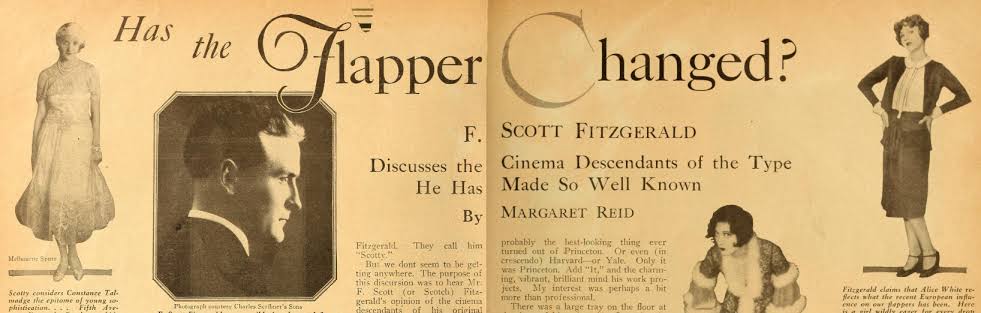
There are only a few recordings of Scott Fitzgerald’s voice, by the way. Some were recorded in California in 1940, the last year of his short life. His voice is just as you would imagine it to be. A breathy tenor that lingers melodiously on the vowels. The voice of an old and dear friend. There is also a film of Fitzgerald in 1922, when he was just 26, the wunderkind of This Side of Paradise, writing at a desk in a garden, the sun against his features, at the height of his powers. Fitzgerald wrote and rewrote. This was his method. He pressed on, no matter the challenge.
Or so I like to think. For this is another myth of Fitzgerald that haunts me, along with his famous drunken antics, such as the time he and Zelda asked guests at a swanky Hollywood party in 1927 to hand over their watches for a magic trick and then went to the kitchen and boiled them in the tomato sauce. That when Fitzgerald awakened from another spree, he put on his tie and sat at his typewriter. Even when Zelda was institutionalized, and Fitzgerald’s career was dead, and he was in debt and living in dollar-a-night hotels in the South, he was still typing. Maybe it isn’t true, but, at his nadir, Fitzgerald did write “Crazy Sunday,” “Babylon Revisited,” and “The Crack-Up.”
*
I don’t believe a muse has to remain one though. She’s never just a heroine, a source of material. No, I think a muse must remain a person. A real person, a flesh-and-blood human being, with weepy moods, highs and lows, career highlights, dreams, traumas, and memories. A person to be cared for, despite all the words that are written about her. For as much as Scott was helping himself to Zelda’s diary for his literary projects, he did love her. When he arrived in California again in 1937, looking for work, and people remarked how his intense eyes appeared as if he was viewing the very openings of hell, I think it was the agony of seeing Zelda institutionalized that made them appear that way. I believe Scott did love Sheilah Graham, the English columnist with a colorful past and with whom he spent the last few years of his life in Hollywood. Scott turned Sheilah Graham into the main character in the novel he was working on, The Last Tycoon. Because to write about someone is to love them too. In a writerly, Scott Fitzgerald kind of way.
Scott died a few days before Christmas in 1940, a chain-smoker who guzzled Coca Cola and had been suffering from alcoholism for years. He stood up in Sheilah Graham’s apartment and dropped dead on the floor, a tragic figure. In the terms of the obtuse Estonian media, the man had what could be called an ootamatu terviserike.
*
One cold winter evening, I found myself on a lonely train platform, surrounded by forest, when a southbound train pulled up for a stop. There she sat. I could see her through the window, totally alone, staring out into the black darkness. How strange, I thought at that moment. To have her delivered to me, at this moment, like this.
First, I went and hid in another wagon on the train. But then I gave myself a little pep talk as the train rattled through the night and she sat there in her seat. “You can only keep running away from yourself for so long,” I lectured myself. “Something put her on this train. Go talk to her.”
Which I did. I wonder what we looked like, the sight of this enormous man seated across from a young woman who was half his size and half his age. The writer, denuded of his pens and notebooks, was forced to make conversation with his muse. She was all there. Her fox-like eyes, her silver rings. She was staring out the windows of wintertime Estonia, lost in her own story. Maybe she was writing poetry in her heart about another young man. Maybe I was some minor character. When we arrived at the station, it was flurrying, frost had formed on the platform. It occurred to me that this was like the scene of a novel. Such a scene demanded good dialogue.
“You know,” I said, affecting my most romantic posturing. “I do happen to like you very much.”
The young woman looked up curiously at the big man in the jacket beside her and said nothing.
“But do you want to know why I like you?”
The young woman shrugged a bit, as if to say, mul pole õrna aimugi. “I haven’t the faintest idea.”
“I like to watch you when you listen to music,” I said. “You seem to be lost in another world.”
“That’s because music lifts us up,” she whispered. “Music can take us into other dimensions.”
The young woman put on her headphones again after that, tightened her coat, and walked home. I stood there for a while as the snow swept down. My hands were shaking then, both from the cold air and because I had been so bold to live out such a wonderful scene. Fitzgerald himself couldn’t have written it better on a $1,000-a-week screenwriter’s salary. It was just too perfect.
*
The Estonian version of this piece appears in the autumn 2026 edition of Edasi magazine. Special thanks to Robert Westbrook, the son of Sheilah Graham and author of Infinite Lies, who helped me with this story.

