SOMEHOW KULA SHAKER‘s new record Wormslayercrossed my desk. I was skeptical. I’ve never known what to think of this band. I was a fan in their heyday, the so-called classic period, way back at the end of the 1990s. It was good background music, driving music, with memorable melodies and interesting lyrics. But then they sort of faded away. There were new albums, but they just didn’t find their way into my heart. The original organ player Jay Darlington left the band and it felt like their best days were behind them. But a few years ago he returned and so Kula Shaker has been reborn. Wormslayer is the second album the reassembled outfit has put out and it sure is tasty and entertaining. Badly needed groove music, especially in such unstable days, psychedelia joined with elements of Indian classical music, English folk, Britpop, and even a little Manchester baggy (just listen to “Good Money“).
As I understand it, it was singer and guitarist Crispian Mills’ aim to bring more positive energy into the world with this album. Lost son Darlington helps him to achieve this noble goal, along with bassist Alonza Bevan and drummer Paul Winter-Hart. My favorite track is “Charge of the Light Brigade.” The production is thick, dense, yet shimmering, lively. The sound comes up at you from every angle. The drums are tight, the bass is flawless, and the organ holds everything together in a warm glow. Mills is also an underappreciated guitarist. According to Mills, it’s the best sound the band has ever achieved on record. Here I have to nod along and say, I agree.
THE TEMPERATURE has remained below freezing this winter, but artist and illustrator Kristi Kangilaski has brought some warm tropical colors to Viljandi with her new exhibition, “However It Feels.” The exhibition opened on 15 January at the Rüki Gallery on Tartu Street and will last until the end of February.
Kangilaski was born in 1982, the same year that Brezhnev died, though before his death which means that, in all likelihood, she is not the reincarnation of Leonid Brezhnev. In fact, it’s the opposite: our Kangilaski is no fat, hairy Communist. Rather, she’s a tall, charming woman who at some point tattooed the words “left” and “right” on her wrists so that she wouldn’t forget which was which. With her hat and long dark coat, this Estonian Academy of Arts-educated artist resembles Mary Poppins from a distance. Her well-marked, magical hands never rest.
When she is not at work as the Viljandi city artist, Kangilaski has created a whole exhibition-full of acrylic paintings. She works at home, somewhere between the bedroom and kitchen, and her warehouse is a corner in her daughter’s room. She uses acrylic paints because she likes to work quickly and acrylic paints dry quickly. “I’m an impatient, restless person,” she says. The paintings emerged according to how she happened to feel. She had no certain plans or preconceptions. Slowly, the collection assembled itself. Almost all of the paintings were undertaken in 2025 — one of them was even finished this January.
At the opening, wine and grapes were served.
At the exhibition, a visitor encounters images of people, horses, elephants, black cats, crocodiles, birds, and bears. In part, the atmosphere is playful and childlike. When I arrived to the gallery the second time to view the exhibition, an entire art school class was there and some little boys even hid themselves beneath the gallery couch and still wouldn’t come out, even when I tried to join them there.
Yet, as another viewer remarked to me, there are also more serious themes. The painting “Black Cat” depicts a mother’s difficult daily life, and “Crocodile” shows a woman seated at a table, with a man’s shadow in back, and that fearsome creature behind them. There is also “Fire Heads,” two red heads in opposition, which brings to mind an argument.
The style is interesting. I was reminded of Picasso and Modigliano’s primitivism as well as Viljandi’s own Paul Kondas, the godfather of naïve art. But Kangilaski herself can’t say exactly what style it is or what inspired it. “I’m especially inspired by different arrangements or compositions that happen appear before me,” she says. “And I have always loved colors,” she adds. “Inspiration is drawn from everything around me.”
Kangilaski agrees that the current colorful exhibition does leave one feeling as if they’re in the jungle. And in the jungle, one can experience all kinds of emotions. The artist has even considered bringing some palm trees to the gallery next time she has an exhibition and I have agreed in principle to help her move them. When she is not out looking for palm trees in Estonia, Kangilaski paints on. As an illustrator, she is just about to begin a new book project.
An Estonian version of this review appears this month in the Estonian magazine Edasi.
ON OUDEZIJDS ACHTERBURGWAL, a street and canal at the center of De Wallen, Amsterdam’s Red Light District, a woman sits in a window on a Friday morning staring into an overcast late November day. She is dressed only in her bra and panties and her hair hangs loosely about her shoulders. She is a voluptuous, pale character with doll-like features and pink lips and her face reveals a mixture of morning grogginess and utter resignation. This is the face of a woman who has seen everything and done everything, and everyone, and she seems bored by the world.
Upon seeing her from across the canal, I give her a friendly wave and she waves back to me. For a moment, it feels like we are old school chums. There is a sense of camaraderie there. Though I am a writer and not a prostitute, I suppose we are in the same kind of business. We give pieces of ourselves away for financial rewards. My soul is written with words onto paper. Her soul is pressed into flesh. She is someone’s daughter, someone’s sister, maybe a mother.
But this has been her fate, to sit here tiredly selling herself, while my fate is to head off to Rotterdam, to give a talk about what it’s like to be a writer who writes in cafes. I feel disgusted, of course, for myself, for the woman, for the world. I feel disgusted as a man, too. But then I wonder why as people we are so often disgusted with ourselves and with our day-to-day lives. As the weekend crowds line the canals of the Red Light District and the sinister laughter of throngs of British men (and women) echoes up and down the alleys, one can only feel disgust.
This is the heart of the decadent West, a West that we have convinced ourselves is dying every day. The official capital of the European Union is in Brussels, but its spiritual heart might be right here by these old canals with their erotic boutiques, 5D pornographic theatres, and sex workers.
Our revulsion and gloom about our future is only compounded by the migrant crisis and climate change. I recently read an article in The Guardian where it said that only one in five female scientists planned to have children, to spare their would-be offspring this shame of being born. No one else should have to contend with the endless famines, wars, hurricanes and droughts.
They want to save the world and so they choke off its future, as if they were solely responsible for all its sins and misfortunes. As demographers forecast our societies will only shrink more, people turn to animals for companionship. There are social media sites for cat and dog owners where their pets can confirm they’re going to meetups at the park, or share photos in a group chat. I suppose the dogs can wish each other a happy birthday. Because animals are innocent and people are guilty. This is how we have learned to think about ourselves. This is the future we are building for ourselves, an indulgent childless future of pet social media.
But hasn’t it always been like this? This is what I think that morning as I wave to my newfound Dutch friend over the canal. She is certainly not the first woman to live this life or have this fate. There are many others. I pass by them as they prepare for the day. Then I turn the corner.
ON THE NEXT MORNING in the Red Light District, the municipal workers sweep up broken glass and soggy french fries and the ravenous seagulls attack piles of trash. This is how yesterday is replaced by today, but the bakeries and cheese vendors are already open, their shops glowing with warm, inviting lights. Life tumbles sleepily forward in Amsterdam, like an old man fumbling for his keys. At night, the city is a hubbub, a bazaar. Whatever you want to eat, you can find it. Whatever you want to see, you can see it. Whatever you want to do, you can probably do it. The Dutch are a tolerant people and that tolerance has become a foundational element of what we call European or Western values. We measure our Westernness according to the number of rainbow-colored Pride flags that hang outside of bars, or by the casual way we smoke cannabis.
We unbutton our top button and walk down Oudezijds Achterburgwal, waving at the women.
We are a free people, we tell ourselves, free people who can do whatever they want and listen to whatever they want. We can spend part of the night in a record shop, as I did, digging through the record bins, engulfed in green marijuana smoke, unearthing treasures by Jamaican and Zydeco bands.
The Western life can be a comfortable life, one where the main existential question is, “How should I spend my Friday night?” Or, “What concert should I go to?” One can just while away the days, in pursuit of personal satisfaction, pleasure, what some call happiness. In corners of the world like Amsterdam’s De Wallen, there are almost no children at all and you can imagine if you close your eyes that they don’t even exist. For many of my friends they don’t. There is an invisible divide between us, I think, those of us who have had children and those who haven’t, and I think we both feel pressured in different ways. When my third child was born, a colleague asked me why I had decided to have one more. “You will never be able to support them on a journalist’s salary,” he said. He was right, but in my mind, that was somehow irrelevant. I took the whole thing to be a kind of godsend or the fulfilment of a prophecy. “Did you expect me to weigh the pros and cons, make an Excel file, and budget for it?” I asked him. “Yes,” he said. “Of course!”
He’s never had any children and so the world of having children was still abstract for him. As it has been for other childless friends, who seem to see kids as something like larger pets, that you can leave at home with a bowl of water for a day or two while you head off to some soiree. Children are an impediment to having fun, a thick wall that walls off happiness. “Every guy I see with a kid is walking down the street, shaking his head and talking to himself,” another friend told me. He hasn’t had children either.
The world for parents among childless friends can be a cold one. “Aren’t you coming to the party?” someone might ask. And then they are disappointed when you can’t, because your daughter is vomiting. They understand that such are the pitfalls of reproduction. They can’t see why someone would voluntarily do it to themselves. Where’s the benefit? Truth be told, it makes no sense. Because if I was to weigh the pros and cons, it would never be the right time to have children. The forces of Western society seem aligned against it. They make it hard in every way.
The West’s days are over, it seems. There’s nothing to do but close up shop, turn out the lights.
But if the ship of the West is sinking into the sea, why not just get our kicks before it slips below the surface?
ON MY LAST NIGHT in Amsterdam, I take a walk to see an old friend. She lives all the way at the end of Vondelpark, which is where my hippie father spent a night sleeping on a bench in 1973. I think about my father as I walk the avenue beyond Leidseplein, which is lined on both sides by restaurants and homes where childless couples watch Netflix while the West slowly dies. In one of these apartments lives an my friend from New York who, like me, attended college in Washington, DC, and later settled in Europe. She has married a Dutchman and has made two Dutch children who are now awaiting Sinterklaas.
Their building is a brutalist masterpiece. Its balconies face an internal courtyard. Outside the doors to the apartments, some boots and toys can be seen. Families have started to move in here, replacing the first generation of inhabitants who had lived in it since it was built in 1961.
That was the year the Berlin Wall went up brick by brick. The next summer, the Cuban Missile Crisis happened. Life must have seemed just as impossibly damned then as it does now. Yet people continued to marry and have children. In 1961, the Netherlands experienced the highest birth rate in recent history, with 3.2 children per woman. But just like in Estonia, the Netherlands are expected to lose people over the next decades. In this massive post-war edifice, young families huddle. They are demographic survivors.
My friend’s family gathers around a table and eats soup and pasta. The little boy, aged three, is dressed in pajamas that resemble a cat. The girl, aged six, is eager to put out her shoe for Sinterklaas, who will reward her with snoep, or candy. My friend’s Dutch life is very different from my Estonian life. She lives in the busiest corner of Europe. I live in the frozen wastes. But we both know the joy of setting out a shoe or slipper for a Christmastime visitor who brings candy.
The family tonight is being visited by a neighbor, a 34-year-old Dutch designer who looks like a woman from a Johannes Vermeer painting. She has red hair and is milky white and once lived in a black neighborhood in Bedford-Stuyvesant in Brooklyn where her neighbor was in a gang. In Amsterdam, she has taken up with a Russian software engineer from Saint Petersburg, and they are expecting their second child. “I only have a few months left,” she says, patting her belly.
This is how new Europeans come into this world.
Later, when I ask my friend about why she decided to have children when so many of our classmates didn’t, she gives a bunch of different reasons. But she also notes that it hasn’t been easy being a mother, that her career has suffered and that academia, even in the progressive Netherlands, is still quite male dominated, and that the women who have secured the best positions for themselves tend to not have children. But she does love her children and she wouldn’t have it any other way, she says. Her main reason for having children appears to have been that she had an awesome amount of love to give and just wanted to give it to someone.
Which, to me, seems like the best reason that a person can have.
EVEN LATER THAT NIGHT, I head back to the Red Light District. Something fascinates me about its stark grotesqueness. I lean up against the Oude Kerk, which has stood since the 13th century, writing in my journal with the hope that the walls of the church will imbue me with more marvellous writing powers. Down the way, some young men negotiate a price with a sex worker. Then I go looking for the woman I saw on the first morning in Amsterdam, the lady in the window. I just want to see her one more time, to wave goodbye to her, to make us both feel like we are human, for just one precious moment. The West may be rotten to its core and in decline. We may all peer out at our futures with that same haggard look of resignation, but I do feel compassion for her as she plies her trade. We are, after all, in the same kind of business.
RECENTLY, AN ICELANDIC SINGER by the name of Björk Guðmundsdóttir turned 60. Her birthday is the day after mine, which is why I know. We’re similar in that way, although she is 14 years older than I am. When I appeared in this world, she was already out in the streets of Reykjavik partying with other young Icelandic punks. When I turned 14, she released her debut solo album, which was named … Debut.
I’ve always felt that we were from the same generation, only that she is from the older part of it and I am from its last dregs. Which means that anything that happens to her will eventually find its way to me.
If Björk can turn 60, I might be headed for the same kind of fate.
There are plenty who have recently surpassed 60. Keanu Reeves is already 61. Brad Pitt is still, as of my writing this, 61. Johnny Depp just turned 62. How can it be? I think. Johnny Depp could retire soon? But he didn’t he used to be youthfulness itself?
For my generation, the stars of the golden sixties have always been old. They always belonged to another time. Mick Jagger has always been old. Even if he is a bit timeless, whether he’s 46 or 82 (this summer, Jagger will turn 83). He better be older than me, because I just turned 46!
It’s as if those stars of the sixties were born when dinosaurs still roamed the earth. A time before man had arrived to the cosmos. When rock and roll was something completely new, even in America. For my generation, their youth always seemed abstract. They didn’t even have black-and-white television when they were born!
I once met with the Icelandic scientist Kari Stefansson, who reminded me that when he was born in 1949, there were still houses in Reykjavik that had sod roofs. Maybe it was something like my generation’s internet-free childhood. It’s hard to describe it to the teenagers of today. They understand, theoretically, that once upon a time, there was was no internet, but it’s still hard for them to fully imagine how it could be possible.
But yesterday’s youths are now turning 60. Björk, Keanu, Brad, Johnny. For those of us getting closer to 50, like myself, it’s somehow refreshing. Because today’s 60 year olds are so active. They are planning new movies and putting out new albums that are full of new and fresh ideas.
I recently watched the Netflix series Ancient Apocalypse, which tells of various theories of history. And there he was, Keanu Reeves, a special guest. He’s not some slouching old geezer. Quite the opposite, he appears to be in excellent shape. I thought, “I would like to be like that when I turn 61. Alive, in good shape, open to the world. Curious, smart, creative. And hopefully still not bald.”
According to the Cult of Youth, youth is the sweetest part of a person’s life. When we get old, we’re supposed to sit around a table and talk about our youths. And nothing else interesting happens to us. But from our cultural idols like Keanu, Björk, and Brad, I have learned that age doesn’t actually mean very much. They just keep busy, no matter what year it is or how old they happen to be.
I’ve started to feel the same way. I don’t want to carry too much weight on my shoulders. I want to move forward. I have also seen how some people get to a certain level in life and then just stay there. They don’t move an inch forward. They sit there, watching TV or scrolling on their phones. And nothing changes. Time stands still. It’s as if their lives are already over, even if they still have to sit there, peacefully, for another 10 or 30 years.
Because of that, I am grateful to the current cadre, the ones born in the golden sixties, who are showing me and others the way forward, so that we also don’t get tangled up in the years.
Of course, I do look back now and then. Not with nostalgia, but to understand how we all got here. I recently wrote a novel, which still has not been published, which takes place in part in the summer of 1965 in Estonia, Finland, and Sweden. When I started writing it, I thought it would be easy. I would just have to remember my childhood from around the year 1985 and subtract 20 years. But soon I learned how different things really were. You had to wait in line at payphones, the television only showed a few channels. I thought how strange that world looked from the vantage point of today. And I didn’t really understand how things worked.
I discussed it with esteemed writer Jaak Jõerüüt. He finally got tired of my questions and advised me not to even try. “Imagine that you’ve never seen water, and then I take you to the bottom of the ocean in a submarine,” said Jaak. “Then you might understand what it would be like for you to step back into Soviet Estonia in the summer of 1965.” Jaak should know. He was 17. “You should write it as you imagine it was,” Jaak continued. “That would be far more genuine.”
You can still explore the material world of that time at the Vabamu museum in Tallinn or in leafing through old newspapers. To be honest, when I first stepped foot in Estonia in 2003, there were plenty of places that hadn’t been renovated since the 1960s. Imagining the inner worlds of people is something else. What was on their minds? What were their hopes?
I understood during the project that the young generation of 1965, those who were 25 that summer, had seen the Second World War as children. They had lived through the deportations of 1941 and 1949. They remembered the death of Stalin. They had seen so much in those first 25 years of life, that it’s hard to compare their youths with another generation. The generation of Estonian stars like Ada Lundver or Eve Kivi was very different in terms of values and outlook.
I think the 1960s are remembered as being golden today because of what had happened before the 1960s, which was so terrible, severe, and ugly. It seems to me that the breath of relief that was first exhaled by the youth of the 1960s is still blowing around the world to this day.
Unfortunately, there are fewer of those young 25 year olds from the summer of ’65 each day. If a few of them could stay a while longer, that would be nice. Then we could hear more of their stories. How the poet Paul-Eerik Rummo was once a young superstar, or how before ETV there was something called TTS, or Tallinna Televisioonistuudio. Which I only know from writing my book. That was a time when everything was different, way back when in the golden sixties.
Who is Justin Petrone?
Justin Petrone (46) has lived in Estonia for a long time. He was born in New York and studied journalism and European politics in Washington and Copenhagen. He came to Tallinn in the summer of 2002, when he was still just 22. He was married to the writer Epp Saluveer from 2003 until 2016 and they have three daughters Marta (born in 2003), Anna (born in 2007), and Maria (born in 2011). He has written, at last count, 11 books and his stories have appeared in the publications, Edasi, Eesti Ekspress, Postimees Arter, Anne ja Stiil, Tervis Pluss, Hingele Pai. He works as a journalist and plays bass guitar in different groups. He has lived in Viljandi, the city of cafes, since spring 2017 and is writing there now as you read this.
An Estonian language version of this article appeared in the January 2026 edition of the magazine 60+, which is intended for older readers.
THE ROAD INTO VÕRU is hypnotizingly long. It just keeps going and going, and even when you pass the turn off to Kanepi, it rolls on longer. Time stands still or vanishes all together out here. There are forests and more forests, with farms and old churches tucked in between. You become disoriented, forget where you are. Jaan Kaplinski used to live out here. I suppose it’s a weird Kaplinski kind of place. Just outside of Võru, there is even a settlement called Magari, which means something like, “if only,” or “I wish,” in Italian. That’s right, I think when I pass it. Magari! I do wish! If only!
If only I wasn’t driving to Võru again. What if I was down there in the Mississippi Delta, or maybe in a jeep on the yellow plains of Tanzania? Maybe if I squinted at that horizon toward Lake Tamula long enough, I might see the neck of a giraffe emerge or hear a lion roar? Every place is this mix of what it is and what you make of it. But there are no giraffes in Võru and the only lion is my daughter’s dog, who is named Lõvi*. Võru is, on its surface, a tidy provincial town. It has a nice central square and decent shops and cafes. There’s some funky street art on the facades. The lake promenade is well cared for and it’s enjoyable to walk over that bridge to Roosisaare. At night you can walk over the bridge and see the lights of Võru from across the water. It almost looks like a real city. It’s hard to imagine that this pretty town is the last outpost of Western civilization. Some outsiders who have moved in have warned me never to relocate. They say the old ladies are very nosy and that they use strange words like määne, sääne, and õkva.
This last word is the giveaway that you are dealing with a võrokas. There’s a nice old lady who lives in the same apartment as my daughter and she is always telling me to go õkva somewhere. Legend has it she is one of the original inhabitants of this Khrushchev-era house. Estonians call these kinds of apartment buildings with small kitchens and bathrooms Khrushchevkas. But the houses that were built in the days of Brezhnev are not called Brezhnevkas and nobody has ever boasted of living in a grand Gorbachevka. There are all of these incongruous pieces that fit together so snuggly in their minds but that make no sense to me. Of course, there’s no such thing as a Gorbachevka! Stupidest thing I’ve ever heard! But a Khruschevka? That’s different.
I like that old lady who tells me to go õkva though. She has a lovely wrinkled face and seems curious about this stranger from a faraway land who arrives sometimes and takes the lion dog for a walk. She is industrious, always busy. In the winter, she shovels snow. In the fall, she rakes leaves. Now she is tending to the flowers. Whatever you do, don’t step on those flowers.
***
I CANNOT SAY that Võru and the county that surrounds it are another country per se, but they do feel different from other parts of Estonia, or at least the ones I am more familiar with. For the people there, Võru is the capital of their own imaginary universe. Tartu is for school and shopping and Tallinn is for concerts and careers, but Võru is the real sun in their solar system. Even my daughter, who has now lived there for some time, said to me in New York one day, “But we have the same kinds of shops in Kagukeskus!” In the mornings, gas stations with ominous names like Coffee Terminal are busy with worker bees in overalls getting their first caffeine fix, in the evenings, those with a taste for finer things gather together and sip wine in NAMM Resto. Võru is also a destination for unsung musical heroes. Jethro Tull may never play Võru. But Jethro Tull guitarist Martin Barre played a sold out concert at a venue called Kannel.
It was at Kannel some time ago that I gathered with this rough-hewn tribe of Võru town folk and frontier woodsmen and watched one of the Apteeker Melchior films with my daughter. I felt like I was in a Roald Dahl book. I’m not sure which one, but those scheming farmers from The Fantastic Mr. Fox did come to mind. I should also note though that the Võru women are striking. On many occasions, your dedicated correspondent has found himself standing in line at the supermarket among local ladies who appear to be buxom, straw-haired angels, but have hardened, disillusioned country interiors. The Võru women and their gruff camouflaged husbands, who wear green either out of style or because they’ve been out hunting, seem impenetrable. If you were to ask them a question, the only word they’d reply is mida?! What?! It’s better to stay quiet.
Võru can seem both modern and ancient, and it has the Soviet period as a kind of mystery filling. In Võru, you can walk past the Kreutzwald Museum and feel as if Elias Lönnrot himself was in there having tea at noon, and then visit the Võru Huub Youth Innovation Center. At the Kubija Spa on the edge of town one can in the mornings enjoy a discounted spa package and socialize with old-timers in the sauna. Võru grandfathers discuss the Soviet era here as if it just ended a few weeks ago. “Do you remember, we had full employment? Everybody had work! You didn’t have to look,” I heard one of these men say to another. “It wasn’t like today.”
“But we were all stealing!” the other grandfather shot back. “Don’t you remember how we used to steal food at the cafeteria? We’d take those bags with us and just load up with food. And my friend, he used to work at the milk factory. All of his friends got free milk. All we did was steal!”
“Maybe you’re right, maybe you’re right,” the first Võru grandfather said. Then, turning his attention to the stranger in their midst, he instructed me to toss some water on the kerris.
***
THERE ARE MULTIPLE WAYS out of Võru and one is the southern route to Valga that skirts the boundary with the Republic of Latvia. Here there are new yellow signs that read Nursi, as if Nursi was an up-and-coming residential development, or maybe a business park, like Ülemiste City. But Nursi is a military training ground. This is clear not only because of all of the military traffic on the road, but because of the unfamiliar sound of helicopters floating over the highway. A few summers ago, I was driving near Sänna on a hot and dusty day only to see several tanks cross a bridge beneath which several Võrumaa girls were swimming in a stream.
This military presence is supposed to make us feel safer, but I can only think of movies about the Second World War. “That summer was the last summer of peace,” some narrator says from somewhere against this pastoral backdrop with a stirring orchestral piece playing. “Everything changed after that.” I saw tanks practicing in the fields as I drove toward Antsla. What am I to make of all this? The saga of the Nursipalu base expansion has touched me in various ways. Once in a south Estonian café, I encountered a stressed folk singer named Mari Kalkun studying a notebook as she worked with residents of the expansion zone to save their family farms. Mari is a musician and a usually cheerful one at that. To see her blue eyes moist with concern unsettled me. My friend’s house, perched in a forest along the Mustjõgi will be possessed. He’ll get good money for it, but who knows what will become of this modest estate where he raised his children or scattered his mother’s ashes. Maybe someone will drop a bomb on it. Just last week I stopped by the place, gave it a lookover and admired its stillness in the spring rain. When I am out in the Võrumaa wilds these days, I am reminded only more of Apocalypse Now. I’m waiting for Marlon Brando’s Colonel Kurtz to emerge from behind the sauna with a bundle of birch branches in his hands.
At night, the road to Valga is deserted. Maybe you might see two other cars pass you the entire way. When I am out there alone on those dark roads around Hargla, I am just waiting to see a UFO land and perhaps be abducted. Don’t most UFO abductions take place on roads like these? “I saw a bright light glowing in the forest. Then a strange pale man stopped my car.”
Nothing of consequence has ever happened to me in Valga, and its traffic flow was designed to disorient and fluster outsiders. Not only is it hard to get out of the town, but one hill even leads up into Latvia, where people speak Latvian and everything is different. This is some mapmaker’s idea of a practical joke. Sepa tänav becomes Semināri ielā. Sõpruse, or Friendship Street, ends abruptly without ever having reached the Latvian border. It’s a metaphor for the aloof Estonian-Latvian relationship, I think. Once I did see some Latvian kids at a gas station in Valga ordering french fries at about midnight in the Estonian language though. There was something endearing about hearing their goofy Latvian-Estonian accents. “Frikartulit, palun.” Beyond that gas station, the road leads northward toward a cozy town called Tõrva, which is where the singer Hedvig Hanson is from, and Helme, where my friend is waiting for me at the Helme pansionaat.
***
IT’S HARD TO THINK of a more unusual fate for an English journalist. Some get blown up by rockets, others are on planes that get shot out of the sky by paramilitaries. But here lies my old friend T. in the last room on the left at the pansionaat, stretched out in bed. He looks thinner, the gray hair around his bald pate is as gray as ever. His blue eyes are still lively. He’s been here since the winter. The windowsill is a shrine of bowls of peanuts and other snacks his Estonian children have brought him. He became aware that he was having a stroke when he got out of bed one morning, he says. T. lives alone, or lived alone, and was only able to alert his neighbors to his predicament by knocking on the floor. His mind is as fresh as it has always been, but his left leg and left arm are still out of commission. “I will recover,” he tells me. “You shall see!”
T.’s roommate is an older Estonian man in his pajamas. The roommate has fluffy tufts of messy white hair and a dreamy look to him. He spends most of his days watching TV and talking to business contacts.
After T. had his stroke, there was some discussion within the Viljandi hospital system as to where he should go to recover. And so he was sent here, to the Helme pansionaat. A modest white building on the edge of nowhere. The nurses come in and position T. into his wheelchair and we sit in the small recreation room beneath a giant screen where Hannes Rumm is interviewing Marju Lauristin. One of the nurses slides a bowl of seljanka in front of him, along with a single slice of wholewheat bread or sepik. He observes the broth with some curiosity. “What do we have here?” he asks. “It looks like seljanka,” I answer. “Hmm,” he says, puts a spoonful in his mouth and swallows. T. doesn’t know Estonian very well, and in the background Rumm and Lauristin are still talking and talking. It’s indeed a strange fate to be a foreigner.
Outside the windows, Helme youths busy themselves playing football between the small apartment houses, oblivious to the struggles of these older neighbors. I brought T. some genoa salami, pecorino romano, artichokes, olives, a loaf of ciabatta, and Saaremaa salted butter. He looks at the food as if it’s a cache of treasure.
“This must have cost you a fortune,” he says. “Where did you get it? Do you usually eat this?” “It only cost me about 15 euros,” I told him. “See,” I tell him. “It pays to have an Italian friend.”
There is hope for T. In a week, he will start rehabilitation at Viljandi Hospital. And this is a man who used to work across the desk from Bill Bryson in London in the ’80s. “If Bryson could only see you now,” I say. “Bryson?” he perks up. “That old chap? Is he still alive?”
Beside the pansionaat are the castle ruins and adjacent to these ruins is a series of sandstone caves. Peasants once hid themselves in these cool dark caves to escape marauding armies, or so they say. Down the hill, there is the so-called Doctor’s Spring, which is said to heal many ailments. Here on its banks I stand for a moment and watch a single small green frog swim across its surface. Other than the bubbling of the water, there is no other sound. If I could bring T. down here, I think, maybe he could be healed. If you just repeat a few phrases and douse yourself in the spring, all can be restored. You need to say the right words the right way.
***
THERE ARE A LOT of stories in the south. Some are pleasant, some are sadder. People down here are living out their lives, passing the time, almost invisible to those in the larger cities and in the north. They are here imagining giraffes drinking from the pristine waters of Lake Tamula or UFO abductions outside of Hargla. They are here eating seljanka in the Helme pansionaat. Once I went to a festival at Õisu Manor, not far from Helme, where there was a dixie jazz band playing. You would have thought we were in New Orleans. Imagine traveling into the Estonian wilds, only to wind up on Bourbon Street. I have a friend who lives in Kalamaja, Tallinn’s premier neighborhood, where lumberjack-looking men with beards push baby strollers to playgrounds with sea views, and where women scurry off to startups in Telliskivi, just like factory workers did a century ago. For them, these tales of the south seem far off, and after a train ride through the forests of the north, they also can feel a world away.
But just the other day I was walking near the beach in Võru when a red-headed young woman came running after me down the street saying, “What are you doing here!” She was wearing a marvelous coat and had on such interesting sunglasses, that it took some time to realize that I knew her from any number of run-ins at Viljandi events. “But what are you doing in Võru?” The red-headed woman said it as if we both happened to be cosmonauts who had crash-landed on the same cold moon. “I’m here often,” I told her. “My daughter lives here.” “Oh, oh,” she said, looking around. “But you know, I have lived my whole life in Estonia and this is the first time I’ve been here,” she said. “The very first time! It’s wonderful,” she paused to wonder at her surroundings. “Here down south, there’s just plenty of excitement and melancholy.”
Quite a few Estonian words appear in this piece. Lõvi is the Estonian word for Lion. Määne, sääne, and õkva are Võru dialect words that mean “which,” “such,” and “straight.” A pansionaat is what Americans would call a nursing home and the British a care home.
MY FIRST IMPRESSION is one of disorientation. I see faces emerging from the crowd, legs, arms, red lips. There are white headscarves, blue and red caps folded down on one side, the black-brimmed hats of the men’s costumes and all kinds of expressions, from the moody and pouting looks of the teenage girls in their traditional regalia to the yellow crooked-toothed grins of old men who need assistance walking. There are lines everywhere here. Lines of ladies moving like migratory birds in unison toward some far-off goal, be it an assembly point or a staging area. Some of them are in line for the toilets, hundreds maybe, others are in line for ice cream. Lines line the stadium steps, take their positions on the fields, and then form ornate and intricate shapes that one can only appreciate by watching the enormous stadium screen.
This is Kalevi Central Stadium in Tallinn, Estonia, on a brisk and windy Thursday evening in early July. Built in 1955, the stadium is said to accommodate 12,000 people, but looking in every direction, I have no way of determining how many people are really here at the Iseoma Song and Dance Festival. I try to do some quick calculations — I count about 100 people, and then trying to guess how many people might be here all together, but then I abandon this task completely. All I can say is that there are a lot of people here, many people. At one end of the stadium, beyond a grove of trees, I find myself inside a tent city of dancers. A man in a black robe, the kuub of the southern Estonian Mulks, is helping a young blonde woman get into her dress beside a tree. Her arms are up in the air and he’s tugging away on her belt. The woman doesn’t look comfortable, but I suppose that such sacrifices are necessary for the nation.
The wind flows over the crowds, chasing away any remaining heat and humidity. Near the podium at the front of the stadium, guitarist Andre Maaker is pacing anxiously with a guitar. I try to make a joke about all the nuns at the event, nodding to the white headscarves, but Maaker is in no mood for jokes. Singer Kelly Vask is standing nearby in a traditional dress waiting. A moment later, I see why, as they take the stage to perform the national anthem.
For me, Maaker’s compositions will turn out to be the most memorable of the dance festival. First there is one called “Lööme Loojanguni Lokku” (composed with Laura Võigemast) and then “Iseoma” which he helped Jaan Pehk arrange. The melodies of these songs are so sweet and so soft that they stick to me like sugar. There are no bold crescendos to them. There is no drama. Everything is just so nice and so tore. Thisis the Estonian word. Yes, everything is so tore that I almost start crying and I don’t know why. All night long, as I try to sleep off the first night of the festival in a friend’s Mustamäe apartment, I hear the verses of “Lööme Loojanguni Lokku” and feel a profound shift is underway, as if the stars have reached down and pulled me up into the euphoria of the cosmos. I think most people feel like this at the song and dance festival.
A world of delicate music
IN THE MORNING, I take the Number 84 bus back into the city center, sharing the ride with a group of dancers in Seto costume who have been sleeping 10 or 20 to a room in the Tallinna Saksa Gümnaasium. Once, when I was staying at the Sai Baba ashram in India, I happened to spend a few nights in an all-male dormitory that consisted of hundreds of bunk beds arranged in a gym. These beds were filled with Sai Baba devotees from all over the world, in whom I took an almost anthropological interest. One of them, an older Italian man, had discovered his guru through a leaflet, which claimed Sai Baba was the embodiment of god. “If he claims to be god, who am I to argue?” the old Italian told me. Another devotee, a comedian from New Jersey, carried miniature figurines of Hanuman and Ganesha and would worship them every morning. He was counting on these gods to help him with his career in show business. At night, the Indian dormitory was a curious place. Hungarian devotees would have nightmares and start screaming in Hungarian. While watching the dancers in Seto costumes on the bus, I can’t help but wonder if their experiences have been similar. Do the Seto men start yelling in Seto in their sleep? Have there been intriguing conversations about Peko, the thunder god?
I spend most of the day in the warm sun of the rahvamuusikapidu, or the National Music Festival, on Freedom Square, pondering such things while being serenaded by youths playing the violin, kannel, bagpipe, and karmoška. Again, the music is so soft and so sweet that I feel that familiar stirring sensation. Watching the young women strum their kannels, I wonder about their inner worlds too. I wonder what they dream about. How do they feel? What are the desires that they have hidden away behind this pleasant music? This is the only world that they have ever known, a world of EU-subsidized highways, of bountiful supermarkets, a world of choirs, ensembles, and festivals. Their lives are lived from event to event, from rehearsal to rehearsal. There’s no time for worry or existential questions in this world. Theirs is a world of delicate music, where there are no loud voices, no shouting, no despair, no angst, no ennui. The life of the lovely kannel player seems gentle, patient, even kind.
In the evening, I am back at the Kalevi stadium for the final performance of the dance festival. One of my friends is a dance enthusiast and has been vigorously documenting her dance group on social media. But trying to find her or anyone at the dance festival is impossible. Every woman has blonde hair done up in braids just like she does. They are all wearing those kinds of tights and those colored skirts that she wears. They all look like the Estonian dolls they sell in the airport souvenir shops, though I would never tell her she looks like that. Then, out of the corner of my eye, I see her flit by, with a big, beautiful smile on her face. She looks happy, happier than I’ve seen her in months. I worry it’s a happiness that can’t be sustained.
On the stage, there is a closing ceremony, and women and men in traditional garb ascend a steep staircase to be recognized for their contributions to the festival. The air is brisk, cool, calming. The sun is just peaking through the clouds over the distant skyline of the city. Behind the stage, there are stacks of what I think are evergreen Christmas wreaths, but these turn out to be made of oak leaves! Each person recognized has the oak wreath or tammepärg placed around his or her neck, so that soon it starts to look as if a whole forest of oaks is up on stage.
“But why do you use oak leaves?” I ask a woman behind the stage. “Because the oak is a very powerful tree,” she says, with an almost mystical glint in her eyes. I wonder about who creates the oak wreaths, where the branches are cut from and what becomes of them. Maybe someone mounts them on the wall of their sauna, to be revered for all time, or maybe they just wind up where everything else winds up in Estonia, as kindling for a fire in the furnace?
Soon our guitarist friend Maaker is also on stage with a wreath of oak leaves around his neck. When I ask him about the experience, he confirms that it was most pleasant. “Those oak wreaths just smell wonderful,” Maaker says. “And everyone at the dance festival was smiling.”
A rainy parade
I SPEND THE SECOND NIGHT of the festival in another friend’s apartment downtown. He’s just moved in and there is no furniture there, so my bed is a camping mattress, a sleeping bag, and a weak pillow. In the middle of the night, I hear people yelling and imagine that my friend is fighting with the police in the next room. I wait for the Estonian police to wake me up and interrogate me, but when I am at last roused from my sleep by the sound of a trumpet player somewhere nearby playing the national anthem at daybreak, I realize everything must have been taking place in the parking lot instead. My friend has in the meantime made a pot of coffee and when I ask him about the police, he says that he has no idea what I’m on about. “That’s just what life is like in Tallinn,” he says. “There are always people yelling at night.”
Tallinn life is a little bit different during the festival. My friend’s apartment is across from the Tallinna 21. Kool. At 10 am, there is a group of men in traditional black hats or kaabud and knickers seated around in front, like extras from the 2019 film Truth and Justice. I walk between these austere characters and enter the school to have a look around. In its atrium, about a hundred children are sitting and standing and sipping from juice boxes. On the second floor, the suitcases are piled up by the windows. Down the hall, I am greeted by a woman in a red headdress or tanu from Pärnumaa. Their group comes from Audru, she says, which isn’t too far from where my children’s grandmother was born. I have a complicated relationship with the Estonians. I am not one of them, nor do I wish to be, but my children are them. So we are relatives of a kind. Inside a classroom, I ask the dancers what it’s like to sleep in a school.
But you can forget any stories about loud nightmares. These people are tightknit and are used to each other’s company. They only respond with, “Noh, täitsa tore oli.” “Well, it was nice.”
The rongkäik or parade is tore, too, but it’s a challenge. One needs stamina, strength to march in this parade. Sheets of rain fall on us all along the route. The poncho I have brought along is quickly soaked, as are my pants. My hair is a wet mess, my skin is cold and damp. My journals are wet, the ink runs in places. My friend and I take refuge in Viru Keskus where I order a hot plate of Uzbek plov. My friend is not the kind of person who cries easily, or expresses any emotion without a joke or healthy skepticism. When you have lived as much as we have, those gentle, peaceful, fluttering kannel-music like moments are few and fleeting. But he admits that he can’t get through a rongkäik without shedding at least some tears. We’ve both been in Estonia for what feels like forever and talk about when Swedbank was Hansapank and when there was no Viru Keskus. Most changes are welcome, but we’re also worried that the Song and Dance Festival will eventually become a cultural attraction, where tourists buy up all the tickets and Estonians are only able to watch it at home. He considers that businesses might start sponsoring these events, so that one day there will be a Prisma, Rimi, or A. Le Coq Choir.
We agree that the festivals are an occasion for social renewal. All societies are made up of such tiny, bite-sized building blocks, like village choirs or dance groups, and of these smaller pieces, more elaborate superstructures are created. The festivals are necessary for society to function. They bond people together and the bonds created must last until the next festival. We hope that Tallinn never becomes another Venice or Barcelona, overrun by Jezz Bezos and other mindless tourists. It’s true that neither of us is Estonian. But we do have Estonian kids. We do worry for them.
The main event
IT’S A LONG MISTY WALK through Kadriorg to get to the song festival on Saturday. I take the Number 1 tram and then cross bridges and climb steps, eventually passing the Japanese Garden and exiting through a parking lot across from the Song Festival Grounds. When a person is caught up in those dense crowds, it becomes hard to construct a timeline of what happens. Even my journals become a mess of discombobulated, half-written entries, jotted down in spare moments and out of order. One thing I do see is a blonde, middle-aged woman running through the food area crying out, “Police! Police! Does anyone know where the police are?” Having seen some guards nearby, I point her in their direction. In chatting with some officers later, I find out that the number one issue they have to contend with is lost children. There’s even a pickup point where as many as 10 children might sit waiting for a parent to retrieve them. One wonders what life is like for the children in this makeshift “kindergarten.”
The police also have to deal with the occasional unruly attendee who has decided to “pregame” for the festival and either gotten drunk at home or hidden a flask of vodka in his underpants. (There is no alcohol on sale at the event). “It’s a shame,” one of the police tells me. “There are some who do not see this festival as a holy event, but as an opportunity to drink.”
The singing is here, but the singing and the songs are only a part of the experience. Yes, we have all come to hear these songs, to sing along, but the festival is also about the circus city that springs up around the stage, or the troupes of children in wet ponchos stumbling across the wet grass, following the instructions of some stern teacher who has commanded them here to participate in this grand event, or the meandering conversations in the press tent where French and Finnish journalists rub elbows and munch on free ice cream. There’s a lot to this thing, much more than any agile camera work or grinning selfie can ever do justice to.
After being drenched by rain for a day and a half, the appearance of the sun toward the end of the concert on Sunday does seem like a small miracle. Then come the best-known songs, “Tuljak,” which is conducted by choirmaster Triin Koch, and “Ta Lendab Mesipuu Poole,” which is conducted by composer Hirvo Surva. These musical personalities are treated with such reverence that every one of their moves is observed with an awesome curiosity. It’s almost like watching Wimbledon. Every flick of the wrist, every nod of the head is somehow meaningful. The conductors look as if they are holding back a mighty wave with the power of their hands.
What is it like to stand up there? I wonder. And how does one feel at the end? Neeme Järvi, the grand old conductor, now aged 88, knows this feeling well. His movements are tight, precise, controlled, but at the end, in a moment of triumph, Neeme Järvi topples over. From the back of the Song Festival Grounds, the Üldala, or general area, no one knows if he has just slipped or if really, being so caught up in the music, Järvi decided that this was his final day and he was going to go out with a cymbal crash. Throughout the entirety of the festival area, there is only silence and concern. This was obviously not planned. Is he alive? Has he died? What kind of festival even is this? But then we see that Neeme Järvi is alive and well and he jokes to the crowd as they chant, “Elagu! Elagu! Elagu!” Which means something like, “Long may you live!”
It is the final festival miracle.
The morning after
AND NOW IT’S THE MORNING of the day after. But when did this day even begin? When the light of the day is nearly seamless and the last people go home after the summer light returns, isn’t it hard to find a line between the two? After the festival, I have trouble sleeping. I awake at three and then five and then eight. I can hear the cries of the gulls and the muddle of downtown life at dawn. Like life, the trams creak back to work, back to normality. Even though my arms and legs are sore from standing for days, and my mouth is dry, my hair is greasy, there’s goop in my eyes, and I’m still wearing yesterday’s shirt, my other clothes piled up on the floor, my socks kicked across the room, the light of the new day is unrelenting. Even when I can’t bring myself to get up, and the euphoria of the festival is still pulsing in my blood, I get back on my feet, because the sunlight won’t leave me alone and life does move onward. Just as I do as I make my way to the Must Puudel cafe in the Old Town where I order a coffee and breakfast, first thing. Hungry city birds are perched, ready to peck at any discarded crumb.
After breakfast I go for a walk to stretch my legs, muddle through this new, post-festival reality that I have awakened to. Some tired singers are lounging in the sun of the Town Hall Square. Who knows when, or if, they ever went to sleep. On nearby Lai Street, I find a lillepärg or crown of flowers lying on the ground. Someone must have left it here in the early morning. I wonder who the woman was who left this flower crown here. I wonder what this crown has seen. By tomorrow, all of its petals will be dry, I think. By tomorrow, the festival will just be a memory.
An Estonian-language version of this piece was published online on 13 July 2025 in the magazine Edasi.
ONE DAY IN EARLY APRIL, when there was still fresh snow on the ground, I was walking down the street towards the seamstress’ place when I overheard two school boys singing a song outside the Lõuna-Mulgimaa Puuetega Inimeste Ühing, or the Association of People with Disabilities of South Mulgimaa, as it translates in English. The words of the familiar song they sang together went something like this, “Mi amore, espresso macchiato, macchiato, macchiato, por favore.”
The melody tumbled down into the street like big wet flakes of snow. I already knew it so well. Sometimes I think that “Espresso Macchiato” is always playing somewhere. I only happen to hear it now and then. When I am not hearing it, it is being played somewhere else or it’s replaying itself in someone’s mind. The song is always playing somewhere out in the universe. Maybe it has always existed then, and its creator merely channeled and recorded the song?
“Do you know that I am researching this song,” I told the young lads, who were perhaps 10 years old. They looked up at me with curious eyes, but they were not intimidated by the big stranger in a dark coat. Rather they were friendly and seemed to take me as just another, much larger school boy. One of the boys held his thumb up to me. “Good,” he said. “Because I love that song.” “Well, what else do you think about the song?” I asked the first boy. “It’s my favorite song,” he said. “Mine too,” said the other boy. “‘Espresso Macchiato’ is my favorite song too,” he added. “Very good,” I said. “Enjoy your favorite song.” “Oh, we will,” they said. At that, I left the boys at the corner, but I could hear them singing as they walked the other way.
‘You just have to watch it’
Everyone, I think, has now developed a special relationship with “Espresso Macchiato,” Estonia’s 2025 Eurovision entry, performed by Tommy Cash. For some, like those little Viljandi boys, it has become their new favorite. Seventy-five years from now, when they are living in some South Estonian hooldekodu, or nursing home, they might sit beside each other watching Aktuaalne kaamera and singing the song. “Mi casa very grandioso. Mi money numeroso.”
Everyone has their own story about how they first heard “Espresso Macchiato” and how it began to manifest itself in their lives. Think about it. Where were you when you first heard it? For me, I was sitting in a cafe in Tartu meeting an old friend in winter when she pulled out her phone and told me I just had to watch this video. “You just have to watch it,” she said. I didn’t know what to make of it at first. The friend, an Estonian journalist from Kuressaare, thought it was fantastic. I understood that to Estonians, I am something of an Italian, though not the genuine thing, and for them, it’s interesting how someone like me might respond to these stereotypes. Coffee, spaghetti, mafia. Screens displaying red-and-white checkered tablecloths.
There he stood, the mustachioed Tommy Cash, looking more like Dracula than any mafioso. The thin mustache, the shoulder-length hair, the pale skin. Was he not some kind of caffeinated disco nosferatu? But it was not blood upon the lips of this Estonian musician. It was a coffee drink. There he stood drinking another espresso macchiato. “Life is like spaghetti,” Cash sings. “It’s hard until you make it.” Then he sings, “No stresso, no stresso. It’s gonna be espresso.”
I had to wholeheartedly agree with him. Life is like spaghetti. More coffee is the answer. “Espresso Macchiato” is not just a Eurovision entry. It is a philosophical manifesto on life.
After my first encounter with “Espresso Macchiato,” baristas began to sing it to me. Nobody in Estonia could order an espresso anymore without someone asking if they didn’t want an espresso macchiato. “No stresso, no stresso,” the baristas said. “No need to be depresso!”
Did I really look so depressed?
Italians love to complain
There has also been controversy. An Italian consumer association appealed to the European Broadcasting Union suggesting that it was not fit to be included in the Eurovision competition. Some right-wing lawmakers were indignant and condemned it on social media. Not knowing how to process contrasting feelings of being offended but also honored, Italians dressed up like Estonians and made their own version about eating sprats. “Sööme sprotte!” The song had descended into a kind of transnational food fight, with Estonians throwing coffee cups and spaghetti over the continent at the Italians and the Italians tossing back cans of fish.
Maurizio D’Agapito, an Italian resident in Estonia who is also a musician and performer, has been asked to participate in numerous podcasts and radio programs, such as Spaghetti alla Chitarra, to weigh in on the merits of the song. Maurizio also provided his own analysis on his YouTube Channel, Itaallane Eestis, and so I decided to seek him out, arranging an interview at Fotografiska in Tallinn on a March day. I was intimidated of course, because I would have to do an interview in Italian. Maurizio is a Roman — he even looks like a Roman, with his coarse hair, broad shoulders — and did not mince his words when it came to Cash’s notorious song.
He approves of it. He performs it at his concerts. “Estonians go crazy when I play it,” he said.
“Italians have a word for a song that gets stuck in your head,” Maurizio added. “A tormentone.”
A tormentone torments its listener. Yet this torment is not necessarily bad. One learns to enjoy being tormented by a tormentone. There is something perversely satisfying about the torment. Here I must agree. If “Espresso Macchiato” had been too infectious, too catchy, it might have long ago burned itself out. But the song takes its time. It has a relaxed feel. You start to miss it.
“Mi amore, mi amore …”
Such is the nature of a tormentone. It is a phantom song, attaining a kind of immortality. One must be careful not to invoke the name of a tormentone. Otherwise it will begin to torment again.
And as for the controversy?
“But Espresso Macchiato is not Italian!” protested Maurizio. “It’s a big fucking mix of Spanish, Italian, English. Broccolino, no?” He laughs. The man is correct. Por favore is Spanish, not Italian. “It would be stupid to be offended by it.” He dismissed the idea with a hand gesture.
Some Italians were offended though, mostly by the use of the word ‘mafioso.’ The mafia is a very sensitive topic in Italy. Just three days ago, as I type this while drinking a coffee, the police arrested 24 in Naples for running a parking protection racketing scheme. They were also charged with possessing illegal weapons and drugs. “The mafia is a big issue,” said Maurizio.
The real issue though, as he put it, is that Italians just like to complain about things. If it’s hot, it’s too hot. If it is cold, it’s too cold. No matter the coffee or the meal, it could have been better. He is not the first Italian to acknowledge this national trait for complaining. If the Estonian way is to suffer quietly through real hardships then the Italian way is to complain loudly about imaginary ones. “Italians love to complain,” said Maurizio. “This gave them another reason to complain.”
Mostly, though, Maurizio is a fan of Mr. Cash. He said the marketing around the song, controversy included, had been perfect. “Oh, he was clever,” said Maurizio I imagine with a pinch of envy. “Very, very clever.”
The boy from Kopli
Of the author of this tormentone, I still know very little. He was born in Tallinn a dozen years after I was, and is of mixed ancestry. His home language was Russian and he speaks fluent Estonian having been educated in the Estonian language. He is therefore a multiethnic polyglot. Mr. Cash considers himself a post-Soviet rapper with an Eastern European soul and Scandinavian resume, they say. Perhaps that might be a good way of describing Tallinn to all. That’s the thing about artists, we hold them up as idols to better understand ourselves. Estonia in recent years has been worshipful of homegrown exotic heroes like Stefan, Alika, and Tommy.
I had thought that his birthname was probably “Toomas Sularaha,” or Tommy Cash in Estonian. In fact, it is Tomas — with one ‘o’ — Tammemets. He was raised in Kopli though, which tells me a lot. A long time ago, in the old days, when I was a 24-year-old recent arrival to Tallinn with a wife from Karksi-Nuia and a newborn baby who I would take on wintry excursions to Säästumarket, I also gave some English lessons in Kopli, which was a wooden ghetto of half-burnt buildings. There were no Argentinian steakhouses in those days, no boutiques or seaside breweries. There were characters who looked a lot like, well, Tommy Cash, in puffy jackets drinking vodka. Tommy Cash came out of Kopli, was a creature of its misty alleycat-inhabited back alleyways.
This idea, of a scrappy street performer who hustled his way into high-profile collaborations with Charli xcx and Diplo, has impressed even the most reticent Estonians. “You’ve got to hand it to him,” a bearded, Camus-obsessed Estonian told me on the street. “In a country where nobody wants to stand out, Tommy hasn’t been afraid to draw attention to himself, to stick his neck out.”
Another Estonian who is more aligned with the folk culture that colors Viljandi life, was similarly supportive of Mr. Cash. “I don’t know if I am down with ‘Pussy Money Weed’,” she said, referring to his 2018 single, which has garnered more than 15.4 million YouTube views since its release. “But if he is making fun of that kind of attitude, that lifestyle, then I can be supportive of that.”
It’s hard for me to understand the music world of which Tommy Cash is a character. I’m old school. I come from the world of concept albums, meticulously recorded in studios in the Bahamas or in Stockholm. Think Pink Floyd’s Dark Side of the Moon. Or Björk’s Homogenic. Think of Radiohead’s Kid A. I suppose in the old days, popularity was measured in units shipped, gold records gained. I’m not sure that 15.4 million views means something. What if one person just kept hitting refresh 15.4 million times? I don’t know what to make of these weirdly titled collaborations called “Zuccenberg,” “Ca$h Ready,” and “It’s Crazy, It’s Party.” I don’t know.
My old analog world of artistry did colide with Mr. Cash’s world of being a digital provocateur. That was the day when Kristiina Ehin, who writes paper books and paper poems, found herself in the Ankrusaal of Kopli unable to pay for a coffee, but rescued by a swashbuckling Mr. Cash. He promptly paid for the lady’s drink and informed her that, having already won Eurovision, at least in spirit, he had little better to do than to mill about Kopli cafes rescuing distressed poets.
“It did not change my life,” Kristiina later confided. “But it was fun and it was nice to see him.”
Kristiina’s husband, the esteemed musician Silver Sepp, also did not come away emptyhanded. Author of his own song about coffee, called “Kohvi,” in which he beat boxes using a microphone and coffee cup, Silver said he was not at all jealous of Mr. Cash after he rescued his wife in a Kopli cafe. “On the contrary,” he said. “After all, I got a coffee cup for myself,” he said. “A new instrument!”
The Kristiina Ehin Coffee Incident has been added to the lore around “Espresso Macchiato.” It is part of the story of the song, as much a part of it as the Italians who did a cover version about eating sprats. Such stories are as important as the songs, I think. All good songs have stories.
A parting drink
All across Estonia, espresso macchiato has either been added to the menu, or has risen to the top. At Sumi, young patrons from Kalamaja ask for it with a morning donut or pastry. At the Cafe Gustav in Solaris, they have even underlined the drink to make it more apparent to their clients.
“We’ve always offered it,” the barista said. “After the song came out, well, there was a wave.”
And at my local drinking establishment in Viljandi the drink, while not on the menu, is available upon request. I have been told to be careful. “It’s quite strong,” the barista warned me. “It’s just an espresso with just a little bit of milk.” The cup of espresso macchiato arrives and I sip it. It’s frothy and does have a certain kick. So this is the famed drink, I think. This tormenting coffee is the one that rules them all. This is the drink that could deliver Estonia a great Eurovision victory. One could get seriously addicted to a drink like this.
Those were the days. Viljandi’s Uueveski Valley in 1930.
FOR DAYS, IF NOT A WEEK, I had been planning to meet with Heiki to talk about Uueveski org or, as I call it, Uueveski Park. To me, it’s clear that this large natural area just adjacent to the center of the town is a town park, but on maps it is merely marked as an org or valley, as if it’s such a natural place that it has not yet been fenced in and given something like an official name or status. I had written to Heiki inquiring about the origins of this place and had been told we would have to meet face to face. Such information needed to be communicated in person, he said. This meeting of the minds proved elusive. I was in Tallinn or Tartu, or just too tired. The discussion of the valley’s origins was pushed off. Then one day at the supermarket, Heiki appeared with a basket in hand. It was one of those Viljandi moments, when the person you’ve been planning to see appears effortlessly, as if by magic. I had almost completely forgotten about Uueveski. There he was, ready to instruct. Heiki comes off as wily, clever. He seems to know who lived in each apartment and how they got along with their neighbors. Heiki just has a nose for these things.
In a few minutes, Heiki recounted the history of this sleepy place, which has belonged to the town for all of living memory and into which a series of swimming pools were built back in the 1930s. At that time, Viljandi Lake was a less attractive swimming hole, as it was full of pasture run-off. The pools on the stream that feeds Viljandi’s least known waterbody, Kösti Lake, were clean and cool and more appealing. There are photos of Viljandiers in old-time swimsuits having a wonderful time. These days it’s rare to see someone taking a dip in the pools, some of which have been renovated, but I have been told that vipers like to sun themselves on the stream’s banks. Each time I walk around those pools, I keep an eye out for those vipers.
When I first lived in Viljandi, some 15 years ago, I never visited Uueveski. I’m not sure why. Maybe because my children were small and I was a house husband. Viljandi to me at that time seemed like the Castle Ruins, the Green House Cafe, and maybe the Statoil on the way into town. There was no Uku shopping center then, there was no Kodukohvik, and there was definitely no Asia Billa Nepalese restaurant. During the pandemic, Uueveski Valley became a close refuge for me. It’s a shady, peaceful place. Many times I have found myself standing on one side of that bubbling stream, which they call the “Uueveski River,” wondering if it would be possible to cross it. There are some places where it seems possible, where the rocks are aligned in an almost perfect bridge. Yet I never attempt it. When I was a boy, I would have done it many times by now, but I lack that childhood bravery I once had. One of these days though I am going to try to traverse the stream, even if I get wet. Even if everyone here sees.
On the other side of the stream, closer to the Forest Cemetery, or Metsakalmistu, there’s a series of large villas that bring to mind the chalets of the French or Swiss Alps. For this reason, I have nicknamed this neighborhood “Little Switzerland.” I have no idea who lives in these palatial residences. Sometimes I see little blond children bouncing on trampolines from a far distance. These must be Swiss children, I think. Their fathers and mothers are involved in money laundering. For breakfast, bowls of müsli. For an afternoon snack, bars of Toblerone. In the evenings, they participate in mandatory military training in the grassy hills up there.
The great green lawn in front of Viljandi’s Little Switzerland is so long it must be trimmed by a robot. One day, I went there with my daughter’s dog, who eyed the robotic lawnmower with curiosity and suspicion. Back and forth it scuttled, like some kind of metallic crab, and the dog didn’t know if it should bark and chase it or not. In the end, we just walked on to the old mill.
I wonder who lives in those large chalets. I wonder who the Uueveski Valley Swiss even are. This is a town of hairdressers, of small shop owners, of cafe cashiers. Who are these wealthy denizens of Little Switzerland? Like so much of Viljandi, their stories remain hidden behind fences, trees, curtains. Northern European anonymity creates these kinds of funny fantasies. If you don’t know who your neighbors are, or what they do, then you just have to imagine it all.
Even if the Viljandi Swiss remain apart and mysterious, there are other friends to be made in the valley. Recently, I was walking up the hillside on the other side of the park when two squirrels came bounding in my direction. In New York where I grew up we have fat and lazy, overly satisfied gray squirrels, and in Washington, where I went to college, there are even social black squirrels lounging by the park benches. But these daredevil red squirrels are a feature of the Northern European forests, with their pointy ears and frisky, energetic pace.
Spending more time in nature, I have come to see the animals here as other people. They may not speak to me in a language that I can understand, but I can communicate with them. All around Viljandi, I’ve had run-ins with foxes, for example, who sometimes pause and watch me knowingly, as if they were my guardian angels. Then there are the poor, lost little hedgehogs, who never seem to know where they are going or why. These Uueveski squirrels were busy bodies. They chased each other around the base of an enormous pine. When they saw me, the squirrels froze. For a moment there, we all blinked at each other. Then they looked back at each other as if to say, What is this stranger doing here in our forest? For the Uueveski squirrels, we’re all just intrusive strangers. In their devilish little minds, they own the place. Maybe they do.
An Estonian version of this article, translated by Triin Loide, appeared in Sakala this week.
BEFORE I GO ANY FURTHER, I should tell you more about Montrone and Canneto, these two towns outside of Bari that have grown together. For centuries they remained apart, distant, at arm’s length, and in fact they maintained two very different dialects. One of the towns hosted a Norman French garrison in the 11th century, and its dialect was therefore influenced by French. The other was settled by Greek refugees in the 10th century, and its dialect was infused with Greek. Cousin Lorenzo says it’s possible to tell someone from Montrone, a montronese, from someone from Canneto, a cannetano, by the way they say the word for “bread.”
“They say, u pan,” says Lorenzo. “But we montronese say u pen.“
The official word for bread in Italian is pane. In French, it’s pain. So the local dialect word, which is common in the dialects around Bari, called barese, is a bit closer to French. To me both of the versions sound almost exactly the same. U pan, u pen. U pen, u pan. U pan …
There are these tiny differences, you see. But a single vowel can give away your identity.
One must realize that the country or nation of Italy is largely a fiction, or at least a coincidence of geography. Every region, every city, every town, even every neighborhood has its own history and its own dialect, many of which are so unintelligible to outsiders that they are considered their own languages. It is said that the singer Frank Sinatra’s mother, Natalina, who played a role in local politics in Hoboken, New Jersey, where Sinatra was born and raised, was successful in part because she could speak all the dialects of the Italian peninsula. This made her indispensable when dealing with the immigrants who thronged New York City a century ago, people like my great grandfather Domenico Abbatecola, who was from Bari, or my father’s grandfather, Salvatore Petrone, who came from a village in Calabria. Even during my first trip to Italy, at the age of 22, I became aware of the language issue when I was stopped by an older man with a white mustache from Palermo on a street in Bologna. He was looking for the train station. People had responded to him in the Bolognese dialect. He was unable to understand their directions. “I can’t understand a word these people say,” the old Sicilian told me that day.
How odd then, that I could understand him. When I was 22, I really didn’t speak Italian at all.
Now and then I replay that moment over and over in my mind. How did I understand him?
***
FROM THE PORT OF BARI, where the ships leave for the ports of Bar in Montenegro, Dürres in Albania, and Dubrovnik in Croatia, it is about 15 straight kilometers south into Montrone and Canneto. These towns, however, no longer appear on maps because in 1927 they were united into one municipality called Adelfia, from the Greek word αδελφός (adelphos), “brother.”
On a map, at least, the Montrone and Canneto sections of Adelfia are distinguishable. Canneto, to the west, with its ancient Torre Normana, or Norman Tower, is the larger of the settlements. Montrone is the sleepier, eastern side of Adelfia. The main landmark here is the public gardens, with its Fontana dell’emigrante, or Fountain of Emigrants, which is a fitting name because my great grandfather Domenico was born and grew up right across the street.
Just a few houses down, there is a little cafe called the Pasticceria Caffetteria Petrone, where you can get a pastry and an espresso in the morning. There is nothing better than waking to the sounds of the church bells, or to the neverending calls of the people in the streets, and walking to the Caffeteria Petrone. The owner, as far as I know, is not a relative, and is from Naples. There are many Petrones in southern Italy, and we are not all close relatives. There, you take your place at the counter, and wait for that little white cup to arrive. Everyone is here, the dentist, the postman, the cosmetologist. And even if they don’t know you, they still know you. The eyes search each other, the cup is lifted, and you are wished a buon giorno.
“Good morning,” or, actually, “good day.”
This is how the montronesi start their days, and just a few hundred meters down the Via Vittorio Veneto, and over the old aqueduct, the mornings of the cannetani are much the same. Only that they call bread u pan and the montronesi call bread u pen. There are other divisions. For example, no one in these two towns can agree on exactly where the border between them lies. This I was told one night, strolling around with cousin Lorenzo. While the aqueduct seems like a natural boundary, only the people from Canneto believe that. The montronesi say the boundary between the towns is really a column on an old building just over the bridge. “This is where Montrone really ends,” said Lorenzo one night as we paraded around the old lanes of Montrone, venturing into disputed territory. “Beyond this point, they say u pan and not u pen. Beyond this point, you are dealing with the cannetani, who speak a very different dialect.”
He gestured quickly with his head, as if these people, the cannetani, were an alien race.
***
I DON’T KNOW how old my Italian cousin Lorenzo is, and I have never asked, but I assume he is about my age. At the time we first met, he was working for a software company that designs platforms for managing airports. He had returned to Bari after many years in Rome and he was single and had decided on something of a career change, to go into academia after a life in the private sector. I cannot fully understand how the Italian economy even works because I only see these people eating and meeting with family members, but during the working hours, they do disappear someplace, to do at least some work, just a little, before returning to the table.
Lorenzo’s father, Giuseppe, works in agriculture, a job he quite enjoys. In the evenings, he heads out to the piazza in Adelfia to play cards and share stories with old friends. Night after night, the old men are out there in their caps talking and making noise. At night, Italy is even livelier than during the day and I am always impressed to see the offices of the country’s political parties on the piazzas in the evenings, the windows lit up, and people seated around inside eating pasta together. They are more like social clubs than real political parties. In the US, they would be outside with signs, yelling at each other. In Adelfia, the only thing they yell is something like, “Would you please pass the bread?” Or, “How about another espresso?”
Lorenzo against this backdrop casts a more lonesome, stark figure. He is tall, dark-haired, at times silent, at times with great humor. He is instantly likeable. Some people just have this kind of quality. You can’t help but like them. While his career path is in mathematics and science, he loves to talk about traditions and he is very thoroughly grounded in the local culture. That same night we went out to see the disputed border between Canneto and Montrone, we also stopped into a church to light a candle and view the shrine to San Trifone, the patron of Adelfia. The interior of the Church of Saint Nicholas of Bari and Saint Tryphon Martyr is beautiful. Its high ceilings are covered with pastel blue and frescoes, triumphant angels, and nativity scenes. And beneath all of this color moved a figure clothed in black named Lorenzo.
I cannot say that Lorenzo is a nationalist, because how could a montronese belong to a nation? Italians are not a nation in this sense, they are a combination of many now forgotten peoples, mingling on the soils of this land over generations. The Greeks, the French, the Albanians, the Visigoths. But Lorenzo is proud of the south and of his home here in southern Italy, and is sensitive to the stereotypes about the southerners that pervade Italy, and elsewhere, that they are dangerous, criminal, and violent. He also likes to talk about history, and how Bari and adjacent areas of Italy were sacked and plundered by foreign armies. In the 9th century, Islamic invaders created the Emirate of Bari, but just a handful of years later the Byzantines took it back from the Ottoman Turks. Then, in 1071, Robert Guiscard and his swashbuckling Norman adventurers swooped in. Among other feats, they built the Norman Tower right here.
Not only the tower remains, but the blue eyes and light hair that exists to this day among some of the inhabitants of Adelfia are a reminder of these Normans. My great grandfather Domenico also had blue eyes as does my mother Christine. As do two of my three children. As a child, it linked my mom and her towering Italian grandfather. He would look down and say, “Our people came from the north.”
“For centuries, Italians were subjected to invasion after foreign invasion,” Lorenzo told me that night. “Only in 1860 were we able to stop being picked apart and fought over by others. Then came the risorgimento, the unification under Giuseppe Garibaldi. Some say that it was a unification, but others say that the piedmontese just annexed the rest of Italy. They helped themselves to the resources and labor of the south, but they think that we are criminals.”
“But my grandfather Petrone, my father’s father, said that our people were criminals,” I insisted. “I have heard that Calabria, where the Petrones were from, was legendary for its banditry.”
“No, no the Calabrese weren’t bandits,” said Lorenzo. They were briganti. Brigantines! They were a movement, trying to wake up the north, to tell them what was going on in Italy.”
Such were the lectures of my cousin Lorenzo. He seemed offended that I would even suggest that our countrymen were anything other than noble Robin Hoods, stealing from the rich to give to the poor, fighting the powerful and wealthy families of the north by flouting their laws and creating their own codes of justice. One man’s brigantine was another man’s criminal. His body language was subdued though. Lorenzo is not your stereotypical Italian who argues loudly, flailing his arms. It’s hard to imagine him yelling out a car window while pounding away on his horn. But in his quiet certainty about the nature of Italy, I felt I had said something wrong, even though I was proud of these stories of criminality that we had carried with us from the south. In America, such tales of lawlessness had a kind of mystique. Who wanted to descend from law-abiding Italians, when you could claim your cousin was a notorious outlaw?
“People are afraid of the south,” I pressed on. “A Florentine told me it’s dangerous. They say they lock their cars when they see Neapolitan license plates. Even when they are driving.”
“Florence is far more dangerous than Bari,” my cousin Lorenzo shook his head. “That’s what’s so funny about the northerners, you know. They think the south is full of criminals. But since all the money is in cities like Milan, that is where all of the real criminals go. Milan is more dangerous than any city in the south.” To his credit, nobody robbed us that night as we paraded around Montrone and Canneto in the dangerous south of Italy. The only thing I was ever robbed of in the south was hunger though, because it seemed like all we did was eat.
***
SOME DAYS LATER, we had a fine meal at a restaurant in Adelfia, consisting of tiny mozzarellinis, polenta baked in marinara sauce, and many other delights, such as sauteed chicken hearts. Lorenzo was there, as were Pamela and Antonella and Lello. Platter after platter of food arrived, glasses of wine were consumed, and I began to worry who would be picking up the bill for this feast. There was even a mozzarella the size of a loaf of bread. On the way out, I asked the chef at the counter about the bill. I imagined that it was enormous.
He in turn simply asked me if I preferred Northern Italy or Southern Italy.
“Whose side are you on?” said the chef. He was a roly-poly man with Sinatra blue eyes.
“The South,” I told him with my most casual Italian shrug. “Naturally.”
“Good! In that case, your meal was free,” the chef said and bowed his head. “Grattis.”
Much later, I found out that my cousins had already settled the bill. But I like to live in that illusion that just professing a love for the South over the North could earn you a free meal anywhere south of Rome. All you had to say was that the South was better, and a waiter would bring you a tray of free mozzarellinis and the cooks in the back would start baking polenta.
I HAD ALWAYS BEEN, even without knowing it, a lost son of Italy. I think most Italian-Americans are the country’s lost sons and daughters. We forgot our language, we forgot our family stories. We forgot what our names meant and we forgot what roles we had played in history. In America, we were supposed to be new people. Some of us changed our names or we gave our children names that would not, on first notice, smack of any kind of ethnic affinity. It was only through my own personal interest and research that I had learned the family stories. In uncovering these forgotten stories, I began to learn the real reasons why we left Italy.
The story about how I learned the truth started when I was 30 years old, to the day. I had spent the night before celebrating my birthday with friends at a restaurant in Estonia, then taken a night bus to Tallinn Airport, pausing only to buy a few gifts for relatives, mostly boxes of Estonian and Finnish chocolates, and one bottle of vodka, which would be prized among any nation other than the Italians. I would come to regret purchasing that bottle of vodka.
***
That morning the plane carried me from the November frosts of the Baltic and across the expanse of the German countryside to Munich, where I changed planes. From the air, Germany was a tidy patchwork of church steeples and fields. These were disrupted by the massive Alps, rocky and jagged, spiked with ice. Then came the valleys of the Po, and those black-green, forested hills, the Apennines. From the mons of the Alps sprang this nether region called Italy, dark and intriguing, the genitals of Europe swaying down into the Mediterranean.
I was a little nervous as that plane descended toward its destination. I had been to Italy before then, but as a simple tourist. This trip though would take me to places I hadn’t been before and put me into situations I had never experienced. I was to travel from the capital Rome deep into the South, meeting with relatives I had never met before, serving as a kind of self-appointed family ambassador, making up for decades of no contact. I had no idea what to expect, but I was willing to take the plunge. I was married, had two small children, and was soundly employed. I did feel kind of stuck. I had just turned 30 and things needed shaking up.
Inside, I still had the heart of an adventurer, I think. I yearned to discover something new. This new discovery would be Italy, but not the Italy of Rome or Venice, of art galleries and souvenir shops, or fashion boutiques and tours of Tuscan vineyards. I was already aware, vaguely, that I was about to leap off into the unknown, into a world where nobody spoke English, and I spoke only a little bit of Italian. Still, I have always enjoyed these kinds of challenges.
At last, we landed in Fiumicino, right on the coast at the very spot where the Tiber begins its snaky crawl toward the heart of the old empire. Here I found my way through an apocalyptic wasteland of industrial parks splashed with graffiti, the reeking armpit of the capital. Whichever way you turned, Rome was dirty and foul, a pungent and fermenting heap of trash and history. The air smelled of trains, of fried foods, of espresso, car exhaust, cigarettes, and pigeons. It smelled of the crisp uniforms of the carabinieri, the tangled shampooed locks of the Roman women as they sped by on Vespas, clutching the waists of their daredevil boyfriends.
I took a train into the central station, and then walked a few blocks to my hostel. The manager on duty took my money and shook my hand and wished me a happy birthday, as he had noticed it was my birthday when he copied down the information from my passport. He next gave me the keys to my room. It would only be a night there before I left for Bari. In the next room, some young American women were already drinking wine in the afternoon and boisterously toasting to each other. “To a happy vacation in Italy with lots of hot Italian men!”
I strongly doubted that they would consider me to be one of these exotic men and I felt a little insulted by the idea that that’s all an Italian could ever mean to them. A quick fling on a Roman holiday. Some Mediterranean spice to their otherwise white bread lives. They would go home and marry some boring man in Indianapolis or Houston or god knew where they called home. They would marry a normal man with a normal name, but there would always be Italy!
I was so annoyed by them that I decided the only thing that could lift my spirits would be a walk to see the Colosseum and a slice of pizza. I remember that moment, sitting with my back against the wall, listening to those girls. Sometimes, I wasn’t proud to be an American.
That was one of those times.
***
THE NEXT MORNING I was back at the train station with my backpack, stuffed with boxes of Estonian chocolates and that bottle of Estonian vodka. I bought a ticket for Bari Centrale and took a seat on the train across from an older woman who wore a giant crucifix around her neck and spent her time surfing the web on a laptop, or calling by phone to check on various relatives. This is a four-hour journey that takes you to the outskirts of Naples and then straight across to the other side of the peninsula. You know you are close to Bari when you can at least see the Adriatic from your window. You see the quiet Adriatic and the lights from the ships sailing on it. When we at last arrived at Bari Centrale, I somehow could not believe it. I couldn’t believe I had gone back, even though I had never stepped foot in the city. For a moment, I almost thought it was a film set, to see that sign hanging above informing me that this was the real Bari: the Bari I had only seen in photos and atlases. It was evening and the moisture of the Adriatic was everywhere. That smell of the sea put me at ease. It was familiar to me, and I felt my body relax, even though I was about to come face to face with a relative.
A cousin that I had never met.
I knew of course that my ancestors had come from this port city in the south, and thanks to some correspondence my cousin Mary Ann — a granddaughter of the famous Uncle Vinny — had initiated, as well as some social media dialogues with this newly discovered relative named Cousin Lorenzo, I now had an invitation to dinner in Adelfia, which sits outside the city.
Cousin Lorenzo and I met via Facebook. Perhaps only because of his last name, he was suggested as a friend to me, considering all of the other Abbatecolas on my friend’s list (Abbatecola being my mother’s maiden name). Not only was I interested in him, he was interested in me. He wanted to meet this lost American relative. Something about the promise of America still stirs the fantasies of Italians. Bright lights, big cities. Fame and fortune. New York, Chicago, Hollywood and Disneyland. Almost every Italian has a lost relative to the American Dream. Almost none of them came back to old Italy, and after a while, all contact with these dreamers ceased. Before I arrived at Bari Centrale, Lorenzo sent me a message.
He wrote:
I am in station. Yuo take off and wait. See a black hat in my hand.
There he was, Cousin Lorenzo, standing beneath the big sign that said Bari, with dark hair and a familiar face. We approached each other with great curiosity. From what we had determined, Lorenzo was a distant cousin to me. My great grandfather, Domenico was the son of a man named Vincenzo Abbatecola, who was born in the year 1846, when Italy wasn’t a country. Lorenzo’s forefather was Vincenzo’s brother. His name, as you might expect, was also Lorenzo.
I remember that feeling of meeting Cousin Lorenzo for the first time. I would not say it was an odd or funny feeling, but everything about him was so familiar to me. It was as if I had staggered into the bathroom at some early hour and glanced at myself in the mirror. Many people had told me that I didn’t look like a real Italian, because I was so tall, but Lorenzo was as tall as I was, and he looked me directly in the eyes. We were undoubtedly related, we few tall Italians, and I wondered about who our common tall Italian ancestor was, who looked this way, and when he had lived and under what circumstances. Was there once a tall villager in some village in Italy in the 17th century who looked like me and Lorenzo? Was he also one of us?
After having known Cousin Lorenzo for a few seconds, I determined he was everything I imagined an Italian cousin should be. Lorenzo was about the same age. We had entered this world at the same time and had grown up on opposite sides of a great ocean, speaking different languages, unaware of each other’s existence. Lorenzo was here in Italy. I was over there in America. He was doing his Italian things, like kicking a soccer ball against a wall. I was doing my American things, like also kicking a soccer ball against a wall. Only that that wall was in America, not in Italy. We did not know each other and yet, in a second, by looking into each other’s eyes, we arrived both at an understanding. Two shadows meeting on a train platform.
“Cugino?” Lorenzo said to me at the train station. “Cousin? Is it really you?”
***
AFTER THAT, I was more or less immediately accepted into the warm bosom of my new family. Each night, I was invited to dinner at Cousin Lorenzo’s parents’ house in Adelfia. Adelfia was a patchwork of multi-story stone houses of indeterminate age, separated from each other by narrow streets and narrower alleyways. There was an ancient, dusty, almost Middle Eastern feeling to these rows of beige and white homes. Lorenzo’s house was among them, accessible from the street through a metal gate. Meals in general were the domain of Giuseppina, his diminutive and vivacious mother, who worked through the day to prepare them. Giuseppe, her husband, would later arrive as would Lorenzo’s sisters Pamela and Antonella. All of them showed great curiosity in me, as if I was an alien or something and brought me different kinds of sweets, dolci, and explained their regions of origin and historical significance. “This is a local sweet,” Antonella would say. “But this one here comes from Sicily. See, you can tell by the use of orange slices.” Antonella had wonderfully thick black curly hair. She looked like one of those women from an ancient Greek vase. Pamela had a fun, playful, boundless energy to her.
Antonella’s boyfriend Lello would also be there while I was being instructed about different sweets, yawning through the evening news. The most important news in Italy at the time involved Piero Marrazzo, the governor of Lazio, a region adjacent to Rome, who had been filmed taking drugs and having sex with some Brazilian transsexuals. One of these transsexual prostitutes died later in a mysterious fire. By eating together with the family, I therefore learned a great deal about Italian culture. Much had changed since my great grandfather left.
Some things remained the same.
Cousin Lorenzo showed me the lemon trees in the yard, as well as the wine press in the basement. Each year, Lorenzo’s family would harvest the grapes from the vineyards and make wine at a certain time, all so that it would be ready for the great Feast of San Trifone, the patron saint of Adelfia, as every Italian village and city has its own patron saint, if not several of them. Meals with his family were familiar, salad, pasta, fish or meat, washed down with this same homemade wine. After the meals, they would munch on stalks of garden-grown fennel, or then indulge ripe fleshy slices of cachi, or persimmons. The tiny cups of hot espresso would come around and a shot of limoncello, the famed liqueur made with grain alcohol, sugar, and boiled lemon rinds, or its lesser known cousin, mandorino, which is made with the skins of oranges. Then these sons and daughters of Italy would lean back and make conversation.
Such were their ways.
***
ONE AFTERNOON, Uncle Vincenzo, or “Enzo” for short, was invited over to discuss the history of the family with me. Enzo was the son of Michele, my great grandfather Domenico’s older brother. At that time, he was about 70 years old, a spry old man with gray hair and glasses and palpable energy. Enzo marched into the dining room, where we were sitting around eating cachi and pointed. Enzo said, “Your great grandfather was the one who beat up the priest.”
Everyone laughed then. I and what surprised me was that they all seemed to know the story. As for me, I was speechless and did not know how to react. I had never heard the story, and yet I was not surprised. That side of my family was known for these kinds of transgressions. Relatives were known to wield a bat with people who crossed them the wrong way. Tempers flared, impulses could not be contained. Sometimes an argument overheated and the police might be called in to calm things down. In a way, I was almost relieved that Domenico had only beaten the priest and not killed this man of god. Certainly, I was embarrassed by the story and the attention. To think that I had come all this way to be confronted by Domenico’s past.
But he was my great grandfather. Surely he had had his reasons.
This had happened in the early 1900s. More than a century ago. The story had been carried forward though, and Enzo was now closing the circle. He was pulling the threads between then and now, between America and Italy, between me and him. The priest, he said, had taken a liking to Domenico and Michele’s sister. He had crossed the line on several occasions. And so Domenico and his younger brother Saverio, who were running a brewery, decided to settle scores. They attacked the lecherous priest with police batons, injuring him badly. The news soon spread quickly, and my great grandfather and his younger brother sought counsel from their father, a businessman, as well as older brother Michele, Enzo’s father, a policeman. “He said, if it was anyone else I could protect you,” Enzo recalled his father’s words. “But this is a Catholic country. If you beat up a priest, you will go to jail. You have to leave the country.”
This is what had sent Saverio and Domenico to the Port of Naples seeking passage to New York. Later, Enzo told me there was more to the story. The incident was not only related to protecting the honor of their sister. They also had “big political problems,” as Enzo had put it.
“They were anarchists,” he said, anarchici. “That’s why they did it.”
“Anarchists?”
Enzo nodded. Anarchici. The word sounded strange and dangerous. It sounded like men with mustaches lurking in the vestibules of churches with police batons ready to pounce. It sounded like terrorists robbing banks or cutting the throats of policemen in their sleep. I had read once of anarchists in Italy who had stolen and burned bank records in a bonfire, as to eliminate any records of people’s debts. With no debts, people could start again fresh. They could rebuild their lives. I remembered thinking that it sounded like a wonderful idea.
Many people I knew had all kinds of different people in their families. Especially in Estonia, it wasn’t hard to meet someone who descended from a notorious Communist, or perhaps someone who had helped the Nazi German regime a little too enthusiastically during the grim and bloody war years. But anarchists? Anarchici? I was the great grandson of an anarchist? What did that even mean? Could anarchism be passed down, like so many other things?
Was I an anarchist too?
***
WHEN I LATER called my mother and told her the story, she said that she had heard something like this whispered around her when she was a child. Nobody knew exactly what had happened, but they knew that it was bad. That was our family. We were passionate, but perhaps too passionate. Whether we were followers of the anarchist Errico Malatesta and read his paper Umanità Nova, or claimed to know nothing of it, you didn’t want to cross us.
For me, personally, this story opened a door to another era. It helped me to better understand my links to this country we left behind. Not long ago, there had been a predecessor just like me, who felt passionately about various injustices in the world. He had sat here in this same comune or municipality outside of Bari, under the influence of the revolutionary anarchists. The story of the two brothers and the priest therefore helped me to feel closer to my origins. It kicked open a door. Just as that door had opened before me, many others would open.

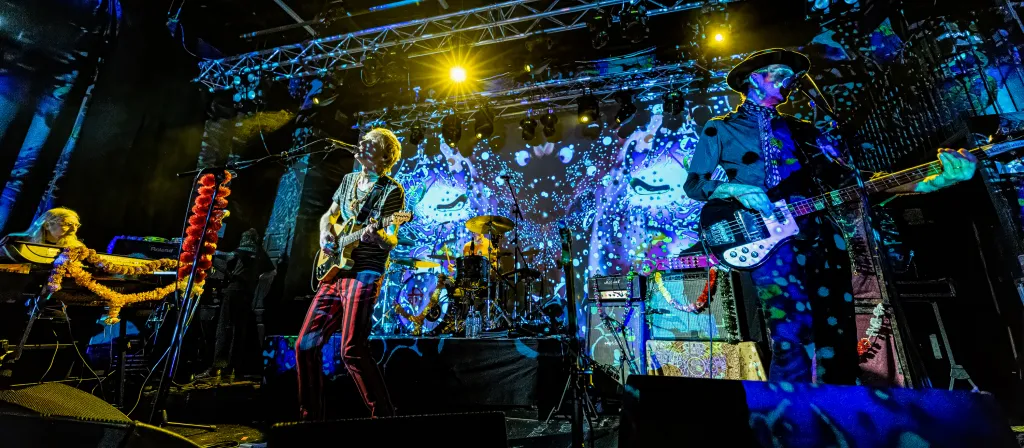
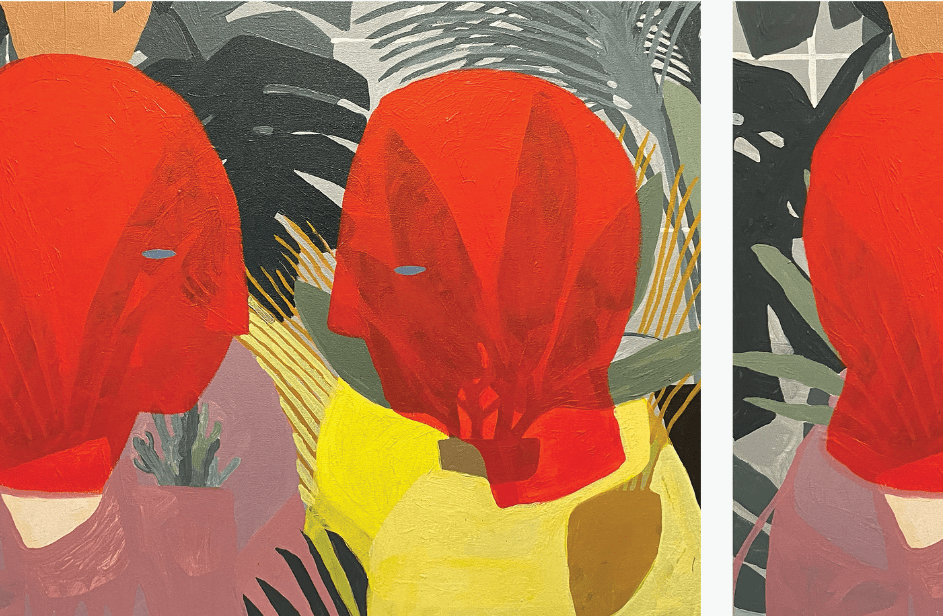
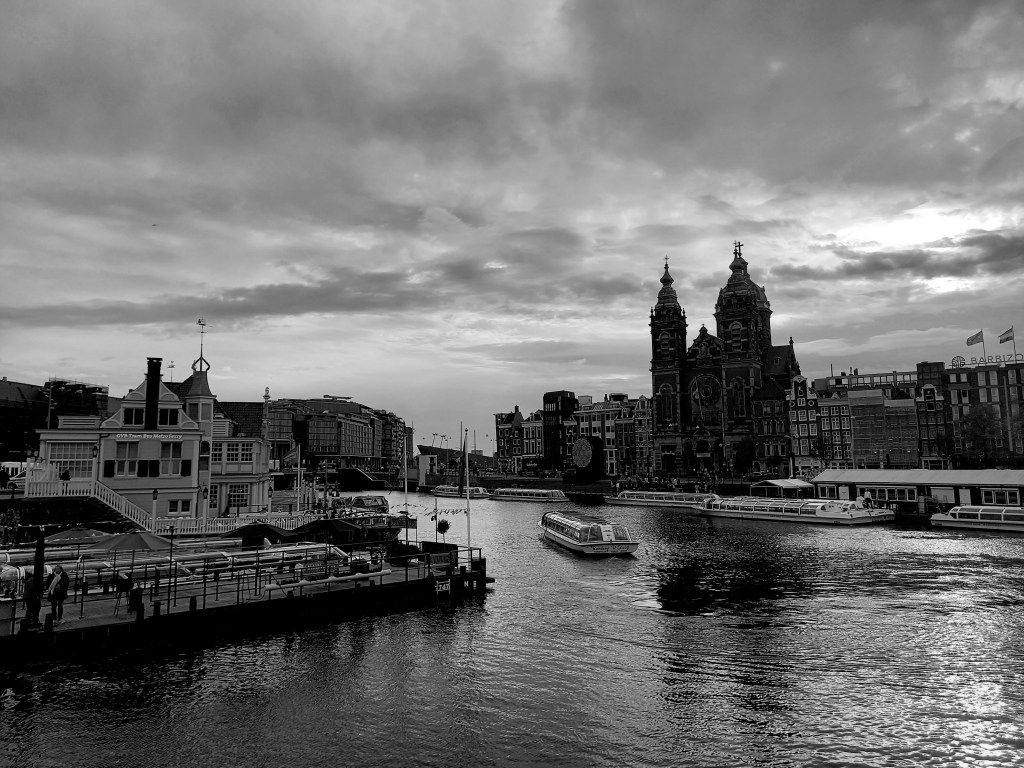
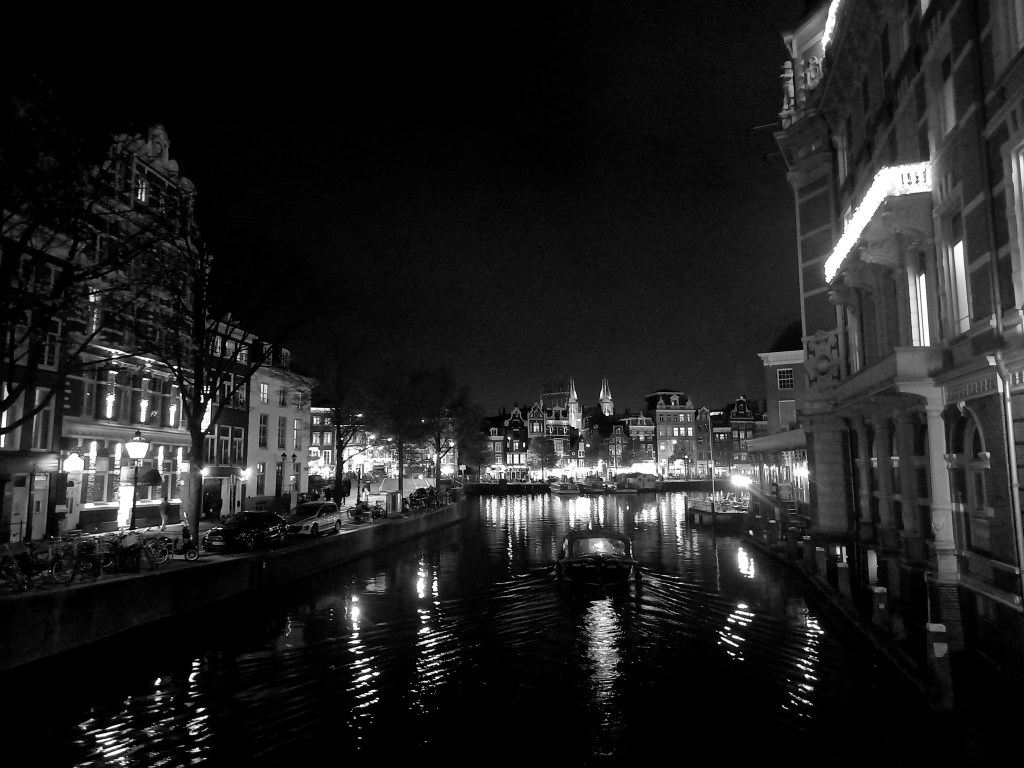
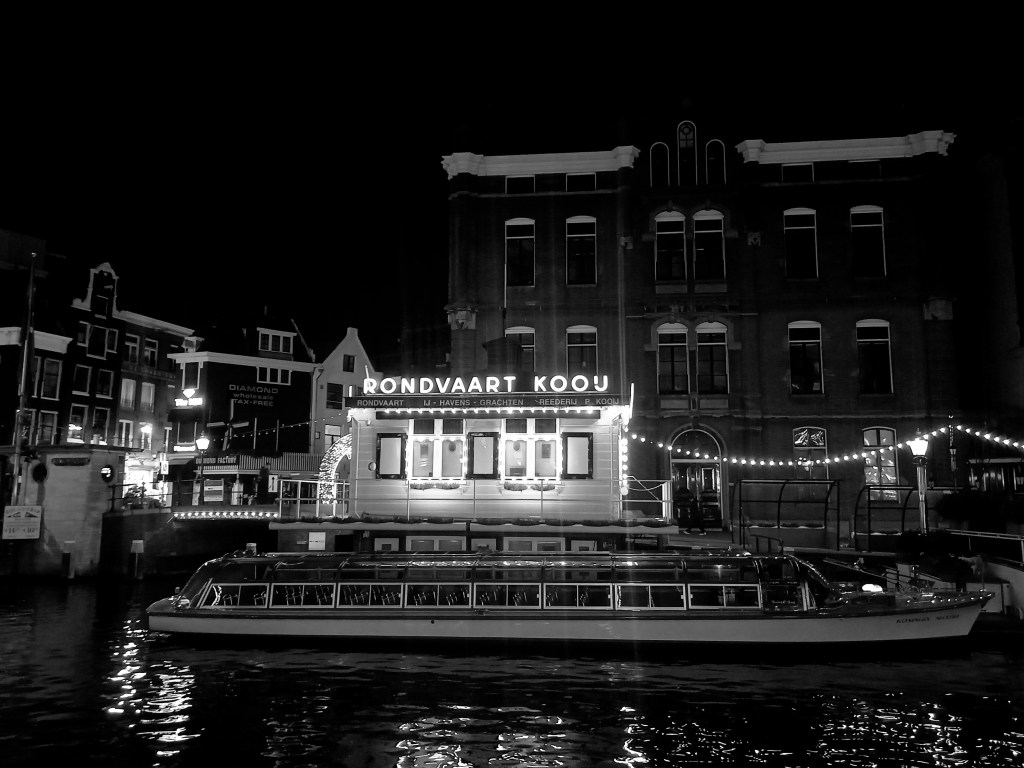
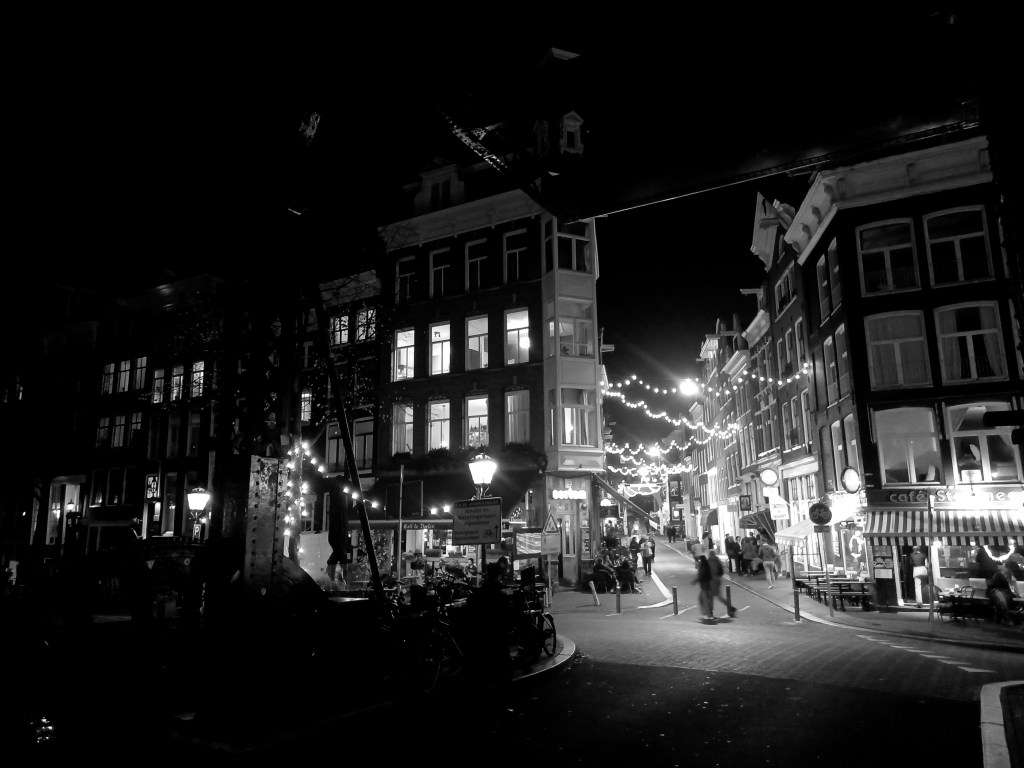
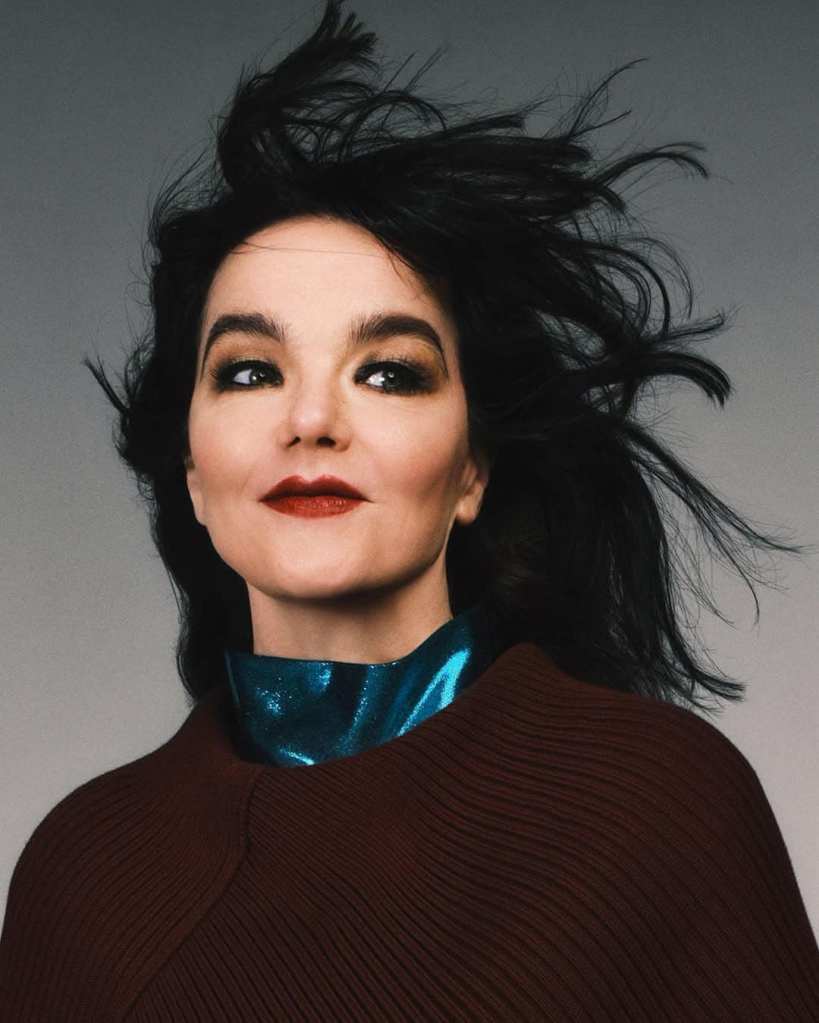


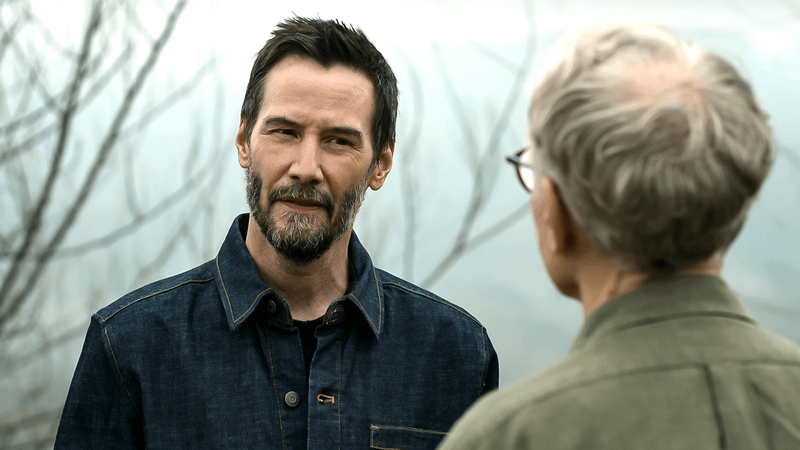
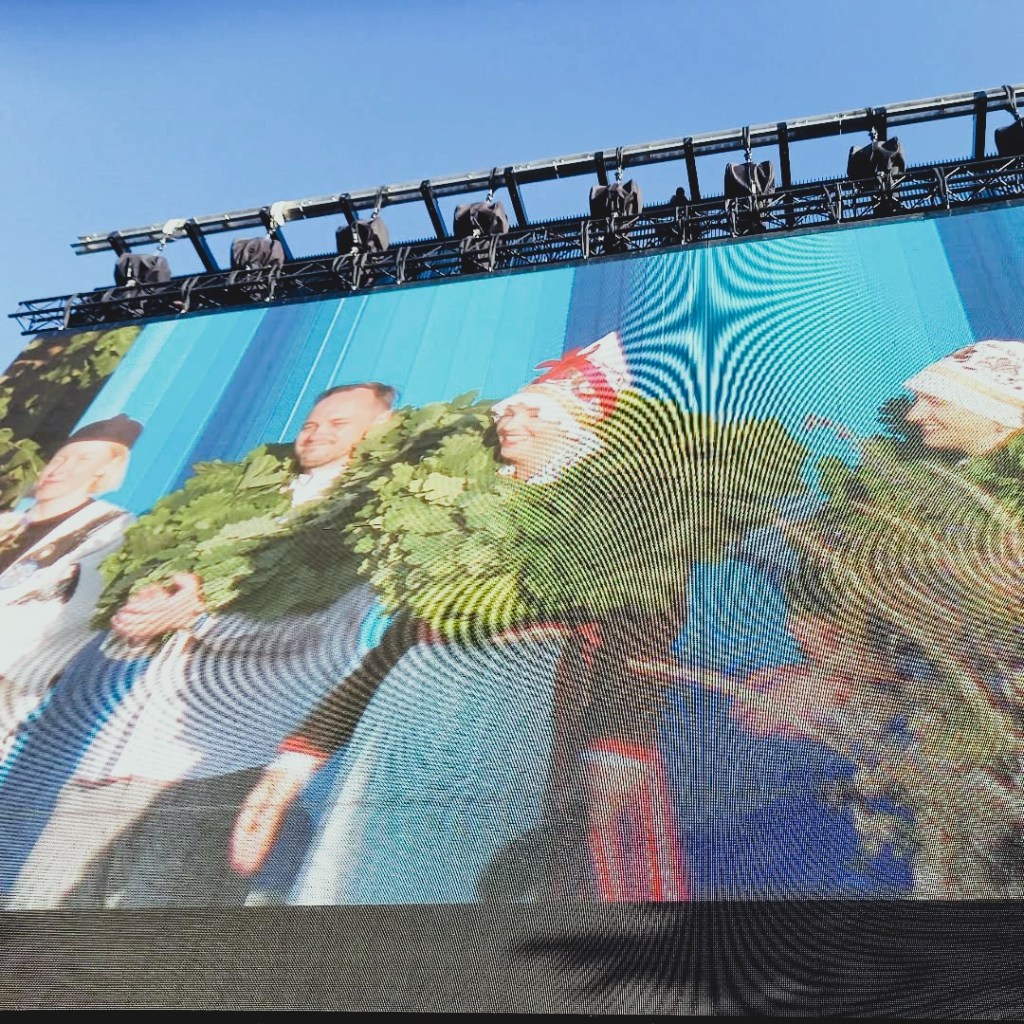

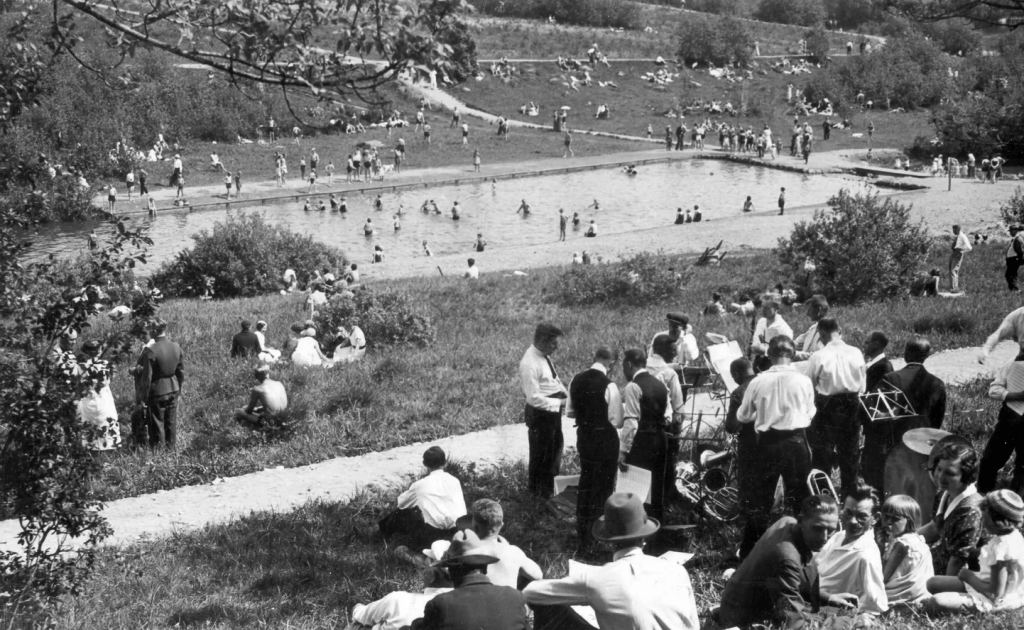


 north!