huracán by don’t chase the lizard

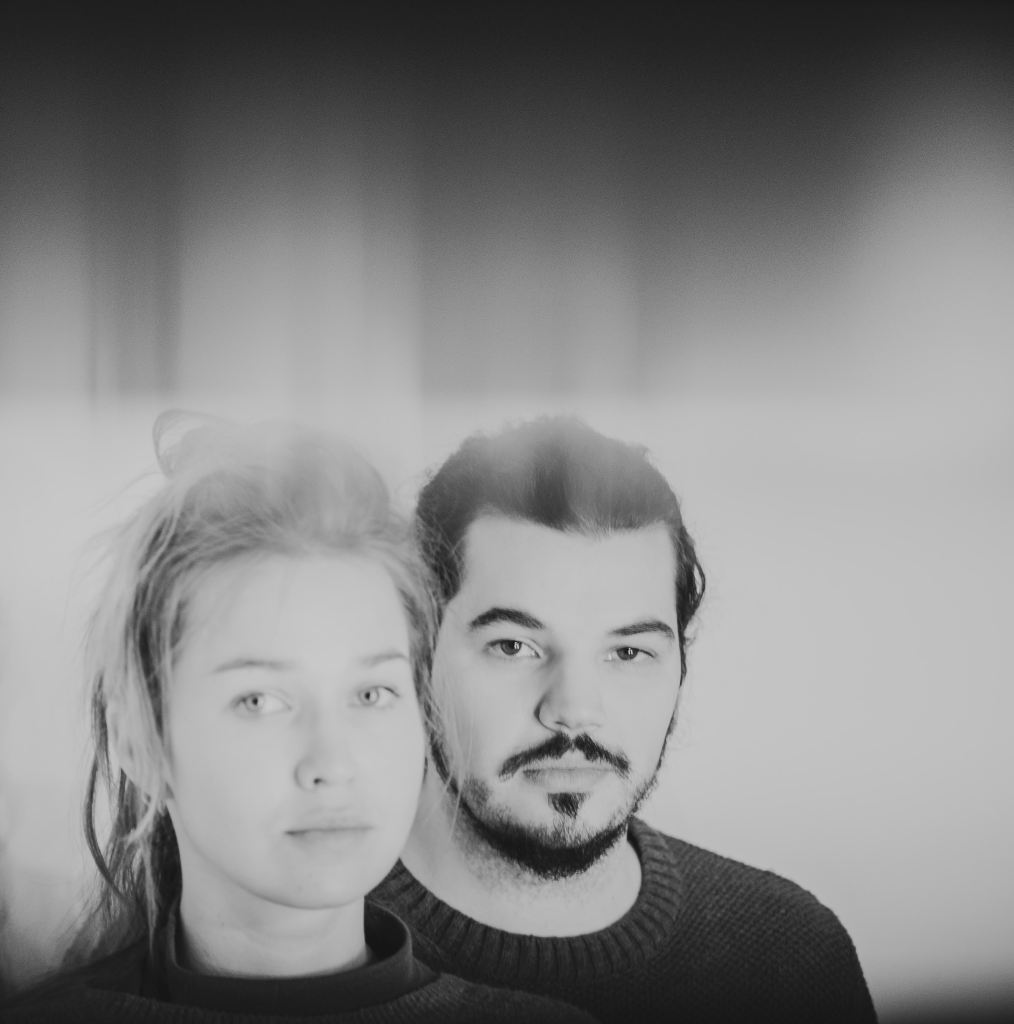
Don’t Chase the Lizard’s Lee Taul and Tomás del Real, photo by Annika Vihmann

EVERY OTHER DAY I catch sight of Tomás del Real leaving the house on Posti Street. It’s a sprawling, timber, 19th century structure across from the courthouse, and the South Americans have settled into the apartment at the far end. In the evenings, I can hear them singing through the windows. Sometimes I peek through to watch them play. I am not sure if Tomás is actually living in the house or visiting. Del Real turned up in town with his guitar and some other Chileans maybe a year ago. Suddenly, there were these dark-haired musicians milling about, the kinds of nomads who carry the winds of Los Andes with them wherever they may venture.

Del Real was one of them. He’s got thick hair, a scruffy beard. He likes to wear sunglasses. I know almost nothing else about him, other than that he is one half of Don’t Chase the Lizard.

The other half of this indie folk duo is the Estonian violinist and vocalist Lee Taul. I see her around town too. Usually she is either coming from rehearsal or going to rehearsal or getting coffee while taking a break from rehearsal. Sometimes she prickles with electric enthusiasm. Sometimes she is frustrated with the slow pace of a project. Sometimes it is raining and she is taciturn. Sometimes it is sunny and she looks more vibrant and Latin than Tomás the Chilean. Sometimes she has been rehearsing with her fiddle all day and yet no new ideas have arrived. Sometimes Lee has a really brilliant idea.

Taul and del Real met at some kind of musical camp or event years ago somewhere in Europe. When del Real found himself in Viljandi, a town of about 20,000 people steeped in culture that serves as a kind of Glastonbury or Roskilde for this Northern European country, they reconnected. Del Real had just washed up on Estonian shores after leading a peripatetic existence that took him from Chile to México to the US, then back to Chile before embarking for Europe. 

“I spent a year without performing and filling myself up with anxiety, not being able to develop much as a person,” he says of this time, which coincided with the Covid-19 pandemic. “I decided that I needed to explore other possibilities, so I moved to Europe with one of my friends.”

During this period, they decided to reach out to old friends they had made at ethno music camps, including from Estonia, which del Real had visited years ago. “I had good memories of Estonia from my past, so we decided to hang out here,” he says. “I connected deeply with the place, the culture, the people and the nature, so that week turned into a year, and here we are now.”

Del Real also got a residency at the Pärimusmuusika Ait, or Estonian Folk Music Center, a converted manorhouse barn that serves as the hub for folk music. It was here that he and Taul began to compose the songs that feature on Don’t Chase the Lizard’s debut album Huracán. 

ESTONIAN WINTERS ARE WEIRD. Anyone who has ever lived through one can tell you that. From about November through April, the ground is covered in snow and ice. Sometimes it melts a little, only to be reinforced by double the amount of white cold. Days dawn and end with sheets of the sticky stuff falling all around. Time doesn’t stand still during an Estonian winter. There is no time. In a way, the hypnotic character of the Estonian snowfall found its way into Don’t Chase the Lizard’s songs. It is this strange yet appealing overlap between northern natural elements and Latin rhythms that colors the group’s music, like João Gilberto mixed with a little Hedningarna. 

Del Real wrote most of the songs early in the morning. There was an almost monastic quality to the composition process, steeped in solitude and peace. He would wake, work, and send his ideas to Taul, and the two would build on them. “I was the winter resident at the Ait, so we started to work while being very much in isolation from the world,” says del Real. Because of pandemic restrictions, there wasn’t much activity at the Ait, which is located adjacent to the ruins of 13th century castle and a wooded lakeside landscape. With few visitors, they were especially isolated.

“All the tracks from the album come from that experience,” says del Real, “being in our little bubble and around nature.”

Within two months, they had an album’s worth of material. “Huracán” was the first song written for what would become the group’s debut album. “It was very early in the morning and I couldn’t sleep so it was almost like having a conversation with your subconscious,” he says of the song. “Lobos” was the last composition. By the time it was written, the duo had started to play live.
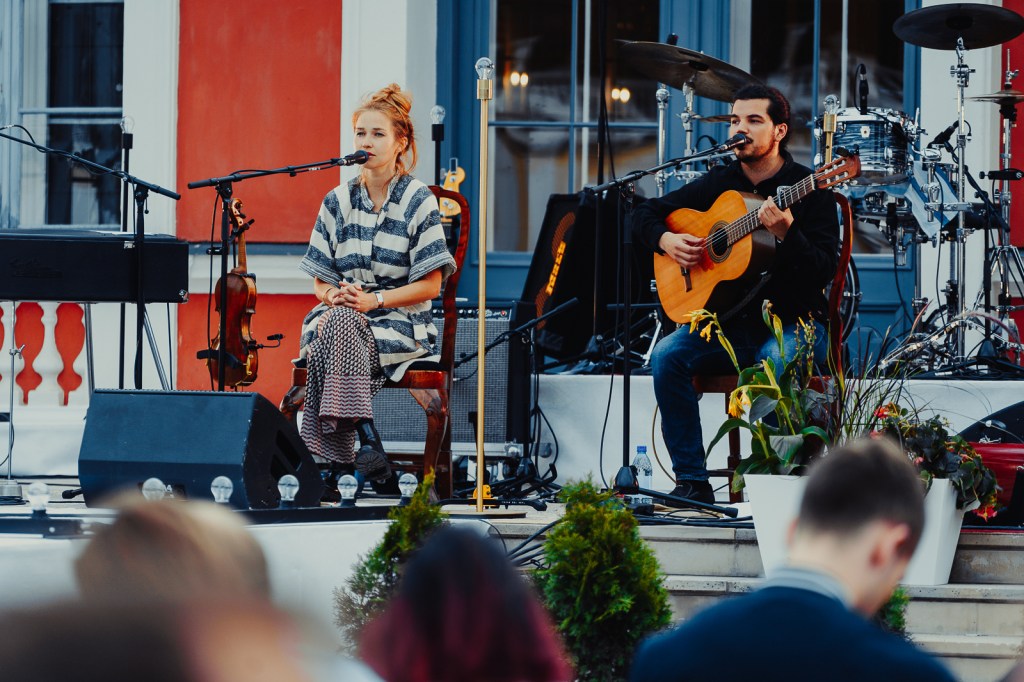
Don’t Chase the Lizard performing, photo by Ako Lehtmets

THE GROUP’S FIRST CONCERT took place in the Ait itself in February and by March, they had released their first single, “Buscar la Luz.” The single has a soothing, undulating quality, held together by del Real’s splendid guitar work and the droning quality of Taul’s violin, which adds color and depth to the melody, topped off with sincere lyrics and beautiful harmonies. 

The duo appeared on several Estonian radio programs in the early spring before making their Tallinn debut at Philly Joe’s in May. From there, they flew over the ocean to take part in Folk Alliance International, where they had an official showcase in Kansas City in May and performed at the Kansas City Folk Festival. Once back in Estonia, they played the Seto Folk Festival in July and opened for Rita Ray in Tallinn the same month. They are also scheduled to play at the Ait’s Harvest Party concert this coming October. 

In the meantime, Don’t Chase the Lizard racked up more than 30,000 streams on digital platforms with its singles “Huracán” and “8,” incidentally the eighth track on the album, which was released in July. “8” features more intricate guitar work, with a hushed, almost prayer-like quality to the vocals. The violin work takes its time, no note is wasted, every tone is supple and adds to the sound. Credit is due to Kaur Einasto, who recorded the album in Viljandi, as well as to Jorge Fortune, who edited, mixed, and mastered it at Estudios Triana in Patagonia, Chile. 

According to Taul, the concerts have gone quite well, and the crowd’s positive feedback has surprised the duo. “I don’t know if it’s the fact that the folk audience is used to a different kind of music, and ours has had a refreshing effect, or that the songs, mainly in Spanish, give the program a special flavor,” she says. “In any case, we have been satisfied with the results.” Taul notes that audiences in the US received the group warmly and that the group made new contacts. “We met amazing musicians, producers, and agents,” says Taul. “We can only hope that some future cooperation will come out of those interactions in the future,” she says.

“I think people have been reacting very well to the live performances,” agrees del Real. “It seems that people connect with feelings and sounds that seem genuine to them,” he says. People have particularly been intrigued by the combination of Chilean and Estonian sounds. “It’s attractive to see how two people from opposite regions of the world have a sound that might fit together very well and become something quite unique,” he says.
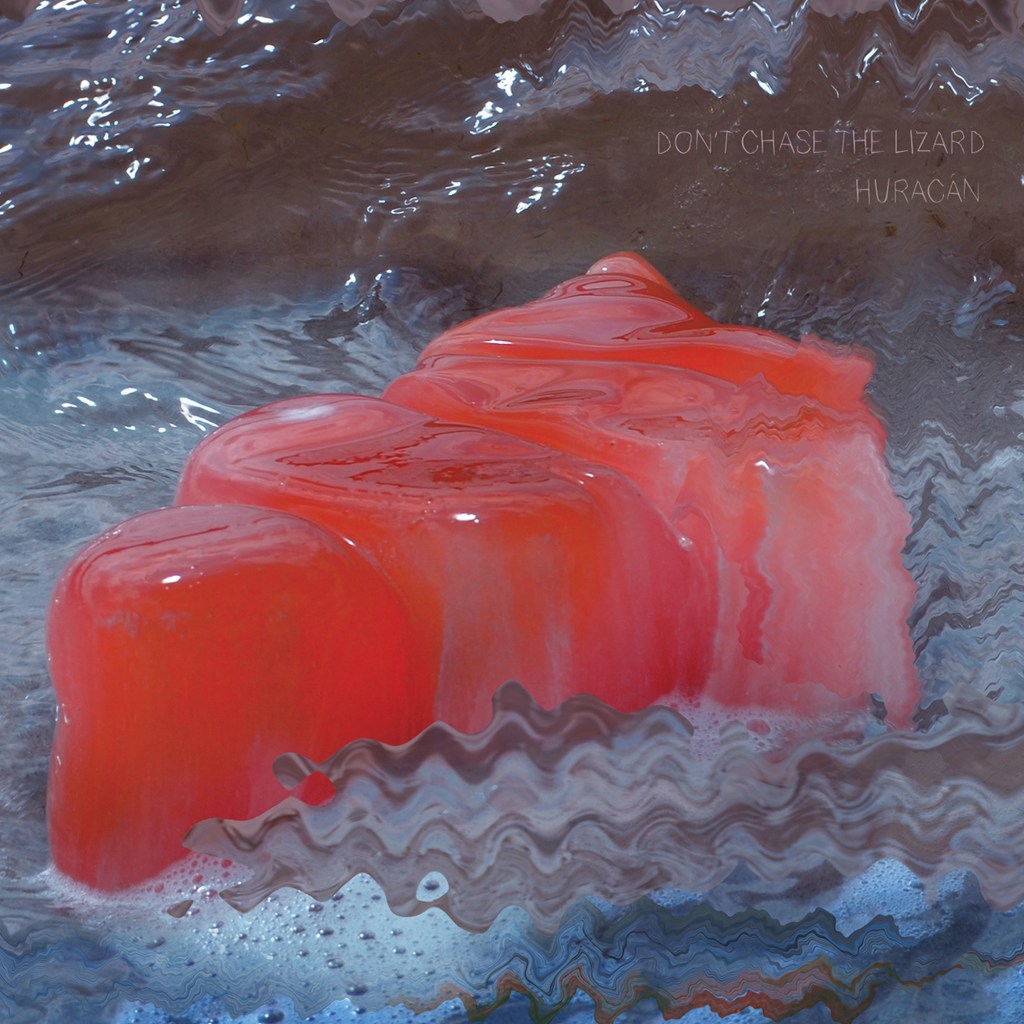
GOOD ALBUMS are like the best novels, of course. They have a way of effortlessly reaching you on their own time. Someone might give you a book and urge you to read it, but you put it aside until one day, out of boredom, you pick it up and devour it all at once in a few hours. Likewise, someone might give you an album and ask you to listen to it, but it might take time for the right moment for listening to arrive. In my case, it was a Sunday morning in August when Huracán presented itself to me. The sun was already shining, I was about to take a shower and go to the cafe to get some coffee. Many of the big milestones of the summer, such as the annual Viljandi Folk Music Festival, had passed. I myself was in a calm morning contemplative mood. 

Each song on Huracán is a treasure to be savored in its own way, unwrapped slowly and delicately. The voices reach out to you. While well produced, it’s a bare bones recording yet with stirring atmospherics. It sounds like it was recorded in an old church in the Andean Mountains. There is del Real’s guitar and Taul’s fiddle, plus their exceptional voices, del Real’s intimate delivery and Taul’s intuitive and sensitive harmonies. There are no electronics gurgling in the background. There are no distractions. It’s as if they are right there with you playing in the room.

I will always recall that moment of putting on those songs and letting them play. They seemed like the best way to start a quiet Sunday morning in the first week of August. It was kind of funny as well. This music, written in isolation in the winter, somehow made sense in summer. Huracán, the ultimate winter album, had unwittingly become the ultimate summer album too.

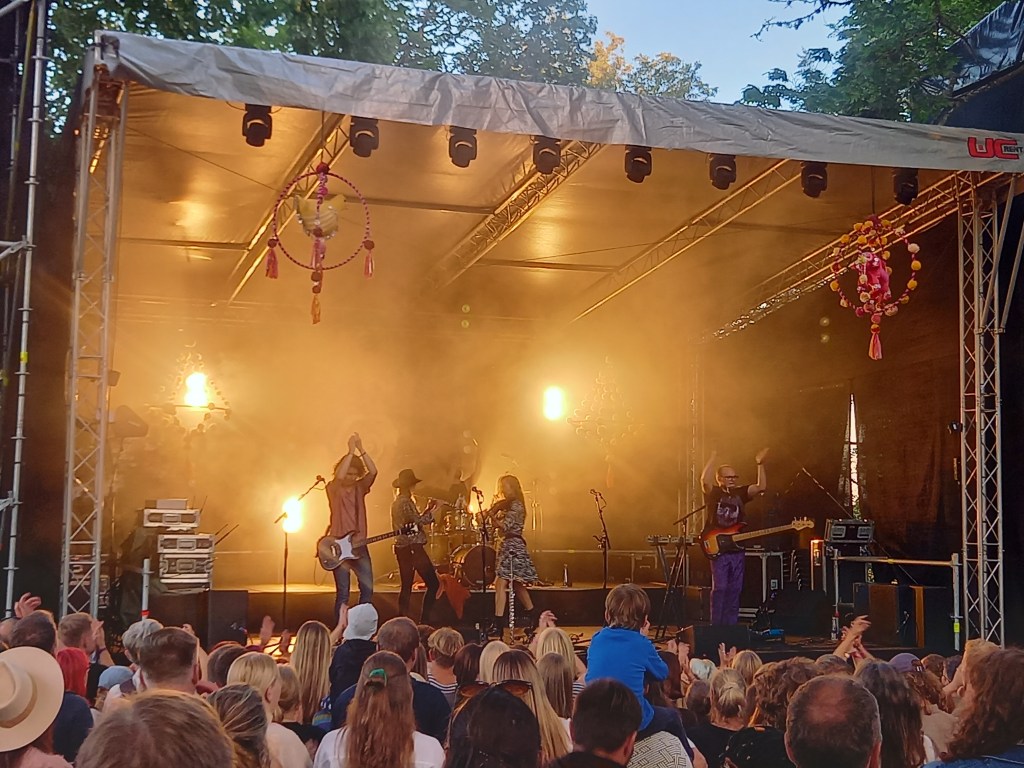
the road to a folk hangover

THURSDAY IS THE first day of the Viljandi Folk Music Festival. I have decided to do this year’s festival sober, which may explain my melancholic mood. Also the rain, which sends me and my youngest daughter to seek refuge beneath some trees, only makes things less joyful. The rain is heavy and floods the streets, soaking the kebabs and donuts. I bailed on the opening ceremony because of the rain. Of course, the Folk people are starting to trickle into town. You can spend all year in Viljandi and never see these people, but then suddenly they are back and swarming in. Where do they go for the rest of the year? Maybe they sleep in the hills behind the castle ruins? When people do come, you look at them. I think lingering eye contact is the currency of Folk. Somehow a look is more meaningful than any words. What does that look mean? Sometimes different things. It can mean I like you, or think that you are beautiful. But it can also mean that I don’t want to have anything to do with you, leave me alone. Sometimes people just look familiar though. “Don’t I know you from somewhere?” Maybe that is what all these looks mean. I have learned to trust people’s looks. They are meaningful moments, moments that linger and haunt you, even while the accordions are blaring and the Cubans are performing. I wonder how many stories start with just a look in a crowd at a music festival.

The highlight of Thursday night is inarguably the Korean ensemble, whose name nobody can say, even though they have a special language lesson in the middle of the concert. (They are actually called “Ak Dan Gwang Chil“). They have great costumes and I can make no sense of the structure of their songs or melodies. I cannot name most of the instruments they are playing. This is exactly how the best music must be, challenging. I am surprised by the turnout for the Koreans, even on a Thursday night. I can only guess that pandemic-era restrictions have increased people’s appetites for live music. Afterward, I head to Romaan to hear Gilly Jones and the Evocations playing in the new samasama.studio in the back. Gilly Jones is from Ghana and leads a band of the “cream of rhythm players” in Estonia. They play afrobeat and highlife music. Even I have to dance to this music. The best dancer is of course Pepi, who manages this creative space. He is from Argentina and has the moves. I am studying Pepi to improve my dancing. The night ends in Joala Park, drinking wine from a plastic bottle with DJ Jaanika and Inxu. Inxu is a vivacious and sharp young woman who is giving an impromptu lecture about US domestic politics. A few young men are seated across from us. One of them is especially proud that he is seated on the spot, more or less, where the Joala Monument was. “And it was located right here where I am sitting,” he says.

AT ABOUT 7 PM on Friday night, Marko Veisson from Puuluup undertakes a stage dive. It is in the middle of their set on the Second Cherry Hill, or II Kirsimägi, and happens while the duo is performing “Roosad suusad,” “pink skis,” which is a song about pink skis. The dive is a success and the crowd is pleased by Puuluup’s performance. The band’s reggae-inflected repertoire is stunningly ridiculous. Even old people like Puuluup’s music. Especially old people. The show ends with applause, unanimous cheers, joy, whistling, and this “three, four, good band” cheer. 

At 8.30 pm, there is a young man in a kimono grooving to the guitar licks of a Malian performer called Samba Touré on Kaevumägi. Three kids in Pokemon hats walk by and I see them again at the Hempress Sativa concert, which is pure Jamaican reggae, along with some speeches about the sacrament of marijuana. There is a funny mood. In general, the music on Friday night is good and satisfying like that. By 11.30 though, I walk by a teenager who is leaning against a tent and watching Geneza, a Ukrainian band, play rock music in Freedom Square. There is something about the blank look on his face opposite a rock band that speaks to the exhaustion of Folk. Even the young get tired. I can’t tell if he is burned out or sleepy, but fatigue has set in. It’s the bagpipe music. I think. It gets to you. But how much bagpipe music can you hear? How many dances can you dance? How many old friends can you greet?

Of course, there are the real Friday night stories. The real thoughts you think while you are wandering around at the festival. The real feelings you feel when you see certain people you know. The memories you have. The ones that you can’t forget. The people you have lost in the crowd. The impossibility of dreaming of anything, and yet the bravery to still be hopeful in life, if only because you have no other choice than to be hopeful. There are secrets you can never tell. Even on your most honest and forthcoming day, you can never tell the complete truth.

SATURDAY DAWNS the same way that every Folk Saturday dawns, with flies tickling your nose. You walk to the café, any café, to get some coffee. Strangers emerge from tents, cars, and apartments, wearing those little quasi-religious “Folk hats.” One wonders about the true lives of these devotees. Maybe they lead a humdrum existence in Tallinn border towns like Jüri, working as accountants, pushing along in drudgery through the year. Now and then they spot the Folk hat in the back of the closet and sigh to themselves, knowing it will be maybe half a year until the next festival. 

The peak of Folk, I think, is the slow Saturday afternoon before the bigger crowds show up. This is when you can take time to eat with your kids, sit around and reflect. You hear church bells chime, the creak of the hammocks tied between the trees. You have time to sit and think. Teenage fry cooks struggle to fill all of the orders for fries. And sometimes people forget their orders. “Maarja” has apparently disappeared to see Polenta, a Finnish group. The cooks keep calling for “Maarja” to pick up her fries, but “Maarja” never comes to claim them.

At 8 pm on the First Cherry Hill, Black Bread Gone Mad takes the stage. This is one of my favorite local bands. During the encore, bassist Mati Tubli asks people to sing along, but the lyrics to their songs go, “u-ja-ei-u-ja-ei-u-ja-ei,” or something like that, and then the next one is “ayibobo.” Okay then. After that, Zetod storms the Second Cherry Hill and the crowds are stricken. Much longer after that, I decide to see Untsakad which, believe it or not, I have never seen. There is a long table behind these Untsakad fellows — it is their 30th birthday celebration — and notable musicians like Ruslan Trochynskyi and Brad Jurjens are at the table. It reminds me a bit of King Arthur’s Roundtable, with Sir Galahad and Percival. I confess, I am jealous. Who wouldn’t want a seat at the Untsakad’s table? The music is Estonian traditional song, but I am surprised by the numbers of young people who are dancing boldly to tunes like “Metsavendade Laul,” a song about postwar guerrilla fighters. This year it is especially relevant.

ON SUNDAY AFTERNOON, Imar Kutšukali, a Dutch adventurer and part-time folk musician, informs me in the yard of the Green House Café that he understands most of Untsakad’s lyrics. This is perhaps the highest level of Estonian comprehension you can have. The next level is understanding what drunk men mumble to you outside the bottle returns and trash bins. Imar is wearing a cowboy hat he picked up in Louisiana, and plucking at a friend’s mandolin, then switching to his own fiddle. Kutšukali is so embedded in Estonian Folk culture, he can name the members of Untsakad. Later, I drag my acoustic bass guitar out of my house, making sure to wipe the dust off it, and dive into a jam session with some other musicians. Folk music operates according to other rules. It has a repetitive, spiraling quality, almost like a cyclone, and it can billow up high or swirl down deep. Providing the bottom end is a challenge, what to play, what not to play, but it seems my fellow musicians welcome my contribution. We even joke about forming a band. Later, at another concert, I run into Ramo Teder from Puuluup who informs me that he also wanted to stage dive during the performance of “Pink Skis,” but there weren’t enough strong men in the audience to support both him and Marko. Maybe next year.

The evening ends in the company of Silver Sepp and Kristiina Ehin, who cannot walk a few paces without meeting old or new friends. Talking with both of them is a challenge, but Silver more so. We just can never manage to have a straightforward, average conversation. It can only go from absurd to more ridiculous. Dancing is easier with this cultural power couple. Kristiina is a sensitive dance partner, and Silver slips me some pepper vodka during VLÜ’s set, most of which I spend dancing frantically with a Swiss psychiatrist. By midnight, people decide to move to the upper floors of the Ait. Within this confined space, there are constricted dances, and there is some kind of guitar, fiddle, accordion jam. I had promised myself this would be a sober Folk, but it is proving once again to be impossible. Kutšukali is seated with Ando Kiviberg. They are drinking cognac and I pour myself a big glass. Veisson is there too. I am asking him if women are constantly trying to seduce him on account of his fame. Veisson assures me that this is not the case, but I am doubtful. A guitarist named August is seated with Lee Taul, and they offer me wine. I inform Ms. Taul that I’ve had too much to drink and am perhaps enjoying myself too much this year. She responds that you’re actually supposed to enjoy yourself at Folk. “Come on, it’s a party,” she says. “You’re supposed to have a good time.”

An Estonian version of this article appears in the 3 August 2022 edition of the newspaper Sakala.

honey

IT WAS SUMMER and splendidly hot. The white tower of the town hall looked like one of those old colonial administrative buildings in the Danish West Indies. If you’ve ever heard that old Muddy Waters tune, “Good Morning Little School Girl,” then you have heard this story. But I actually didn’t know she was a school girl, I swear. I thought she looked interesting. In retrospect, the skirt should have tipped me off. It looked like it had been stitched together from old curtains. And then the worn red blouse, the messy blonde hair. She was not one of those bank clerks. She was holding something in her hands too, bearing it in front of her, but whatever it was, I couldn’t see. I decided to follow her but to keep my distance, as if I just happened to be headed in the same direction. If she looked back, I could inspect a hedge, or stroke the little dog of a passerby. Pretend to be a legitimate pedestrian. She walked through the park and then down Hollow Street. At one of the old houses, she paused to chat with a young man who was sipping his coffee in the doorway. She laughed at his joke. Then she came up Trench Street and arrived to the intersection with the main road. It was here that I caught up to her. I felt guilty for following her. I should have just glanced her and let her go. Yet she waited for me there. It was as if she had known I had been following her. We stood there and she looked forward and then turned and cleared her throat, but said nothing. Instead, she showed me what was in her hands. A small container enclosing a honeycomb. “Would you like some of my honey?” the girl asked. She had such a pleasant air, and I said, “Of course, I’ll have some of your honey.” She smiled at me and pulled a dripping hunk from the container and handed it over. She took a separate chunk and slipped it in her mouth. “It is good, isn’t it?” said the girl. A touch of golden honey was on her lips. From the crest of the hill looking down the road, I could see the lake in the distance. I could see the beach and the pines. “It is,” I said. The youth said nothing and we crossed the street. The wind blew and toyed with her sunshine hair. It was that kind of day. Disarming. Innocent. Bluesy. Honeysweet.

tüütumaa park

I HAD TO GO to the airport to pick up a daughter flying in from Brussels (and there was panic about whether or not she was even on the plane). While at the gate, I was pacing in worry when she called out to me, “Dad. Dad! I’m right over here. God, what an idiot.” Then we had to go back home. All of Europe was arrayed in Scandinavian-style apartment blocks. You know those big yellow brick buildings you see in Stockholm, or Copenhagen especially. “Estonia” was merely at the end of one particularly long boulevard. It was dark and it was raining. When I got home, my woman friend was gone. She had come to see me but I had to leave her alone to attend to my family needs. Apparently, she didn’t have the patience to spend all day, leafing through old magazines. She had worn a special dress for me, but where was I? At the airport? She didn’t even bother to say goodbye. Not even a message. When I inquired after my female guest my other daughter said, “You mean the one with the breast implants?” “Breast implants? I thought they were real. When did she get breast implants?” I was not convinced about the fake breasts. But I also didn’t want to ask. They were fine, firm, very believable breasts anyway. Organic. I understood then that my other daughter was just trying to downgrade her in my mind. It was all about attention, you see. These daughters of mine, they wanted my attention. Another female interloper was just a drag on the attention stock. She needed to be pushed out of the picture. They sure were crafty. The next morning I had to go out with Morris for a meeting at a startup company on the other side of town. It was somehow impossible to get to this place on foot. I looked at the map. It said it was located in “Tüütumaa Park.” The river flowed straight toward the park, and we decided to commandeer a small vessel. It was this ramshackle wooden thing, leaking, but still seaworthy. The waterways were full of great sea lions, walruses, elephant seals. They floated by, big furry masses of dopey fish-feeding mammals. “There must be sharks in these waters,” I told Morris. “Where there are seals, there are sharks. I don’t like it one bit.” The water was incredibly clear, but I saw no great whites or hammerheads. They had to be down there somewhere. It was just so troublesome to get all the way down to Tüütumaa. Why were we even going? To visit another software company? Excuse me, ICT. Who cared anymore anyways? I really hoped that they had a food court down there. Maybe a coffee house that roasted its own beans. Something to make the trip worthwhile.

use your illusion

People at the Viljandi Folk Music Festival, July 2021

I CAME TO VILJANDI years ago because I was really in a hard place. I felt that I needed to leave Tartu, where I was living, to create some space for myself. I really felt like the rabbits in Watership Down, who have to avoid the predatory bears and foxes and weasels to stay alive. Viljandi became a sort of rabbit hole for me then, a place where I knew I would be totally safe.

At least, I thought I would be safe, at first.

Back then, I was exhausted. I remember I drove into Viljandi one night, probably in November, that now infamous November when I turned 37, and I sat down in the Green House Café. It seemed like such a relaxed and welcoming environment, and I remember thinking, I could just sit in this chair here in the corner forever. There was no place else I wanted to be or to go then. 

Of course, Tallinn was always an option. Tallinn promised some kind of job and some kind of career. But Tallinn also required some major startup capital just to get going, several months worth of rent money, which was hard for me to put together, because I was totally broke, and also educational issues. The school system in Estonia is complex. Kid A, who lives next to one school, has to travel across town to go to another school, where there is space, while Kid B, who lives next to that school, has to travel across town to go to the school next to Kid A. 

It makes no sense to me either. 

IN TARTU, this situation was somehow more ideal, because most of the schools were located within walking distance. But Tartu is also a bit like Los Angeles, in that you have to drive everywhere. Multiple times a day in Tartu, I had to drive to take a kid to swimming lessons, or to pick one up from kindergarten, or to take another to her zoology course after school. There were a lot of logistics involved. So, to imagine living that kind of life in Tallinn was more challenging, especially since my kids had a habit of going on their own adventures and calling to have me pick them up from, say, McDonalds at 7 pm after their zoology course. How did they get there? We walked! But now should I expect them to hike across Tartu in the dark in December? No. Imagine these incidents happening in a place like Tallinn. Imagine your child getting lost in Kopli or Lasnamäe? It just didn’t seem like the kind of setup I needed in my life at that moment.

In this sense, Viljandi emerged as a strong contender as a place to live. It had affordable rents, multiple cafes to work from (if you are a remote worker like me), lots of green space around, and it was entirely walkable. My child could walk to school, and to all of her activities, and even to the cinema or supermarket, all by herself. It really was, in some ways, the perfect place to live, at least for someone in my situation.

I NEVER COMMITTED myself fully to Viljandi in my heart though. It always seemed like a temporary base camp from which to launch future expeditions. Yet the fact is, my kids are tied to this place, and one of them was even born here. Viljandi, in this sense, will never leave our lives, even if we did move very far away. As you see, there were a lot of moving pieces that led to the decision to live in Viljandi. I suspect for anyone who comes to live here, they have their own reasons, both practical and personal. I am not by any stretch some kind of cosmopolitan, who absolutely must dine at the finest restaurants and pretend to be someone of importance by attending various showy public events. I think some people in, say, Tallinn, would feel less of themselves for living in a small provincial town. I couldn’t care less what people think of me. I don’t even do these things in Viljandi. I rather prefer how exiled I feel living here. The loneliness suits me at times though in winter it can really get to you, and you can get severely depressed. You won’t even know you are depressed, that’s how depressed you can get in winter. Not sad, mind you. You are not actually sad. Just somehow detached from your own feelings, detached from the joys of living this life.

Viljandi’s community is both a blessing and a curse. In Tartu, I did not know my neighbors very well. I still get this anonymous feeling when I go to Tartu, that people give each other space, distance, room, because in their minds Tartu is a big city, and such anonymity is normal. In Viljandi, I cannot walk down the street without bumping into multiple people who know me very well, almost too well. Sometimes they know more about me than I know about myself. This has real value. If you have a problem, for example, your car won’t start, you can always go ask the Krishna devotee upstairs and he will come down with a fist full of krokadiilid and get your car going. If your child doesn’t come home, there are at least five acquaintances who saw her heading toward the Castle Ruins. Having eyes everywhere is really helpful. It creates a social safety network. On the other hand, let’s be honest, having people around you all the time, who involve themselves in your business, can be tiring and make you yearn for the anonymity of a larger city. It seems at times like people in Viljandi even know what color underwear I have on, even when I don’t. This is why it is a relief to leave Viljandi at times, to get away from all of those prying, curious eyes.

WHEN I THINK BACK to that decision I made, to move to Viljandi, I have to say it was an emotional decision as much as it was a practical one. Obviously, I could have gone to Rakvere, or even Pärnu, or Kuressaare, and enjoyed many of these things that I enjoy here. I had strong personal reasons though for setting up a new life here. My best friend was going through his own strife, and we were supporting each other in a way. He was living here then, and he sort of pulled me back into Viljandi, though he has since left. I also was really in love with someone at that time, which was a unique and compelling feeling I had not felt often in my life, and still do not feel often, or encounter, at all in my daily life. I suppose I just do not feel love that often or am bereft of romantic love. After dealing with complicated situations, hers was a light that shone as bright on me as the north star. She also left Viljandi behind, very long ago. So that was also bubbling away inside of me. The illusion that life could be different. It was an illusion, of course, but even those of us with the strongest constitutions can be led on by an illusion. My daughter’s best friend in Tartu had also moved to England, and life felt so hopeless then. Viljandi promised at least some kind of new experience, some way out of what was going on, and a way toward something new.

At that moment in time, staying awhile in the Green House seemed like the best decision I could make.

I DO NOT REGRET coming here at all. These have been very creative years for me as a writer, and I have to thank Viljandi and its dreamy landscapes for it. Someday I will probably pack up and hit the road again, but Viljandi has fulfilled at least some of its promises. It has been supportive.

*

An Estonian version of this article, translated by Triin Loide, appears in the 27 May 2022 issue of Sakala.

a bus full of books

I HAD TO GO TO PORTUGAL to pick up some books. The address was somewhere between Porto and Povoa de Varzim. It was a seaside street, ruled by proud white castles of houses. Matteo, of all people, answered the door and we shook hands. Then someone else, another Milanese writer, told me I should relocate to Portugal and that the beach here was “just full of people like us,” in other words other Italians. But I had to drive back to Estonia, I told them. Business demanded it.

On the other side of the street there was a canal, and some local yogis were filling it up with birthday cake. Channels of cake, cream, different kinds of colorful toppings, so that it almost resembled a floating chocolate garden. They were hanging decorations above the canal, too, in preparation for a major street festival. But I was expected back in Tallinn within days with a shipment of books, and so set out shortly after toward Madrid. When I got to Barcelona, I parked my car and went for a walk. On one back street, I passed an aerobics class in session. I could see Linnéa inside stretching. “You can stay and watch me,” she mouthed to me through the glass. “I don’t mind at all.” As she stretched, I caught sight of her undergarments. There was just something about the pattern of the lace on her skin, the way her golden braids dangled down her back. I decided to curl up right there, outside the window glass, and sit beside her as she stretched.

Later, a door opened and I watched Linnéa and the others file out of the class. A Catalan nurse had come to administer fresh COVID-19 booster shots. I remained at a distance, though I could see the tiny glass vials of the Pfizer vaccine piling up. I didn’t want anyone to know of my secret affection for Linnéa. An old colleague happened to turn up and we started to talk about people we had known from our days in New York. Good old Jankauskas! I told him about the bus full of books and the long ride in from Portugal. Jankauskas asked me the books and I told him all about them. You should have seen his eyes as I relayed their plot twists and turns, their heroes and villains. Jankauskas said it sounded like a lot of good reads.

telliskivi can-can

STANDING IN LINE in Telliskivi, waiting to enter a French-themed can-can bar behind an older lady with short gray hair parted on the side, and spectacles, like an aged Frau Farbissina from the Austin Powers franchise. At the desk they requested her recovery, vaccination, and booster codes, and she was lacking one, fumbling through her purse, speaking in broken English, so they sent her away. When it was my turn, I spoke to them in Estonian, but the security guard, a husky type with a handlebar mustache, informed me that he had no knowledge of that language. Then an older man came out of the establishment and addressed him in German so perfect, I later marveled that my mind could reproduce the German language in such a believable way. He was trailed by a French-speaking couple. Same story. There were some Estonians working the front desk, but they gave me that dreadful Soviet legacy service, just shrugged their shoulders and blinked and did nothing. “Not my problem.” I left the can-can bar and went somewhere else. I didn’t have three passes anyway. Persona non grata, that’s what I was. No can-can for me. Not this time.

kärt and anselmo

ONE NIGHT I dreamt of Kärt and Anselmo, her Latin husband. We were at their penthouse in the city. It was late morning and Kärt was sprawled out nude in her bed, engulfed in crisp, white sheets. The sun was through the window on the sheets and illuminating her tufts of wild golden hair. I was kneeling beside the bed suckling on one of Kärt’s breasts while she took part in a Teams meeting via her phone. Kärt is not one to let bedside reveries get in the way of work.

Sometimes though, Kärt did get thirsty and dispatched me to fetch her some water or coffee, which I was only too glad to do. Then Anselmo, that brooding Spaniard, would enter, tying his tie for work. He would take his turn kneeling on the opposite side of the bed, and being attentive to Kärt’s other breast. My breast was her right breast. Never did I venture to the left. That was Anselmo’s territory. Likewise, he never took her right nipple in his mouth. It was my job to be attentive to Kärt’s right breast.

This went on like this for some time in the dream, the jug worshipping, until it was time for us to both leave. Kärt needed to prepare for a working lunch. Anselmo meanwhile had ignored me for the entirety of this exercise (other than to lecture aloud, as if to a spellbound audience, that visitors had to keep their hands above the sheets, that is, only breast licking was permitted in the penthouse and nothing more). At the door though, Anselmo for the first time turned to me and asked, “What do you think, Justin, is it really possible for a man not to have faith in himself?” 

It was a very serious question and Anselmo looked me in the eyes as he asked it to me. To which I replied, “Well, if he has done all that he can and it still doesn’t work out, I suppose a man has reasons to doubt himself.” Anselmo nodded repetitively as if making a series of calculations. Then he called me a defeatist and marched out the door to work.

I am relating this tale to you now because one of my friends told me that I should try to write more about sex. She is a long-time confidant, a middle-aged woman and a mother of three. But she wants to read about sex. Sex involving me? Like what? Positions? Experiences? Advice? 

When I told her that it would be difficult for me, ethically at least, she suggested that I write about dreams instead. “Use your imagination. You can get away with anything in your dreams.” This she said with a wink and was out the café door holding several bags of fresh coffee. 

That dream about Kärt and Anselmo is a recent one and I really enjoyed it because it was so different. Breast worshipping? A Teams meeting? I could never make these things up while I was awake. These kinds of dreams are interesting because they always find ways to surprise you. It’s always a treat just who you wind up with in your dreams, and often you wind up dreaming about people who maybe aren’t so attractive to you in your waking life but are quite thrilling to be with in bed when you are asleep. Then you awake in delirium, feeling as if a great truth has been revealed.

One night, I dreamt again that I was back in Tallinn. I was down by the Linnahall, which had now become a tropical location, with a bright sandy beach lined by palm trees just like in Belize. The Linnahall was overgrown with vegetation and vines, like some kind of ruined Mayan temple, and the waters of the harbor were crystal clear and warm, and you could see your feet below. That was not all you could see, because it was then that I realized that I was completely naked. So there I was, naked in the capital. I managed to steal a towel from someone on the beach, and soon was sauntering through the Rotermanni kvartal wearing my makeshift diaper. 

Of course, when I reached the publishing houses on Maakri Street, I happened to see Linnea, the beloved author of many prominent and revered books, who was exiting some swanky party. When I looked over and saw her shapely form attired in one of her flowing elegant dresses my heart sank. To make matters even worse, Linnea was walking right my way. Soon after, we were making love on a bench on Maakri Street, she in her elegant dress and me in my stolen towel. Then I noticed the photographer from Kroonika had arrived to take a few photos of our scene. Rather than flee, Linnea only pulled me closer into a sumptuous kiss. “Don’t worry,” Linnea said. “You and I are going to sell lots and lots of books.” Her words soothed any remaining concerns. And soon after, the city was full of the sensual sounds of sighing, suckling, satisfied dreamers. 

Who would ever want to wake up from a dream like that?

fires

THIS IS THE SEASON, the season of heavy boots and crackling fires, of warm blankets and dark nights. It’s a relief at times to feel winter’s cold hands on your face. As hard as it is on the body, as hard as it is on the mind, and hard on the soul, there is a stunning beauty in the diamond elegant hardness of winter, in those frosted-out branches reaching to the moon in full, mirroring back light like phantom fingers.

Outside, the local men march and return, ascending crooked staircases, great armfuls of birch and alder to burn, held tight in their muscles. That hard-headed determination, that clenched desire to survive and keep warm. Inside their wives and girlfriends are making them soup or tea. Sometimes their girlfriends are other men’s wives.

On some cold nights, it’s all too much. On some nights, it feels good to shiver, to let the cold have its way with you. Let it all in. Let it in through the doors, and windows, through the floor. Then it’s morning and I wake up thinking about Brynhild, which is some Old Norse goddess name I have given to one woman who appears from time to time. I think of the comfort of her breast, and how weak I am for it, and how she is unrepentant for betraying her husband. “It’s complicated,” she says.

I don’t like being weak, or vulnerable, or in need of comfort, but when the opportunity arises, that’s when I understand how famished I am. My life is full of hard things. Heaviness, wintryness, ice floe hardness. There is no natural softness in me, so I seek out the soft. I dream of the warmth and of the soft as I head out to the wood barn and the flakes are fluttering down in the moonlight at midnight. I crawl up and sleep in the room beside the hot flames in the furnace and awake beneath the blanket at the very first signs of light.

Outside, there are already people on their way somewhere, stepping over mounds of snow to head to the cafe or to the apothecary, bundled in hats, gloves, shawls, boots, and just a little room for their wild eyes. Sometimes I ask myself, do I love Brynhild? The answer I think is no. I don’t love anymore. Sometimes I try, but it never goes anywhere. You get that big feeling and all you are left with is some words, or an idea, or the memory of being content for a while. Sometimes the women I think I love have partners, which means they are locked up tight like princesses in some castle, and there’s no getting at them anyhow, even as they blow kisses at you from the tower. Sometimes they don’t, but they are always looking for something better. Sometimes they pass you on the street with another man. Most times they don’t look back. They might wave to you. That’s when I think that love is just some word someone made up once upon a time. Like a fever dream, I wake up restless again and aching for comfort. I think again of Brynhild.

Sometimes you don’t fully understand how hungry you can be for a woman until she’s lying there nude beside you. Sometimes the experience is so confusing, so euphoric, and so grotesque, that I don’t know what to think. I keep coming back for more. I have to go back because I want more. Anything to keep warm on cold nights. This is it for me then, the restlessness, the shuffling, the drifter’s life. Like some bluesman hobo of the American South, moving from town to town. You listen to the blues and fall asleep to them at night. You get up, put on your snow boots and head out. Maybe some princess in a tower might blow you a kiss. Or maybe Brynhild will at last take pity on your soul. Maybe today will be different.

the north star stipend

THE NORTH STAR STIPEND, an annual allotment of state support for the arts. I badly needed the money and I badly needed help with my project. I decided to go visit Christian and Anita, who live down the street. They’re both heavily involved in the arts scene and have been awarded various state honors, medals, sashes, and accolades and have had their words chiseled into granite. Christian has been passed up too many times for a Nobel, but will surely receive his invitation to Stockholm someday. The residence is brimming with stacks of books, a lovely old fashioned-drawing room where Christian sits, thumbing a gray beard and smelling of pipe smoke. There he reads Bergman’s The Magic Lantern and contemplates existence. I knew Christian would help me win the stipend. Yet he was not at home. His wife Anita was. She beckoned me to the second floor, and then into her bathroom, complete with large windows and big white bathtub, and thus began to undress herself from a loose-fitting gown. Anita was a much older woman, with white hair and light eyes. She was once a stage actress, a contemporary of Jane Fonda and Catherine Deneuve and other legends, heavily courted by many of the world’s most decadent and monied men of industry, but chose this life instead, a life of letters, libraries and literature, a life with Christian. She was visibly older now, with plenty of wrinkles everywhere, lines no cream or cosmetic could conceal from the cruel illumination of the sun. There she was beside me, undoing her shirt slowly, and I felt at her breasts, which were still quite smooth, supple, and firm. It went on from there, slowly, deliberately, as a connoisseur sips a well-aged wine. We were only disturbed by good-natured whistling of Christian coming in downstairs, jingling his keys. “Honey, I’m home.” Anita dressed, and I came down the stairs alone, holding my head as if wounded, trying to look nonchalant. “Aha, Christian, it’s you.” “What are you doing in my house?” I was stricken with shame and embarrassment. “I came to ask your advice on a project. I am applying for the North Star Stipend.” “The North Star Stipend! Why, yes, of course. Of course, I myself received it many times. Even the first time, back in 1968. Or was it in 1969?” In my flustered, post-adultery mindset, I couldn’t express myself quite well. I stammered and mumbled, and couldn’t even remember what my idea was about. I left their home feeling like a true savage loser, and knew Christian would look at me differently the next time our paths crossed. I had so wanted to be a great writer, that was all I had really wanted, but I was just some actress’s part-time bathroom consort, it seemed, good for wet kisses and thespian breast fondling. At my own apartment, I could see my fellow writer Eeva out on the terrace. She was now living next door to me and seated in a chaise lounge reading a book, dressed up nicely in an old-fashioned 1940s Hollywood dress, complete with a hat, and her blonde hair was drawn about her shoulders. She had some visitors too, but when I called out to them, Eeva said that they were from Russia and didn’t speak any other tongue. “Ah,” I said then. “Harasho!” Everybody laughed, and for a while I forgot all about the North Star Stipend. Later, I returned to Christian and Anita’s house. Christian wasn’t home again, but Anita was, and again we repeated the bathroom sex scene. Again that feel of eerie sensual decay. I enjoyed it. Who wouldn’t. But it troubled me so, the whole sordid thing. After a long lingering kiss, Anita looked at me and said, “You know, I think we should stop this thing between us. I can’t really see it going anywhere.” We agreed, and I left soon after, never having consulted Christian, not having made progress. Later, my application for the North Star Stipend was denied by the review board, on which several of Christian’s colleagues sat, but I was fine with this dismissal, just fine to leave this bizarre macabre tale of secret loving behind. I still had my novel. I should concentrate all of my energies there. I went back home to the apartments, where Eeva was still lounging on the terrace, reading a paperback and eating an apple. She looked quite nice there in her old-fashioned dress and the Russians were long gone. It was nice to have such a pretty and talented neighbor, even if she always had her nose in a book. I decided to join her on the terrace with my writing machine and she never stopped reading. Then I sat down behind my clackety typewriter, rolled up my sleeves, and got back to work.