middle america

I TOOK A GREYHOUND, deep into Middle America. Through green hills, corn fields, byways and highways. For whatever reason, I was heading for Wheeling, West Virginia. From there, I was supposed to connect to a bus that would take me to Reading, Pennsylvania. However, I believe my departure point was Portsmouth, Virginia. At least that’s what it said on my ticket.

When I got to Wheeling, I disembarked and decided to go for a stroll. We had about a two-hour layover in West Virginia. I came up the main drag, there were small crowds of men and women standing around, as if they were all unemployed. They were dressed as if it was still the 1930s, and the place had a Great Depression feel. Their trousers and skirts flapped in the wind.

Walking along those streets, I remembered that there was a mass shooting in America almost every day now, and that it was best not to get too close to large crowds of people. Instead, I walked by the facades of buildings, always thinking of where I could hide myself if there was an active shooter. The First National Bank had wide columns that would make a fine hiding place.

Somewhere up ahead, I turned left, along an old river canal. Here the bridge was badly in need of repair. There were clumps of dark weeds sprouting up through the cracks in the sidewalk. There were some old garages and shanties along the canal, and when I peaked inside one, I could see Americans sleeping on the dirty floor, maybe half a dozen to a dark room, in sleeping bags and old cots with their mouths ajar. They all had those rosy Normal Rockwell cheeks.

I came back to the bus station, thought I might get a bite to eat before the long bus ride to Reading. A woman came out of the station at that moment, heavy set with short brown hair and said, “Hey, I know you. We bought your book when we were in Tallinn last summer on a cruise!” “You did?” I said. I was suspicious. How could it be that people in Middle America knew who I was? “We all know you,” she said. “We’re all fans of Estonia. It’s a lovely little country.”

mca’s 61st birthday

THE SCENE, an industrial area, a dump, maybe both. Rory Lapp, the acclaimed Estonian writer and poet drives in first, then I follow him, our automobiles follow a set course. It’s almost like we’re rally racing. Yet there are no competitive drivers, just rusting manufacturing waste that brings to mind a mineral processing plant. At some point, Rory leaves his vehicle with a sort of industrial plant valet and I do the same. Then we head into an old building, vast and obviously post-war, with a peeling façade. It’s an auditorium. Light wooden floors. Burgundy curtains.

Inside, everything has been renovated. I can see that we’re in something like a basketball court set up for a party. This is one of those multipurpose halls. There are long tables on both sides, and on stage, an unfamiliar hip hop trio is performing. They are pacing with microphones, trading rhymes, and a DJ spins records in the corner, cutting back and forth. At the head of the tables, I see a familiar-looking man, clean shaven, with a full head of wavy hair. He wears a red button down shirt, open at the top, and looks somehow lost in thought or just unimpressed.

“Who is that?” I ask from one of the partygoers, who is loading his plate from a bowl of potato salad. “He looks just like …” “That’s MCA,” the partygoer responds. “Today is his 61st birthday. Weren’t you invited?” “I guess so,” I say. Now I can see that MCA, also known as Adam Yauch, also known as Nathaniel Hornblower, is at the gifts table, and guests are hovering around him as he unties every last big package. I look down and see I have a gift bag in hand too. It’s full of my own books. “Yauch loved Minu Viljandi,” somebody says. “He’s a great fan of your work.” “He is?” I answer. “I have to say, he looks great for 61,” someone says. “Sixty-one?” another answers. “And I thought he was dead!” “Isn’t he though?” I ask them. But nobody answers.

Slowly I make my way to the busy gift table. MCA is seated there. He still looks like he’s part alien or something. Did the Beastie Boys really smoke so much dope back in the day? Or was it all that Tibetan Buddhism that did that to him? MCA is functioning on some other plane of consciousness. He’s floating around in the Third Bardo. I am afraid to even say hi to him. He’s a big superstar, one of the greatest emcees ever. I’m just … But how did MCA even find out about me? MCA looks up as I hand over my gift. He nods in his good-natured, all knowing way. Kind, sympathetic, brotherly. The man looks as if he’s about to speak. MCA looks up and says …

pärnu police

AN ARREST WARRANT was issued for me due to an unpaid parking ticket in the Pärnu Beach area. I went to the police headquarters and turned myself in to await the outcome, and was told to head downstairs. The punishment would be about a night’s incarceration, and I figured there were worse fates than to spend a night in a Pärnu jail in December. While not a deluxe Danish facility, they had comfortable bunk beds, and surely I could get some reading done.

Once I got downstairs though, I discovered that there was no one there and nobody came. After about half an hour of waiting, I decided to leave the building. Again, nobody was watching me as I walked off toward the Port Artur shopping center, where I ordered some Hawaiian food from a very complex menu. “Did you want the spam with plain rice or with fried rice?” the woman at the counter asked me there. For reasons unknown, my parents were with me and they also wanted some Hawaiian food. My father was glum about the whole police situation. “You know you’re going to have to go back to jail,” he said. “It’s only a matter of time.”

Later, I went with my family to a new adventure park that had drawn upon East Coast maritime themes. There was an old whaler’s church, for example, and a series of Algonquian wigwams made of fresh birch. My wife and I went into the picnic area with our children and had something to eat. By this time, I had forgotten all about the Pärnu police and that they wanted me to do hard time for the parking infraction. But then a police officer turned up at the adventure park and announced my name through a bullhorn. He said that I had to return to Pärnu police headquarters at once, that I still needed to serve out my one-day sentence.

Not knowing what to do, I kissed my family goodbye and headed toward the tip of the peninsula, where I found my old friend Annikki selling crafts at a fair. She was there and her mother Liivika was there, and her three children were climbing all over her. I bought a coffee from a vendor and complained loudly of my plight to some Estonian journalists I knew, one of whom had been just recently posted to Kyiv, and so had seen far more in his time than I had in mine. Here was a man who has seen the charred bodies of drone attack victims, and I was crying about spending a night in the Pärnu police station. “Your father was right,” he said, while biting into a powdered donut in the concessions area. “You have to go back to jail.”

Just then I noticed some police officers approaching, and I took Annikki by the hand. We hid beneath a blanket, and I watched her breasts rise and fall with her breath. She was wearing a skirt and a black top. Annikki smelled quite nice, maybe of lavender, and I was surprised that I had never noticed her scent before. Her mother Liivika came walking by and noticed our legs sticking out from beneath the blanket. “What do we have here?” she said. “We’re just talking about Annikki’s handicrafts business,” I told her. Annikki was happy to hold my hand, but just that. She wasn’t ready for any below-blanket hanky-panky. “I expect much more from a man than holding hands below a blanket,” said Annikki. She had very blue eyes and very platinum hair and was very beautiful. “Especially a man who is being pursued by the Pärnu police.”

They started to pack up their wares from the festival and Annikki was loading boxes of goods into the back of her car. They were set to go to Tallinn to another festival. Her children were climbing all over a nearby playground like happy woodland squirrels. I kissed Annikki on the cheek and began walking along the bluffs overlooking the seashore toward the bus station. I came down long, sandy lanes dotted with pines and hedges. At the intersection of two streets, a young man was out selling a whole house full of handwoven traditional baskets. It was really just the bones of the house filled out by long shelves, stacked up with his goods. I tried to take a picture of it, but by the time I got my phone out, he had begun putting the baskets away.

I looked down at the sea and noticed how strange the coastline looked. There were large underwater knolls in the water, and I could see how vegetation had grown up and down the sides of these features, and how little whirlpools had formed between them. Down the way, I came into a seaside tavern, and then was ushered into a back room, where a group of Estonians had assembled to sing traditional songs. They began to sing together and as they did, I looked through my bag, only to realize I had left my journal with Annikki! My prized journal, full of all of my darkest secrets, brimming with compromising material. I left the singing room and called her at once. Annikki picked up. “I know everything now,” she said.

“For your own sake, please don’t read any more,” I told her. “I’ll come up to Tallinn to retrieve it. Just don’t read any more of my journal.” “I saw what you wrote about that girl,” she said. “You said you wanted to …” “Oh, this is just horrible!” I said and hung up. What a day, pursued by the Pärnu police and now a missing journal? At the tavern I was approached by some Indian students, three or four of them. “Don’t you recognize us?” one of them said. “No,” I answered. “We’re studying at TalTech, you wrote an article about us last year.” “I did?” “Yes, it was about our new steam apparatus.” “It was?” They all looked at each other. How could this journalist have forgotten everything in so short a time? “Are you okay, man?” one asked. “You don’t look so good. Let us buy you a beer!” “It’s the Pärnu police,” I said. “They’re after me.” “Even more reason to start drinking,” one of the students said. The singing room was just letting out and one could hear the lovely chiming sounds of kannel music playing gently in the background.

‘let’s go together’ by paul kantner and jefferson starship

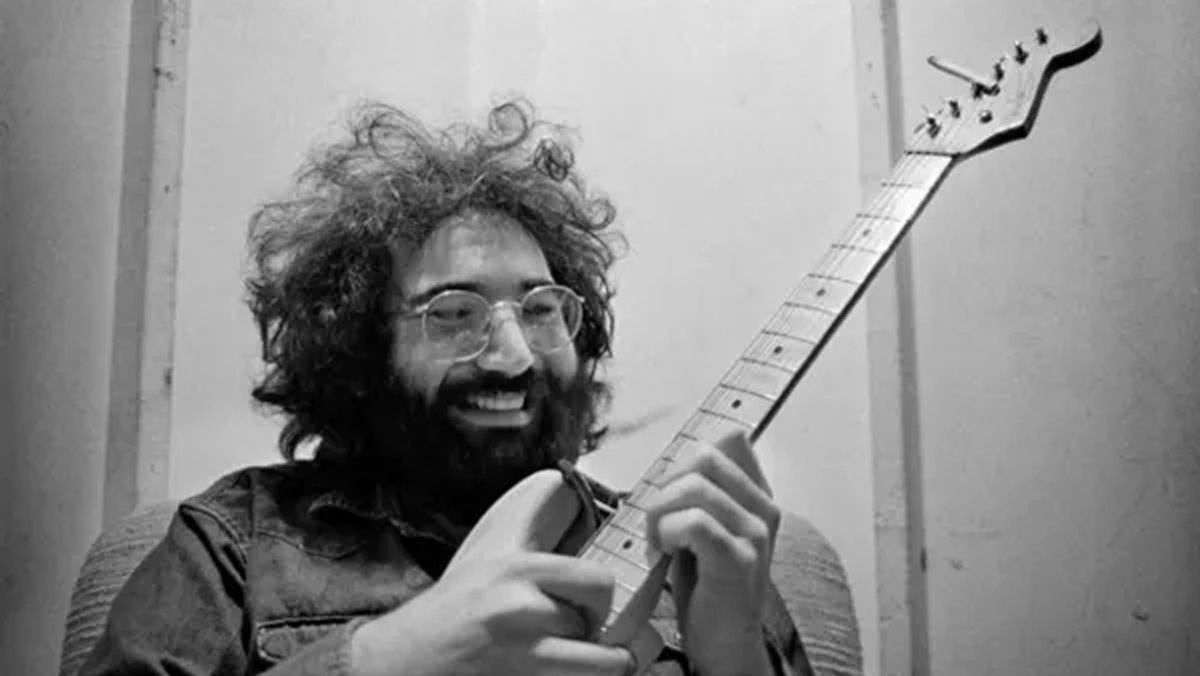
IN CASE YOU’RE WONDERING, no, this is not the Starship that put out “We Built This City.” Blows Against the Empire (1970) was a collaborative record arranged and composed mostly by Jefferson Airplane’s Paul Kantner with lots of Woodstock Nation friends, including Grace Slick, Jorma and Peter Kaukonen, Jack Casady, Graham Nash, David Crosby, Jerry Garcia, Bill Kreutzmann, Mickey Hart, and many more. It’s very similar to Crosby’s solo album, If I Could Only Remember My Name from around the same time. (Kantner and Crosby, before there ever were Byrds or Airplane, used to play guitars in Los Angeles on the beach and smoke pot).

I like the piano on this track, played by Grace Slick, which gives its sparse, almost hollow sound. Her vocals are also great, at times, with her voice, you can’t tell if it’s her or a guitar hovering in the back. Paul Kantner plays guitar, sings, and also helps out with some kind of “bass synthesizer,” whatever that was. Jerry Garcia plays the banjo and Kreutzmann is the drummer. And that’s it for this one. What a weird lineup. Kantner/Slick/Garcia/Kreutzmann? Who knew that such musical combinations even existed. Slick is now 86 and Kreutzmann is 79. The others, Paul and Jerry, are up on that big starship in the sky.

Lyrically, it picks up where they left off with “Wooden Ships,” a Kantner co-creation. “Say goodbye to America, say hello to the garden.” Utopian fantasies about sailing off into space with hippies. Imagine a world of David Crosbys and Grace Slicks. What a world that would be. Like, all our problems would be solved, man!

an old classmate

IT HAD BEEN YEARS since the name Cody Brigham even passed my lips, or flickered across the deck of my mind. To be honest, he had been relegated to dust, like everyone else I went to school with. I could never understand why people thought that school ties were the ties that couldn’t be undone. Sure, I knew them, by face and name, and maybe I knew a little about their personal lives — I think Cody’s parents were divorced and he was spending a lot of time at his grandmother’s house on Beach Street. But other than that, like most New York things, indeed, American things, they could have all been serial killers. Yet Cody Brigham hadn’t, in all of those decades since LL Cool J ruled the airwaves with “Mama Said Knock You Out,” forgotten me.

This I found out in an unusual way, as I walked the rainy December streets of Helsinki near the Kamppi shopping center, passing by shadowy Finns in raincoats and winter jackets who always looked away or down. Trams and buses rocked past me, and I trudged on carrying a parcel of books to be sold at an engagement in a local Finnish casino, as my career as a regional celebrity writer took on new, ‘Elvis in Vegas’ undertones. There I was coming up the street, when a man shouted down to me from one of the balconies. “Hey,” he said. “Come on up!” Then, to make it clear who he was, he said, “It’s me, Cody Brigham, from Sconset Elementary!”

He had been, all this time, aware of my movements and even was aware of my coming to Helsinki because of social media, and even knew the precise moment when I would pass under his balcony. Because of this knack for timing, he had managed to record video of me coming up that street. There I was, my hair slicked wet from the rain, with my big satchel of books. He showed me the film in his finely furnished apartment, which was situated in a large hotel.

“But why are you here?” I asked Cody. He looked more or less the same, of stocky build and of Northern European ancestry, with straight blond hair that was mostly intact, a solid, friendly countenance. It was him. Random weird things were my speciality, but this one took the cake. Or the karjalanpiirakat, as they say. “After I graduated from the University of Rhode Island, I went into hospitality,” Cody Brigham told me. “Do you want something to drink, eat? Lapin Kulta? Koskenkorva? Leipäjuusto?” “No thanks,” I told him. “Suit yourself.” He opened a bottle of Lapin Kulta beer and took a swig from it. “I worked in hotels all over the world, and eventually I was offered a job here in Helsinki, Finland, so I took it. And so here I am, man.”

How strange that a former classmate would be working in Helsinki and I would have known nothing of it. The whole situation seemed weird. After we spent some time talking about the old days, I continued on to my casino destination. It was then that I looked up at Cody’s building and realized that his “hotel” was also a sex club. There were images of Finnish women with whips licking whipped cream off each other. So this was Cody’s line of work? Funny how he hadn’t mentioned it. Maybe because it was so obvious? Or maybe because he was ashamed.

klaudia’s home improvement

AFTER I ELOPED with Klaudia, I was thrust into a home improvement job. I knew it was coming, it was all too expected, but at that glowing, early moment in the relationship, I was in a tender, giving mood indeed, and felt fine about sawing some wood or painting some windows. We went to a home improvement store in Estonia, which could have been Bauhof or Decora, to get some supplies, and Klaudia engaged in some friendly banter with the cashier, another woman who, like us, was inarguably middle aged. Klaudia was in a swell mood that day and she looked quite beautiful with her plume of blonde hair and red winter outfit. One could say there was an irrepressible five year old locked inside. I did admire this childlike side of her.

“And he’s going to renovate it all!” I remember her regaling the cashier, who typed all her orders up hotly with freshly manicured nails. Klaudia was standing on a chair, gesturing wildly. Someone had given her a mug of Decora coffee and she was taking tasty sips from it. At this moment, I said, “Stand right there, just like that!” I lifted up Klaudia’s red sweater and licked both of her breasts. This was done in plain sight of all the other shoppers. There was something wonderful about the contrast of Klaudia’s warm pink nipples and the harsh light of Decora. Or wherever we happened to be. Rather than feeling exposed or humiliated, Klaudia’s mood only soared. She laughed like a child and her blue eyes smarted with breast-licking joy.

“Men are wonderful,” said the cashier, typing away. “They lick your breasts and work for free!”

After we picked up our supplies from the back of the home improvement store, we went home, and Klaudia disappeared behind a door to discuss something important with her mother with whom she consulted on all important things. I looked around the room I was set to renovate. It looked as if it hadn’t been touched in 40 years. There were even old posters for Return of the Jedi on the walls. Dust on the windows, on the walls, strangling out the air. “Klaudia,” I called out to her. “Is it okay if I open the windows in here? I can’t breathe.” No response. They were still on the other side of the door. I only heard muffled voices. What were they talking about?

I began to move things out into the hallway to make room for the renovation. Slowly, devotedly. The first was a long plank of wood which might come in handy for a shelf later. I moved it out into the hallway, unfortunately scratching the old 1980s vintage wallpaper in the process. But when I set it down in the corridor, Köler, an old Viljandi dissident, turned up in his work clothes and snatched it at once. He wanted to use it for his own renovation project! Old Man Köler has been working on that pizza parlor on Tallinn Street for a decade now. I watched him disappear down the hall with Klaudia’s wood. I called out to her again, but she was behind the door, discussing something passionately with her mom. Would they ever stop?