
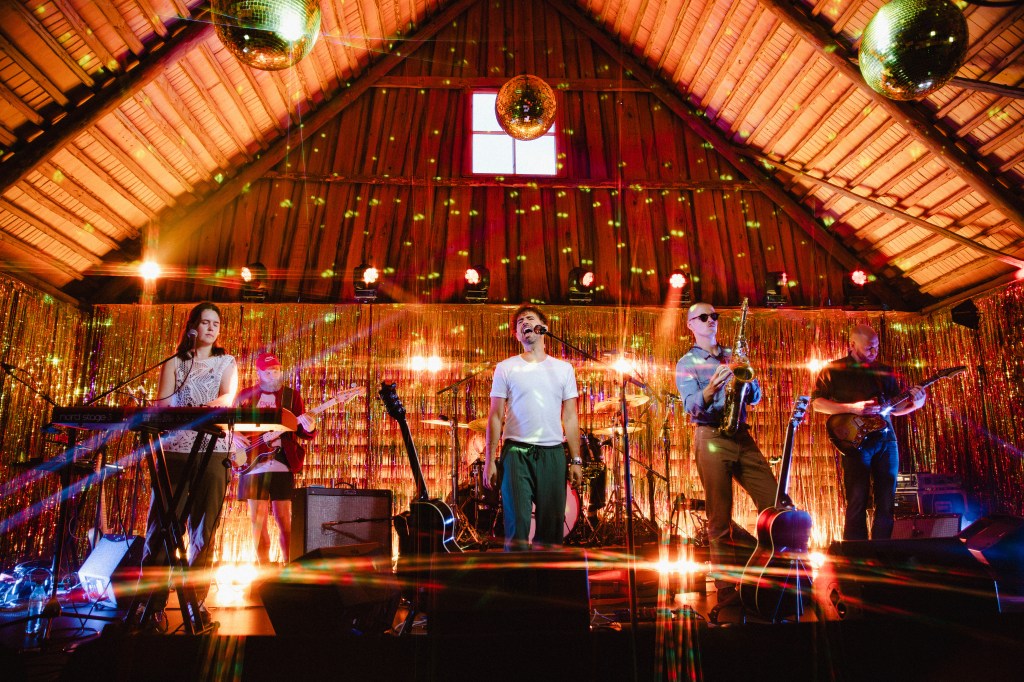
Araukaaria on stage. Photo by Kerttu Kruusla.
ONE THING that has always impressed me about resident Viljandi Argentine musician José Manuel Prieto Garay, better known as Pepi, is his sincerity. It can be disarming at first, it can even make you a little suspicious, put you on guard. For how could a modern person be so sincere? At what point does such sincerity become an act? But his façade of sincerity is so durable and resilient that no matter what you throw at it, it just won’t stick. There’s no winking at the camera here, no hidden double meanings, no metamodernism. Everything is what it is.
This is sort of how I approach the new song by his group Araukaaria, too. “Canto Oscuro” is disarmingly sincere. It has a cinematic quality to it — it would make a good backing track to a montage about a religious pilgrimage. Considering the story behind it — the loss of Pepi’s father, a trip to Palestine — that’s not far off the mark. Pepi recounts a roadtrip between Chile and Argentina before his father passed away years ago in telling the story. His father was very ill at that time, and could barely make the trip. This song, “Canto Oscuro” (Dark Chant) is kind of like the soundtrack to that trip composed after the fact. It passes along like a mountain road at night.
Shadowy, lofty, winding, introspective.
“I think it was clear from the beginning of the song that it was some kind of lament or requiem,” says Pepi of the song. “I wanted to visualise the journey I lived with the music and lyrics.”
Supposedly it takes about 16 hours to drive from Santiago to Buenos Aires. “Canto Oscuro” is only about six minutes long, but it feels like it could be 16 hours long. There’s enough packed in, a flute motif by Rauno Vaher at its opening, atmospheric guitar playing by Viljandi virtuoso Norbert de Varenne, backing vocals by his sister María Julia Prieto Garay and keyboardist Lisanna Kuningas, and solid contributions by Fedor Bezrukov on bass and Johannes Eriste on drums, the rhythm section of an earlier incarnation of Araukaaria. Araukaaria is one of those bands like Nine Inch Nails, that revolve around a principal songwriter and musician, but that have a revolving cast of characters, some of whom return after various scrapes and adventures (Rauno Vaher was the original drummer, and the last time I saw them, he was back on drums).
“I like to work with different people and in particular here in Estonia most of the musicians are involved in three or four projects which makes it hard to schedule and coordinate,” says Pepi. “As the project is quite a live band project, having different people always brings a new flavor.”
One of these players is Lee Taul, also of Don’t Chase the Lizard, Black Bread Gone Mad, and the Songs and Stories from Ruhnu Island project, who provides epic sweep with her violin. And another is — surprise, surprise — Tomás del Real, another Viljandi Latin American musician, this time from Chile, who helps out on something called the charango, a “small Andean stringed instrument of the lute family,” as Wikipedia informs me. He hadn’t played it in years, he says. But here it is, filling out “Canto Oscuro,” fusing Estonian and Latin elements.
“One day I was working on some other stuff and Pepi rang me up and asked, ‘Do you have time today to help me with something? I need you to record a charango in two hours,” recalls del Real. “I hadn’t played in a while but I went over there and we locked in the studio for a little bit and I made what I could,” he says. “I knew that the song was important to him and that Chile in a way plays a part, this connection between his life here and there, so I guess I was one of the pieces he needed for that track.”
As a person who also lives a life bridging continents, I know that sentiment well. At times, in the air between Europe and the Americas, I have often thought of myself as pulling thread with a needle, trying to sew two lives, one here, one there, together. It’s this sense of disorientation, of displacement that lurks in the obscured background of “Canto Oscuro.”
It is felt, even if not expressed.
“Pepi has an ability to put images in music that the listener can understand without even understanding the lyrics,” says Kuningas. “A lot of his lyrics are very visual, and he is able to put these pictures in your mind.”
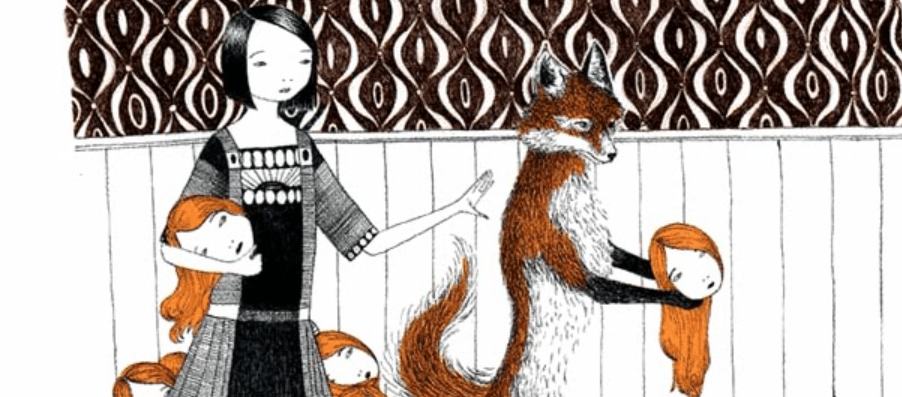
Most of the song was recorded in one live take, though a few elements — the backing vocals, the charango, classical guitar — were added later. Martin Mänd of Kopi Luwak recorded “Canto Oscuro.” It was mixed and mastered by Mattias Pärt. Animation to accompany the video was created by Pepi’s sister Camila. Pepi decided to release it on February 12, his father’s birthday. “This song is connected directly to my life, my story,” he says. “It’s a snapshot of that period of my life and has helped me to heal and to let go of a very big emotional burden.”





 north!