


It’s not paradise, but it offers some little smatterings of hope.

It’s not paradise, but it offers some little smatterings of hope.


On and around Veski Street in Tartu this morning.


The old laundry house (vana pesumaja) on Kraavi Street in Viljandi. A favorite ruin of mine.

I WAS NEVER THE PERSON to take offense in the name of good taste. Rather, I enjoyed the idea of a world where experiences rose and fell on their own merits.
There are those days though. Those days when even the most jaded intellect can be stirred. This was me not too long ago in a parking lot in Estonia. This was me holding our youngest daughter as we got out of our car and saw a poster for a bicycle shop.
Six, sun-bronzed ladies in string bikinis, each one in a row, each straddling a bicycle on a beach. The bicycle wheels, yellow, matched the color of their neon swimwear. Their round buttocks stood at attention above the seats, bringing to mind the delicious baked color of hot cross buns straight from the oven.
I see these kinds of sexy signs all the time. Once, when I was standing outside of Seppälä admiring the Finnish models in the storefront advertisements, our eldest daughter asked me how I felt about the smiling women in lingerie. “It does make me feel good, when I see them,” I admitted. “Like a breath of fresh air.”
But this advertisement bothered me. Was it ridiculous with its bikes and bikinis? Its taut hindquarters roasting in the sun like hams? Something about the scene troubled me. I think it was this: I have reached the point where I feel responsible for the world.
I understood that somewhere, some men devised this poster. Sex sells, they thought. It makes you look. I imagined the photo shoot, how the director set it up, told them what to do. “Okay, everybody has their string bikini on now? Good. You over there, could you tighten your butt muscles just a little bit? No, a bit tighter. Clench, clench, beautiful! Hey, could you spray their butts with some oil? We need shiny butts. Shiny. Terrific. Action!”
Then I wondered how could I ever justify such a grotesque image to Maria, a four-year-old girl with bangs who likes ponies and rainbows, whose face I turned quickly away from those shiny buttocks for fear that she might ask me some strange questions. But I couldn’t justify it. Not for the sale of more bicycles. Not for the sale of more anything.
I am still not offended. But I am disappointed in my fellow man. So much of the discussion over these uncomfortable experiences is dominated by women. It is women, we are told, who are most offended. It is women therefore, we are told, who must speak out. I am part of a Facebook group called Virginia Woolf Sind Ei Karda, where I read women’s opinions, and sometimes see that men have shared their thoughts, too, in a context set by women.
But where are the men? We are the target market, are we not? We are supposed to see those butts and spend thousands on new bikes. Are we really so cowardly that not a soul will stand up and tell the world for once and for all that we are really not so stupid?
In the end, I took my daughter into another shop, and my moment of distress soon passed. That advertisement did make me worry about her future, though, and all the other things she might see. I couldn’t shake the feeling of being responsible for it either, knowing that all of it had supposedly been created for me.
I HAVE MET Marina Kaljurand, I have met Hillary Clinton, I have crossed paths with Siim Kallas outside the foreign ministry on Iceland Square (and had someone whisper in my ear, ‘Do you know who that is?’) and remember very well as a boy going to visit Trump Tower in Manhattan, so that we could take in this cathedral of 1980s greed and excess. For me, this presidential election is — unlike any before it, either in America or Estonia — very, very personal.
The people running for president are not so much candidates as they are like family members. Your kooky uncle. Your obstinate cousin. You look down the table at a holiday — maybe Fourth of July for Americans, maybe Jaanipäev for Estonians — and realize that, ‘Oh, no, we really must choose one of them to represent the entire country again.’ And not just for a day, but for a decade.
One might be excused for suffering from indigestion.
Then comes the measuring, the sizing up, the countryside whispering. America still harbors its Cold War mentality. There is blue and there is red. There is good and there is evil. There is Clinton and there is Trump. Are you for him or against her? If you are for him, you are against me. Trump is working for Putin. Hillary only serves the interests of her shady “Clinton Foundation.” In my hometown on weekends, demonstrators gather at a certain intersection with signs. On the left side, you have what might be considered Republicans. They have Trump signs. On the right, you will find Democrats. They support Clinton. They yell at each other and people honk their horns in support of either side, raising their fists in solidarity from car windows. This is American politics.
In Estonia, the dialogue is more nuanced. Here there are more choices. How confusing could it be for me, as an American, to look at a stage at the Arvamus Festival in Paide, for instance, and see four people engaged in a meandering discussion about where to take the country? To know that beyond those four, there might even be four others who could become the next president? People aren’t sure why their head of state is so important — How many times has someone told me that this figurehead has no power? — and yet they know that he represents Estonia, the chosen land.
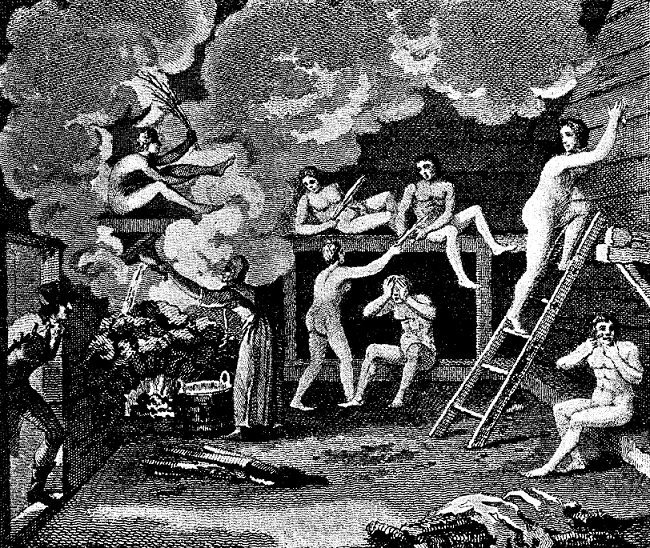
It starts, as expected, in the sauna. “What do you think about so-and-so?” someone will whisper to you in Estonia. Then comes the inevitable discussion about what happened to that money. “But I think the Estonians respect that in a way,” I will say. “They like the idea of being clever with money. It’s the chewing gum in public thing they can’t stand.” Then I remind them of my handshake with Kaljurand at an Arvo Pärt concert in New York in a room full of monks. By shaking my hand and smiling, she won my support. “Yes, but did you see what so-and-so wrote on his blog about her?”
The sauna whispers continue. Siim Kallas, Erki Nestor, Allar Jõks, Mailis Reps, Mart Helme, Marina Kaljurand, and Jaak Jõerüüt — who should probably be elected on the strength of his surname alone. It’s like some complicated card game. I can’t follow all of the moves. This is what it comes down to — for at least the Estonians. Some facts, some gut instinct, a few public gaffes. Slowly the Estonian mind accommodates some popular choices, which might be, in comparison to America — where people fantasize about moving to Canada or seceding from the union should their candidate lose — a slight bit healthier.
In the end though, I am reminded — tragically — of Seto Kuningriigide Päevad, the Days of the Seto Kingdom in southeast Estonia, where the Seto leader, the Ülemsootska, is selected for the coming year. People gather and whisper. “Maybe I should vote for him, he is a good traditional dancer.” “But she knows all of our folk songs!” “He came over to my house once and helped me with some rotten logs. He’s definitely the candidate for me.”
The people line up behind their chosen leaders. Whoever has the most people standing behind him gets to lead the masses. This is how village politics works everywhere.
Real democracy.
 WHENEVER SOMEONE brings up the word Olympics, two things come immediately to mind. One is Tõnis Mägi’s famous song for the 1980 Olympics, “Olimpiada,” a disco classic, with a solid beat, stirring runs of strings (and in Russian!) The video of him strutting around with dancers and Misha the Bear in the background is not to be missed.
One of his best.
The other thing that comes to mind is how I once wanted to be an Olympic athlete. This was not just a fleeting thought that came to me one day, but one that I invested some time and emotions in. I even had a poster in my room for the 1998 Olympic Games in Nagano, Japan. I put the poster on the ceiling above my bed, so that each morning, when I opened my eyes, I would see it. That was my goal when I was 15 years old. As anyone who has ever watched the Olympics knows, you have to set your goals. Then you can talk about how you achieved them when they interview you after you win. “It’s about self-discipline,” you tell the reporters. “About getting up every morning and thinking, ‘I want to be an Olympic champion.’” A montage of images of you working out with a determined look on your face follows as the media recounts your path to victory.
This is how you become a winner, a hero, a man beloved by all.
I wasn’t after the fame though. I was after some girl.
This was a downhill skier, of course. I always go for the skiers. She was raised in the Rocky Mountains by hippies who rather than give her a name, decided to wait until she was old enough to name herself. For the first few years of her life, she was known as “Girl.” This “Girl” won the silver medal at the Winter Olympics in Lillehammer in 1994, which is how she became known in all American households at the time. Including my household, where I became captivated by her winning spirit, strange family story, and curvy figure.
One must acknowledge the backdrop however. Frost-crusted Norway with its lovely folk dancers from the opening ceremony. The reindeer, those red Scandinavian cottages. The chill of the mountain air seemed to waft from the television set. The Olympics get under your skin this way, in that you fall in love with the Games’ gestalt: not just a charismatic athlete, but the entire picture. Whether it is Lillehammer or Vancouver or London or Athens, we become enraptured by this idea of how life could or, rather, should be. Instead of political corruption, military occupations, and a migrant crisis, the world could just be a cute village of beautiful and interesting athletes, where people whiled away the day enjoying world class catering and engaging in sporting competitions.
It was definitely a world I wanted to escape to and there was a chance that I could. At that time, there were commercials for the American luge team. I’m serious. There were videos of men on tiny sleds shooting down icy tunnels, gripping the sides of their toboggan at every slippery turn. “Dial 1-800-USA-LUGE” the man said on the commercial. So I did. I picked up the phone and I called and was sent pamphlets in the mail about the sport and about competitions to be held at Lake Placid in Upstate New York that spring. It meant that I would have to prepare.
I put the poster for the Nagano Games above my bed to keep me inspired, and told all of my friends that I would probably not be attending university because I intended to become an Olympic athlete. (Even today, some of them send me letters asking about what became of my career). It was winter, so I spent my time practicing my moves on my sled, imagining myself one day up on that podium in Japan with the coveted medallion suspended from my neck, only to descend into the soft embrace of my hot new girlfriend, the hippie daredevil downhill skier from the mountains.
As gossip spread in the school that they had a new member of the Olympic luge team in their midst, it reached other students beyond my immediate social network. It turned out that one of them, a less dreamy, immensely more physically fit youth named Chuck, was also going to Lake Placid to take part in the luge contests. In fact, he had already been training for the luge team since he was 10 years old. Chuck took one look at me in the hall and told me my career was over.
“They’ll never take you,” he said, looking up at me. “There’s just no way.”
“What do you mean? Why not?”
“You’re way too tall,” he said. He held a hand up in the air. “It’s all about the aerodynamics. They want shorter guys like me, because we weigh less, meaning we can slide faster,” the hand curved down an imaginary luge course. “But your long legs will dangle over the toboggan. It won’t work.”
I was crushed but I knew he was right. I went home and tore the poster off the ceiling, and never said a word about the Olympics to my classmates again. I still do check on that skier from time to time though to see how she’s been doing since she retired with all of her gold and silver medals. Some bits of Olympic magic never fade.
 AFTER A JOINT birthday party held for our daughter and her mother — both of whom were serenaded with candles and desserts — I took a car south to Latvia. Social media was just awakening to the news of my official change in relationship status, and though I tried to ignore it, now embarking on a new stage in life I had not especially sought out, I could feel the curious mind of the Estonian Nation pursuing me, and knew I must leave the country at once.
I was headed to Cēsis, what some Estonians still call Võnnu, if only to remind themselves that they once won a battle there against the German landeswehr in 1919, and for the first time in my life, actually happy to be going to Latvia. The truth was that I was never that interested in the other two Baltics — Latvia or Lithuania. I regarded them as a New Yorker might regard New Jersey or Pennsylvania. The fact that they spoke languages of a completely different origin only made them seem more distant, reinforcing my idea of Estonia as a lonesome island floating in the sea.
The Estonians, too, had this ambivalent and ambiguous relationship with Latvia, I had learned over time. It was as if Latvia was a partner it had been assigned in a folk dancing class, forced to dance together through time without any true chemistry. So much had been made of the idea of the Baltic countries as a geopolitical unit, and Western newspapers often ran articles about “The Baltics,” as if it was one contiguous place, the borders merely cosmetic, yet most Estonians’ knowledge of their southern neighbor’s language after centuries living beside each other seemed to be one word: saldējums, ice cream. There were exceptions, of course, like the poet Contra, who has written the book Minu Läti — “My Latvia” — and even penned poems in Latvian. But few people I knew had Latvian friends, and it seemed that the only reason they went to Riga was for a concert, or to pass through the city on the way to Jurmala to swim and eat more saldējums.
I did have a Latvian friend to visit in Cēsis, but he was also not local. Mike Collier, also known as Miks Koljers, is the author of the satirical novel The Fourth Largest in Latvia and the excellent new collection Baltic Byline. He wears a flat cap and has the ruthless dry humor the British are loved best for. I didn’t burden him with tales of my personal life, but welcomed the opportunity to sleep at his country estate with its majestic views of rolling hills. And eat saldējums. According to Mike, the Latvians do hold the Estonians in higher regard, “because they think that all Lithuanians are crazy, which, based on my own experiences, does seem to be the case.”
The Latvians preferred the company of their northern neighbors, even if they were only interested in their southern friends for their rich, creamy ice cream or, on occasion, exotic women?
A fair trade, I guess.
For me, as an American who had absorbed a lot of Estonia’s prejudices about people and places, plus that sense of superiority they have over all the other ex-inmates at the geopolitical prison called the Soviet Union, I had to say that I enjoyed being in Latvia in this time, pleased to be distracted from everything else going on, titillated by the tiny differences and architectural curiosities and funny words. Imagine a bar called Miks. “Should we go in?” “Miks mitte?” (“Why not?”) Imagine a river called Seda (“That” in Estonian). “Vaata, Seda.” (“Look at that.”) “Mida?” (“What?”) “Seda. The name of this place is Seda.” “Mida?” “Seda!”
Latvians remain a mystery. Women named Ginta and Gunta. Men named Dzintars and Gintars. I have so far not been able to grasp their perspective, though it became more apparent with my visit. There is much in Latvia that is similar, the houses, the history, the cadence of the voices on the squares. Yet Latvia remains apart from Estonia with its Indo-European tongue. There are more brunettes in Latvia, too, so at times I got the sense that I had stumbled across a long-lost Latin settlement, another one of those vanished Roman legions, gone missing in the curling mists and berry bogs of the north woods.
It was these Indo-European roots, I at last grasped, that divided the Estonians from the Latvians, that feeling of connections to the Finns, and, especially to the Sami, that is only apparent in some place names in northern Latvia. As soon as I recrossed the border a few days later, sensing less scrutiny from the Estonian Nation on the back of my neck, feeling more fluid and optimistic about my future, less worried about what might come and content to live life day by day, and saw that sign with the strange word Tahkuranna written across it, I understood that I was on different terrain. Estonian terrain.
I felt like an English trader crossing the frontier, preparing to live among the Cherokee.
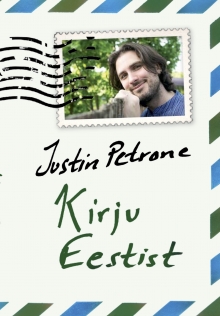 “A good crisis will bring your work to the next level.”
— from the chapter “Naised Köögis,” Letters from Estonia
WHEN WE ARRIVED to America with our overstuffed suitcases at the end of the summer of 2013, we moved to the very tip of Long Island, nearly 170 kilometers to the east of New York City. There, in a seaside village, I began working in cafes on much of the material that became this new book.
I was, in retrospect in crisis in every way at that time. Emotionally, physically. Too overwhelmed to work toward some great literary goal, I just borrowed an approach from some of my favorite musicians. Instead of composing perfect pop songs and then going into the studio, they would enter the studio every day, record whatever came to mind. Some of the greatest albums of all time have been recorded in this chaotic, spontaneous, loose way. Think of the eighteen messy songs on The Rolling Stones’ Exile on Main Street. Or the 36 tracks on The Clash’s Sandinista.
That’s how you accomplish great things: improvise.
So the “letters” in Letters from Estonia were envisioned by me really as “song demos.” Every day I would begin work on a different song. Whatever idea came into mind, it was written down. I think the first two chapters I wrote this way were “Kid Sirts and Surfer Taavi” about two bohemian friends of ours, and “Tea with the Icebreaker” about the naturalist Fred Jüssi. I remember when I showed the Jüssi chapter to Epp, she was really pleased with the outcome.
My favorite scene in this chapter is hovering outside Fred Jüssi’s window in the 1980s and watching him write the book Jäälõhkuja and then floating outside my window at the same time.
That was fun.
I was inspired to write more and to try new approaches to writing, each time focusing on a person, or a place, or an experience in Estonia. This process continued after we moved back to Tartu. “Andres Metspalu’s Elevator Speech” was one interesting result of this experimenting, a new journalism style profile piece, while “Naised Köögis” was one of the more challenging projects I worked on, because my source material was a notepad full of scribbled thoughts from the night they recorded their video in our old house in Viljandi. For this project, I used a new technique, where I inserted “images” into the story, so that the reader could imagine snapshots of the scene without ever seeing them. I love the idea of using imaginary images to accompany text.
As I wrote on, I also started to dig through my older “demos” to discover stories or pieces of dialogue I had written years ago but never finished. A beat up old notebook of conversations from Viljandi that evolved into some great chapters, like “Vastlapäev Arithmetic,” or “Kuldkala,” where I literally wrote down the scenes as they happened, or “Tree Balsam,” from Obinitsa, where I would take breaks working on the farm in November to type my feelings with cold, shaky hands. The project gave me the opportunity to at last complete them.
The desire of anyone involved in such a project is that once it is done, it will all fit together. A song is a song, a chapter is a chapter, but put them all together, and you may get a great album or a great book. I am sure that anyone who reads this book will understand what my life has been like during the past years. It is at times humorous, at times playful, at times melancholic, at times just sad. It begins with a ghostly encounter in the forests of Vormsi, and ends with a man losing his family on a beach at sunset in Narva-Jõesuu, his own idea of the “End of the World.”
These have been the toughest years of my life. This book documents them best.

ONCE, WHILE I WAS attending a conference in England, I went to visit my wife’s relative. The taxi took me out into the suburbs of Cambridge, where I walked to the door and pressed the doorbell.
{“I should warn you, he’s had a stroke”}
I did notice that one of his hands was clenched when he greeted me, and when he spoke, it did sound like he was struggling. He told me how he had staggered to the neighbor’s house one night, and the neighbor had understood. “Oh, you’re having a stroke.” But he was still very active. The television was on and he was watching football on the couch. Gamely. Leaning forward a bit. His name was Enn, and he had an Estonian flag on top of his TV set. It was beside a framed image of him with Mart Poom, the famous Estonian goalkeeper.
“I know Mart Poom personally,” he said with a twinkle in his eye. “Terrific player.”
His childhood story had been pretty dramatic, full of war and refugee camps and new beginnings. I had even seen the photo of the two little boys in old-fashioned flat caps fleeing the great disaster.
They were relatives, sons of my father-in-law’s uncle. One was named Tiit and the other was named Enn. Tiit, who became a professor, called himself “Tim,” out of convenience. Enn was just Enn. For his life he remained a man with a name that sounded like a letter of the alphabet.
James Bond had M. Cambridge had Enn.
He wasn’t a big guy, kind of wiry, had a face that was believably English with a little bit of Estonian Lord of the Rings mixed in. He had a working man’s inflection, the cadence of a person who spent a lot of his time hanging out with friends on the corner. There was nothing posh or stiff-lipped about this Brit. And he loved football. I mean, he really loved it. This was obvious from the second you met him. Just watching the movements of the players, sizing them up. “Ooh, look at this bloke, covered with tattoos, seems arrogant though. Ooh, look at that one, he’s pure muscle, isn’t he?”
I tried to appreciate it, but the truth was that organized sports always bored me a little. I never fully understood the pleasure of watching little men run back and forth on a screen. This is probably because I had been raised by people like Enn. In my house growing up, my father, mother, and older brother had gathered just like him at the lip of the couch to watch the little men run, and sometimes get angry and throw things at the TV set and curse the referees. Whole years of my life passed by like that, with them watching games and me in my room, tinkering with a guitar or something. Once we went to a real game and tried to follow the plays from our stadium seats. It was like watching fleas on the moon. Everyone else was having fun. They had painted their faces. They were crying, laughing, and, predictably, a few were drunk. I asked Dad for more popcorn.
Enn looked up at me from the couch. “I used to play too, you know.”
He had a whole stack of cool old photographs, with a recognizable young Enn standing with various football teams consisting of other players with determined looks on their faces. I remember that one photo was dated 1959. It seemed like so long ago. And yet, it was probably the period of his life that best captured his energy. He seemed to have — even after suffering a stroke — athletic impulses. He showed me photos of his wife, too, who had died, but whom he still adored, and of his parents and his brother, these Estonians that had somehow escaped their native soil and wound up in postwar Britain. Something seemed off about it, like one of those TV shows where they bring in the cast of another TV show for an entertaining, but truly weird special episode.
Enn’s father had been a professor, a musician, and an all-around renaissance man. Many of the men and women in this family were learned people. There were old photos of them with violins and fine suits and dresses, playing in unison, a prewar family, with a well-stocked library in the house, full of musty books. In a word, they were nerds. They were the kind of people tossed around words like filoloog like table salt. And then there was Enn, who didn’t care much for those things, but loved football.
“My parents were good people, they helped us, but they just never took an interest in my games,” he said, tracing a finger around an image of his teenage face in an old picture. “I kept playing for years. I never really quit. If it wasn’t for this stroke, I’d still be playing.”
It was true, his daughter told me later. He had played football up until he was 61. His favorite team was Estonia, but he also supported Cambridge United.
I felt compassion for the man. In my family, it had been the opposite. In my family, it was my older brother’s football heroics and cousin’s baseball victories that filled us with pride. Playing guitar was seen by some as rather regrettable hobby. Enn had experienced the opposite. He had discovered life’s true thrill in athletics. While relatives fiddled, he sweat, he kicked, he knew that full-throttle adrenaline rush.
We should have just switched families.
I didn’t tell Enn this. I watched his game from then on with more interest though. Watched it like I listened to music, or read a good story. It was an art form, too, wasn’t it?
I heard some more tales of football field glory from Enn and, as I did, I remembered that I had also enjoyed running back and forth on a field when I was boy. I realize now that I owe him for that, since word has reached me that he just passed away after Euro 2016. He went to sleep and didn’t wake up. A peaceful way to go. I don’t know what team he had been rooting for but I am sure he was watching.
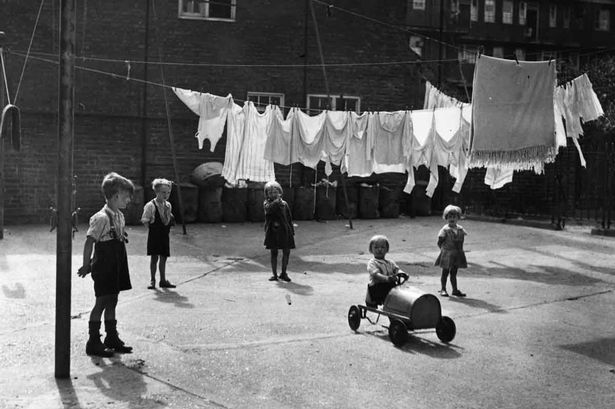
MY CHILDREN ARE BORED. They tell me this all the time. They are bored with their toys, with their rooms, with their books. They sit on the couch and fret and they complain to me. “Daddy, I’m so bored.” They’re so bored even the alluring shine of a smartphone screen excites nothing in them. They are more jaded and weary than a Las Vegas lounge singer. Not one of them is a teenager. Yet the world for them has already lost its vibrancy. There is nothing left to do. They’re bored.
“Daddy, I’m bored,” says the middle one, groaning in the kitchen. “What can I do?”
“I don’t know. Read a book.”
“That’s boring.”
“Why not go and play with the neighbors?”
“They’re boring too.”
“Oh well. I’m sure you’ll think of something to do.”
“But I’m bored.”
And so it goes around. I am frustrated with my children, but I am not the only one. Many articles have appeared in recent years discussing the exact same dialogues. Not only are my children bored, it seems. Other children are bored. A whole generation of children is bored. They have been entertained and occupied for their entire lives. With activities, with applications. So when that brutal moment arrives when nothing is being offered for them to do or to watch or to consume, they fall into despair. They are bored. They are like baby chicks crying to be fed from the nest, and we are like anxious and irritable mother and father birds tiring of feeding them worms. It’s time for them to leave the nest, at least mentally, and to think of something to do by themselves. But they won’t leave. They tweet and twitter and flap their wings, convulsing with helplessness. “Help us, help! Help us! WE’RE SO BORED.”
My own childhood was not the stuff of magic — pretty ordinary as I see it — but I don’t recall being bored whenever a free moment arrived. Instead, I saw it as an opportunity to get something done. I always had little projects going on, for as long as I can remember. I was building a castle with blocks. Or setting up a battle with toy soldiers. I recall my grandfather coming over to visit once to help my father assemble a swing set. As they worked, I sat in my sandbox, creating a parking garage for my toy cars. It was multi-leveled, with different routes in and out. Pretty ingenious for a garage made out of sand. Nobody told me to make one either. I just decided to do it myself.
Recently, I went for a walk with my two older daughters near the famous lighthouse in Montauk, New York. If you want to know where Montauk is, I will tell you. You drive two hours east of New York City, through the famous Hamptons — those quaint beach communities where Paul McCartney and Jay-Z own beachfront homes — and then through miles of desolate and sandy pine barrens, until you finally reach the windy point.
We decided to walk around the lighthouse, which went well, although one slipped on the stones and skinned her knee, and the other one spent half of the time taking selfies of herself with the lighthouse in the background. On the way back, we got lost. The area around the lighthouse was fenced off, and so we had to find a path through the woods, which were lush and thick, with vines hanging, creating a canopy that hid the light. It was jungle cave dark there in the woods, and I recognized many plants: the wild raspberry bushes, the suspended honeysuckle flowers. I knew which plants were edible, which ones were poisonous. I knew, because I used to play in the woods when I was a boy. I went into the woods with other children, other children who taught me which berries to eat. Nobody’s parents ever came in the woods, and none of them sent us to the woods.
We just went.
That instinct — to just do something, anything, to satisfy one’s inner curiosity — seems to be lacking in my children and others like them, who expect entertainment to be delivered with the touch of a button. This is not a critique of modern youth, but it does worry me from time to time. Yet, I should be fair. This is not always the case. Sometimes they are quite creative on their own. They dress themselves up, or invent interesting games. “Let’s play Valge Daam,” one declares, and they vanish into the cellar to pretend. I can hear them act out the various roles and I feel so proud in these moments. By that time, they’ve become so disenchanted with life, they forget they were bored to begin with.

