
SILVER WAS ON the north coast. I had never been there before and I wasn’t sure if it had been named after a precious metal or a popular folk musician. The city was located in the fjords somewhere between the Pakri Islands and Akureyri. The architecture revealed both Japanese and Nordic influences. The rooftops were angular, half Shinto, half Norse. It was dusk when we arrived by train and an orange sun was sinking into the cola-colored sea on the horizon. There were long piers along the waterfront. Vendors were out selling ice cream, painting portraits, and strumming guitars. I took a walk out to the end of one of the piers and climbed down a metal staircase. Then it began to rumble. This was another submarine, right beneath my feet! We began to voyage out into the harbor. There is something magnificent and a little terrifying about the stealthy and quiet movements of a submarine. Once far enough out from port, the one below me began to dive. The water levels rose quickly. The dark and warm seawater pooled at my ankles, then was at my knees. So this was it then, the big end. The submarine was going to go down and I was going to drown with it. Davy Jones Locker. I was somehow resigned to this fate, when the submarine suddenly rose again and returned to port. When I disembarked, I saw that the submarine captain — a certain Peter Townshend, the guitar player for The Who — was wiping his head with a handkerchief and pacing on the docks of Silver. “All my friends are dead! All my friends are dead!” There were tears behind his blue eyes. His face was pink from the moisture. I didn’t know what else to do, so I went and tried to cheer him up.
the 400 blows: an account of some months off social media
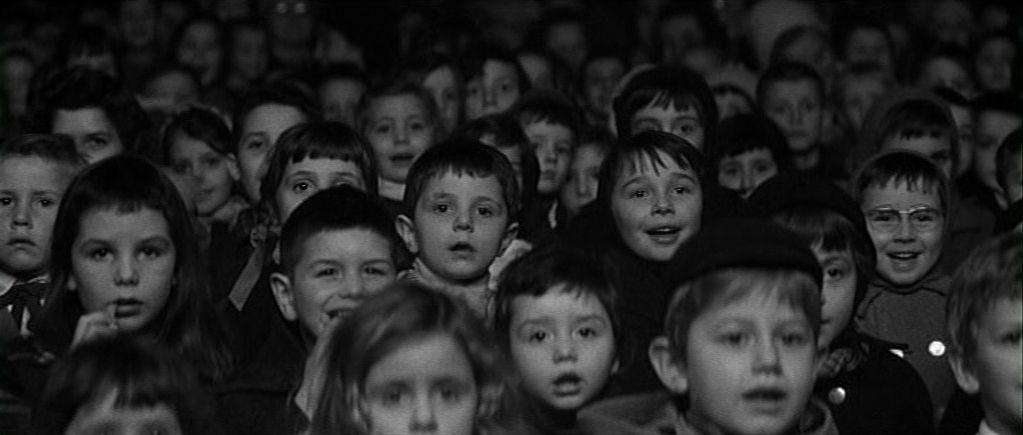
A scene from The 400 Blows (1959) directed by François Truffaut
TUESDAY, the 21st of September was my first day off social media. It also happened to be my father’s birthday, but these two events were not related. I did feel guilty for not being there to wish him a happy birthday in front of everybody, but this prompted another perplexing question: Where was this ‘there’ where I was supposed to be? It almost reads like an absurd poem. In the old days, I might get him a card. Nobody had to witness any moment of it. I did not go out in the street and loudly proclaim my sentiments. We might gather, yes, and he might be served a cake. Someone might take a picture. I have no idea where the ‘there’ is where I was supposed to be on that day, my father’s birthday, but I could sense that I was absent from that place. If it is a place.
Why I decided to leave social media is I guess of some interest. A simple answer is: addiction. Scrolling social media developed into my most sacred ritual over the years. It was the first thing I did in the mornings, the last thing I did at night. And if I had happened to wake up in the middle of the night, I would do it again. I would check posts, notifications. I felt some kind of pleasure when I saw that someone had liked something, or expressed something. I am sure this is correlated to a surge in dopamine, but I didn’t see it that way. In all my time spent as a mouse in that artificial labyrinth, I had barely noticed how it was all set up. Looking back I have to wonder if all of that time I spent there, in that place, wherever it is, was worth it. Perhaps a tenth. More likely 1 percent of the time I spent on social media platforms enriched my life in any way. Therefore I had wasted a part of my life using the 21st century version of an online bulletin board, or one of those usenet groups that emerged in the 1990s at the dawn of internet time. Yet for now at least, those days have come to a rest, if not an end. I had left the shared space. For many, it seemed, I had vanished. “Where did you go?” a concerned friend wrote to me. “But I didn’t go anywhere,” I told him truly. “I’m right here where I have always been all along. Here.”
***
There is a saying among the Irish for people who leave a family event without saying anything. They just feel like it’s time to go and then silently slip out the door. My grandmother was Irish, and so I’ve been made aware of this situation, particularly when one of my uncles just disappears, leaving people wondering where he went, and why he hadn’t bothered to kiss everyone, in the Italian fashion. They call it the “Irish Goodbye” and, in a way, I had given social media the Irish goodbye. One morning, I just wasn’t there. But it was necessary. Social media was not only an addiction. It had become a war zone. It perhaps had always been one, a virtual conurbation of unhappy people airing grievances and settling scores. In the year 2021, this became the terrain of a scorched earth war between new vaccine advocates and opponents.
Feelings throughout the pandemic had been heated. Before the pandemic, it was the Trump presidency that gave lifeblood to the arguments. In the summer of ’21, it was now epidemiology. I began to feel my own psychosis set in as I was exposed to diatribes by social justice warriors turned vaccination advocates on one part, and conspiracy theorists trying to feed me livestock dewormers on the other. It was relentless and it was unhealthy. Data, data, data. One morning, I awoke to a friend describing his desire to load a tranquilizer gun with miRNA vaccines and drive around town shooting people. People from both sides accused the other of being accessories to murder. Being exposed to this daily torrent of discontent had a bad effect. Any remaining peace of mind was shattered. It would take me hours to shake off the feeling.
Social media also fed massive insecurity issues within me, I think, and reinforced a sense of isolation or apartness from others. When I was using it, I would tune out the people who were actually inhabiting the same physical space as me. I ignored the rich detail of real life, yes, real life, this one that one can taste, touch, and smell here now. When I deactivated my accounts, however, I felt a massive void open up. Somehow, I felt as if I had lost everything. I had lost nothing of course. Most of those people were not my real friends. In fact, I had never seen most of them in the flesh. So they were not “leaving” my life, as they never were in my life to begin with. The sense of loss was synthetic. Yet there was also this odd sensation of disconnecting from the world, because nobody knows where you are anymore, or what you are having for lunch, except the person who is seated next to you, or the server who brings it to you on a tray.
I want you to think about this for a moment, because it is very important. How can you “leave the world” by deactivating an online account? Regardless, I felt this void open. Only in the evening on the second day off social media did I start to feel something like normal. That night I watched The 400 Blows by Francois Truffaut about some French kids in Paris in the 1950s. This was actually a beautiful film, one I couldn’t take my eyes off. Watching those little boys run around the city back in 1959, I began to realize that when I was 10 years old, circa 1989, my life wasn’t so different from theirs. In the past, I had thought 1959 was a very long time ago. Now it suddenly seemed comforting and familiar, even if it was in some other language.
I realized that I belonged to some other species, the people who had grown up before this. There had been a real life, one that came before the advent of social media. That was a world I used to inhabit. The real one, as I saw it, which was being displaced by this flimsy fake one.
Going off social media isn’t a miracle cure though. It takes weeks, if not months, for one’s mind to return to its natural state. People don’t realize how much they have changed. How much it influences their identities, their self-concepts. One day in that first week off social media, I ran into the TV host and producer Teet Margna in a restaurant, and he wanted to tag me in a photo. He kept searching for my name from his friend list, but was frustrated because it wasn’t there. “But where are you?” said Teet, pressing the phone with his thumb in frustration. “Where did you disappear to?” “I’m right here, Teet,” I told him. “I am standing beside you.”
***
On the third day off of social media, I even managed to read a book. It was called The Head in Edward Nugent’s Hand, and it was about failed English attempts to colonize the Atlantic coast of what is now the US in the 1580s. I didn’t realize that Sir Francis Drake landed 300 Central American indigenous women and 200 Africans and Turks in the Outer Banks of North Carolina and just set them loose. They disappeared into the wilds and perhaps were assimilated by Indians. Nobody knows what happened to them. In Haiti around the same time, English adventurers discovered dozens of skeletons scattered on a beach, perhaps bodies from a shipwreck. Nobody knows what happened to them either, and there is no record of who they were. Nobody had marked themselves as safe during the Great Haitian Shipwreck of 1590. It was just lost to time. That same night, I dreamt I was in the Russian Embassy in Tallinn. I needed a special visa to enter the embassy, and my visa was only valid for three hours. The inside of the embassy was rather posh, like a nice boutique hotel in Rome, with carpets on the staircases. There was also a nice buffet with croissants and freshly squeezed orange juice. In the back, I discovered, the Russians had constructed an indoor water park, and I decided to go for a swim. Later I asked the concierge at the embassy where my eldest daughter, who would soon be 18, was, and he said that she was last seen getting into Mr. Putin’s car wearing an orange dress. I did not like the thought of my daughter alone with Mr. Putin, and ran into the street in my swimsuit. When I awoke from the dream, I wrote some memories down into my notebook. I have actually been maintaining handwritten journals for more than 20 years, old-fashioned some say, but in these days off of the social media machine, I have suddenly found them more relevant in my life. I notice how the books feel in my hands, and enjoy the sensation of writing for my eyes only. I read somewhere that Haruki Murakami, one of my favorite writers, had once dived head first into the social media universe, only to also retreat into solitude, and hide himself away from that world. In an interview, he said he had to leave social media behind because the writing was so bad. As a good writer, he needed to read other good writing to continue to produce good writing.
This made perfect sense to me. It sounded like a good idea. There is something counterintuitive to all this, of course. For writers, social media is actually a blessing. It’s a lightning quick way to reach more readers. But to be a good writer, you must stay very far away.
***
Of course, I cheated a few days after that and checked my Instagram account. It seemed like a harmless vice. At first glance, Instagram is less addictive and menacing than Facebook, with its deluge of angry political outbursts, but it also peddles in illusions of people who are so beautiful doing such wonderful things. Somehow someone named Brigitte Susanne Hunt had been added to my feed. I had no idea who that was. Also Kelly Sildaru was there. I sort of knew who she was. I used to follow Anu Saagim, but I got tired of all the posing and pictures of the sweet life. In my real life, my cat had just thrown up again in the kitchen. The bubble of fantasy had burst.
If you leave Instagram for a while and return, you will notice how strange people look in their selfies. They have an odd gleam in their eyes, a kind of satisfaction as they transmit some photo of themself doing something to the rest of the world. If you are away from it for a while, such photos start to look stupid and absurd. There is a perversness there, a narcissism you don’t notice until you are away. This is what 21st Century life has been reduced to. And I mean, almost all of 21st Century life. I have a stream of content posted going back to at least 2008, when I was convinced to get a Facebook account. It hangs there suspended in time, accessible at almost from any point in the future. This has blurred my sense of time. If all these images are accessible at any moment, then at what moment on the time continuum are we? If I can look through 2008 and 2018 at the same time, in different windows of the same browser, it all becomes part of the same experience of reality. But it isn’t actually how we remember our lives or experience them really.
Even days off of socal media won’t heal a fractured mind. You still remember things you have seen, comments people made. Arguments that happen online continue in your mind when you step off line. You go for a long walk in the woods, replaying these dialogues and then see a bird or a tree and want to share it. Then you realize the depths of your addiction. One night, a week or two after I had quit social media, I went out for a walk and turned off my phone data. I wondered where I was in 2001 at this time, 20 years ago? I had no mobile phone, I only used the internet at a university computer lounge. In the year 1998, before I left for college, I did not use the internet at all. I worked in a music shop that summer and I can recall a woman asking me for something called an email address, which I did not have. I remember how my family went out to the islands that summer and I spent my days searching around in used records and book shops.
If we can access photo albums from 2008 with a click, perhaps I can access that time? If I can leave this place called social media, perhaps I can go back to that place too. That’s where I want to go. I don’t want to go back in time. I want to resume time as I once knew it and leave everyone behind, floating away into the depths of black digital space. I’ve just got to get away.
***
It actually took about a month for me to forget about social media altogether. It was during this time that I came down with Covid-19 and was locked away in isolation for about two weeks. I’m somehow glad that my bout with this illness was private, and that I did not provide status updates on every cough, runny nose, ache or pain or feeling of weakness or sense of disorientation.
Sickness is now political and invites the rabble to comb through your behavior (“Did you wear two masks? Did you get your booster?”) or to score your own illness according to symptoms and play doctor (“I would say it was a mild case”). When I was ill, I needed none of that in my life at all, because illness is personal and doesn’t actually involve people on the internet. They aren’t there with you in bed as you sleep sick. When I awoke from the fever dream of Covid-19, I saw on the news there had been a rally in Freedom Square led by the Helmes and Igor Mang had also made an appearance. It seemed so distant and irrelevant to my real life, but apparently the incessant arguments had continued, the neverending social media war. I had left it, but it had gone on. Think of all the energy expended, the sleepless nights, the unhappy arguments. This was how much of humanity was spending its life. I was in bed recovering and people were arguing on their phones about the sickness I had. It seemed too strange to be true.
As I said, I was completely off social media and had even forgotten about it. Before the local elections, I had heard a friend talking about a mutual acquaintance who was running for city government in Tallinn and I said I hadn’t heard about her campaign. “But how could you not know?” the friend said. “It’s everywhere!” Interesting, I thought. Where was this “everywhere?” Because in Viljandi it was nowhere, as there were no signs for Tallinn candidates here, especially those a bit farther down the list who were more interested in boosting their popularity online. People would start conversations with me on the presumption that I had seen their morning post, then act agitated when I said that I had not seen it, as if it was my job to be on Facebook all the time. It may be hard to believe, but I forgot that Facebook even existed. The word was strange. Face? Book? A book of faces? It sounded like an old catalogue for a modeling agency. If they even make those anymore. Sometimes I would see people in cafes with that ugly layout open on their screens. It was really like something out of a science fiction film. Each person deep in that space, that idea of “there,” this fictive place where they felt they needed to be all the time.
They had become robots.
***
Other than being ill, those months off of social media brought me feelings of balance and clarity. I felt my mind realign itself to a more natural tempo, and I was more creative too. So you might ask, why on earth would I reactivate my account? The answer was simple: to sell more books.
Yes, social media, the marketplace for attention. I had a new book coming out, and felt I must do everything to support its launch. If the eyes of the world were on Facebook, then that is where my book needed to be. Part of this is my livelihood and my children depend on this, so I cannot just write it off as a need for greed, or a desire for attention. There was a material need.
Going back onto Facebook at first seemed harmless. Its layout is horrible, by the way, and it is a pain to navigate. It’s odd to think that so many people have spent part of their lives staring at this ugly thing. All of these little boxes, strips of text, windows of images, a headache. If I had to look at it any longer, I thought, I might go insane or blind. But I did. The first days back, I used it judiciously. Slowly though, I began to check it again and again, and engage in the same arguments I once loathed. Once again, I was checking it in the mornings, and at night, and at all points in between. Once again, a grown man could be seen standing alone in a forest, or in the aisle of a supermarket, staring at a small rectangular object and pressing it with his thumbs. The access to other people’s personal lives was also offputting. Suddenly I had living dossiers on virtually any person of interest. If you saw a pretty girl and knew her name, you could find out almost anything about her with a few clicks, which felt somehow deeply wrong and unfair, not only to her, but to yourself and the natural flow of life. It felt like you were cheating life, using social media, and yet being cheated yourself in the end, as technology made the very prospect of a naturally manifesting existence impossible. Everything and nothing were at your fingertips. The same disappointment in the experience began to haunt me, and I decided to go away again. It happened to be my ex-girlfriend’s birthday, the 3rd of February, when I pulled the plug again. The two events were not connected, and yet I could no longer spy on her life, even if I wanted to. It also happened to be a new moon, supposedly the time for new beginnings and fresh new starts.
We shall see, of course, how long it will last this time. We shall see.
the man who didn’t know he was invisible
YESTERDAY, the high lonesome highway. The countryside has a certain Prohibition-era flavor to it. The abandoned, splintering houses, lost to time and graffiti. That empty bottle of whiskey tossed carelessly into a desert-like wheat field at some desperate moment in the winter, only to be revealed by the thaw, like some ancient mastodon. Sometimes I wonder about the local indigent people who might shelter in these discarded structures on the outskirts of the town. Maybe they make bonfires at night and play harmonica. What kinds of horrors have these broken walls seen? In India, I once saw a man sleeping curled up in a rug by the side of the road. I imagine it was something like that, only colder and more forlorn. The countryside is blooming though, stubbornly. One can hear birds in the trees, singing. The birds are social. The people not so much. I have done this route many times, down to the lake, past the Baltic German cemetery in the woods. Sometimes I revisit one spot where I went swimming with a particular lady friend, though our peculiar brand of friendship has since been dissolved. Then it’s back out onto those long elevated roads. Other walkers come by, but nobody looks at you. It would seem that this would be the most opportune occasion to exchange some kind of pleasantries, or to acknowledge each other’s existence. Two strangers meet along a lonely highway on a cool but sunny spring day. I don’t expect much, you know. I understand that this is not California, and there will be no “have a great day” wished upon me by some passing jogger. Still, a nod might do. Or some eye contact. There is nothing. Yesterday, a young woman walked right past me. She was within arm’s distance. I looked to her, just to acknowledge that we existed along the same plane of reality. The wind was playing with her straw-colored hair. Her face was pale, as were her eyes. She looked like an extra from one of those Netflix Viking dramas. I wondered what she was thinking about. It must have been very important. Maybe she was wondering about what school she might get into, or how much her cousin Tõnu’s new car cost. “I wonder how much it cost? I wonder, I wonder.” Then it occurred to me that maybe she didn’t see me. Maybe I was invisible. What other explanation could there be? I didn’t know when my invisibility began to manifest itself. Naturally, the girl didn’t say hello. She couldn’t see me.
twenty fifty-three
THIRTY YEARS from now, where will we all be? In 2053? In the yard, sipping espresso, or shots of limoncello, or playing bocce ball? God, I hope so. Then someone will put on Pinkerton. “I don’t want to be an old man anymore.” And Rivers Cuomo will still be writing songs, somewhere. And Weezer will still be putting out color-coded albums, somewhere. That’s where we’ll be, in the yard, playing bocce ball and listening to “Across the Sea,” with grandchildren or great-grandchildren on our knees. We’ll be sunning ourselves tranquilly, by the seaside, beneath the beach pine canopy. That’s where I’ll be in ’53.
i saw you
I SAW YOU the other day, in the shop, buying cognac or vodka or something with astronomically high alcohol content at about ten minutes to closing time. I saw you there in your scarf but you didn’t see me. I didn’t want you to see me, because I wanted to let you be over there, in that new, more manageable universe you have created around yourself, the one where I no longer exist. I’m not actually sure if it was the same you I saw though. Maybe you no longer exist either, or at least the way I once knew you. Maybe that’s over. I remember how just a few years ago we were drinking wine together in your rented room overlooking the street and had some young friends over. We got down and kneeled beside each other and were praying and laughing. What was so funny? I can’t even remember what the joke was. I remember the candles though, and the taste of the wine. That’s one memory I have. It’s just a memory and maybe there is no point in writing about it or talking about it. “Sometimes,” you told me tersely toward the end, “people just go their separate ways.” I did try to forget about you. In fact, I had almost erased you. You were nearly deleted, and when I went in there that night, my spirits were high and my soul was swinging. I wasn’t even upset by seeing you in the back there, with him. You mostly looked the same, or at least your eyes had the same visible vibrance. You always did have beautiful eyes. I will at least acknowledge that. I went to the other side and stood over there so you wouldn’t have to deal with the trouble of seeing me. I waited for a while and read a special magazine about the German occupation. When I looked back, you were gone.
i’ll see you in the faroe islands
WE WERE SITTING next to each other in the studio when she told me that she was leaving. Delivered, matter of fact. The young engineer pretended that he couldn’t hear, because he had his big headphones on and was editing the tracks, and making them wet with reverb. His eyes were on the screen. My eyes were on her. I was still stunned by her smallness, and to imagine that she was a full-grown woman, completely bloomed, and that she would never grow any bigger than this. Even when she was an old grandmother, long after I was gone from this world, she would still be this small. Diminutive in the flesh but stellar in the soul. She was so pale with such light eyes, but as sweet and as tart as a red wild strawberry, the kinds that grow out on the islands. But who dressed like that? Wearing those pants? Who held their coffee like that? Who drank it like that, with both hands? She had pretty hands and lithe fingers. She was beautiful. Young ladies drank coffee like that, with fingers just like that, and they blinked wonderfully at the world with eyes like that. She had the eyes of the forest foxes. She looked at the world through her fox eyes and sized it up and then she sized me up. Large, hairy, spent, craggy, but good humored and good natured and well enamored. She told me she was leaving. “I have to go to the Faroe Islands,” she said. “There’s a folk music camp there and I want to work on my music. I need to work on my instrument.” Those islands, those green rocks flung out there in the Atlantic somewhere between Shetland and infinity. She was going out there and of course I was going with her, even if I had to hide myself away in her instrument case. It was decided. I would come too and even try to enjoy the taste of smoked fish. She came to my house the day of the departure. She rang the bell and I heard the bell ring. She was downstairs waiting. I was up in my chaos. There were clothes all over the floor. My daughters were popping their heads out of the mess like prairie dogs and demanding orders of Indian curry. “I want the chicken tikka. And get two orders of basmati rice!” The bell rang again. This was just not going to work out. I was too old and burned out and had responsibilities. I couldn’t even find my shoes! None of them matched up. She buzzed the room yet again. She was down there in her snow boots waiting. Oh, I wanted her so. I just wanted to run away to those islands and vanish into a warm bed of rain-splattered mornings of moisture and everything. I wanted her so, and desperately, and she was right here and it was time to go. The bell rang and I couldn’t find my shoes. When I finally got down, my stuff tossed into a rucksack, journals and such, she had already gone. There was a tiny handwritten note left in the crack of the door. It read, “I had to go ahead, but don’t worry, you can always join me later. I will wait for you and will always be waiting for you. I’ll see you in the Faroe Islands.”
the french riviera
I WAS KICKED out of bed and lost for a good while. Then I reached a mountain village, up in the hills beside the French Riviera. I had to go to the diva’s house. Brynhild. She was on tour somewhere, performing Wagner’s Der Ring des Nibelungen, with valkyrie headdress. She left me multiple envelopes full of instructions on what I was to do and not to do while in her palazzo. Inside, there were mountains of old records piled up. Earth, Wind & Fire. Nina Simone. Neil Diamond. It was so dark inside, and yet bright, because all of the interiors were painted white. It was cold, like an ice palace in the mountains. Her dog was there, sniffing around. The house was so cold, especially after the sun went down on the Riviera, and I was up there, all alone. She told me that I had to get a fire started in the furnace, but I didn’t feel like it. I was just too tired for fires and decided to sleep. When Brynhild arrived back from the concert, still wearing her headdress, the house was cold and she was disappointed. Brynhild scolded me and went to wash herself.
lata
A SWANKY EVENT, with wine and cheese and such, and balloons, but I felt overwhelmed and hid in the men’s room. Into which walked an older woman of maybe 55 or 60. An average Estonian woman, though attractive in her own way, blonde, with breasts, and eyes, and lips, and maybe a soul under her business attire. She was an accountant. She didn’t tell me so, but I just knew. They all have that look, as if only numbers interest them, and not men. Of course, I kissed her. “Why did you kiss me?” she asked. “Because I was desperate,” I told her. We kissed again, and then washed our hands and dried them and left. I left the event and walked into a computer classroom. Rows and rows of PCs. Mostly empty seats except for one. Lata was there, sitting beside one of the computers. She looked at me from behind the screen. “What happened to you in there?” Lata asked. “Nothing at all,” I said. I felt bad for little Lata, as if I had betrayed her with the toilet accountant, and left. Rich, an old friend from my college days, came up to me after that. He wanted to know if I had a recording of a lecture on reporting from the prior week. I said I did, and we began to walk toward my room, which was still in the university’s journalism or J school. Rich walked too quickly and soon disappeared into a crowd, and in the atrium, youngsters began to pester me for autographs. “Justin, Justin! Justin, Justin! Sign here, Justin!” I signed as many books as I could, and eventually reached my room. My mother was there on the couch, reading a newspaper. I began to play with some old toys on the floor behind the couch. Then Lata walked in and started to chat with my mother. Mother said, “Has something been going on between you and my son?” Lata addressed me, in Hindi. “Justin, does she know about us?” I answered her, in Hindi, “Not as far as I know.” “Actually, I do know a little,” said mother, reading her newspaper. I felt alarmed, I felt my inner temperature rise. But Lata and her both got to talking. They agreed that it would be a good idea to go to therapy together.
here comes the ocean
WHO IS SHE? Wouldn’t you like to know. Sometimes you only catch a glimpse of her, out of the corners of your eyes. You think you see her coming your way down the street, or that you see her from behind at the shop, examining some bananas, but then she turns around and you realize that it isn’t her and you are disappointed. Sometimes the girl has the same scarf, same build, same boots, same way of walking, but it’s not her. Another good question might be, what is it that makes her who she is? That one is also difficult to answer. You just don’t know. Idiot poets struggle and wrestle and hassle themselves with such questions. Idiot painters too. They keep painting, and the songsmiths keep writing, just trying to get it all down on record or on paper. Is it in the curves of her eyes, the way that she walks, the sound of her voice? God no. There is some kind of radio signal broadcasting from the bosoms of people and hers is the one that is hitting you the strongest, starting to reverberate in your core. The sound continues to fill you. Sound is one word. It’s also like seawater. Remember, how you used to go and swim at the seaside as a child, and you could feel its waves pulsing through you hours later when you were all sandy and sleeping in the back seat on the long car ride home? That’s what it’s like. It fills you from end to end, rolling like the waves, from the hairs on the crest of your head to the final peninsulas of your toes and back again. Naturally, I tried to get away to preserve my autonomy. I told myself all kinds of pleasant lies to distract myself from the truth. She was too young or too old. Too fat or too thin. Her voice was too high or too low. Whatever I was, it was too much or too little. I was overly abundant and inadequate. However the math squared, it would never work out. But math is wicked and deceptive. Thoughts are self-sabotaging. And sometimes there really is no way out. The only way to go is in. I don’t see her always, but she is always there, just beyond sight, a blurred figure at the end of a misty street. The last time I saw her in real life at a birthday party, she was stunning. It was as if someone had cut a piece of the night-time sky away with a pair of scissors and made a woman from this celestial fabric. All of the little lies I had told myself were washed away. I thought everything was normal and tried to convince myself such, but about half an hour later, I started to feel that pull again. The mighty ocean had picked me up and was tossing me about with its heavy waves. I was being sucked out into water. I confided in my friend about what was going on, and she said that it all sounded beautiful. “Go with those waves,” she told me. “Ride them.”
fernando pessoa
WHO IS FERNANDO PESSOA? That’s not actually his real name. His real name is something like Paulo or Oswaldo, but pronounced in that juicy Brazilian way. Oshwaldo. He has multiple identities and documents. He claims his father was Jorge Ben. He claims to be a capoeira enthusiast. And also a ninja. He claims to be a lot of things, but he’s really just a criminal. And also black. Though these things are not connected. He is one slick street artist though. I met him in an upscale neighborhood in Santos, down those treacherous mountain roads from big city São Paulo, where he used to sell contraband down by the stinky river. In Santos, it’s nicer and you can smoke pot on the beach and play volleyball with girls in polka dot bikinis and still hear Tom Jobim on the radio. That’s why Fernando Pessoa prefers Santos. There are also fine streets lined with Victorian mansions. These were owned by American plantation owners who fled south during the Civil War so that they could hang onto their slaves for a few decades longer. Brazil only abolished slavery in 1888, you know. This is where Fernando Pessoa earns his money, taking part in what he calls live theatre. He pretends to steal things, and then his business partner Seaside Jair comes along dressed like a policeman and arrests him. Local yuppies come out and are so grateful that they toss money into Jair’s hat. Then they take it back to their little shithole bunker in the mountains and cut up the proceeds. I only fell in with these rogues because I was on vacation and trying to get a picture of the ocean. I wanted to post it on Instagram. There I was, walking along by those Victorian mansions, when I witnessed the Fernando-Jair street play. I followed them back to their hangout, but rather than pull a gun on me, Jair, who has one of those long donkey faces you can’t help but love, thought it would be good to have an Italian-looking policeman as part of the skit. “Just like Bolsonaro!” Then the closet fascist euro bourgeoisie in Santos would be especially grateful and give us even more cash for the arrests. That’s how I wound up taking part in the scam. And once, a business lady from Morumbi even gave me a ride in her helicopter for putting Fernando back in chains, where he belongs. There are perks to this gig, you know. We don’t always do Santos, of course. We work the coast. Praia Grande. Vila Caiçara. Guarujá. Jair even says we should go up to Rio de Janeiro. Or even to Buenos Aires. There is good money to be made in racism, if you know how to milk it. As for Fernando, well, once I asked him how he came to bear the name of a legendary Portuguese poet. He told me he had once been arrested, and the jailer had handed him a copy of The Book of Disquiet. “That is when I started calling myself Fernando Pessoa,” he told me. “That’s when I became him.”

