
FOR A BIG PART of my life, this was the woman against whom all other women were measured. Others perhaps wanted the Sports Illustrated Swimsuit Edition cover girl, on the back of a motorbike, with a case of beer, I wanted this one. I wanted someone explosive and a little grotesque (which invites the remark, be careful of what you wish for, no additional comment needed). I was actually in a room with her in New York, but was too nervous to approach her, but could not help but think, “What’s a nice Icelandic girl like you doing in a place like this?” The new album is really a treasure, like a cache of pirate’s booty, hidden in the back of a wet cave (let’s see how deep we can go with these metaphors). Something genuinely needed these days. Thanks.
the tartu shopping center scene
YESTERDAY, the Tartu shopping center scene. Tartu is the epicenter of south Estonian shopping. When I arrived to this second largest city in the distant year of ’03, the bus station was a mottled parking lot, the “big department store” looked like one of those makeshift research stations at the South Pole, and they were unearthing the land that would eventually host the new “big department store” across the street. The gaping muddy wound in the earth revealed ancient wooden structures that I am sure were thoroughly sampled and photographed. That was always a fun part about Tartu, no matter where you dug, you were bound to unearth a skeleton or two. Now all of this territory has been submerged in capitalistic wonderland of massive billboards showing taciturn models (the square-jawed Viking, the vacant-eyed maiden) in Baltic bling. There is Tasku, Kvartal, and the now “old” Tartu Kaubamaja (Kvartal, the large shopping complex, now sits on top of the area of the “old big department store”). When I am in the new department stores, I feel utterly poor. Where are my shiny new shoes? Why aren’t my pants as nice as those ones? Maybe I should work more with my hair? Perhaps it’s time to buy a car I cannot afford and get a mortgage on a home I cannot afford either? Maybe the beatnik life is not the life. Maybe it’s time to sell out? Who needs poetry when you can binge watch it? If you don’t get paid to do it, then why do anything? Isn’t that what life is, a big commercial, a giant dangling billboard showcasing the sweetluck apparel of the northern high life? And how come, no matter how hard I try, nature wants me to look like a Greek fisherman? I could straighten everything out, but tomorrow I will be just as messy as the day before. It’s been bothering me when I go out recently. I am the oldest person there. Where are all the other people my age? At home? Watching TV? What do they do with themselves at 9 pm? Beats me. Being in Tartu, this university town, one can’t but help but feel ancient. The median age is about 22. I kind of like being around all of those 22 year olds. It’s not even about eyeballing pretty youth, it’s just that, they didn’t live through most of the forgettable things I did. NSync? Who was that? Bill Clinton? Never heard of him. Webster? Didn’t he write the dictionary? They never had to see what happened to the cast of Diff’rent Strokes, and have never heard of Todd Bridges. If they ever heard of 2 Live Crew, it was because of TikTok. Maybe that’s a good idea. Let’s just wipe the last 40 years or so from memory and start over. Sure, a pandemic and war, but, we’re just getting started anyway. Surely things will get better. Everything is new again, shiny, sparkling and new. It’s a new dawn.
a ghost in the machine
SOMETIMES PEOPLE VANISH from your life. People you are close to. People you thought you knew. People you thought knew you. People you trusted. People whom you thought trusted you. People with whom you shared vivid memories. But then, one day, they went away. They did not die. They just erased themselves from your life. They had good reasons, but at one point you looked over, and all you saw was an empty chair. These people are not dead but have become ghosts. It’s a strange phenomenon, how the living can turn themselves into phantoms. Vague and amorphous. Almost tangible. We actually always talk of the dead. We remember the dead. But when a person becomes a ghost, it’s not just as if they don’t exist, it’s as if they never existed, so there is no need to speak of them, and even if you do, it’s as if you are talking to a wall. What difference does it make? They are no longer there. This creates havoc in your mind and memory. You begin to question if they ever existed, or if they were just imaginary. You begin to suspect that you have become like that troubled mathematician in A Beautiful Mind. At some point, you just have to shed them from your own memories, like yesterday’s clothes. You take them off, and they are there lying coiled on the floor. Not only are they gone from your life, but you are no longer you anymore. You have to become someone else. You have to rewrite your story. It’s like one of those dried up distributaries in the Nile River Delta. It used to be there, but it’s gone. Where there was once water, there is now just yellow sand.
before i forget yesterday
BEFORE I FORGET, yesterday, rain in the squares and in the parks, and down the avenues. Rain on the river and on the little street, and outside the Italian cafe, and the new supermarket, the gentrification of the neighborhood complete. Rain outside the music shops, the academic buildings, the coveted high school, and then the incident, and her and all that. I melted away before I even understood anything. Two shadowy figures in the wet. Love-bombed in October. Then I went to the church and lit a candle. I thanked god, and the universe, and all of the terracotta saints. At night, beneath a warm blanket, I was soaked up in the vibration, and again whispered beneath my breath, “Always, always, always.” And so I waited for her, and dreamed of her, and wrote only for her, and all my sands crashed and crumbled away into the sea, and there were only tropical nights after that, sumptuous tropical nights, with palm trees, starry constellations and rich love.
dreadful poetry
THERE MUST BE some way to preserve the peace of the bay, rainy and grey on a mottled motley day, dressed in plaid, dull-eyed, youthful, guitar lines spreading out like nerve endings and memories, lightbulbs, passing cars, raindrops and dreadful poetry. If this isn’t it, then whatever could it be? Sitting, sitting. Waiting, watching. Marimekko prints and tea-soaked reveries. Cloudy glass. The dream of the yawning big ocean climax, the sex that collapses the twilight. The hobo who, asking for warmth, is taken under the dry feathered roof, just so that he can persist and persevere. Reveries, memories of big bays and big bogs and cranberries, owls, and maritime creatures. Feelings of blues and stories of singers. Lonesome. Wandering. Sailboats on the gulf. White triangles, stars, midnight blue, equinox, solstice, hope.
a glass half full
FOR MOST PEOPLE, COVID-19 was a negative experience. It was the virus that made them ill. It kept them bedridden. They could not go to meetings, or on trips, or perform at concerts. It took away their senses, made it hard to breathe, left them fatigued to the point where they could barely walk. It obviously killed many people, including my cousin, who would not get vaccinated, made a trip to visit her sister in a different state, and died in a hospital intensive care unit after being on a ventilator for weeks. My experience last autumn was mild in comparison to what so many have gone through, but it was an intense two-week-long journey. It also changed me in profound ways.
To begin, I didn’t even know that I was sick. I had somehow made it through the Harvest Party, an annual folk music event, where I had heard from friends that many had been infected, and came out unscathed. I had started to believe that I was immune, or that I had already had the infection. I had, after all, been sitting in cafes throughout the pandemic while visitors coughed and sneezed their way to their next espresso or piece of cake. That Friday, I went to see the new James Bond movie at the cinema. I have a feeling that it was there that I met the virus. The name of the film was No Time to Die.
Two days later, I drove down to Karksi to deliver some supplies to my former father-in-law and his wife, who were laid up with the virus for the second time. I left the small bag of vitamins at the doorstep, called to them, and got into my car to drive home. It was then that I began to start coughing. It was a strange, dry cough. It felt as if all the oxygen had been sucked out of my lungs. It was worrying enough for me to get a rapid antigen test done the next day at a shopping center. That evening the result came back. I was negative. Of course, I went back to the cafes the next day, even as I began to develop a tremendous head cold. But something else was wrong. I just did not feel completely myself. I felt slower and a little sad. My doctor helped secure a PCR testing appointment, and the following day I walked, yes, walked, to the white tent to have my nose swabbed. Later I got a call informing me of the result. I was positive.
The next 10 days are a blur. The only other person I interacted with was the Bolt delivery man, who left orders of hot curry on the other side of the door. I did not lose my sense of taste or smell, and I credit that spicy curry with helping me get through the experience. I binge watched old James Bond movies. Hours and even days were swallowed up by sleep. I could do, at most, three things a day. Wash a few dishes, maybe a load of laundry. I tried to write. The rest of the time I slept in my bed or stared at the ceiling. At one point, I was almost certain that a young woman I knew was in the room and had brought me a glass of water. I even remember taking the water from her hand and drinking it. When I awoke, she was gone. I also thought I was driving Bond’s Aston Martin DB5. This turned out to be a sweaty blanket.
At some point, I became so disoriented, that I only had a marginal idea of who I was. I knew, in a sort of roundabout way, what my name was, and where I had been born and when, who my parents were. I had some memories, but these memories seemed irrelevant to who I was. My name was just a bunch of sounds put together. Memories were just things that had happened. Thoughts had originated from beyond me. Those were things that other people had told me, or that I had read. As such, thoughts, ideas, and theories had nothing to do with me. They were fake, pieced together in elaborate ways, but not really tied to the act of being alive.
Almost a year later, this transcendence of consciousness has had a positive impact. I can no longer judge others by their words, because I know that their words, or attitudes, are not really who they are. They are just words. They come and go. Likewise, I can recognize connections with others that are significant and powerful, but do not need words to define them. If you do feel for someone, what is the use in telling them, because they probably feel the same. I remember the morning the virus left me though, and the sensation of it leaving my body, as if it was tired of messing with me and was hungry for a new victim. It was like possession. The spirit sat up and floated away out the door. A few days later, I came out of isolation and went to the shop. The girl who had brought me water was there, looking at me. I told her about my vision and thanked her for bringing me that glass of imaginary water. The girl gave me a weird look, but I think she understood that I was just grateful that she existed.
*
An Estonian version of this column appears in the September 2022 issue of the magazine Anne & Stiil.
huracán by don’t chase the lizard
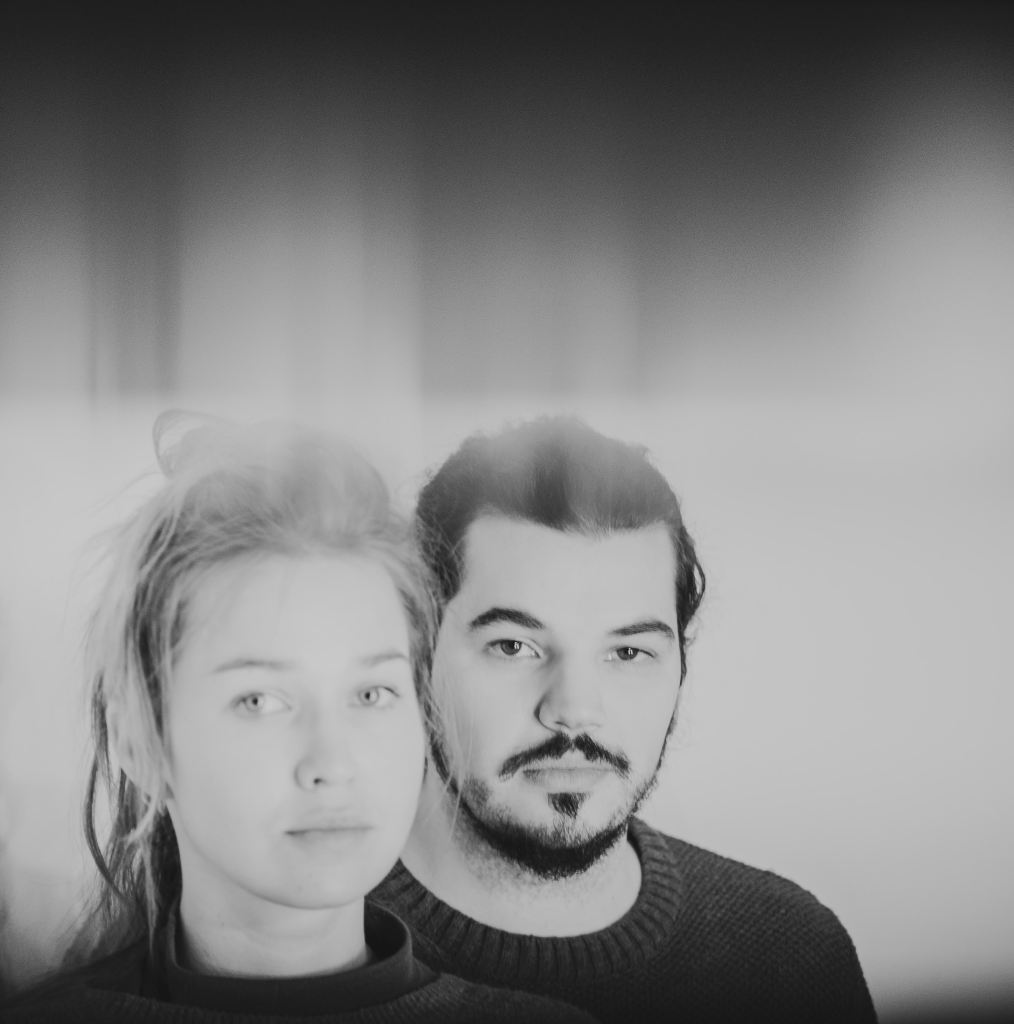
EVERY OTHER DAY I catch sight of Tomás del Real leaving the house on Posti Street. It’s a sprawling, timber, 19th century structure across from the courthouse, and the South Americans have settled into the apartment at the far end. In the evenings, I can hear them singing through the windows. Sometimes I peek through to watch them play. I am not sure if Tomás is actually living in the house or visiting. Del Real turned up in town with his guitar and some other Chileans maybe a year ago. Suddenly, there were these dark-haired musicians milling about, the kinds of nomads who carry the winds of Los Andes with them wherever they may venture.
Del Real was one of them. He’s got thick hair, a scruffy beard. He likes to wear sunglasses. I know almost nothing else about him, other than that he is one half of Don’t Chase the Lizard.
The other half of this indie folk duo is the Estonian violinist and vocalist Lee Taul. I see her around town too. Usually she is either coming from rehearsal or going to rehearsal or getting coffee while taking a break from rehearsal. Sometimes she prickles with electric enthusiasm. Sometimes she is frustrated with the slow pace of a project. Sometimes it is raining and she is taciturn. Sometimes it is sunny and she looks more vibrant and Latin than Tomás the Chilean. Sometimes she has been rehearsing with her fiddle all day and yet no new ideas have arrived. Sometimes Lee has a really brilliant idea.
Taul and del Real met at some kind of musical camp or event years ago somewhere in Europe. When del Real found himself in Viljandi, a town of about 20,000 people steeped in culture that serves as a kind of Glastonbury or Roskilde for this Northern European country, they reconnected. Del Real had just washed up on Estonian shores after leading a peripatetic existence that took him from Chile to México to the US, then back to Chile before embarking for Europe.
“I spent a year without performing and filling myself up with anxiety, not being able to develop much as a person,” he says of this time, which coincided with the Covid-19 pandemic. “I decided that I needed to explore other possibilities, so I moved to Europe with one of my friends.”
During this period, they decided to reach out to old friends they had made at ethno music camps, including from Estonia, which del Real had visited years ago. “I had good memories of Estonia from my past, so we decided to hang out here,” he says. “I connected deeply with the place, the culture, the people and the nature, so that week turned into a year, and here we are now.”
Del Real also got a residency at the Pärimusmuusika Ait, or Estonian Folk Music Center, a converted manorhouse barn that serves as the hub for folk music. It was here that he and Taul began to compose the songs that feature on Don’t Chase the Lizard’s debut album Huracán.
ESTONIAN WINTERS ARE WEIRD. Anyone who has ever lived through one can tell you that. From about November through April, the ground is covered in snow and ice. Sometimes it melts a little, only to be reinforced by double the amount of white cold. Days dawn and end with sheets of the sticky stuff falling all around. Time doesn’t stand still during an Estonian winter. There is no time. In a way, the hypnotic character of the Estonian snowfall found its way into Don’t Chase the Lizard’s songs. It is this strange yet appealing overlap between northern natural elements and Latin rhythms that colors the group’s music, like João Gilberto mixed with a little Hedningarna.
Del Real wrote most of the songs early in the morning. There was an almost monastic quality to the composition process, steeped in solitude and peace. He would wake, work, and send his ideas to Taul, and the two would build on them. “I was the winter resident at the Ait, so we started to work while being very much in isolation from the world,” says del Real. Because of pandemic restrictions, there wasn’t much activity at the Ait, which is located adjacent to the ruins of 13th century castle and a wooded lakeside landscape. With few visitors, they were especially isolated.
“All the tracks from the album come from that experience,” says del Real, “being in our little bubble and around nature.”
Within two months, they had an album’s worth of material. “Huracán” was the first song written for what would become the group’s debut album. “It was very early in the morning and I couldn’t sleep so it was almost like having a conversation with your subconscious,” he says of the song. “Lobos” was the last composition. By the time it was written, the duo had started to play live.
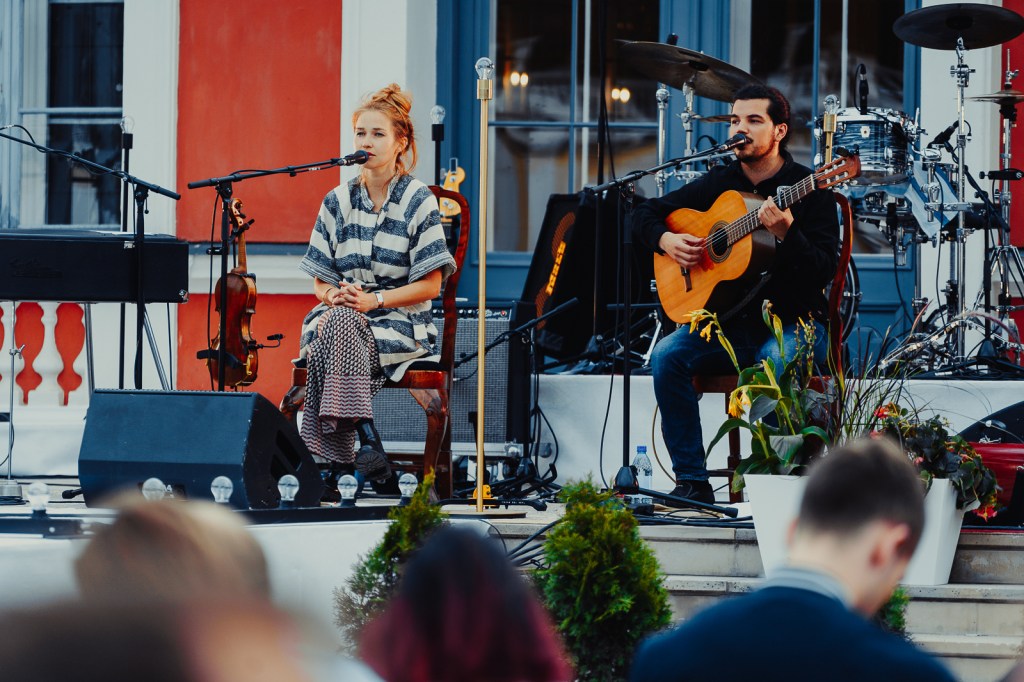
THE GROUP’S FIRST CONCERT took place in the Ait itself in February and by March, they had released their first single, “Buscar la Luz.” The single has a soothing, undulating quality, held together by del Real’s splendid guitar work and the droning quality of Taul’s violin, which adds color and depth to the melody, topped off with sincere lyrics and beautiful harmonies.
The duo appeared on several Estonian radio programs in the early spring before making their Tallinn debut at Philly Joe’s in May. From there, they flew over the ocean to take part in Folk Alliance International, where they had an official showcase in Kansas City in May and performed at the Kansas City Folk Festival. Once back in Estonia, they played the Seto Folk Festival in July and opened for Rita Ray in Tallinn the same month. They are also scheduled to play at the Ait’s Harvest Party concert this coming October.
In the meantime, Don’t Chase the Lizard racked up more than 30,000 streams on digital platforms with its singles “Huracán” and “8,” incidentally the eighth track on the album, which was released in July. “8” features more intricate guitar work, with a hushed, almost prayer-like quality to the vocals. The violin work takes its time, no note is wasted, every tone is supple and adds to the sound. Credit is due to Kaur Einasto, who recorded the album in Viljandi, as well as to Jorge Fortune, who edited, mixed, and mastered it at Estudios Triana in Patagonia, Chile.
According to Taul, the concerts have gone quite well, and the crowd’s positive feedback has surprised the duo. “I don’t know if it’s the fact that the folk audience is used to a different kind of music, and ours has had a refreshing effect, or that the songs, mainly in Spanish, give the program a special flavor,” she says. “In any case, we have been satisfied with the results.” Taul notes that audiences in the US received the group warmly and that the group made new contacts. “We met amazing musicians, producers, and agents,” says Taul. “We can only hope that some future cooperation will come out of those interactions in the future,” she says.
“I think people have been reacting very well to the live performances,” agrees del Real. “It seems that people connect with feelings and sounds that seem genuine to them,” he says. People have particularly been intrigued by the combination of Chilean and Estonian sounds. “It’s attractive to see how two people from opposite regions of the world have a sound that might fit together very well and become something quite unique,” he says.
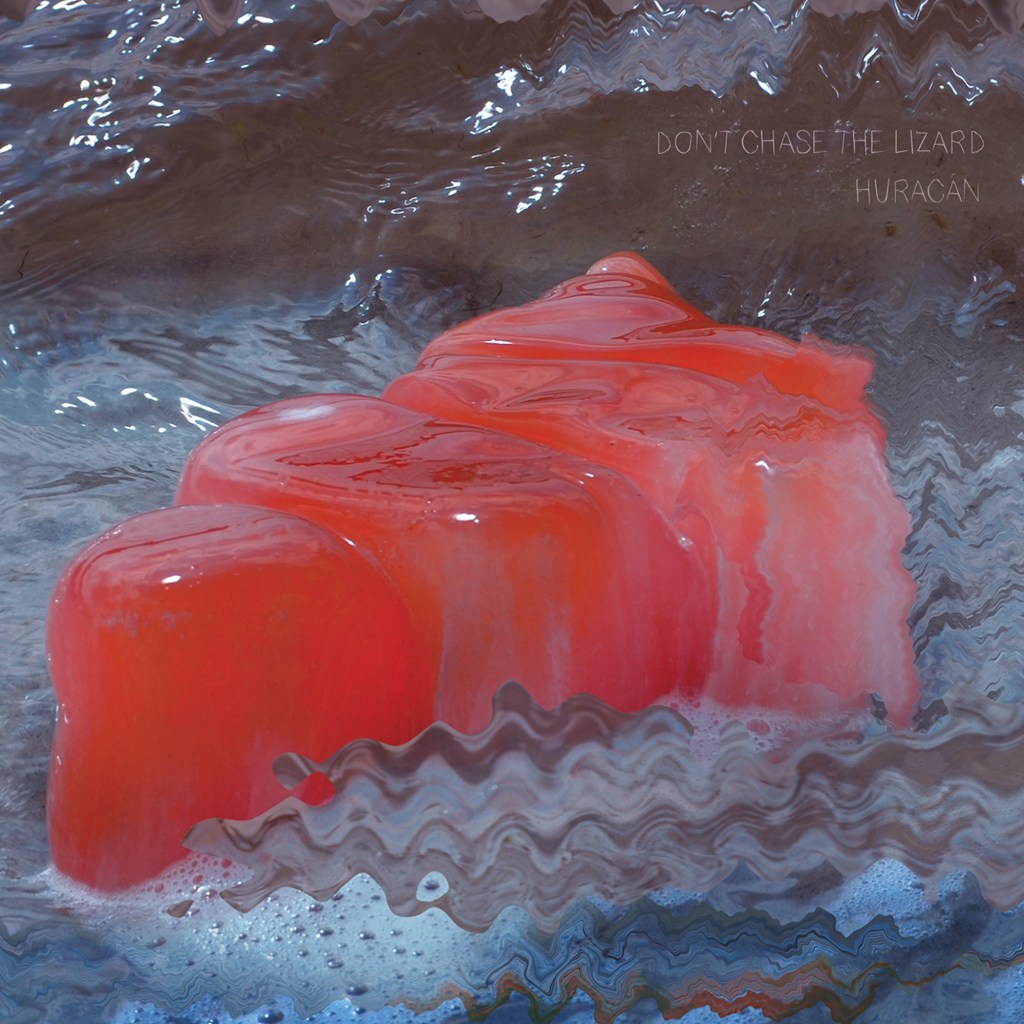
GOOD ALBUMS are like the best novels, of course. They have a way of effortlessly reaching you on their own time. Someone might give you a book and urge you to read it, but you put it aside until one day, out of boredom, you pick it up and devour it all at once in a few hours. Likewise, someone might give you an album and ask you to listen to it, but it might take time for the right moment for listening to arrive. In my case, it was a Sunday morning in August when Huracán presented itself to me. The sun was already shining, I was about to take a shower and go to the cafe to get some coffee. Many of the big milestones of the summer, such as the annual Viljandi Folk Music Festival, had passed. I myself was in a calm morning contemplative mood.
Each song on Huracán is a treasure to be savored in its own way, unwrapped slowly and delicately. The voices reach out to you. While well produced, it’s a bare bones recording yet with stirring atmospherics. It sounds like it was recorded in an old church in the Andean Mountains. There is del Real’s guitar and Taul’s fiddle, plus their exceptional voices, del Real’s intimate delivery and Taul’s intuitive and sensitive harmonies. There are no electronics gurgling in the background. There are no distractions. It’s as if they are right there with you playing in the room.
I will always recall that moment of putting on those songs and letting them play. They seemed like the best way to start a quiet Sunday morning in the first week of August. It was kind of funny as well. This music, written in isolation in the winter, somehow made sense in summer. Huracán, the ultimate winter album, had unwittingly become the ultimate summer album too.
the game of hockey
AFTER SHE HAD finally purged her life of her husband, Céleste invited me over. I wasn’t surprised they had gone their separate ways, but Céleste had often spoken lovingly of Georges, a man of business, a man of ideas, a man she could depend on. It was a relationship consecrated in a cathedral, celebrated at a manor, formalized with the necessary paperwork.
They also had a child.
Then, just like that, in a matter of eighteen months or so, there had been a crumbling, a dissolution, a reversing of the course. Everything she loved about Georges she now despised. She disliked the way he drove, especially. I wasn’t sure if infidelity was involved. I never dared to ask, but I had my suspicions. If anything, Georges was more married to Pierre on his hockey team than he was to his wife Céleste. As soon as she had banished him from the home, she invited me over to dinner. I went there accordingly. I had no idea what to wear or to expect.
When I arrived at their house, the door was open. I knocked and rang the bell and when no one answered, I went in. I could hear that someone was in the shower downstairs, and then Céleste’s mother came out from the kitchen, holding little Antoine in her arms. She invited me in, and I saw that Georges was very much still in the house, eating dinner together with Pierre. They said they were both going to play ice hockey, and then asked if I’d like to come along.
Naturally, I thought they were plotting to kill me. Georges must have known there was something going on between me and Céleste. Perhaps he had even read our erotically charged letters? Or seen some of the photos she had sent in her more vulnerable, early morning moments? I studied him as he walked toward the rink. He was no doubt regarded as handsome, I thought but at the same time, a rather stale, dry kind of character, the kind who breezes through life into positions of power, even ascends to the presidency, or who collects great wealth, but in person is rather a bore. Such a character is the very epitome of manhood by all metrics, yet lacks anything that would distinguish him as a man. The only thing that defined Georges was his love for hockey. He knew statistics associated with all of the players. He played hockey. He watched hockey. He was hockey. During that solemn walk, I did not dare mention his failed marriage, but the man never mentioned it. Instead he spoke of the game with Pierre, and they recalled with great accuracy different plays from the season. His only lament was a sore shoulder that was taking too much time to heal. I suggested he take some time to recuperate. Georges sneered at me as if I knew nothing and said one word: “Never.”
I left the two players at the rink and walked back to the house for my dinner with Céleste. The evening had just begun and yet had already taken a strange turn. Even the trees down the boulevard looked sinister. In a nearby park, a man tossed some breadcrumbs to some pigeons.
At the house, Céleste was waiting for me. She had put on a red dress, and draped herself in a white shawl. Her blonde hair was pulled back. She held a glass of red wine before her and stared at it in contemplation. I knew she wanted something from me, but did she want it all, and tonight? The grandmother had apparently left, and Antoine was sitting in his high chair.
“Well,” said Céleste. “At least you came.”
Dinner was nice. Afterward, she told me she wanted to show me the cellar. We came down an iron staircase to a series of underground rooms, full of antiques, magazines, and a plush bed in the corner beneath a ground floor window, through which shone some early evening sun. The child held to its mother. When she set him down on the ground, he started to scream.
“Please kiss me now,” said Céleste. I obliged and kissed her. She fumbled with my pants, grasping at my underwear. “Now I want you to make love to me,” she said. “Would you?”
Of course I said yes. “Please do it. Here, like this. Take me from behind.” I complied. Antoine kept sobbing. Then, from outside the window, I could see a shadowy figure approaching us.
“Don’t stop, ” Céleste said. “Whatever you do, do not stop.” “I am not stopping,” I told her.
The figure put his face to the window and began to speak through it in hurried French.
It was Georges! He had returned to the house to fetch a hockey stick. That was all he said. Céleste put her face up to the window and began to pelt him with obscenities. I tried to make myself invisible, but this was impossible. How do you make yourself invisible when you are servicing another man’s wife in a messy basement with a screaming child on the floor? I was wrapped up tight, deep inside the lady of the house. There was no way back or out of this thing. “Céleste, please come to your senses,” I heard Georges say through the small window.
“No, I want you to watch,” Céleste responded. “I want you to watch this all, Georges. This is how I feel now. This is exactly how I feel about you, and us, and about the game of hockey.”
the road to a folk hangover

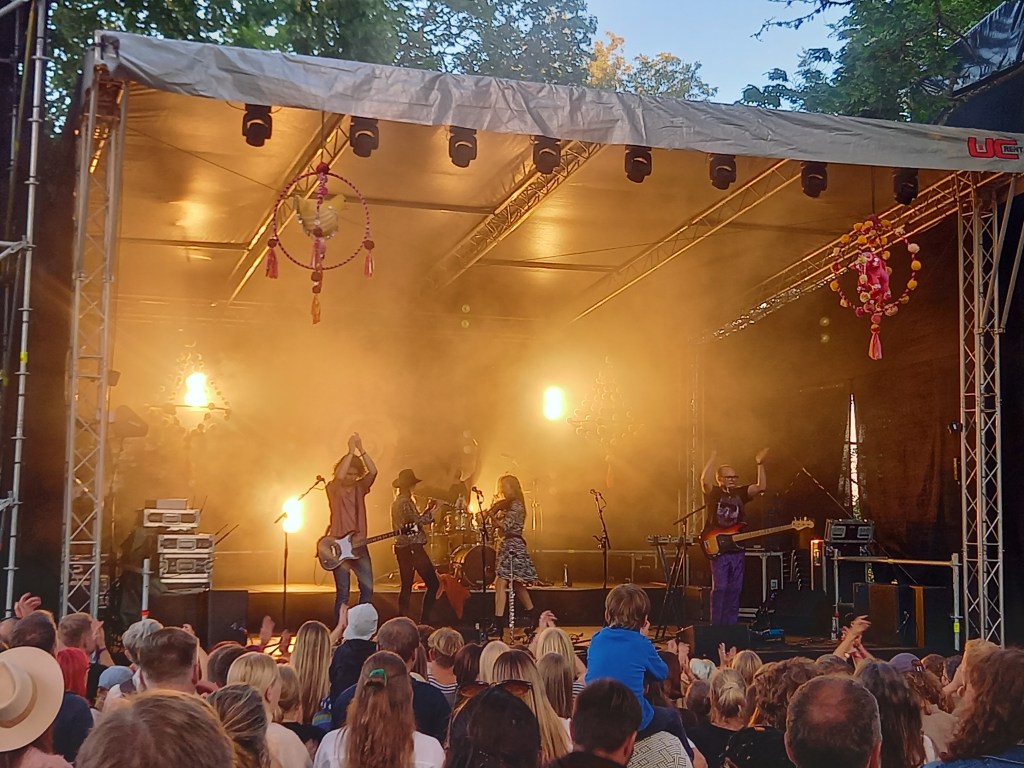


THURSDAY IS THE first day of the Viljandi Folk Music Festival. I have decided to do this year’s festival sober, which may explain my melancholic mood. Also the rain, which sends me and my youngest daughter to seek refuge beneath some trees, only makes things less joyful. The rain is heavy and floods the streets, soaking the kebabs and donuts. I bailed on the opening ceremony because of the rain. Of course, the Folk people are starting to trickle into town. You can spend all year in Viljandi and never see these people, but then suddenly they are back and swarming in. Where do they go for the rest of the year? Maybe they sleep in the hills behind the castle ruins? When people do come, you look at them. I think lingering eye contact is the currency of Folk. Somehow a look is more meaningful than any words. What does that look mean? Sometimes different things. It can mean I like you, or think that you are beautiful. But it can also mean that I don’t want to have anything to do with you, leave me alone. Sometimes people just look familiar though. “Don’t I know you from somewhere?” Maybe that is what all these looks mean. I have learned to trust people’s looks. They are meaningful moments, moments that linger and haunt you, even while the accordions are blaring and the Cubans are performing. I wonder how many stories start with just a look in a crowd at a music festival.
The highlight of Thursday night is inarguably the Korean ensemble, whose name nobody can say, even though they have a special language lesson in the middle of the concert. (They are actually called “Ak Dan Gwang Chil“). They have great costumes and I can make no sense of the structure of their songs or melodies. I cannot name most of the instruments they are playing. This is exactly how the best music must be, challenging. I am surprised by the turnout for the Koreans, even on a Thursday night. I can only guess that pandemic-era restrictions have increased people’s appetites for live music. Afterward, I head to Romaan to hear Gilly Jones and the Evocations playing in the new samasama.studio in the back. Gilly Jones is from Ghana and leads a band of the “cream of rhythm players” in Estonia. They play afrobeat and highlife music. Even I have to dance to this music. The best dancer is of course Pepi, who manages this creative space. He is from Argentina and has the moves. I am studying Pepi to improve my dancing. The night ends in Joala Park, drinking wine from a plastic bottle with DJ Jaanika and Inxu. Inxu is a vivacious and sharp young woman who is giving an impromptu lecture about US domestic politics. A few young men are seated across from us. One of them is especially proud that he is seated on the spot, more or less, where the Joala Monument was. “And it was located right here where I am sitting,” he says.
AT ABOUT 7 PM on Friday night, Marko Veisson from Puuluup undertakes a stage dive. It is in the middle of their set on the Second Cherry Hill, or II Kirsimägi, and happens while the duo is performing “Roosad suusad,” “pink skis,” which is a song about pink skis. The dive is a success and the crowd is pleased by Puuluup’s performance. The band’s reggae-inflected repertoire is stunningly ridiculous. Even old people like Puuluup’s music. Especially old people. The show ends with applause, unanimous cheers, joy, whistling, and this “three, four, good band” cheer.
At 8.30 pm, there is a young man in a kimono grooving to the guitar licks of a Malian performer called Samba Touré on Kaevumägi. Three kids in Pokemon hats walk by and I see them again at the Hempress Sativa concert, which is pure Jamaican reggae, along with some speeches about the sacrament of marijuana. There is a funny mood. In general, the music on Friday night is good and satisfying like that. By 11.30 though, I walk by a teenager who is leaning against a tent and watching Geneza, a Ukrainian band, play rock music in Freedom Square. There is something about the blank look on his face opposite a rock band that speaks to the exhaustion of Folk. Even the young get tired. I can’t tell if he is burned out or sleepy, but fatigue has set in. It’s the bagpipe music. I think. It gets to you. But how much bagpipe music can you hear? How many dances can you dance? How many old friends can you greet?
Of course, there are the real Friday night stories. The real thoughts you think while you are wandering around at the festival. The real feelings you feel when you see certain people you know. The memories you have. The ones that you can’t forget. The people you have lost in the crowd. The impossibility of dreaming of anything, and yet the bravery to still be hopeful in life, if only because you have no other choice than to be hopeful. There are secrets you can never tell. Even on your most honest and forthcoming day, you can never tell the complete truth.
SATURDAY DAWNS the same way that every Folk Saturday dawns, with flies tickling your nose. You walk to the café, any café, to get some coffee. Strangers emerge from tents, cars, and apartments, wearing those little quasi-religious “Folk hats.” One wonders about the true lives of these devotees. Maybe they lead a humdrum existence in Tallinn border towns like Jüri, working as accountants, pushing along in drudgery through the year. Now and then they spot the Folk hat in the back of the closet and sigh to themselves, knowing it will be maybe half a year until the next festival.
The peak of Folk, I think, is the slow Saturday afternoon before the bigger crowds show up. This is when you can take time to eat with your kids, sit around and reflect. You hear church bells chime, the creak of the hammocks tied between the trees. You have time to sit and think. Teenage fry cooks struggle to fill all of the orders for fries. And sometimes people forget their orders. “Maarja” has apparently disappeared to see Polenta, a Finnish group. The cooks keep calling for “Maarja” to pick up her fries, but “Maarja” never comes to claim them.
At 8 pm on the First Cherry Hill, Black Bread Gone Mad takes the stage. This is one of my favorite local bands. During the encore, bassist Mati Tubli asks people to sing along, but the lyrics to their songs go, “u-ja-ei-u-ja-ei-u-ja-ei,” or something like that, and then the next one is “ayibobo.” Okay then. After that, Zetod storms the Second Cherry Hill and the crowds are stricken. Much longer after that, I decide to see Untsakad which, believe it or not, I have never seen. There is a long table behind these Untsakad fellows — it is their 30th birthday celebration — and notable musicians like Ruslan Trochynskyi and Brad Jurjens are at the table. It reminds me a bit of King Arthur’s Roundtable, with Sir Galahad and Percival. I confess, I am jealous. Who wouldn’t want a seat at the Untsakad’s table? The music is Estonian traditional song, but I am surprised by the numbers of young people who are dancing boldly to tunes like “Metsavendade Laul,” a song about postwar guerrilla fighters. This year it is especially relevant.
ON SUNDAY AFTERNOON, Imar Kutšukali, a Dutch adventurer and part-time folk musician, informs me in the yard of the Green House Café that he understands most of Untsakad’s lyrics. This is perhaps the highest level of Estonian comprehension you can have. The next level is understanding what drunk men mumble to you outside the bottle returns and trash bins. Imar is wearing a cowboy hat he picked up in Louisiana, and plucking at a friend’s mandolin, then switching to his own fiddle. Kutšukali is so embedded in Estonian Folk culture, he can name the members of Untsakad. Later, I drag my acoustic bass guitar out of my house, making sure to wipe the dust off it, and dive into a jam session with some other musicians. Folk music operates according to other rules. It has a repetitive, spiraling quality, almost like a cyclone, and it can billow up high or swirl down deep. Providing the bottom end is a challenge, what to play, what not to play, but it seems my fellow musicians welcome my contribution. We even joke about forming a band. Later, at another concert, I run into Ramo Teder from Puuluup who informs me that he also wanted to stage dive during the performance of “Pink Skis,” but there weren’t enough strong men in the audience to support both him and Marko. Maybe next year.
The evening ends in the company of Silver Sepp and Kristiina Ehin, who cannot walk a few paces without meeting old or new friends. Talking with both of them is a challenge, but Silver more so. We just can never manage to have a straightforward, average conversation. It can only go from absurd to more ridiculous. Dancing is easier with this cultural power couple. Kristiina is a sensitive dance partner, and Silver slips me some pepper vodka during VLÜ’s set, most of which I spend dancing frantically with a Swiss psychiatrist. By midnight, people decide to move to the upper floors of the Ait. Within this confined space, there are constricted dances, and there is some kind of guitar, fiddle, accordion jam. I had promised myself this would be a sober Folk, but it is proving once again to be impossible. Kutšukali is seated with Ando Kiviberg. They are drinking cognac and I pour myself a big glass. Veisson is there too. I am asking him if women are constantly trying to seduce him on account of his fame. Veisson assures me that this is not the case, but I am doubtful. A guitarist named August is seated with Lee Taul, and they offer me wine. I inform Ms. Taul that I’ve had too much to drink and am perhaps enjoying myself too much this year. She responds that you’re actually supposed to enjoy yourself at Folk. “Come on, it’s a party,” she says. “You’re supposed to have a good time.”
An Estonian version of this article appears in the 3 August 2022 edition of the newspaper Sakala.
elementary, my dear watson
YESTERDAY, I RECOUNTED to a friend the story of how I once tried opium, but by accident. No one ever believes me when I tell this story. They like to think that a person knows exactly what drugs they take and when, and how, and their provenance, but in my case, it really just happened. I was a senior in college then, and had just returned from a study abroad program in Europe to Washington, which is where I was studying journalism. I had gone to call on my friend Seán who was renting an apartment up on O Street, across from a boisterous gay nightclub. There were many quarrels outside the nightclub, and at night we could hear lovers fighting in the alleyways. There was pure torment down there. It was interesting to walk through that neighborhood if you were not gay, because you might notice some old man looking at you a little too long while he took his dog out for a walk. A funny little district.
Seán lived up on the third floor. He was one of these drug people, people who knew of and experimented with drugs. I was never a drug person per se, but, for whatever reason, I have always had one or two of these characters floating around nearby, hovering in the near distance, the kind of cat who will lecture authoritatively on the effects of indica versus sativa. Even in high school, I had another friend, Beaver, who used to roar up in his car and whisk me away to some field on the edge of town where he would set up his howitzer-like water pipe and implore me to try it. My college friend Seán was one of these experimenters and lifestyle artists, but he also was and is in his bones an Irish intellectual. His walls were lined with the books of Joyce and Yeats. Whether sober or not, he could engage you at the highest levels on the political conditions in Ireland and the history of Ireland. Seán also had a habit of attracting strange characters, like me I suppose. After my time in Europe, I had taken to walking around with a “Learn to Speak Danish” cassette and could be seen strolling up and down the avenues of Washington repeating back Danish phrases out loud. Many of his other friends though were of another sordid sort and I didn’t even know their real names. These kids only had nicknames. One was called Scooby.
It was February then and they were watching the Olympics in Salt Lake City. This was the year that Veerpalu won the gold and Mae took home the bronze. Estonia was not at all on my radar then, even almost exactly a year to the day I would be moving into a Khrushchevka in Tallinn. The hash pipe came around the room, and Scooby handed it to me. The first thing that struck me was its odd metallic taste. But there were other factors at play. A cannabis high is different from an opium high. A cannabis high will surprise you a bit, because even if it is strong, you won’t recognize it at first, unless you are a connoisseur, a pure play drug person. You can watch skiing on TV all day long with a cannabis high, and not miss anything. This was different. I was overwhelmed by a kind of gray melancholic sleep, a complete withdrawal of desire. I was on the couch but could not move. There was a glass nearby, but I could not bear to reach for it. I tried to move my hand, but I couldn’t make it move. “Hey, this hash is strong,” I remember saying to Seán as he watched the men ski on TV. My own words sounded faraway, as if not my own. Seán looked up at me through his glasses and raised his red eyebrows with his Irish intellectual eyes twinkling and said. “It’s not hash, man. It’s opium.” Opium? The kind of opium that started wars in China in the 19th century? The kind of opium that Watson caught Sherlock Holmes smoking in an East London den? That kind of opium? Seán nodded. Then the pipe went back around the room.
In a puff of smoke, I had become one of them, the lotus-eaters, dreaming my winter blues away in peaceful apathy. It was a drug that took away not just your pain but everything else. It wasn’t my thing. I preferred psychotropics, something that might help me see things in a new and refreshing light. I believed in a psychedelic world, a world of color and permeable meaning. I am not sure how that day ended, but perhaps with me walking home, listening to my “Learn to Speak Danish” cassette and muttering to myself. Now that such experiences are decades in the past, I have to wonder what I was even doing there, how I walked into that scene, how I wound up smoking opium by accident. It seems like a lifetime ago, and my experiences are back there, in the distant past. Those kinds of characters are still floating around me though. They always are. When you are a writer, you make a habit of surrounding yourself with such people and experiences. I just didn’t know that I was a writer back then.
 north!