the good old days

Aitüma entered my vocabulary at some point in the recent past. I don’t know when and I honestly have no idea what the etymological difference is between aitüma and aitäh because as far as I can tell they mean the same exact thing, “thank you.”

So I started saying it to everyone, to the cashiers in Tallinn and the telemarketers trying to sell me cookbooks and the guy who delivered my boots. They didn’t seem to mind but a few were amused to see this foreign guy standing before them saying this archaic word.

My guess was that aitüma was just one of those funky South Estonian words making a comeback like hüva and hää and too. I asked my friend Silver about this and he explained that I was only half right. “Only ökoinimesed say aitüma,” Silver said. “Why?” I asked. “Because it’s so cool and old,” he said, “and ökoinimesed love anything that is old.” (Ökoinimesed translating as “ecopeople,” people who wear old-fashioned clothes and eat only organic foods, people like a lot of our friends, people like us.)

I liked this dialogue with Silver because it was the first time that someone in my group of friends had expressed irony about the popularity of anything aged among the young people of Estonia. But it’s true. Call it the öko lifestyle or just retro infatuation, the adults around me seem obsessed with traditional life. Öko in this sense is nothing new, but rather old, öko is the food your grandmother’s grandmother ate, öko is the clothes your grandmother’s grandmother wore. In Viljandi, they advertise dance nights at the Pärimusmuusika Ait (the happening folk music center) with images of men and women who look like they could be characters at a wedding from a hundred years ago with their old caps and whiskers and braids and granny dresses.

Mind you, not just anything ancient will do. No one is trying to harken back to the days of the Black Plague or the Napoleonic Wars. Instead, Estonians have settled on an optimal period of nostalgia centered on the 1920s. I hypothesize that this makes life more convenient because the Estonians of the 1920s lived in a sort of limbo betwen the archaic and modern eras. That is to say that they lived in wooden houses and spoke their various local dialects and largely ate food that they grew on their own and had homespun clothing and milled around drinking homebrewed beers and moonshine, but they also had radios and cars and bicycles and tennis rackets and went swimming in Pärnu and sometimes even holidayed outside of the country. And I think this is what these öko people are aiming for: the 1920s plus wireless Internet, for the Internet is the one modern thing that öko people will never abandon.

There is a deep irony here. To hear oldtimers tell it, nobody wanted to live in the dark, crooked old wooden houses of Kalamaja and Karlova and Supilinn in the 1950s and 1960s. They dreamed of a life beyond those ramshackle old neighborhoods, in newer projects like Mustamäe or Annelinn, a comfortable existence of organized building maintenance and central heating with vacuum cleaners to pick up dust and gas-heated stoves to do the cooking, and television to entertain.

Now their grandchildren boast about the virtues of wood-heated furnaces, think the crooked old wooden houses are charming, clean the house with brooms and wet rags, gave the TV away long ago, and cook pork and potatoes or porridges or bread in the fireplace. And it’s the pensioners, the very people who were the little children during this vaunted golden age and the only ones who actually remember it, who are living alone in the apartment blocks of Estonia with their eyes glued to Latin soap operas eating canned meats and vegetables and factory-made bread.

This has led me to wonder — will any of our current creature comforts become fashionable in the same way, 50 or 100 years from now? Maybe our grandchildren will astonish us by trying to imitate life as my generation lived it as children in the 1980s, with no Internet (because there was no Internet), no mobile phones (because there were no mobile phones), no piercings or tattoos (because only junkie guitarists had tattoos), no GPS (only foldable paper roadmaps), and no bicycle helmets (because nobody wore bike helmets back then). Some might argue that this has already happened. As my friend Hannes, a former music label owner, informed me, nobody wants to buy CDs anymore, but vinyl is making a comeback. I haven’t relied on vinyl for music since I was eight years old, but chances are I will be playing records again.

Or maybe the 1980s will be forgotten, and it is the 2000s we will aspire to recreate, the “good old days” when people had laptops for computing, mobile phones for calling, and iPods for listening to music, not just one high-tech instrument for doing all of these things. In Estonia, future generations may yearn for “good old” euroremont, ah, those vinyl floors, those styrofoam ceilings, those plastic windows, “just like grandma and grandpa.” Or maybe they will scower the Internet looking for “vintage” versions of programs like Skype, not the modern one, but the first version, just so they can feel like an earlier, more idealistic, more genuine denizen of the web.

I am sure such sights will elicit a few chuckles from old geezers like us, and maybe more than a little Déjà vu.

Striving for Perfection

There is an old Estonian saying, “Once we get going, we can’t be stopped,” and the same could be said of me, in any endeavor. I love traveling, and once I get traveling, I just want to keep on going, every few days a new hotel, a new city, more planes, trains, buses, boats, cable cars. When I get home I am disappointed. I don’t know what to do with myself until the glow wears thin.

Eating is the same for me, that insatiable appetite. Bring me a salad, bring me a main course, and dessert, and a few more drinks. Ah, yes, drinking, now that’s a real disaster. One beer leads to another. By early morning, I don’t want to remember, though I always do.

Some say I lack self discipline, and I have to say that I agree, 100 percent. But I don’t want to be this person. I dream of the perfect, balanced week, a week of measured consumption and regular exercise. I think we all dream of such a life, for this is the modern ideal, the image of what is the perfect person of our era.

Maybe for our grandparents the ideal person wore certain clothes and lived in a certain neighborhood and had a nice car, but we’ve taken it a step further, the ideal person of 2012 is so much more than clothes or possessions, he is everything, always working and yet always enjoying life to its fullest, always consuming delicious and exotic foods and beverages, and yet — most of all — always physically fit.

Here I am reminded of our dear friend Kaja who runs marketing for a telecommunications company, has six children, goes mountain climbing, and is remodeling her apartment in her spare time. Or our neighbor Janek, who manages a beverage company, goes on business sojourns to Japan, and makes sure to run around Viljandi Lake at every opportunity, even when it’s minus 30 degrees Celsius outside, because Janek is smart, he has special clothes for running in Arctic temperatures, and special shoes for running on ice. This modern woman won’t let work or home life keep her off mountain tops. This modern man will not let mere weather get in the way of his quest to fulfill his ideals.

I am jealous of people like Kaja and Janek and all the others who are in better shape than me. I tell myself that they are older, and that one day I might wake up and start running every day, eat only healthy foods, enjoy a good drink or two but know when to stop, work like a machine, read my children to sleep, surprise my wife with something romantic, and smile all the time, as any ideal person does, because regular exercise does wonders for the find and so the ideal person is always happy.

But, alas, I am not there yet. I lack the self discipline to see the project of “me” through, to master all elements of being an ideal modern human being, including getting in shape. While Kaja repels off of mountains and Janek charges up another hill, I am trying to convince myself to not eat that very delicious piece of pepperoni pizza, to not log in to my time-sucking Facebook account and instead go out for a jog, though I never find the time.

Years ago the English band Radiohead included a track on their seminal album O.K. Computer where a modulated electronic voice recited the words, “Fitter, happier, more productive, comfortable, not drinking too much, regular exercise at the gym (3 days a week), getting on better with colleagues at work …” Singer Thom Yorke called it the most depressing thing he had ever written, but I saw it as a satire of us, modern adults, and our ideal images of who we should be, happy people who work hard and then take off for luxurious holidays, where we can refresh our tans and take wonderful photos of our bodies in the sun to show everyone at home just how fit and perfect we are.

It’s easy to be a mocker, and I am, but I also accept that without some ideal vision of who I should be, I would probably still be living with my parents. Early on in life, I developed my own idea of who the ideal person was, largely pieced together from my father’s stories and books and Hollywood films. My ideal person was some kind of hybrid of an action hero and an artist, taking off for remote areas of the world where he got into memorable adventures and perhaps fell for a love interest before spinning the tales into fiction.

These ideals got me this far but, unfortunately, when I was developing my ideal self, I left out a few things. I forgot to code in moderation, and, especially, moderate, regular exercise, something I now yearn for, but never seem to find the self discipline to attain. Like a lot of people, I see other people doing it every day, but can’t find the will to just wake up and do it myself.

Here, I wonder about my friends Kaja and Janek. Maybe they were different. Maybe when they were children, they had different visions of who they would become. Maybe little Kaja had fantasies of mountain climbing. Or perhaps young Janek looked wistfully at the lake on extremely cold days, and dreamed of the day when he would run around it. But young Justin was too busy stuffing his face with pizza and watching Indiana Jones movies and now he can’t manage to do what millions of other people do every day: get out of bed early and go for a run.

So now, later in life, I have to reprogram myself to fulfill these new ideals, so that I too can be “fitter, happier and more productive.”  And it’s not just a matter of going down and running around the lake, because you know I’ll wear the wrong shoes and overdo it (like everything else) and hurt myself in the process. No, I am going to need to do some research into proper foot attire and training methods, how many minutes to do it every day, what kind of terrain is most suitable for beginners. I’ve got to tackle this thing the way an ideal person would.

My friend in Belfast who is a runner says that it makes sense to go to a special shop where running shoes will be selected by a computer based on the shape of my foot and the way that I run. So, it’s going to take some time. But, sooner or later, I am sure that my new ideal will be fulfilled —  albeit it a moderate, perfect, 2012 kind of way. So watch your backs Janek and Kaja. Soon enough —   I hope — I will be right behind you.

saved by a volcano

I came through a crowd of protestors on a hot day in Philadelphia, it was the Republic National Convention, the year was 2000, there were anarchists breaking things, and socialists selling newspapers, and college kids chanting. In the melee, I saw her face on a t-shirt, like some kind of albino seal pup. The slanty eyes. Those fat cheeks. It was her! The man wearing the shirt began to converse with me, we discussed our love of the singer, her music. He was chubby, in his thirties, wore glasses, and looked like a mole.

But there was something different, soft about his demeanor, elusive, as if he was afraid of me. The man was peculiar in other ways. His shoulders weren’t very wide, he talked with a lisp. He asked me if I wanted to get a cup of coffee. And then I realized that he was gay, and I had to tell him no, there would be no coffee. I was renaissance enough to admit I loved the singer, but that didn’t mean that I was playing for the other team – maybe he wanted to be Björk, you see, but I wanted to be with her.

A poster of the singer hung on my dorm-room wall, naked, tongue out, covered only in a leaf, like some nymph out of Eden. But I was afraid of her because she was like some kind of vaginal Icelandic volcano that could erupt at any time and bury my soul like Pompeii in hot lava. To hang her on my wall, to see her flesh each day was to me a political statement, a weapon, a way of retaliating against commercial ideals of feminine beauty around me.

As men we were told to worship Baywatch, to drool over Pamela Anderson, buy her posters, hang her on our walls. Maybe our real-life girlfriends bore no resemblance to the curvy models, but we were supposed to be thinking about them secretly, kissing our girlfriends in New York or Washington, DC, but really thinking that we were on a beach in Hawaii or California locking lips with Pamela Anderson. It was a lie and it disgusted me because Pamela Anderson never did anything for me, never has, this embodiment of these sort of livestock-like qualities within with Western womanhood has been constrained, a world of faces and torsos and measurements and nail jobs, the ideal of the perfect bone structure and hourglass figure, a regime under which all females will be ranked according to their conformance to the babe ideal, like cattle ranked for milk output, and our role as men in the equation was not to ask any questions and to support the commercial ideal of what a woman should be. It was our duty.

And then along comes Björk, a little wrecking ball who sang of “big time sensuality” and “emotional landscapes.” She wasn’t “perfect,” sometimes she was actually quite grotesque, and I couldn’t really look at her without thinking that her breath must smell like that fermented whale meat they eat in Iceland, but at least she was genuine, creative, honest — a genuine communicator, an immediate vision of primitive femininity, this kind of womanhood that is buried in the back of each man and woman’s brain. I knew on first sight that the woman liked to have sex, such a wonderful, sugar-glazed feeling for any man, not that she was flaunting her sexuality like Madonna with her stupid conical bra just to prove something, but that she simply liked sex, the way we all like strawberries because they are delicious.

And the problem was that there were far too few of her. There was just one Björk. There were some imitators, but, mostly, she was considered some kind of demented freak. Maybe it was because she was inbred, or her Hippie parents smoked too much pot, or she was dropped on the head as a child. And did you see how she attacked that journalist? Or that music video were she sewed pearls into her skin? When a friend saw her singing Dancing in the Dark, he thought she was a mentally handicapped person. “What the hell is this shit?” he grunted. “Turn it off.” He wanted to watch a football game on TV. My friend was a sergeant in Pamela Anderson’s army, you see. The pint-sized witch from the big island with no trees had no place in mainstream society.

But when I fell ill with depression in college and didn’t leave my dorm room for two weeks, the little volcano came to my rescue. The days came and went. It would be dark and then light and then dark again and I would still be in bed. One morning though I happened to open a magazine beside my bed, one that I hadn’t looked through before. And she was inside it, dressed up like some kind of surrealistic flower. And I thought, “This is a person who is not afraid of life.” Then I got out of bed, took a shower, and went outside.

An Earthworm and a Rhinoceros

There are a lot of good reasons not to have sex with your cousin, but probably the best reason is that you put your potential offspring at a higher risk of inheriting a genetic disease. I know this because I spend a lot of time at genetics conferences. These events are always fun – you get to see old friends and drink wine and eat stuffed mushrooms and listen to talks about the genetics of different forms of cancer.

The liveliest sessions though concern what the geneticists politely call “consangunity” – the sharing of blood, the state of being inbred. This is actually a big headache for clinicians. They run the child’s sample to identify the genetic variant that might be causing the disease, and then they run samples from both parents to see if they also carry the variant. Then, to their surprise, they discover that significant blocks of the child’s genome and the parents’ genomes are the same. A child born of an incestuous relationship, say between a father and daughter or a brother and sister or a mother and son, may carry 25 percent of the same genome as the parent. This, the geneticists say so politely, is an example of “consanguinity in the first degree.”

Watching all these presentations about incest gets me thinking about my Estonian friends. How come so many of them look the same? And, more importantly, how do they know that they aren’t related? Especially today, when so many children are born out of wedlock, it is entirely possible that some randy wayfarer could father a child in Pärnu and one in Jõhvi and they would grow up and have a midnight tryst in a parking lot somewhere in Paide and unwittingly have a kid with a genetic disorder.

I ran my suspicion of Estonian inbreeding by my friends Enn and Kaari, but was rebuffed when I insinuated that it was possible that they might be related. They know they are not closely related said Kaari, because they had genetic ancestral testing done. At the time, there were two main tests for ancestry in the market. Men can have their Y chromosome tested: tracing their paternal line back, as well as their mitochondrial DNA tested, tracing their maternal line back. Women, having no Y chromosome, can only trace their maternal line back. According to their test results, Enn’s forefathers apparently got to Estonia by way of India, while Kaari’s mtDNA was found in highest percentages in Sami women. They weren’t related afterall. See, Enn is actually Hindu and Kaari is actually Sami. Viljandi is a diverse town!

I have always been a little proud that there is little chance that Epp and I are related. Some people are proud of being all one thing, but my kids count among their ancestors Estonians, Italians, Irish, Scots, Russians, English, Germans, Dutch, Greeks and Albanians. Sometimes, when my father drinks his coffee and gets excited, he starts adding others to the list. “You know, my German great grandfather came from a town on the Czech border,” he says. “We could be Czech!” He says it as if I should go out and buy a six-pack of pilsner and place a framed picture of Vaclav Havel on the shelf.

Needless to say, no one can say what nationality my children most resemble. One of our friends, a world traveler, says that it is impossible to say what they look like. “Your kids are like an earthworm crossed with a rhinoceros,” he says. Still, after hearing Enn and Kaari’s story, I decided that we should also get tested, if only to have something to talk about in their cafe. I tested my Y chromosome first, tracing my forefathers back to the beginnings of time. These men were from southern Italy, so I thought that the results would show a migration through Greece or Turkey. Or maybe even Africa! Wouldn’t it be terrific, I thought, to discover that I was actually black? Perhaps it would explain my love of African music.

Instead, my forefathers apparently came from northern Italy, southern France, or northern Spain, where the same results are found in the highest percentages. I do have a geneticist friend named Ernesto whose family comes from northern Spain and I have always noticed how we have a similar appearance. At last, I had an explanation! We descended from the same dark-haired, spear-chucking barbarian. Then I ordered Epp’s mtDNA test. Her friend, the same world traveler, has seen a photo of Epp’s grandmother and insists that she is Jewish. It’s in the curly hair, the eyes, and, most of all, the nose, he says. This friend is from the same part of Estonia on the west coast, and tells tale of a caravan of Jewish families who settled long ago north of Pärnu and over time became Estonians.

When asked about it, Epp’s grandmother said she had never heard of such a thing, and expressed a general disinterest in our modern genetic adventure, but Epp remained very excited by the idea that she could be Jewish. While waiting for Epp’s results, I took long walks near Viljandi Lake and pondered what the discovery of my wife’s Jewish ancestry would mean for our family. Would I have to familiarize myself with the Torah? Start eating unleavened breads? Could we still celebrate Christmas? Maybe it would be good for us, I thought, because once Stephen Spielberg found out you could count on seeing My Estonia the movie in every theater in the world, starring Adrian Brody and Natalie Portman.

But, alas, Epp had the same results as Kaari, a maternal lineage suggesting an origin in Finnic populations and found at its highest percentage in the Sami. We were confused. What about the Jewish settlers in Pärnu? But Kaari was very pleased to know that she and Epp both descended from the same little Sami woman.”You know, I always knew you were Sami,” Kaari said putting an arm around my wife. “You did?” Epp said. “Of course,” said Kaari. “You look just like one!”

So I Married a Writer …

At first glance, it all seems quite romantic. One might think of Jane Austen and the stirring melancholia of England in the 19th century. Or perhaps Anaïs Nin springs to mind and with her the Paris of the ’30s, bohemian and erotic. Everyone knows that writers are a little crazy. In my experience, they are, but not in the way you think. Because if there is one thing writers adore more than sleazy affairs, cisterns of alcohol, and mindless self-destruction, it’s sitting in one place for a really, really, really long time and writing. Writing is what writers do, and they do it all the time.

Here I am reminded of the lamentable suicide of the great Ernest Hemingway, a man famous for fighting in wars and hunting wild animals, but who was plagued to the end of his life by simple hemorrhoids. Think about it. It may not have been the ghosts of the battlefield that drove Hem to the brink, but sitting on his ass all those years, writing!

And the disease of the pen is contagious. Consider this. While my writer was working on her latest book, I would awake at strange hours in the night with a feeling that something was not quite right. I’d drift through the darkness of our bedroom to the top of the stairs, from which I would sense the orange glow of electric lighting on the first floor. Who could have left the lights on? I’d wonder. Then I would descend the stairs to the dining room. And there she would be, behind the table, punching away at the keyboard, hair in her face. “What time is it, honey?” I would ask. “I don’t know,” she’d mumble. Then I’d look up at the clock on the kitchen wall. “It’s 3 am.”

Her latest idée fixe is a travel novel, a story of strange men and exotic islands, of scrapping everything in frustration and rebuilding your life piece by piece. When I read the draft, I felt the usual way, like a small boat on top of an enormous tide. From sentence to sentence I felt the water rushing, rushing and rushing, and I kept reading and reading. And the most mysterious thing is that all this water, all these words, all this electricity slipped simply from her fingers in our dining room in the middle of the night.

When I catch her during one of her zombie writing spells, I am grateful that I too am some kind of writer. I lack the near religious devotion to the art that she does, but I imagine that if I didn’t comprehend the narcotic-like allure of a creative project, living with such a person would drive me or any other reasonable person mad. And the interesting thing is this: few people write about what living with a writer is like. Everyone wants to read their great books. Who needs to know about the sleepless nights spent laboring behind the keyboard?

There is one more detail. When you live with a writer, you are not only a caretaker who provides energy-sustaining coffees, or midnight editor who cheers the creator on with her endeavors. Often times you are a character in the books too. In this world of reality television, there are now reality books, because who doesn’t want to read a story that’s at least partly true? And so there you find yourself, in fine print, described from another’s perspective with lines of insightful dialog that you may or may not recall ever saying.

How does it feel to be a character in a book? You’ll know it when it happens. I’ve come to understand the huge gap that exists between what is written and what is reality. I now understand that even if the scene is constructed perfectly, the dialog edited from a digital recording, it still is not and will never be a precise rendering of what happened. No matter how hard you try, fiction always finds a way in.

I think I am the kind of person who enjoys living with an artist. There are different types of people in this world. Some are analytical academics. Others are fiery activists. But a small group of them are artists; people who can make water rush from their finger tips. It’s not easy being married to one of these characters, but it’s worth it. After weeks of devotion and labor, her she said her manuscript was finished. An eerie blanket of calm fell upon our household. Could it be? Was her book done? She insisted that it was, but I didn’t believe her. Some part of me still doesn’t.

“did you get kicked in the balls?”

That’s what a relative said to me at Christmas a few years ago when our second child made its debut. We had traveled across the ocean with five-month-old Anna just so that relatives like him could see her. And when he did, he couldn’t find it in himself to just say that she was cute. He could only insinuate that by having produced two female children, I must have suffered from some physical problem.

I’m not sure why males are in such demand but it seems that they are favored. When we learned we were having a third child, the prospect of another female made a certain amount of sense. We had boxes of pink clothes packed away.  We had the right books, toys, films. And — most of all — we had become relative experts in raising females, at least compared with our knowledge of little boys. Little boys seemed dirty and alien, violent and dangerous. Every other little boy I come into contact with is pointing a fake machine gun in my face or trying to saw off my arm. In contrast, little girls seem slightly better mannered … and clean.

And yet, all we heard following the announcement of the coming of our third child was, “Certainly, it’s a boy.” Sure, it made mathematical sense. There is only a 12.5 percent chance of having three children of one sex. It’s not impossible, but it’s not likely. But the way they said it made it seem as if we had been yearning for a male child all along. This was not the case. I would have been far more disappointed if I had been stuck with two boys pointing fake machine guns in my face rather than sweet little girls, waking me up with kisses. But to other people it seemed that males were more desirable than females.

Why is this so? It’s not like I need help tending to the family farm. I don’t know anything about farming. It’s not like I need to pass on my talent for building houses, because, as everyone knows, I can’t build anything. And then there is the pressure to pass on the family name.  Ah, the family name. My grandfather had four sons, so somewhere around the year 1960 the future of the family name seemed secure. But only two of those sons had children, and I was the only male grandchild. And now I am preparing to have my third daughter. So much for passing on the family name! Fortunately, according to the Pagine Bianche, there are 2,208 Petrones living in Italy, so the family name will continue. We have achieved critical mass!

Now, I can understand the male desire to see other males born, if only to rescue them from the wackiness of the female world. There are just some things about girls that I don’t understand. I cannot fathom the interpersonal feuds my daughters have, where they can go from being friends to enemies to friends again with the same girl in the same week. I’m tired of sitting in clothing stores pretending to be able to tell the difference between one dress and another. And how many mornings have I rubbed my exhausted face, frustrated because my daughters were unhappy with the way their hair looked? I admit that once in a while, I wish there was another male around to balance out all the estrogen.

But what I find interesting is that some women also prefer boys to girls. When I told my neighbor, a woman in her seventies, that we were expecting another girl, she frowned. “Well, maybe the fourth one will be a boy,” she said. The fourth one? The third one has yet to arrive and you’re already thinking about the fourth? “Boys are easier,” the neighbor told me. “Girls are more difficult.” Are they really? Hmm, I don’t remember many girls playing with pool chemicals or rolling portable toilets down hills, as my friends and I did as youths, when we were out terrorizing the neighborhood.

And how many families do I know where the older sisters are hardworking and successful and the youngest son is lazy and spoiled? A lot. Think about Al Gore. His three daughters have all led successful lives. Karenna is a journalist and attorney, Kristin is a screenwriter, Sarah is an artist. And then there is his son, Al III, who is most famous for being arrested for drug possession, twice.

So, I guess we could try for a fourth, and when another girl is born, we could set our sights on a fifth. How about a sixth? Or a seventh? But, nah. I’m happy with the  children I have now, and I have other things to do in life than worry about producing male offspring. Sure, some can joke that I’ve been kicked in the balls, but at least I haven’t been kicked in the head.

This column originally appeared in the magazine Anne ja Stiil.

International Man of Mystery

It happened the other day. I was walking down Kuperjanov Street in Tartu and I walked past two teenage girls. I caught them looking in my direction, to which I responded with a glance. At this, they both snorted and began to chuckle.

Is something wrong with me? I wondered. Is my fly undone? I checked and it wasn’t, so I decided to forget about those two girls on Kuperjanov Street. But then I walked into the University Cafe to buy some chocolate. The November darkness brings on a chocolate craving like you wouldn’t believe. I’m like a drug addict. And while I was paying for my fix, I noticed two completely different girls staring at me from a table. “Look,” one whispered. “It’s him.”  When I looked in their direction, they started to giggle. And to make matters worse, an old guy who was reading a newspaper nearby looked me up and down, too, as if he had seen me before.

Am I famous? I don’t know, or rather, I am beginning to suspect that I might be, at least just a little bit. My life doesn’t yet resemble the opening sequence of the first Austin Powers movie, where the international man of mystery is chased around a city by screaming girls. But I do have a lot more empathy for the well-known, including my wife.

For years now I have walked by store windows seeing her name in print from behind the glass “Epp Petrone.” I’ve seen magazine interviews and newspaper articles about her. When our second daughter was born on Epp’s birthday, it warranted a headline: Epp Petrone Gives Birth on Her Own Birthday. I even noticed people staring at us on the street from time to time, though mostly in her direction.

Still, I was unaware of what it meant to be semi famous until recently. And this new challenge, of navigating the line between what is personal and what is public, is one of the issues I hope to address in this column going forward: to make sense of the changing views on social boundaries in this era where everybody has their own blog, where people tell me they know all about me at parties before I can even say a word about my life myself.

I wonder, what is the difference between being famous and not famous?  In New York, from where I come, it’s not just a matter of being on TV or on the cover of a newspaper or magazine. No, the well-known live an entirely different lifestyle. They don’t fly commercial, they take private jets. They don’t eat at the corner restaurant, they dine at exclusive clubs. They don’t suntan at the public beach, they tan at their own estates. There is a huge gulf between the famous and the average. If you are lucky enough to actually see one of these famous people in person, you might tell all your friends at the office.

In Estonia, it’s different. Here, the famous and lesser known do almost everything together. They do their shopping at the local department store. They take the same package trips to the same exotic destinations. I’ve been told that Estonia is such a small country that there is a very thin line between being well known and unknown, and I think it’s true.  Estonians rub elbows with public figures all the time. You go to the store in Tallinn, and a quarter of the parliament might be in there picking up groceries. That’s just how it is.

But while the relationship between so-called celebrities and non-celebrities in Estonia is different from the US, the channels through which celebrities are made are the same. How did people figure out who I was to begin with? They saw me on television or heard me on the radio or read about me in a magazine or newspaper article. And after several TV appearances and radio interviews, the local taxi driver is looking in the rear view mirror and saying, “Hey, I know you, you’re the guy that wrote that book.”

How to react to this new-found awareness of my existence? I’ve tried to think about it, but I keep failing to settle on any profound thought to guide me through scenarios where diners at a cafe drop their forks and start laughing when they see me at the cash register. I’m told that experienced celebrities tip their hat or smile or even go and introduce themselves. I’m not there yet. After the experience at the cafe, I turned and got out of there as fast as I could. And I checked my zipper again, just to be sure.

Still, I’ve come to see celebrities in a new light. They really are just people like you or me. So, if I ever meet someone genuinely famous, I’ll make sure not to burst into laughter or give them a weird look or chase them down the street. No, I’ll let them go on their way. And if we happened to be introduced, I won’t feel nervous. Instead I’ll feel pleased. I’ll feel like I am meeting anybody. I might also feel that we have something in common.

Sibling Rivalry

Two little girls sat in a gravel alleyway in Pärnu throwing rocks at each other. “You stole my babies!” one yelled at the other. “No, you stole my babies!” the other one fired back, pelting her sister with stones.

The “babies” were actually little rocks. For a good twenty minutes they had played peacefully, naming their “babies” who shared a home together on an old brick. “This one’s name is Maria!” six-year-old Marta held up a tiny blue stone. “This one’s name is Villem!” announced three-year-old Anna. It was a sunny day, the sky a dream-like blue. What could go wrong? At some point, though, someone took “Baby Maria” or “Baby Villem” over to the wrong side of the pile. And that’s when the war began.

I never thought little girls could fight so fiercely. When my daughters start battling though, there are no boundaries. Long-legged Marta naturally brings her feet to her defenses, kicking at her sister’s face. Rolypoly Anna reciprocates by using her sturdy strength. Rather than kick from afar like Marta, Anna goes straight for her sister’s hair. By the time I wade in to stop a conflict, both are usually crying. “Anna pulled my hair!” Marta will whimper. “Marta kicked me,” Anna will whine. I try to console them equally, holding Marta in my left arm, Anna in my right.

“Girls, you should be nice to each other,” I adopt my most fatherly tone. “Not every girl gets a sister. It’s a special honor.” But even as I hug them, Marta will manage to get one of her feet back into Anna’s face, and Anna will grab a lock of Marta’s hair and pull. “Let go,” Marta will growl. “He’s my daddy!” “No, no!” Anna yelps back. “He’s MY daddy.” Anna will tug harder. Marta will kick again. And me? Worn down by the two little beasts, I inevitably collapse on the ground, my two offspring writhing and rolling and kicking and punching and crying all over me.

To me, my daughters’ rivalry is a mystery. My kids have the same parents. They live in the same home and so, arguably, are the products of the same environment. You would think that would make them somehow equal: equally parented, equally fed, equally clothed, equally entertained, equally bathed, and, ultimately, equally loved. And yet, they fight over everything: what clothes to wear, what food to eat, what movie to watch: even in a gravel driveway in Pärnu, they managed to fight over rocks.

What is the solution? How do I stop my kids from trying to kill each other? There is some modern idea that if we read enough self help books, if we go to enough counselors, we can somehow eradicate every problem in existence, including sibling rivalry.There are plenty of self-help books out there, no doubt written by experienced psychologists who have done loads of studies and all of which I am sure would be helpful to read if I didn’t have two children to pull apart every day.

I have asked Estonian dads for advice, but their answers haven’t been encouraging. “They are fighting all the time,” I lamented to Jüri, a father of three young men. “And they will keep on fighting for the rest of their lives,” he answered, puffing quietly at his pipe. “They will still be fighting long after you and I are gone.” Rein, a father of two grown women, offered a similarly bleak forecast. “Kids” he grunted, “are only good when they sleep.”

Love Is All You Need

“All you need is love, love, love is all you need.” So The Beatles sang over a full orchestra in 1967 and so their words of love reached my young ears twenty years later. I was my elementary school’s youngest Beatles fan. While other kids amused themselves with video games, I had inherited my parents’ record collection and I would stay up late at night watching the old vinyl spin round, trying to decipher what exactly this “love” thing meant that the Fab Four were always singing about.

Whatever love was, it sounded like something I needed. From the adrenaline rush I got every time I listened to the rocking “She Loves You” – yeah, yeah, yeah – to the cool calm that would set in whenever I heard the harmonica on “Love Me Do,” to the jingle jangle of “Can’t Buy Me Love,” I was hooked on love. I just had to have this wonderful thing. So I set my sights on a girl in the grade above me. She was an unusual choice, very dark hair, porcelain skin, round face, mysterious brown eyes; she could have been Japanese if she wasn’t Jewish. I don’t think any other little boys were in love with her, but I was sure that I was in love with her, so I began to write her letters, passed by my courier, a classmate who rode the same bus with the little mysterious girl.

My friend warned me that the girl was mean. “She once hit me over the head with a chessboard,” he said. “I hate her.” This should have turned me off, but it just made her that much more intriguing. “Who is this girl who hits boys?” I wondered. “What is her secret?”

I knew she was absolutely the one for me and so I wrote to her, though most of the words in my love letters were copied from Beatles songs. “Love, love me do,” I wrote to her. “I’ll always be true.” At the end, I added, “PS. I love you.” I waited anxiously for her response, but when it finally came, I was shattered. “Stop writing me these fucking letters,” she cursed me. “You are ugly and I hate your guts.”

I was crushed by her rejection. I cried in my room all night. If love was so great that The Beatles sang about it all the time, then how come it hurt so much? But her letter didn’t dissuade me. No. Instead I fell more deeply in love with her and wrote her even more, to which she replied with more nasty responses. By the end of the year I was heartbroken and decided to maybe find another girl to fall in love with. It was only later I found out that my classmate never passed the letters to her. He had been writing her nasty responses all by himself, the little bastard! He really did deserve to get hit over the head with a chessboard! It was the end of our short-lived friendship.

Of course I did find another girl to fall in love with. And one after that. And one after that. And after a long time, my idea of love began to change and I thought I started to understand it a little better. One could now say that I have gained wisdom in all my years of love, wisdom that could be shared, wisdom that could be passed down to the younger generation. Or maybe not. Because these days I see my daughter is reliving my elementary school experiences.

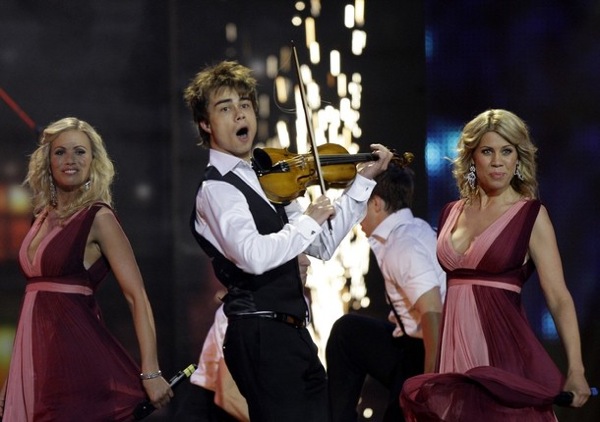
It’s not The Beatles that are informing her pursuit for love, though. This time it’s 2009 Eurovision winner Alexander Rybak. “I’m in love with a fairytale, even though it hurts,” the Belarusian-Norwegian croons, leaping around with fiddle in hand. “I don’t care if I lose my mind, I’m already cursed.” My daughter loves that song. She watches it over and over again on YouTube. I can see that it hurts her a bit to watch it, to be in love with someone so unattainable, who she can only view through a tiny clip on the Internet. That bittersweet feeling. I remember it so well from my school days.

But there is another side to this story. In my daughter’s school, there is a little boy – let’s call him Meelis – who has fallen deeply in love. With my daughter. I can see it in his words and deeds. My absent-minded daughter will forget her backpack in the classroom and then use him. “Meelis, go and bring me my backpack!” And I will stand there and watch as little Meelis jogs up the stairs and returns, with red ears, to hand my daughter her bag to which she replies, “Go away now, Meelis. I don’t want to talk to you anymore today.”

I want to interfere, to step in, to teach my daughter that she shouldn’t be so obsessed with Alexander and be kinder to Meelis. And I want to advise Meelis that he should probably find somebody else to fall in love with. But I don’t. I just stand there and watch them, because there’s nothing I can really do because I know that these kids will just have to learn their own lessons in love.

Who is Beautiful?

It happens at the beginning of each month. I hear the metal close on the mailbox and rush outside and open it up, just to get my hands on that fresh copy of Anne ja Stiil. It’s been sent from Tallinn and addressed to me, sealed in a white envelope. Terrific! I tear open the envelope and hold the soft glossy paper in my hands. What follows has become a ritual. I first flip to my column to see what parts have been edited out of the final product. Then I skim the rest of the magazine, sometimes glancing at headlines, but mostly to just check out the women.

The ladies on the cover are quite attractive, often to an extreme. I found one recent cover so riveting that I had to hide the magazine away under some old newspapers, just so I could go about my daily business of dressing children and tending to the wood-heated furnaces without getting distracted. I won’t disclose the name of the woman though, not just to leave you guessing, but because I know that the moment I hold her up as some example of beauty, most of you will start thinking bad things about her.

It’s a phenomenon I’ve noticed with most of my female friends. As soon as I ever made a remark about the virtues of another female, they sharpened their spears. “She’s an idiot,” “she’s crazy,” “she’s so fake,” “she’s a nasty bitch,” and, the absolute worst, “she thinks that she’s so pretty but she’s really not.” Ouch. Whatever happened to solidarity? Whatever happened to sisters doing it for themselves? It seems that the competition to be seen as beautiful can be quite fierce. It is as if beauty gives a woman her value, and perhaps it is true. My mother was a slender model in the 1960s. A few years out of high school she was hanging out with celebrities in New York City. I asked her how it was possible. “If you are a young and beautiful woman, you can go anywhere,” she said.

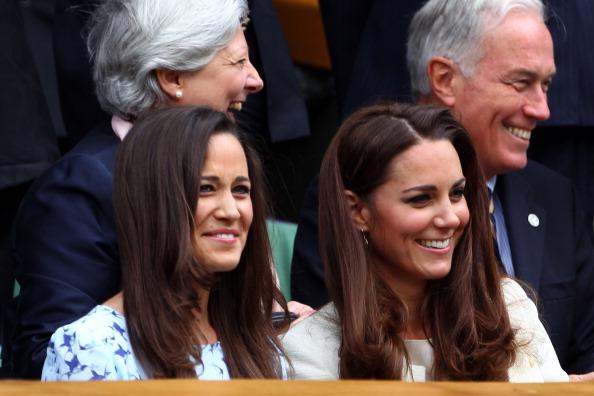
But who is beautiful? That is the question. The men’s magazines keep serving me these emaciated, rail-thin chicks with fake tans and pointy breasts. After the British Royal Wedding last year I had to endure endless articles about Pippa Middleton, the woman that supposedly all men, including me, wanted. I complained to an English friend about Pippa at a bar one night in Germany. I had drunk a few beers by then. And I said, “I don’t see what these guys see in her anyway! She’s too skinny.” “Well, I think Pippa is quite lovely,” the English colleague demurred. “She’s your classic beauty, I mean she’s nice and thin and trim …”

I should never drink beer in Germany. It only gets me into trouble. And yet I am adamant about my conviction that not every beautiful woman has to be skinny. Maybe I am in the minority when it comes to ideals about body image. Maybe most men and women really do think that the thinner the better. It’s lonely to be in the minority. Man, I need to find Sir Mix-a-Lot and buy him a drink.

This all may sound rather silly, superficial, and even chauvinistic, until you consider that my eldest daughter woke up one morning recently and asked me, “Daddy, do you think that I’m fat?” The girl is eight years old. Where does she get such ideas? I can only guess that every beautiful woman that she has ever seen, from Barbie to the majority of the fashion and cosmetics models in Anne ja Stiil, has been thin. And so she already equates being thin with being beautiful which, as I have already made clear, is not true.

She’s not alone. Before she went senile, my 93-year-old grandmother used to weigh herself every morning, before and after visiting the toilet. “I weigh 125 pounds,” she would beam. She was so proud! But here I was, faced with a little skinny girl who has barely an ounce of fat on her body asking me if she weighs too much. And I was her father. Perhaps I was in a position to rectify the situation, so that she could see the world the same way that I do, so that she wouldn’t wind up like my poor grandmother, smiling down at that scale every morning.

So I told my daughter, “You’re not fat. You’re too thin!” “But so-and-so at school is thinner than I am,” she said. “She’s also too thin,” I said. “You two need to eat more. Mangia, mangia!”

My wife told me that maybe this was maybe not the best response, but what is? I still do not know how to proceed. Should I really point out every curvy woman I see to prove to my daughter that one not need be thin to be beautiful? (One time I did accidentally mumble, “nice chick” under my breath as we passed some girls in swimsuits headed toward the beach, and my second daughter became excited, asking me, “Where’s the chicken? I want to see the baby chicken!”) Or maybe I should take the “You are beautiful, no matter what you look like, it’s what’s inside” approach. Will that work?

I like to get my wife’s perspective on beauty, because we see things very different ways. Once I suggested that Kate Middleton was pretty, to which she snapped, “Really? You think she’s pretty? I don’t think she’s pretty at all.” So, I must have been mistaken that time, as I often am. But recently she caught me flipping through a new copy of Anne ja Stiil and looking at the ladies.

“Just think, Justin,” she said and sighed. “Someday someone will be looking at our daughters the same way.”