the elf advises

foxandtomten3IT’S HARD TO RECALL when the elves first came into our lives, but it must have been during our oldest daughter’s second Christmas. The jolly child — who was adorable, with fat apple-red cheeks — would awake in the weeks leading up to Christmas to find some sweet waiting for her in a slipper beside the window. “Oh, päkapikud tulid,” she would mutter to herself on those long-ago mornings, munching on a chocolate, as if it was the most natural thing in the world.

For her, as an Estonian, it was natural.

To me it was strange. Having grown up with different, American traditions, I understood that two tasks were assigned to elves. The first was to observe children in the weeks leading up to Christmas to see if they were deserving of gifts. The second was to spend the rest of their waking hours toiling away in some kind of massive factory at the top of the world to produce those goods. So, espionage and slave labor. Such was the lot of the elves as understood by the Americans.

The Estonian elves were different. Independent, crafty. They were the undisputed Lords of Christmas, to whom everyone else, even Santa Claus, was secondary. The entire Estonian Christmas holiday revolved around their stealthy movements. From the moment the first sweets arrived at the beginning of the advent until the last bites of blood sausage were digested on Christmas, the elves were essentially running the Republic of Estonia. Children would gather and sing songs to revere these tiny gods. “Meil on päkapikud käinud, aga neid me pole näinud …” “Kuidas kõnnib, kuidas kõnnib, väike päkapikk.”  “Seal elab päkapikk. Seal elab väike päkapikk. Seal elab päkapikk.”

They were also active in commerce. I will never forget the day I strode into a home goods store in Estonia, only to be greeted by an enormous icon of a wise-looking, red-hatted elf that read, “Päkapikk soovitab” — “The Elf Advises.” The Estonian elves, like the Estonian themselves, were quite resourceful. Not only did they deliver chocolate, but they could advise on sponges, rat poison, moth balls, and the like.

Our nine-year-old daughter has kept me up to date on the activities of the elves this year and I continue to learn more about their habits. For one, I am told that the elves are no longer peddling only in sweets. Some children come to school boasting that the elves have brought toys, even hover-boards. Others get whole boxes of candy, rather than just the traditional one or two pieces. She also knows exactly when the elves arrive. “Well, considering they start at midnight, and have to take care of the Finnish kids before they get to the Estonian kids, I would estimate that they come anywhere between 2:30 AM and 4 AM,” she informed her curious younger sister. When I asked her how she knew that, she scoffed at me. “Huh. Everybody in school knows that.” Selge.

It’s interesting how these children understand intuitively that the Finnish elves and the Estonian elves are connected. I know that it was several years ago when an Icelandic acquaintance mentioned to me in passing that the elves had recently visited her children in Reykjavik, leaving behind the same offerings of chocolates and modest gifts in slippers placed by the windows. As I began to read more about the role that elves have played in ancient nordic pagan beliefs, I understood that elves have been prowling around this part of the world for a long time. It made their appearance in our home, year after year, seem rather precious and sacred.

international wardrobe

india
It was all quite exotic. My clothing had been to more places in the world than I had.

YOU SHOULD HAVE SEEN IT, a massive pile, like my own private garbage heap. Almost every item of clothing I had retained in the past 36 years was amassed on the bed in my new apartment, pants, socks, underwear, long underwear, dress shirts, ties, suits, pants, sweaters, socks, t-shirts, hats, belts, jackets. And just when I thought I had assembled it all for a final round of sorting, a suitcase was discovered that contained even more clothing! Somehow, I was supposed to dig through it all, excavate the gems, pack away the summer clothes, and find a way of discarding the remnants.

As a person who had little to no interest in clothing design, yet of course appreciates how well they can look and feel, it was truly dull work, so I decided to make a little sport out of it. With a fresh page in my notebook, I began to mark down the nation of origin of each item of clothing I owned. This was in part inspired by a recent documentary I saw, The True Cost, which highlights the uglier aspects of the global “fast fashion” industry, from murderous sweatshop collapses in Bangladesh to carcinogenic pesticides poisoning the minds and bodies of cotton-growing America.

Sure enough, Bangladesh was a popular country of origin for my attire, and so were several other Southeast Asian countries: Thailand, Malaysia, Vietnam, and Cambodia among the most popular. Since most of my clothes were purchased in America, this made me quite curious. Weren’t our airplanes bombing Vietnam and Cambodia just a generation or two ago? And now those people are making our clothes? Well, well. We must have mended ties and become good friends again.

Of course India and China were the two most prolific producers of Justin’s international wardrobe, which makes a strange kind of sense, as they do have the largest populations in the world. Most of my undergarments, including the long underwear I use daily here in snowy Estonia, were made in hot India.  My higher quality clothes — dress shirts, jackets, and ties — were pieced together by the hands of millions of Chinese women who are in general paid about $1.26 a day for their work.

There were some surprises in the mix though. Shirts from Peru, ponchos from Pakistan. I even had a shirt from Mauritius, an island nation in the Indian Ocean. I had to double check its location. It was all quite exotic. My clothing had been to more places in the world than I had. There were other revelations. My Irish flag t-shirt had been produced in Thailand, not Ireland. My “Jorge Ben Brazilian Beat Box” t-shirt hadn’t been made in Brazil, but in Haiti. Haiti! Of all places! And my ultra-patriotic Captain America t-shirt had been stitched together by Mexican senoritas. My Breton sailor’s shirt was made in France though. That was a relief. My only EU-made item.

Those are just my clothes. I haven’t surveyed my daughters’ clothing, but I know a great deal of it comes from their beloved “Haa ja Emm,” fast fashion supreme. You can imagine how thrilled my girls were when H&M came to Tallinn, and then even more floored when it opened its glass doors in Tartu. Any time any one of these international brands comes to Estonia, they are welcomed like a liberating army. Yet this liberating army of fashion brings with it an unsavory sweatshop supply chain and a consumer junk culture that results in mountains of useless stuff. So, I am still sorting my clothes as I write this. If anyone wants to buy some old crap, you know where to find me.

a real finnish party

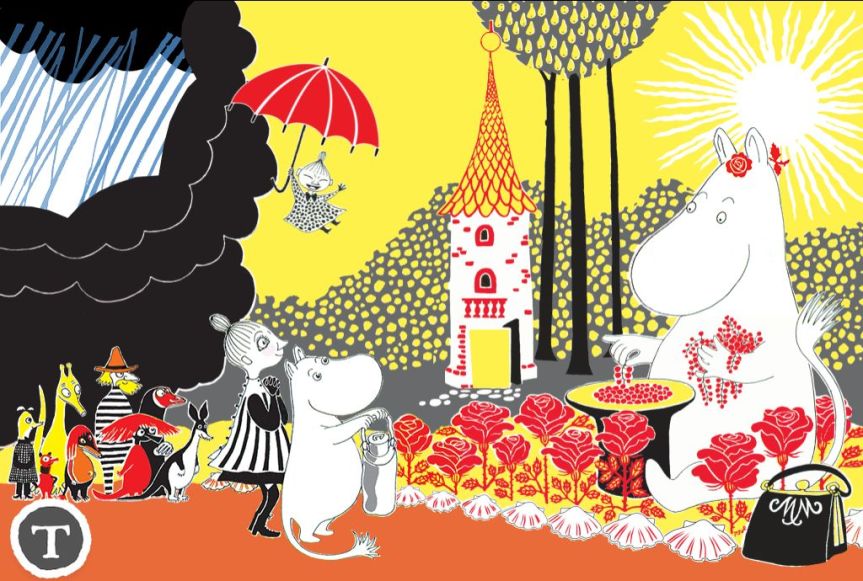
moomin
This column appeared in the Oct. 22 edition of Postimees

HELSINKI, FINLAND, beautiful and baffling. Whenever the hulking ship ports and I wobble off in the direction of Aleksanterinkatu, whenever I hear the words spoken in the tram lines and outside the bars, I get that sensation that perhaps every Estonian knows — How is it possible that there is a country of five million people whose language sounds like some hick South Estonian dialect?

Yet even though they sound like country people, they have built this magnificent city. They have organized the Nordic Business Forum and flown in talent to address thousands of attendees, most of the speakers coming from my country. That’s right, this American traveled to Helsinki to write about other Americans who were flown into Helsinki to speak. Skateboarding godfather Tony Hawk was even in Helsinki. There was a half pipe in the exhibition hall. That’s how impressive Finland is.

After a day working as a reporter at the forum, I met my Estonian friends who invited me out to drinks — at the Estonian House. There we could drink Estonian beverages and listen to a band made up solely of Estonians. When I mentioned this to Niina, a Finnish colleague at the conference, she frowned and said, “That’s right, the Estonians always insist on having their own separate event.”

That depressed me. If there was anything I wanted to do in Finland, it was socialize with the locals. I found something both peculiar and enchanting in their special looks, those beautifully flabby cheeks, the strange slope to their eyes. I loved the lush roll of their ‘r’s. Some were from Helsinki, others from Jyväskylä, others from Vaasa. They were wonderful characters and I wanted to hear their stories. But not the Estonians. Oh no. They wanted to sequester themselves in their own special house!

You know why, don’t you? It’s because the Estonians and Finns are sibling nations, and, like all brothers or sisters, they can put up with each other at family gatherings, but sometimes it’s just more comfortable to sit in opposite corners of the room, ignoring each other. This is what was going on that night in Helsinki. This is what I had stumbled upon. A classic sibling relationship.

If you ask the Estonians, they will tell you that Finland is “boring” for them. This isn’t the case. Siblings are never boring. They are alarming, distressing. They make you feel weird inside. They remind you of private things that you would much rather forget. Better to be among other Estonians in a controlled, safe environment. I was frustrated there in the Estonian House though. I searched the crowd for a familiar face, Juhan Parts perhaps, but he wasn’t there. Then I noticed beautiful people descending from the antique staircase and went up, hoping that there might be something interesting going on, a bordello perhaps, but no, there were just more Estonians drinking. It was like a bad dream.

At last, I left the Estonian party and went out into the streets in search of my real Finnish party. Surely, I would find some pretty Finnish girl named Virpi or Marjukka and tell her my life story. “And it all started here, in Helsinki.” By that time it was 1 AM, and after drinking and dancing with the Estonians all evening, I was too tired for adventures.

I went to my room to sleep instead.

hot cross buns


I couldn’t justify it. Not for the sale of more bicycles. Not for the sale of more anything.

I WAS NEVER THE PERSON to take offense in the name of good taste. Rather, I enjoyed the idea of a world where experiences rose and fell on their own merits.

There are those days though. Those days when even the most jaded intellect can be stirred. This was me not too long ago in a parking lot in Estonia. This was me holding our youngest daughter as we got out of our car and saw a poster for a bicycle shop.

Six, sun-bronzed ladies in string bikinis, each one in a row, each straddling a bicycle on a beach. The bicycle wheels, yellow, matched the color of their neon swimwear. Their round buttocks stood at attention above the seats, bringing to mind the delicious baked color of hot cross buns straight from the oven.

I see these kinds of sexy signs all the time. Once, when I was standing outside of Seppälä admiring the Finnish models in the storefront advertisements, our eldest daughter asked me how I felt about the smiling women in lingerie. “It does make me feel good, when I see them,” I admitted. “Like a breath of fresh air.”

But this advertisement bothered me. Was it ridiculous with its bikes and bikinis? Its taut hindquarters roasting in the sun like hams? Something about the scene troubled me. I think it was this: I have reached the point where I feel responsible for the world.

I understood that somewhere, some men devised this poster. Sex sells, they thought. It makes you look. I imagined the photo shoot, how the director set it up, told them what to do. “Okay, everybody has their string bikini on now? Good. You over there, could you tighten your butt muscles just a little bit? No, a bit tighter. Clench, clench, beautiful! Hey, could you spray their butts with some oil? We need shiny butts. Shiny. Terrific. Action!”

Then I wondered how could I ever justify such a grotesque image to Maria, a four-year-old girl with bangs who likes ponies and rainbows, whose face I turned quickly away from those shiny buttocks for fear that she might ask me some strange questions. But I couldn’t justify it. Not for the sale of more bicycles. Not for the sale of more anything.

I am still not offended. But I am disappointed in my fellow man. So much of the discussion over these uncomfortable experiences is dominated by women. It is women, we are told, who are most offended. It is women therefore, we are told, who must speak out. I am part of a Facebook group called Virginia Woolf Sind Ei Karda, where I read women’s opinions, and sometimes see that men have shared their thoughts, too, in a context set by women.

But where are the men? We are the target market, are we not? We are supposed to see those butts and spend thousands on new bikes. Are we really so cowardly that not a soul will stand up and tell the world for once and for all that we are really not so stupid?

In the end, I took my daughter into another shop, and my moment of distress soon passed. That advertisement did make me worry about her future, though, and all the other things she might see. I couldn’t shake the feeling of being responsible for it either, knowing that all of it had supposedly been created for me.

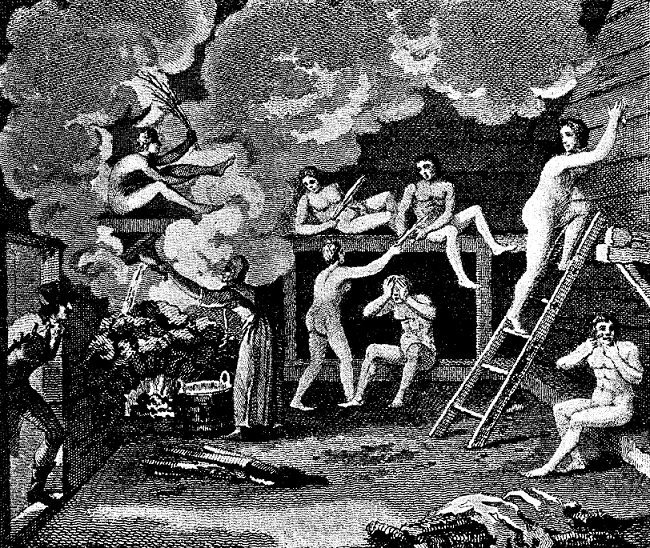
whispers in the sauna


sauna
Estonian Presidential Elections

I HAVE MET Marina Kaljurand, I have met Hillary Clinton, I have crossed paths with Siim Kallas outside the foreign ministry on Iceland Square (and had someone whisper in my ear, ‘Do you know who that is?’) and remember very well as a boy going to visit Trump Tower in Manhattan, so that we could take in this cathedral of 1980s greed and excess. For me, this presidential election is — unlike any before it, either in America or Estonia — very, very personal.

The people running for president are not so much candidates as they are like family members. Your kooky uncle. Your obstinate cousin. You look down the table at a holiday — maybe Fourth of July for Americans, maybe Jaanipäev for Estonians — and realize that, ‘Oh, no, we really must choose one of them to represent the entire country again.’ And not just for a day, but for a decade.

One might be excused for suffering from indigestion.

Then comes the measuring, the sizing up, the countryside whispering. America still harbors its Cold War mentality. There is blue and there is red. There is good and there is evil. There is Clinton and there is Trump. Are you for him or against her? If you are for him, you are against me. Trump is working for Putin. Hillary only serves the interests of her shady “Clinton Foundation.” In my hometown on weekends, demonstrators gather at a certain intersection with signs. On the left side, you have what might be considered Republicans. They have Trump signs. On the right, you will find Democrats. They support Clinton. They yell at each other and people honk their horns in support of either side, raising their fists in solidarity from car windows. This is American politics.

In Estonia, the dialogue is more nuanced. Here there are more choices. How confusing could it be for me, as an American, to look at a stage at the Arvamus Festival in Paide, for instance, and see four people engaged in a meandering discussion about where to take the country? To know that beyond those four, there might even be four others who could become the next president? People aren’t sure why their head of state is so important  — How many times has someone told me that this figurehead has no power? — and yet they know that he represents Estonia, the chosen land.

It starts, as expected, in the sauna. “What do you think about so-and-so?” someone will whisper to you in Estonia. Then comes the inevitable discussion about what happened to that money. “But I think the Estonians respect that in a way,” I will say. “They like the idea of being clever with money. It’s the chewing gum in public thing they can’t stand.” Then I remind them of my handshake with Kaljurand at an Arvo Pärt concert in New York in a room full of monks. By shaking my hand and smiling, she won my support. “Yes, but did you see what so-and-so wrote on his blog about her?”

The sauna whispers continue. Siim Kallas, Erki Nestor, Allar Jõks, Mailis Reps, Mart Helme, Marina Kaljurand, and Jaak Jõerüüt — who should probably be elected on the strength of his surname alone. It’s like some complicated card game. I can’t follow all of the moves. This is what it comes down to — for at least the Estonians. Some facts, some gut instinct, a few public gaffes. Slowly the Estonian mind accommodates some popular choices, which might be, in comparison to America — where people fantasize about moving to Canada or seceding from the union should their candidate lose — a slight bit healthier.

In the end though, I am reminded — tragically — of Seto Kuningriigide Päevad, the Days of the Seto Kingdom in southeast Estonia, where the Seto leader, the Ülemsootska,  is selected for the coming year. People gather and whisper. “Maybe I should vote for him, he is a good traditional dancer.” “But she knows all of our folk songs!” “He came over to my house once and helped me with some rotten logs. He’s definitely the candidate for me.”

The people line up behind their chosen leaders. Whoever has the most people standing behind him gets to lead the masses. This is how village politics works everywhere.

Real democracy.