trudeau eulogy

TRUDEAU, whatever you may think of him, gave Canada a face for 10 years. Everyone in the world knew who the prime minister of Canada was. For me, it elevated my first name from “Canadian pop singer” to “Canadian prime minister” status. Justins the world over were no longer ashamed. Due to some vague, beer goggles-induced similarities, I was even asked a few times if I was the Canadian prime minister. And I didn’t even need to don blackface or fall backwards down the stairs.

Quick, who were all those prime ministers before Trudeau? What? Can’t remember? Maybe it was the ultraboring Stephen Harper, the even more boring and boringly named Paul Martin. The last one who rings a bell is Jean Chrétien. Brian Mulroney? I mean, please. The last interesting Canadian prime minister before Trudeau was his father. And now he’s getting out to avoid online bullying by The Orange One.

In Trudeau, we saw pieces of ourselves. Our interfamilial vaccine feuds. Our health and fitness obsessions. Our hyperfocus on appearing youthful and ageless. Our smiling selfie poses. Our attempts to look respectable. Our collapsing marriages. Our bizarre Indian government assassinations. Nobody’s happy, but there was a brief thought that if the world was run by happy people, its leaders might very well look like Trudeau and Macron, youngish Frenchmen who it seemed just wanted to hang out and have something good to eat. And maybe go skiing.

Alas, it wasn’t to be. Back to the apocalypse.

võru apartment house

IN VÕRU, in the south-eastern corner of Estonia, there is a paneelmaja, or apartment building. This apartment building is made of the same elements of all the other apartment buildings of the 1960s. It is, in that sense, a standard Brezhnevka. However, there are some characteristics that separate it from others. For example, it’s built in a precise square with a courtyard at centre, including an old swimming pool. Nobody has been in that pool since Gorbachev was premier and it’s now used for storing potatoes. It’s covered in graffiti referencing Billie Eilish.

This common courtyard though is a place of interaction for the tenants of the Võru apartment building. They can watch each other, spy on each other’s comings and goings. I went there to stay in the building to spend some time with my child. What I found there was true delirium.

What kinds of people live in the Võru apartment building? Woodsy lumberjack-looking tenants with a predilection for the New Age. That means men in red flannel shirts and beards with tiny Ganesha statuettes bedside. They are all meditating and fasting when they are not sharpening their sharp axes. The women of the house make good use of them, and partners are switched and swapped out like lightbulbs. The men give when they are asked to and ask no questions. Such is the way of the Võrumaa matriarchy. When they are no longer needed for sexual favors or car repairs, they head into the Võru forests to tap birch juice or chop more wood for winter.

Children roam the halls of the Võru apartment building freely. I have seen small blonde children leaping between the floors. I myself was heading up a set of concrete stairs when I encountered a small boy in striped pajamas teetering dangerously on the edge of a balcony, the guard rail of which had collapsed. This small boy I took in my arms and went racing around the building looking for his mother. She turned out to be in bed managing her online business while listening to a few self-help podcasts from a guru. A light-haired blonde woman in a homemade blanket. She was still in her pajamas. She was stretching, blinking strangely at me.

“Your son almost fell off the balcony,” I told her. “Maybe you should take better care of him.”

“Don’t worry about Joosep,” said the lady. “He likes to play on the balcony but he never falls.”

notas rotas by tomás del real

WHAT IS WRONG with the youth of today? The world’s on fire, the clock is ticking, and Tomás del Real is hanging in backyards from Canada to Estonia, tinkering with his guitar, jamming with fellow travelers and otherwise observing the downfall of civilization coolly from behind his sunglasses. Even the cover photograph for his single “Prólogo,” released last August, shows the chill Chilean in media res, as if he was caught off guard while he was contemplating something more profound. He looks like a Latin Sigmund Freud, I think, one who just survived a natural disaster because there are broken couches around. Maybe that’s exactly who he is.

It’s the end of the world as we know it, but Tomás feels mostly fine. The cover to the album’s single ‘Prólogo.

While listening to the entirety of the album Notas Rotas, I hear many interesting things. Released in the dreariest days of late November, it has a warmth to it. The opening song “Prólogo” is a burst of warm air, propelled by the violin of Alan Mackie and flute of Katariina Tirmaste. Right up front, this record promises something that food critics might call fusion cuisine. There’s del Real’s contemplative, Tropicalia-laced meditative poetry and innovative melodies coupled with what sound like North American and Estonian influences and driven forward by a thunderstorm rhythm section of percussionists Magnus Heebøll Jacobsen and Steven Foster: the former from Denmark and the latter du Canada

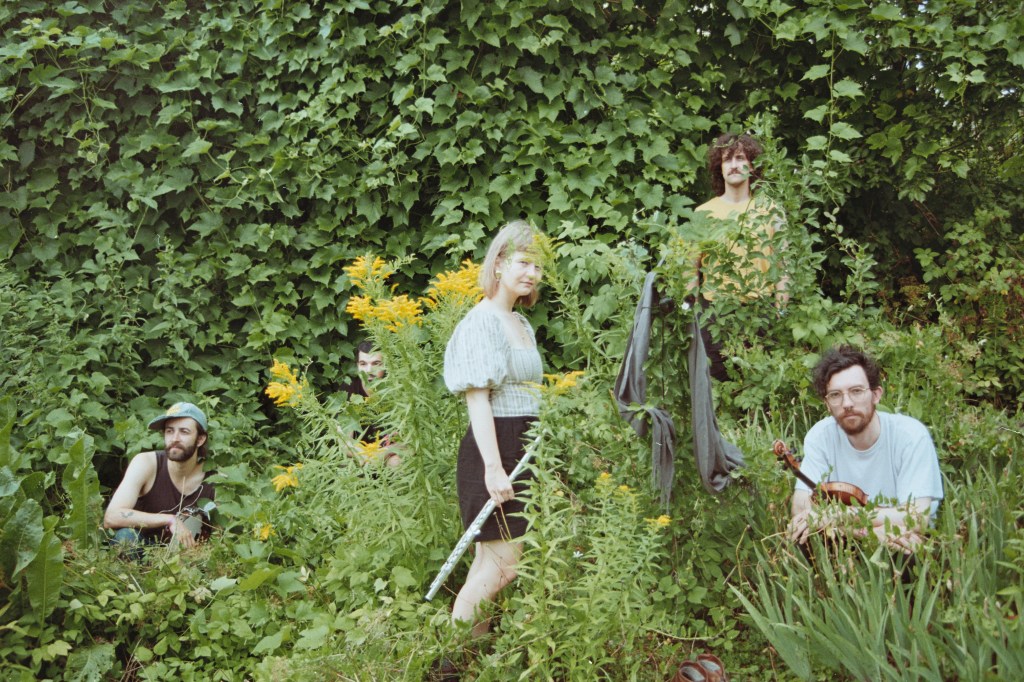
On the cover of the album, they all look like a bunch of farmers who took some time off from the harvest to fashion 10 incredible songs, and then went back to messing around with a tractor or something. But there was a method to this folk madness for del Real is the consummate artiste. 

The album cover. From left to right, del Real, Foster, Mackie, Tirmaste, and Heebøll Jacobsen.

“In every album, we try to shape and find the reason and the language in which the songs exist,” remarks del Real. “There were a couple of musical languages that were present in the picture.” In the case of ‘Prólogo,’ Alan Mackie, who also played bass on the record, was a co-composer and co-producer of the single, as he was on many of the album’s songs, bringing along his own sentiment (Mackie is from Prince Edward Island). In combining with del Real’s own Latin American folk, they have created a blend of music they jokingly refer to as LatinAmericana. But there are Old World influences too.

“There are a lot of European folk influences, such as Eastern European uneven time signatures,” says del Real, “which we tried to implement in a very organic way, and some Scandinavian influences, both in the percussion and in different colours in the instrumentation and arrangement.”

While del Real wrote the songs on the album and the record is credited to his solo project, it is very much an ensemble effort and grew out of an ongoing collaboration with Mackie and Tirmaste. Mackie and del Real even hit the road and toured Asia at the beginning of their co-sojourn, with dates in Japan, Taiwan, and South Korea. “I had a bunch of songs waiting to be something and we decided that could be a good place to try them out,” says del Real. “From that experience we started to shape where the sound was going and it felt very natural to start working on this.” 

Katariina Tirmaste was “another fundamental pillar” in the creation of Notas Rotas, helping to flesh out the compositions and to arrange them. Del Real credits her as a “creative and emotional performer,” one of who provided sensitive, flexible parts to the different songs that eventually made up the new record. “She’s incredibly versatile and also without taking up more space than needed, which is a very humble and Estonian approach in my opinion,” he says.

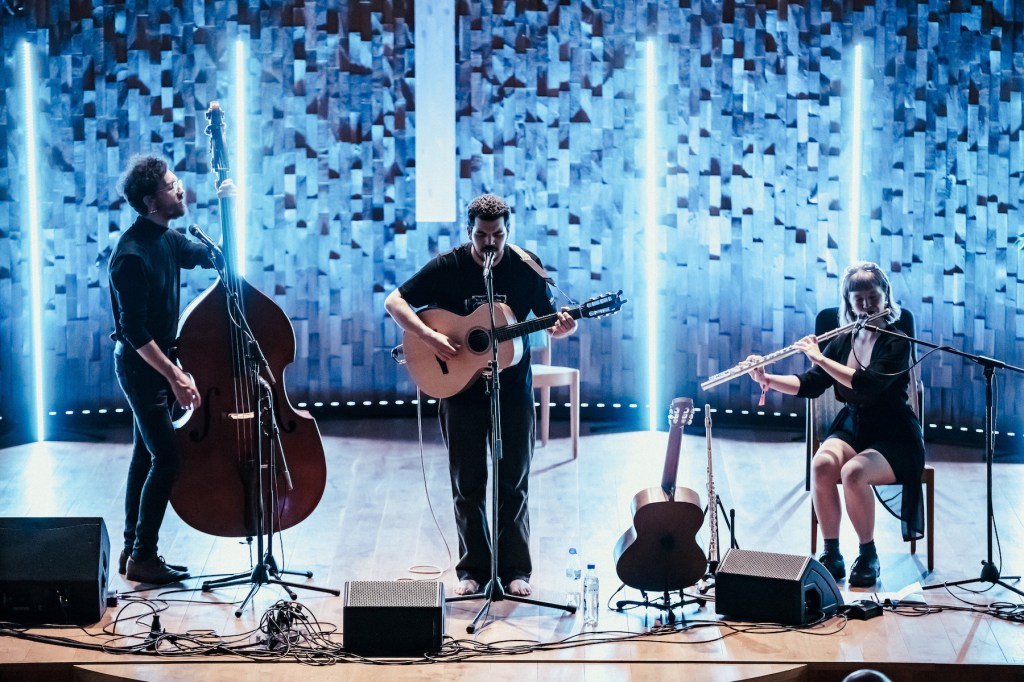
LatinAmericanaEstoniana on stage: Mackie, del Real, and Tirmaste.

The record itself was put down in home studios in Toronto, the south of France, the west coast of Sweden, not to mention a multitude of closets in apartments in Estonia. From this pastiche of on-the-fly audio recordings, a sound engineer of fortune called Jorge Fortune in Patagonia mastered the sonic tapestry of Notas Rotas, which is that rare record that sounds good whether it’s been played in the car, through headphones, or on your smartphone. 

I know because I have tried listening to it in all three environments. These recordings hold up.

Del Real I have known as a musician for years and have attended his shows, including some with Tirmaste and Mackie. While I hesitate to say anything about his songcraft, I can say that some of the melodies on this album challenged me and required multiple listens to fully digest, which for me, as a listener, is the mark of the very best music. Having a minimal knowledge of Spanish, even after years of instruction in high school, his lyrical intent remains a mystery to me. In his own words, it reflected the transient nature of his life as he moved around as well as the emotional winds blowing through. “It had a lot of reflections around inconclusive situations, self-awareness, letting go, and letting life take its course,” del Real says. 

He was also demoing the material on the road and in front of his fellow musicians, which took him out of the more introverted, isolated settings that fueled the creation of his last album, Principios de Declaración. Solo albums can be complicated territory for any musician, though del Real is a singer songwriter and thus a solo artist by default. With Notas Rotas I am reminded of David Crosby’s solo outings, particularly his first venture, If I Could Only Remember My Name, recorded at the very dawn of the singer-songwriter era in 1971, which saw a whole cast of characters join Croz in the studio (there’s even a cut with Jerry Garcia and Phil Lesh of the Grateful Dead paired with Neil Young and Santana drummer Michael Shrieve). 

While Croz’s musical influence might not be immediately apparent on Notas Rotas, his spiritual influence is everywhere and I think, might he have lived a little longer and heard the record, he would have approved. The kind of camaraderie that fueled Croz’s effort can be seen here, because these fellow musicians are del Real’s confidantes and he trusted them with this music.

A band apart or, for you non-Godard aficionados, a band of outsiders.

When this album was first released, del Real encouraged listeners to post their favorite songs. But what I have found upon multiple listenings is that my favorite track changes with each listen. Today, on a snowy January day, it is the sixth track, “Distracciones” with its vibrant fiddle parts. Any one of these tracks is sticky enough and interesting enough to catch a listener in its web. Perhaps “La Primera Nieve” or “The First Snow” is the most appropriate for this colder season. And then there is the finale, “Los Sueños” (which can be translated as ‘Dreams’ or ‘Visions’) which is carried along by lovely backing vocals like a ball being carried away upon the waves. 

There is, whether it exists or not, and whether intended or not, a maritime fluidity to this music.

For del Real who, like the writer of this review, calls Estonia home, it was this seabound country that most manifested itself in this latest work. It found its ways into its lyrics, its melodies, its colors and moods. “Personally I think it’s very inspired by Estonia, its pace and imagery,” del Real says. He also sees in it a breakage with his past, or the path he was once on, and a fresh intimacy that he credits with producing its raw, unfiltered, and, I would add, touching result.

russia surrenders

AFTER RUSSIA surrendered to Estonia, celebrations were held in both capitals. Estonians were able to roam the Grand Kremlin Palace in Moscow at will, taking photos of themselves lounging in its furniture. Koit Toome reclined by the fireplace, taking turns stoking the fire with Tanel Padar. Mart Sander was playing billiards in the other room with Anu Saagim. Someone had torn Lavrov’s portrait off the wall. One could only see half of Lavrov’s face.

My friend Stig decided to hold an ancillary meeting for the Estonian and Russian communities in the Canary Islands, which happened to coincide with his 18th annual 30th birthday party. It was held at the MTV Beach House, which meant Stig and Riken, the worldwise wandering Japanese mountaineer, spent much of the time networking and pressing the flesh with various dignitaries around the pool, which was filled with tanned young beautiful people in Baywatch red bikinis and swimming trunks playing volleyball. Stig was dressed in his summer finest, which included a Hawaiian shirt and matching shorts. Riken wore loose desert camouflage garb, including pants and jacket, and I wondered if he always was dressed to hike, or if those were the only clothes he owned. They walked around the pool celebrating New Victory Day.

“The Sign” by Ace of Base was playing.

Somewhat tired of the scene, I retired to my room at the Canary Islands MTV Beach House, where I began to work on the next chapter of what would surely prove to be a poorly received and misunderstood work. But Stig and Riken were soon at the window, chastising me for living more in the digital world and less in the real world, “where people stop being polite and start getting real,” as Stig put it as he admonished me. After that I returned to the party, only to meet a boisterous woman who looked Spanish but was speaking Estonian. She was clothed in a flowing blue dress and she had lots of silver rings on her fingers. She was sipping some kind of fruity cocktail and regaling her girlfriends with stories of outlandish behavior. These are the kinds of women I like, I thought. The ones who are truly horrible. The ones with filthy souls.

“We should go on a date,” I told the woman in the blue dress. “A date?” she answered me while licking a line of sea salt off her wrist before swallowing another shot. “You mean a date date?”

“Yes,” I said. “You can wear nice clothes and I can wear nice clothes. We can meet together somewhere and eat food. I will even offer to pay, but will accept if you refuse. Then we can talk about our lives, our jobs, who broke our hearts.” The woman in the blue dress wiped some of the tequila from her lips and said, “It doesn’t sound so bad, the way you put it. And I thought you had promised the world that you would never go on another date.” “Well, Russia just surrendered,” I told her. “Koit Toome is in the Kremlin. Surely that’s cause for celebration.”

i saw the sun a few days ago

I SAW THE SUN a few days ago. It was low in the sky but visible between some of the buildings on Posti Street. For a moment, I couldn’t quite understand what I was looking at. What was this strange orange glow? It cast its warmth on the wooden facades of the street. I stood there and wondered what I was dealing with. I knew it was sunlight and was amazed I had forgotten it. In the summer, there were whole 24-hour cycles where it was almost always by my side. In the summer, I took the sun for granted. I thought that it would never fade from my life. Little by little it was scissored away, until I forgot it even existed. I told my father it wasn’t so bad. “Just imagine that it’s night all the time. You get used to it. It’s like you’re always dreaming.” You do get used to it. You slow down inside. You trade away your White Nights for your Dark Days. One day, when you’re strolling down a street in a small wooden town in December, it appears.

The sun. Your old friend. The sun waves to you and you feel its presence. And then it vanishes.

***

When I think about the sun, I am reminded of a book of Greenlandic folk tales I have on my bookshelf at home. It’s one of my favorites. Inside, there is a story about the sun and the moon. According to this story, the moon slept with many women but was not satisfied by any of them. He then decided to sleep with his little sister, the sun. He disguised himself and slipped into her tent at night. The sun was very satisfied by her brother until she learned of his true identity. Then she cut off her breasts and mixed them in a bowl with urine and blood and gave this porridge to the moon to eat. “If you want to see how I taste,” the sun told the moon, “you can taste this.” The sun ran away. The moon paused to taste her breasts, of course, and then went after her. The lusty moon continues to chase her, but the sun is always faster than him. Because of this, night always follows day.

I’m not sure why I like this story so much, maybe because like most stories of the Greenlanders, it’s grotesque and involves incest and mutilation, but also because it says something about nature’s beauty and brutality. I feel it these December days. The lack of sunlight robs you of something, but so does the cold. Just walking from one end of the street to the other is a challenge. In summer, the sidewalk seemed as soft and warm as butter. In December, I am tending to the fire in my fireplace, listening to its assuring hot crackle. The sound of the fire is like Christmas music as I sit here reading about the moon and the sun. 

***

A few days ago I found myself in an Orthodox chapel. There were icons on the wall of the Karelian saints. Colorful old men with beards enveloped in gold. I think I saw a few women there with their heads covered. I don’t know their names. A little research afterward yielded the name of Sergius, a Greek monk who had traveled the rivers northward to spread Christianity to the Finnic tribes in the forests. For some time, the Orthodox Church was a presence in my life. When I joined the church, I told the priests that I was an Italian, and therefore could not belong to any Estonian or Russian church. They informed me that it was all one church, and so this idea whether you belonged to one or to another was unimportant.

At the little Estonian chapel, I was told that they were an Estonian Orthodox chapel, not a Russian Orthodox chapel. There would be no risk of being forcibly abducted into the Russian World, or Russky Mir. Some of my friends are atheists. For them, these icons might as well be Legos or a woman’s lingerie catalog. They mean nothing to them, because they don’t believe in the idea of god or gods, let alone that a person, say Jesus, could be the son of a god, or have arrived to this world by a virgin. For me, there is no difference if his mother was a virgin and if his father was god. The icons of the Karelian saints are another window through which I might understand existence. Whether the Virgin Mary was a virgin or not makes no difference to me.

I went to confession once in the church after which the monk forbade me to have Communion for a year. “If I plant potatoes in sand, nothing will grow,” the monk had said. “But if I fertilize it for a year, you will see them take root.” Being forbidden from Communion pushed me more toward the world of animism and toward the blues in which voodoo also plays a part. In these worlds, I understood that I would be received as I was, without any kinds of expectations. Maybe I could learn something too, as I wandered among the seal hunters and the bluesmen.

***

By this point, you might start to wonder, what do all these things have to do with each other? How is the sun connected to weird Inuit folk stories? How are these connected to Karelian saints? How are Karelian saints connected to the blues? And what does any of this have to do with Christmas? For me, they are very connected. Christmas was created on top of pagan holidays to celebrate the winter solstice, the moment when light begans to grow again, or when the sun, everlastingly pursued by an oversexed moon, outruns him around the universe. Christmas is a celebration of the birth of Jesus, which makes it in a way a celebration of fertility. And in the American South, the blues were considered to be the Devil’s music, the opposite of Christianity. These are not extremes or polarities, but elements of a larger truth. Christmas connects them. Christmas is the needle. Different threads pass through its eye.

One does not need to choose one over the other, but rather embrace and combine all aspects. In the Greenlandic book, it is reported that in the time before memory, the heavens and earth were covered in darkness. According to the Greenlanders, the fox wished for sunlight, so that he could catch more seals. The bear was opposed. He was better at hunting at night. But the fox was better at witchcraft, and so sunlight came into being. This is why the Inuit don’t eat foxes. Now that I think about it, I have never heard of an Estonian who ate fox meat either. 

As I write this, Estonian girls in folk costumes are spinning around a stage at a Christmas fair in Põltsamaa. There are also Estonians in top hats and knickers. Someone is wearing a cowboy hat. As they dance, I have been searching for a blues song about Christmas. John Lee Hooker has a good one called “Blues for Christmas.” He’s sad, he’s drunk, and he’s broke. He’s waiting for his rich girlfriend to come back to him. He’s begging Santa to send her back. I used to think BB King was one of the more respectable, well-mannered bluesmen, but he’s got a song called “Back Door Santa.” He comes around daybreak, while all of the fathers are asleep. He gives the children pennies to leave him and their mothers alone while they have some fun. And Santa Claus only comes once a year, but BB King comes all the time and his girlfriends do too.

These are real Christmas songs, I think. These are Christmas songs that tell the truth. According to Wikipedia, BB had between 15 and 18 children, none of them with his two wives. I’m sure he would have also been forbidden from taking Communion and for more than a year.

***

ON THE WAY to the Christmas Fair in Viljandi today I found myself listening again to the blues. I listen to the Rolling Stones perform “Parachute Woman” off of 1968’s Beggar’s Banquet. “Parachute woman, land on me tonight.” Inside the fair, everything smells like candles and happiness. The emcee is on stage speaking of gingerbread. There is something calming about the scene for me, and for a while I start to feel very tired of this rambling life. I have been running from everything, and sometimes I wonder where I am running to. My main goal is survival, I told my therapist. I’m running to survive. Hea küll siis, the lady said, very well then. But what will you do with your life if you survive?

Through my jumble of thoughts, feelings, and epiphanies, consciousness and truth begin to reassert themselves. If Christmas is the moment of regeneration, when darkness gives way to light, when the sun outruns her brother, and when all the points of light align through the positions of the stone circles, then might it be a similar moment for my own soul? Maybe Christmas could set me right. Or make me correct, as the Orthodox priest once said to me.

At the same Orthodox cloister, one of the Greek nuns did take pity on me while we were out gardening. She said I had a good soul, the soul of a saint. Another friend told me that I should listen more to the nuns and less to the monks. The Christians do like to talk about love. Only I wonder if it’s the same love that I understand it to be. The kind that flows through you and remakes you? That would be a worthy kind of love. That’s the love they sing about in the blues. The love that makes the moon chase his little sister through the cosmos, trying to catch her. 

He never does, but he never stops trying.

*

An Estonian version of this story appears in Edasi.

Special thanks to Lawrence Millman, author of A Kayak Full of Ghosts.

lyndon

LYNDON JOHNSON, resurrected, back from the dead. Or maybe it was his ghost. He was wearing a freshly pressed gray suit, and standing on the edge of a corn field. It was warm, if not summer. From time to time, he removed a handkerchief from his front pocket and dabbed the sweat from his forehead. Only later did I notice that he was barefoot and hovering about an inch off the grass. He was speaking of Luigi Mangione and the killing of Brian Thompson.

“I tried to warn them, I tried to tell them this would happen,” said Lyndon. “I warned them.”

Lyndon liked to stare off into the distance when he spoke. He was wearing his glasses and his hair was slicked back. This was solidly 1964-era Mr. Johnson, though he had slimmed down some in heaven. Maybe dying had been good for him. He seemed to be in good spirits. Relaxed. He took a peanut out of his pocket, cracked it in half and munched on both tasty nuts inside.

“You can’t take credit for everything,” I told Lyndon. “You must give your vice president credit.”

Lyndon smiled. He said, “You must mean my dear Humphrey. Yes, Hubert’s a top-notch man. As I was saying, if America had carried out my War on Poverty and become the Great Society.” After that, he seemed to be distracted by his own thoughts and kept muttering the name, “Kefauver, Kefauver.”

“What do you think of Mr. Mangione?” I asked Lyndon. “Troubled,” came the response. “But we all know why. I tried to warn them.” “Do you think Mr. Biden should free Mr. Mangione,” I asked Lyndon. “Now, now. I never said that.” He dabbed at his forehead again. I had to admit that, Vietnam War aside, he seemed like a decent man. Maybe those folk stories about how he secretly engineered the Kennedy Assassination were just Kremlin dezinformatsiya passed along via willing stooge Oliver Stone. Maybe Lyndon Johnson was a good man deep down.

eistneskt hús

AT THE GAS STATION on the edge of Tartu, a blue car pulled up containing two very over partied, overtired, hungover young women. They were red-headed sisters, and looked a little like the O’Mara sisters who used to live at the end of the street, except they were Estonians. I was standing there, obviously not minding my own business, when they invited me to pass the time with them and stay warm in the passenger seat. “We haven’t slept at all,” one of them said. “We came here straight from a party.”

They drove me down to the center of the city, where the Tartu Kaubamaja department store had been possessed by the university and where the former sites of Apollo, Tokumaru, Copenhagen Tiger, and Tommy Hilfiger had been replaced with seminar rooms. One of my classmates from elementary school, a nice Jewish girl who had since become a wildly successful Indian devotional singer, came out of one of the seminar rooms and I patted her on the sleeve. I was reminded that she had been, at one time, my square dancing partner. Tartu had been turning into a kind of mecca oasis. Everyone was here these days. Happening place.

BUT I WAS RESTLESS. School wasn’t for me, so I obtained a cheap ticket to Reykjavik. I arrived and took the bus into town from Keflavik and walked down to the harbor. It was a brisk, blue-skyed winter’s day. At the harbor master’s office I went inside, looking for the Icelandic Estonian House, Eesti Maja, or Eistneskt Hús. I was told it was on the eleventh floor, and I had to take a sophisticated in house funicular system to get there, one that also delivered the mail.

There at the top, I met up with the head of the Hús as well as a teacher. The director was a charming, younger lady, who looked as if she was Spanish. The teacher had affected a Robin Hood look, with a green beret and goatee. I thought then if I should contact Katla, if she still harbored ill will toward me. Maybe she did. Maybe it was better to let sleeping Icelanders lie.

north seas

NORTH SEAS. Or, to get from Point A to Point B. Or, riding public transport along the Scottish Coast, somewhere near John O’Groats. From there I could see, as the rain was breaking and giving way to a December sunset, an old ruined castle perched on a bluff of a nearby island, which the mapmakers tell me could be Stroma or Muckle Skerry. I disembarked the bus and lost my way snapping photographs and was lost for quite some time then wandering until I stumbled into the outskirts of what I thought was Edinburgh. A few fishermen encountered me and asked me where I was going. “Ireland,” I told them. “Ah,” one answered. “It’s over there.”

LATER, I wound up in the embrace of a voluptuous Inuit throat singer. Somehow she had become my girlfriend and somehow we were staying in a hotel room in Reykjavik that overlooked the entire city, which meant it must have been up by the Hallgrimskirkja. She had kakiniit sprawling all over the lower parts of her body like vines. I was coolly unsurprised that this was my new fate in this life, but having been denied emotional connection for so long, I found myself indifferent to this latest bedsheet romance. When she kissed me goodbye, I blinked. It wasn’t that I had no feelings for her. It was that I could barely remember my name.

After that my daughter came to live with me in the Hotel Reykjavik. We were there, wondering what on earth there was to do in Iceland other than visit hot springs and museums, when the lights went out. I thought it might just be the hotel electricity, but when I looked out the window, I could see the whole city of Reykjavik was dark. Then I began to hear a loud rumbling sound. “Maybe the Russians are attacking,” I told my daughter. “But why would they attack Reykjavik?” “I don’t know. Indefensible NATO country?” I said. I found an old radio and turned it on, but static came through. After adjusting the antennae, I was unable to pick up any signal.

unitarian universalist

ON THE ROAD, like Jack Kerouac, except this time in Ida-Virumaa, along the north coast. This time I was hitchhiking and was picked up by some lady who claimed to be Kerouac’s aunt. She brought me back to her homestead and gave me tea. She said that hitchhikers were thronging the roads of Ida-Viru due to the recent posthumous publication of Kerouac’s secret diaries of a 1964 trek through Soviet Estonia. She proved her point by gesturing outside where a classmate I hadn’t seen since junior high was drinking tea in the yard with the chickens. Dan had last been seen in about 1994 or so wearing a Nine Inch Nails t-shirt. “But I haven’t seen him since chemistry class,” I told Kerouac’s aunt. “He barely came to school.” Dan had gone gray in the intervening 30 years. He wore a black leather jacket, drank tea, and scribbled poetry. “Dan’s been here for months,” the lady said. “He also loves Ida-Virumaa. It’s become a hipster magnet.”

Later, I took a bus along the north coast in the direction of Tallinn. My bus left me off down by the port near the ferries to Helsinki. MacDougal, another former classmate from the Nineties, was on the bus. Having become a hotshot attorney since, he was less friendly than he perhaps should have been. He was in a hurry to catch the last boat to Finland. When we got off the bus though, we noticed that someone had left behind a knapsack full of contraband alcohol. MacDougal, freckly Scotsman that he was, advised we leave it at the ferry ticket office, but not before insisting that the alcohol be refrigerated in its office. “We can’t allow the poor fellow’s drink to attain room temperature,” he said. “When he retrieves it, it should be chilled.” MacDougal found room for the bottles in the office fridge and then went to the boat. “Nice seeing you, man,” MacDougal said before rushing off. “Let’s meet again in another 30 years!”

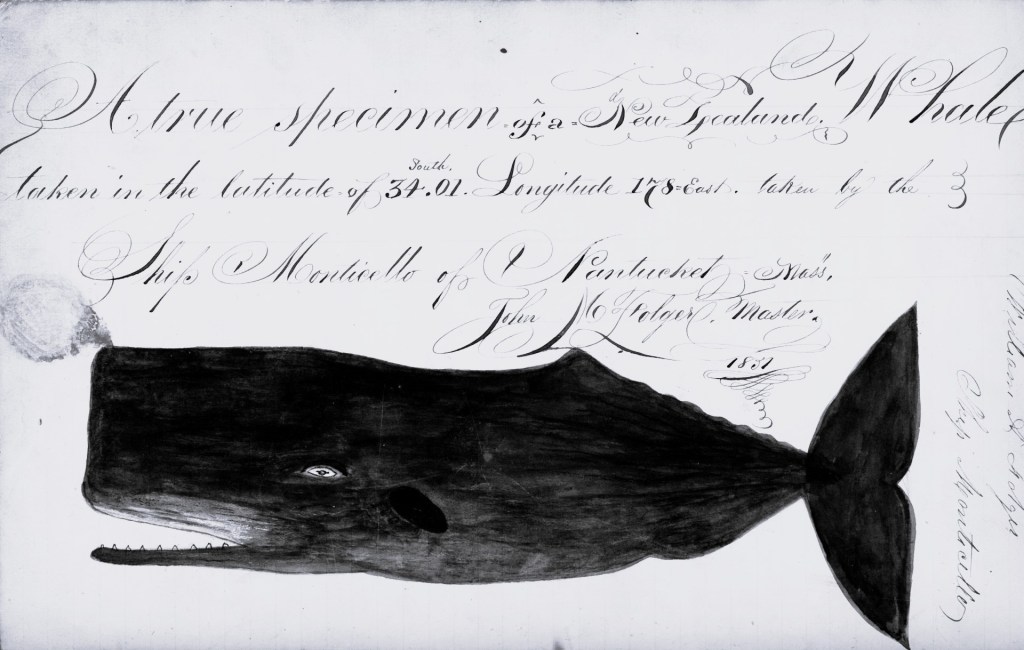
A snowstorm blew through the city after that. It obscured everyone’s vision, including my own, a total whiteout. When the storm withdrew, I realized that I was no longer in Tallinn, but at the docks in Nantucket. I watched as a solitary jeep drove over the ice and cobblestones down to the ferry terminal. Wiping the ice and snow from my eyes, I started up Main Street. All of the cafes, boutiques, and book shops were closed. At Orange Street, I turned left and walked ahead until I looked up and saw the haunted Unitarian Universalist Church, with its golden glinting sun-like dome. It looked like a distant junior cousin of the Helsinki Cathedral. I stood there and admired the church through the snow and mist. It was for me another lost friend.