
Man, Desolation Angels is getting under my skin. These days I just want to grab a backpack and walk outside and keep on walking and scour the earth in search of adventure and enlightenment. There is Kerouac in me. That perpetual outsider status. The oddball-goofball friends that somehow seem to be better anchored in this world (“Julien,” “Irwin”) yet still retain alien-like qualities, as if the old bum Kerouac was the last real human among us. His time and place differ. In Jack’s books, you meet an old and content Henry Miller and an old and content Salvadore Dali, and Jack is the one wandering around while they eat their grapefruits and drink their wine and seem just fine with everything, the great struggle of adjusting to life, the artist’s struggle, digested and defecated from their bowels in the form of paintings and writings and renown. But Kerouac never got there. His alcoholism killed him. Or he killed himself. What do you do when so many of your heroes had miserable endings?
Category: Uncategorized
enter the ginsberg
I’m not sure how or when I got it into my head that Allen Ginsberg was a titan of 20th Century American Literature who had moved mountains with his “Howl” (“I saw the best minds of my generation destroyed by madness, starving hysterical naked, dragging themselves through the negro streets at dawn looking for an angry fix”). The way it is put to us, he is an icon, end of story. But when “Irwin Garden” walks into Desolation Angels in “Passing Through: Mexico,” and starts babbling on about Samsara, I just want to grab him by the necktie and tell him to shut the hell up, I’m more interested in junky Old Bull Gaines’ junky cough (ke-he) or little dark eyed Tristessa’s “luvv.” Duluoz likes Garden, sure, he’s an interesting character in a postwar world of “crewcuts and sullen faces in Pontiacs,” but all of Ginsberg’s Samsara, Dionysus blah blah blah — it hasn’t aged well. I keep coming back to what Keith Richards called Ginsberg in Life — “a pontificating windbag.” Ha! There’s some real poetry. Anyway, it’s not that I don’t like you, Ginsberg (“Stop the machine!” You can’t stop the machine”) It’s that I don’t believe you.
the vanished race
Lots of opinions voiced about the Zimmerman verdict, some outrage, some head scratching, plenty of talk about American racism against its African-descended population, in which a ‘white Hispanic’ (Zimmerman) shot and killed a black man (Martin) and was found not guilty in the former Confederate state of Florida. Hmm. The story was always framed in US national news media in two tones, white and black. Zimmerman was our white, Martin was our black. But Zimmerman isn’t really “white,” he’s half-Peruvian, identifies as “Hispanic,” and phenotypically isn’t that far from Hugo Chavez or Evo Morales. All of these terms we throw around here, “white Hispanic,” “Hispanic,” “and “Peruvian,” don’t actually get to the core of the matter, which is that George Zimmerman is Amerindian. He is, at least in part, an indigenous person of the Western hemisphere, an “Indian” as Hollywood and Columbus called them. And no American news network would ever describe him as such. How is that possible? Because of American myth making that portrayed aboriginal Americans as a proud, but vanishing race, one that had died out, or was in the process of dying out. It was one of many ways that the original real estate owners of the Americas were outflanked — devastated by wars and disease, many Amerindian people took as partners people of a race other than themselves, Europeans and Africans. Their offspring were no longer considered Indian. They had native heritage — if they could document it and prove it beyond a reasonable doubt — but in many cases they could no longer claim to be something that society had decided no longer existed. Such individuals no longer had the ability to claim land as their own, or to refer to treaties that had been concluded with their ancestors, because that proud race had vanished, and all that were left were some “mixed bloods.”
Like George Zimmerman, who now, somehow, represents white American racism.
no stick
I have been plowing forward through Angels, but Jack is still up on that mountain and I am not sure how much more I can take. I tried to get back into EIMI, but that wasn’t sticking either, which is a shame, because I really liked EIMI before I set it down before we went to Bali. It was too thick to drag along for the trip. For Whom the Bell Tolls is eyeing me curiously from the drawer. Can Hemingway hold my attention?
The last book I finished was called The Long Goodbye, by Raymond Chandler. I enjoyed it. My friend’s always going on about Chandler, and I know he influenced Haruki Murakami {and Kerouac influenced him, too, though such influences are not always apparent}. In a way, Murakami is spoofing Chandler. Their worlds and stories are so different. But the narrator’s voice in a lot of Murakami books {A Wild Sheep Chase comes to mind} reminds me a lot of Marlowe’s.
My own writing is pained. I’m not happy with what I am producing. I feel like it’s not important enough or significant enough. Then I think of how Kerouac filled a fat book called Desolation Angels with his unimportant, insignificant thoughts at the top of a mountain. Aha.
desolation
Desolation Angels is a book I’ve heard plenty about … I bought my copy in a book store in Penn Station (I think it’s called Penn Books, I’ve purchased many train-ride’s worth of novels in that establishment). Angels is supposedly one of Kerouac’s best books, but as someone who loves Kerouac, I’ve had a rather hard time getting into it. Part of the Beat Mystique is that something happened in the mid-20th century, something that changed American culture and literature for-ev-er. If only we could have been there at that momentous, stupendous, earth-ratting, cosmos-vibrating, yab-yumming time to .. spend a few days … alone … with Kerouac … on a mountain.
Yeah, that’s why I always put Angels down. It opens with Kerouac alone on a mountain. I’m sure other wonderful things happen while he faces up to his own personal void, but Big Sur had him getting drunk in San Francisco in the first scene, and, say what you want, On the Road goes somewhere, naturally … Dean shows up, he leaves, things happen. And then there’s Angels. Kerouac. Alone. On a mountain. I know Kerouac’s a great writer but he’s still just some guy from Massachusetts.
Today, I dug through a pile of other books, and there was Mr. Solitude looking back at me from half a century ago. I decided to give Angels another spin. Maybe I’ll finish it.
joe hill and julian lennon
Got the new Writer’s Digest for Aug. 2013, read the interview with Joe Hill, spawn of Stephen King, with interest. It is indeed fortunate that Joe didn’t go down the Julian Lennon path to “son of” irrelevance. Makes one wonder if Julian could have pulled it off as, say, Julian SMITH. No, singers don’t have the anonymity of writers, but, wait, actually they do … Remember Belle & Sebastian, who remained faceless for the first part of their career (maybe they looked like those hipsters on their covers, we all thought) Jules could have peddled himself down that route (and he sounds so much like Lennon!) … stranger things have happened
how not to start your novel …
Chuck Sambuchino writes the following:
“We also can no longer compare our writing to classic works or even books written 30 years ago that started slow and found marketplace success. Today’s novels — especially debut novels — must grab readers from the first page, the first paragraph, even the first sentence.”
Well, yeah, you want people to read on. Still, I’ve pondered this statement because so few books today remind me of the books that I love, many of which are classics, or at least older, and which have influenced my own style. I feel that many books published today lack what I would call “mental clarity.” This is what comes on when you read Hemingway describe the dust on the leaves kicked up by the marching soldiers in the very long opening sentence to A Farewell to Arms. You follow the river of words into a very different, relaxed state of mind. Achieving this mental state is one of the main reasons that I read. I think writers should distance themselves from this need to compete for attention in this buzzing, beeping, anxious modern world, and give us less gripping scenes involving murder weapons and more of that old-fashioned, unmarketable mental clarity. That kind of state hits you like the cool air of the Scandinavian mountains … it’s refreshing, and it stands above a need to lie to people for the purposes of marketing. It’s not the book I’m after, it’s the soul. And if your book doesn’t contain any soul, then no attention-snagging first line is going to redeem it.
cruz in montreal
Working on a rewrite of Montreal Demons, or rather a reattempt at the story. I think I’ll let MD be MD, but move forward with this “remix” called Cruz in Montreal. That is, MD will still be available as MD, and the new work will be CiM. I also think that leaving the story to sit for a year has helped me greatly in seeing its strengths and weaknesses. Stephen King and Writer’s Digest, you were right!
far flung
Writers Abroad has a new contest — this one’s called Far Flung and Foreign. My short story “Mr. Perfect” was included in last year’s Foreign Encounters anthology. I am sure I’ll have something to submit to this one too. The deadline is July 31, 2013, at midnight. Why not try it?
goodbye goodreads

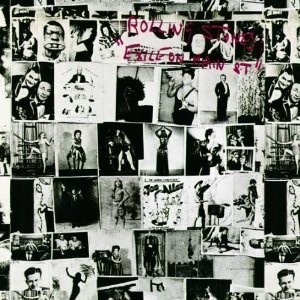
I deleted my Goodreads account this week, and it’s all the Rolling Stones fault. I had joined I don’t know how long ago {and now that my account is gone, I guess I’ll never know}. Not like I care. I rarely used the thing. Once in a while I would check in on what other readers were saying about some books I had read or was in the process of reading, though it usually wasn’t that interesting. In general, I found other reviewers’ reviews useless because reading is such a personal experience. Some books that I love are dismissed as crap by other readers. Books that some other readers celebrate as genius bore me. It’s kind of like discussing your favorite Rolling Stones records. Does Between the Buttons warrant four stars {or five or three}? And would you give Between the Buttons a star over Let It Bleed? Or vice versa?
Truth be told, I feel terrible about what I’ve done on Goodreads. To think that I had given Halldor Laxness’ The Fish Can Sing three stars, while Corrado Alvaro’s Revolt in Aspromonte received four. Poor Halldor! I mean, he died in 1998, and got a Nobel Prize in the 1950s, but still! To have one of his finest novels passed off as a three-star affair, just because I was too lazy to read the middle section. Tsk tsk. Shame on me. How do you say “I’m sorry” in Icelandic?
Oh well, I might as well have given Exile on Main Street three stars and Sticky Fingers four. What? Three stars for Exile on Main Street? Treason! We all know that Exile is a classic, five-star album. Classic. Who says so? Rolling Stone magazine and Allmusic.com, that’s who. Yet, classic as it may be, I just don’t listen to Exile that often. I still listen to Sticky all the time. It doesn’t mean that Sticky is superior to Exile … no, no, no … it just means that, for whatever reason, Sticky appeals to me more. Maybe it’s that rollicking riff on “Bitch” … all the “Turd on the Run”s could never take its place.
Conclusion — I like some things because I like them, and I dislike some things because I dislike them. There is no reason or calculated aesthetic to these gut feelings. They are instinctual, circumstantial. Maybe I was sick when I read The Subterraneans. Now, whenever I see the book, I feel like puking. Yet I felt great when I read Satori in Paris. I found it on a discount shelf in Copenhagen, read it in the Scandinavian summer sun. It’s one of my favorite Kerouac books, yet most critics would dismiss it as the ramblings of a middle-aged Masshole drunk. And it is! And I still love it!
Goodreads claims its mission is to make reading social. With 10 million users, obviously a lot of people believe in that idea. I have nothing against them. Socialize away! But I have decided that, for me at least, reading is not social. It’s very, very personal. Consider that my own personal satori.
 north!