‘How Silly Can You Get?’ A Review of The Bern Band’s New EP, No One Wins, Part I

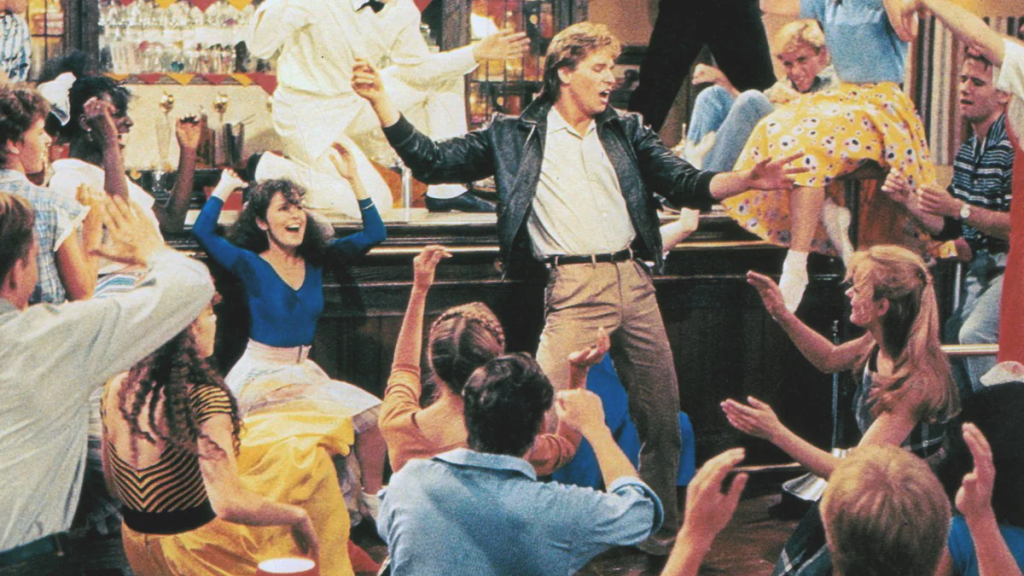
A scene from 1984’s Top Secret, starring Val Kilmer as Nick Rivers, an endless source of inspiration.

I WAS PLANNING to write something beautiful and majestic but I ran out of time. I’m thinking about that Zelda Fitzgerald comment, how Scott’s progress on Tender is the Night was being anthologized in Encyclopaedia Britannica. In this case, I can’t afford to wait nine years. The Bern Band will have come out with several EPs or albums by then.

What is this then? A loose attempt to review The Bern Band’s latest EP No One Wins. Free jazz. For some reason, each time I try to write about this EP, I start thinking about the movie Top Secret. According to Bern Band singer, guitarist, everyman Brendan Hackett, this film introduced him to adult silliness, but there is just so much more to it. I feel like this film defines our philosophy toward life. I cannot yet articulate how though, but it’s all there in the “How Silly Can You Get?” or “Skeet Surfing,” or, “What? Do I have to hear again what a great cause you and Nigel are fighting for? My only cause is my music.”

… is my music, is my music, is my music.

There is something haunting about that film, if only I know that I can repeat any line of it to Brendan, or bassist Dave Trump, and maybe even the drummer Cody, and I will get the following line repeated back.

“They’d have enough salt to last forever.”

“What phoney dog poo?”

Thirty-one summers ago, at a time when Billy Joel ruled the airwaves with “The River of Dreams,” which was his Long Island take on “The Lion Sleeps Tonight,” Brendan and I lived probably our last summer as non-musicians. We spent that summer watching goofy movies like Top Secret or Fast Times at Ridgemont High. Essential learning for teenage boys. We made ridiculous movies with a camcorder that I hope have long been lost and will never be found. He might have had an acoustic guitar by then. I’m not sure. But by that fall, I had my bass guitar and we were playing. That might have been our last boyhood summer. Ninety-three. In those days, ahem, you heard music on the radio or in movies, or maybe your older sibling might have hipped you to some groups (which is how I wound up with Led Zeppelin IV). I remember working for Brendan’s uncle and hearing “A Day in the Life” on the radio. This was the only place you might hear it, unless your parents had some vinyls lying around, or you could scrape together some money to get a CD. This was a deluxe investment, because CDs were supposed to survive everything.

Even nuclear war.

That $11.99 or whatever at The Wiz on Long Island in 1993 went far.

So that is the sort of technological and musical milieu from which we emerged. After that we were musicians and half-men. We started playing music at a tender age, 13-14. You can’t really start bands any younger unless you go to one of those camps, or you’re a four-year-old guitar virtuoso on YouTube. This is important, because it shows that we got the bug so early. I say we, but Brendan of course took it as far as a person can go with it, and he’s still taking it there. He is in his car, driving to that musical future. I do find it kind of funny, because one aim of this group is to make the kinds of songs we heard on the radio growing up. But not “The River of Dreams”. No. Other tunes that might become apparent upon listening.

***

The first song on No One Wins is called WTLF. I don’t know what that stands for. Maybe, “What the living fuck?” Or is it loving fuck? A living, loving fuck? It could be, but it also seems too easy. It also looks at first glance like the name of a Long Island radio station. WBLI. WALK. WTLF. The kind of station that used to play the so-called classic rock that has served as the raw material for this musical project. For the Bern Band are definitely recyclers, but they make something new. They are up-cyclers. They are digging through the trash, spinning gold from memories of old Heartbreakers, Cheap Trick and Thin Lizzy records.

They take the banana leaves of 1970s rock and press them into exquisite high end 2020s musical goods. 

Years ago when I was toying with the idea of becoming a music journalist, like David Fricke or Lester Bangs, god forbid, I remember someone saying that the riffs on a Weezer record were “hot dog plump.” But here, I would say the guitars are “peanut butter chunky.” This is the nuttiest, chunkiest, thickest variety of peanut butter rock guitar there is on the shelves. The song itself feels a bit off balance or disjointed, but in a good way. There are these tunes like WTLF that you need to listen to 25 times just to fully “get.”

The second track on the new Rolling Stones album is like that, “Get Close to You.” Every time I listen to it, I hear something new. But what does WTLF stand for anyway? Maybe these are weird chord names. I think Jefferson Airplane had a track called DCBA-25, which was a make of LSD on the streets of the Haight, but Paul Kantner also used to inform his chord changes. Or was it the other way around? Is there a variety of WTLF acid? Winnipeg Toronto Laval Fredericton. Were these stops on a Canadian tour? WTLF, indeed.

The next tune on the record is called “Misery.” This one could have had its own MTV Buzz Clip back in 1994. The chord changes are that familiar, but in a comfortable way, and the vocals are perfect. It’s one of those songs you already know, just from the first few seconds. It’s as if Soul Asylum and the Wallflowers decided to jam and invite Mike Campbell to play lead. In a way, and I am not afraid to say it, but that’s what this album reminds me of at times. It’s as if it’s a lost Heartbreakers project, but without Tom.

I know how much Brendan worshipped Petty. I used to play “Last Dance with Mary Jane” in a band with him in junior high school. That was probably one of the songs we learned to play so long ago. Did I have to sing? Maybe not. Maybe it was “King” Jim O’Rourke doing the singing on that joint? I remember playing that tune on a deck somewhere and kids coming through the woods to listen to us, somewhere on Long Island. But, anyway, King Petty is dead, and someone needs to step into the vacuum. There is just a hole there. Someone needs to pick up the flag and take this thing forward. Who better than Brendan to feel that hole and to try to fill it with his own music? That’s what music is anyway. Torches are passed. We pick them up and carry them forward in our own ways. The ending of this song is memorable. What I like about this EP is that there’s so much to explore. But I’m not done exploring this subject. There is more to come. We need to talk about Dave Trump, ska, Kurt Vonnegut, Seattle versus New York, and other things.

We’ve only talked about two tracks on the EP!

There is more to write about. But we shall get there. You will see.
a map of the school

THE SCHOOL was constructed in the Colonial Revival style sometime at the tail-end of the 1930s, financed by a local tycoon. It featured four large white columns, and incorporated elements of Federal and Georgian architecture. At its founding, it served as a public school for local students in Sowassetville and adjacent communities, from kindergarten through 12th grade, but eventually, as the population grew, it was developed into a middle school in the 1960s. I hadn’t been there in years, but when I was invited back, along with other members of the ninth grade class of 1995, I decided to return, to see if it could inspire any memories.

To my surprise, the interior of the school had been completely redone, and a large stone-surfaced park had been installed, along with a bronze memorial to the Estonian War of Independence (1918-1920). A solemn soldier stood at its precipice, holding a sword up into the air. His head was decorated with a wreath. In the front of the school, there was a new staircase leading to a second level. From this level, one could take a glass-enclosed corridor into a new extension of the school. It was like something from an aquarium. “I don’t remember any of this,” I told an old classmate, who was clutching unreturned library books, such as The Great Gatsby. “None of this was here when we were. It’s like the entire school has been changed.”

I went down a back staircase into a cafeteria. But only more confusion ensued. It was like a big billowing cloud of confusion. I was reminded of a New Order song by the same name. Because Raivo, my faithful translator, was seated at one of the booths in the cafeteria. He was there in a button-down shirt in one of the booths, digging through a Caesar salad. Raivo said that we had to get a translated version of one my short stories to the editors as soon as possible. I still was baffled to see him there. And then when I turned my head, I noticed that the lovely Atlacamani, the mysterious Azteca goddess of storms, was also seated in the cafeteria. She was wearing a red shirt and blue pants and was seated with musicians from the Viljandi Cultural Academy.

They were all eating fries.

El Scorcho, a Chilean folk singer with a slight mustache who lives and thrives in V Town, arrived with a tray full of food and drink. His guitar was slung across his back. He was wearing one of those gray ponchos they wear down in the Andes. He said, “You look so funny. You should see your face.” I said, “What’s going on? What are you all doing here?” El Scorcho just smiled. “A lot has changed since you went to junior high school,” he said. “Todo es diferente.”

jersey dreams

WEIRD DREAMS, JERSEY DREAMS. I returned to the United States and acquired a home on a hill in New Jersey, not far from a major thoroughfare, but far enough to give off the impression of being in the woods. It was a dark house, inside and out, with some German architectural influences. But I just couldn’t stand to sleep in the house for whatever reason. I tried sleeping there, but no good sleep ever came.

Instead I hit the road, to Florida, South Carolina. I was on the road because the house was bothering me. At some point, I wound up in Riverhead on Long Island, on the shore of the Peconic Bay. It was all frozen over, like the Arctic, with huge mounds of ice and an apocalyptic feel in the chill air, and there were buses going this way and that. I had no money, but I decided to ride the bus without paying just to get out to the Hamptons, for whatever reason.

Then I returned to Jersey, where I inspected the house. There was a room that was full of old toys and dolls, and another that I just didn’t feel like going into, where all the windows were covered in thick red curtains. I tried to sleep in that side room, but rest wouldn’t come, so instead I decided to go for a walk to the store.

I didn’t know how long I would have to stay stranded in New Jersey. I thought of the Lenape as I walked sullenly with my hands in my pockets past vast oceans of parking lots and convenience stores. This was their land and they or we turned it into this? Sure, the bagels were excellent, but where did the Lenape go? To Oklahoma? And would the Lenape ever come back? I felt restless and kept on walking. There had to be some way out of Jersey.

the terrible truth about extreme estonia

It's unconventional.
It’s unconventional.

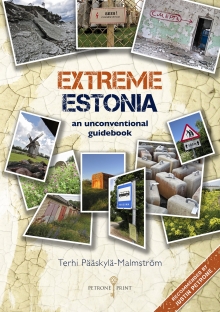
THE TERRIBLE TRUTH about the book Extreme Estonia is that I didn’t take it very seriously when it landed on my so-called desk. I was too biased, too doubtful, because the word “extreme” to me carried with it unwritten references to tattoos, piercings, snowboarding events sponsored by fast food companies, and bungee jumping.

And the pathetic thing about Estonia is that so much of it is not extreme in any way. There’s nothing particularly extreme about gazing at some fluffy white sheep under some fluffy white clouds on Saaremaa, is there, unless you happen to contract Lyme disease while doing it. Honestly, I almost fell asleep when I wrote about Saaremaa for Minu Eesti 2, because it was just such a relaxing place. But fortunately the extreme in Extreme Estonia refers more to the idea of being remote, outermost, farthest removed, and in this sense it is a very credible title for such an interesting book.

What Terhi Pääskyla-Malström does in Extreme Estonia is take readers to the extremities of this intriguing northern land. And what one learns while flipping through these 192 pages, is that there is a hell of a lot to experience up here. Sure, I have been to Haapsalu and to Narva and to Võru and to Pärnu, but I haven’t managed to get out to the Pakri Islands (and I probably never will). And given the pace of the book, the terrain covered, and the author’s wonderful sense of humor, one gets the sense that he or she has hitched a ride with Terhi and is finally going to all of those distant-feeling places, locations and settings I would bet that many Estonians have not even visited.

My favorite section of this book dealt with humorous place names in Estonia. Feel  a sudden urge to visit Urge? Mustvee? Of course, we must! And why not say “I do” in Aidu? Good old Terhi! She’s a tremendously sympathetic writer. She can be honest and sarcastic at the same time, and her buoyant  and informative text obliterated any doubts I had about this book. Doubt. It’s a peril that all writers face, that irritating question of who are you and why do you have any business writing a book about anything? Many readers ask authors this question, and the authors restrain themselves from answering back, “Well, if you have such doubts about my abilities, why don’t you go write a book yourself?”

But maybe Terhi doesn’t have these doubts. She seems like a courageous person, and her book inspired me to be more courageous too. Get out a bit more. See Estonia, see the world. Time to set away the laptop and trek out to that remotest, farthest removed, outermost point. And don’t forget to take along your copy of Extreme Estonia.

daddy, why can’t you just get a normal job?

A normal job.
A normal job.

LIKE MANY PEOPLE when I reached my late teens I made some big decisions based on a few loosely connected concepts that continue to track me to the present day. I was good at writing and could do it quickly and did not care for an academic major like psychology or anthropology. The way I saw it, journalism was practical, just a craft, like being an electrician or a mechanic. It was a job that needed to be done and I had some of the right skills to do it.

There were a few hints along the way that our lives as journalists might diverge from the college-educated mainstream though. “Don’t expect to get rich from this job,” one professor said. “You’ll meet a lot of alcoholics in this business,” another confessed. “Everyone has heard about the reporter who comes back to the office after a long day on the job, pulls out the whiskey, and gets to work, and I am here to tell you, it’s true.” To me, as a 19-year-old kid who liked to drink on the weekends, journalism seemed to promise everything I could ever want — a life spent writing, a career path lubricated by liquor, and, most of all, limited responsibility. It was the perfect job for the drifter at heart, and that was me.

Yet somehow I got settled. I meandered over to the other side of the world only to fall in love with a woman. Then we got married and have had three children and acquired real estate. And all the while I was writing. I got so used to writing that I started to write even when I wasn’t getting paid. I started one blog and another and then I started this one. My poor children have grown up watching their father stare at a small rectangular screen, sometimes even in awe of the speed in which letters sprout up across it. But they hate it too. They wish they had a father who went to work somewhere and then returned from that place. Or better yet, someone who does something physical, who produces something other than content.

My eldest daughter’s friend has a boat mechanic for a father. I’ve never seen him in action, but I imagine that he is walking around a lot with tools in his hands and perhaps rubbing his forehead from time to time when a particularly ugly job comes in. “It’s a damn shame what salt water does to good vessels,” he has a habit of saying. “It just destroys them.” “The wiring?” I ask. He nods. “The wiring. Everything.” Sometimes he goes to training courses in New Hampshire to learn about lake boating and kick it with other boat mechanics. The kids come too and they stop at the aquarium in Mystic, Connecticut, along the way. It all seems very nice.

My daughter senses this niceness too, which is why the other day while I was checking my email in the car she said, “Daddy, why can’t you just get a normal job?”

“A normal job?” I set down my device. “But being a journalist is a normal job.”

“No, it isn’t.”

“It isn’t?”

“No.”

“Well, what kind of job do you think I should get?”

“Why not be a boat mechanic?” she said and shrugged. “Jenny’s dad does that. He seems to like it.”

A boat mechanic? I thought. Only on the North Fork. Anywhere else and your kid would ask you to be a doctor or a restaurant owner. But on the North Fork, ask a child for a career option and she’s bound to mention something to do with boats or vineyards. And it’s not just Jenny’s Dad. Angie’s parents run a dock-building business. And Nate’s dad owns a berry farm.

“But I didn’t go to school to become a boat mechanic,” I said. “I went to school to become a journalist.”

“Are you serious? They actually have schools for that?”

“They do. And I don’t think I’d be a very good boat mechanic anyway. I’d probably screw the boats up more. They’d sink.”

She thought for a moment. “Yeah, you probably would,” she said. “But maybe you could try and write a little bit less sometimes. Okay Daddy?”

“Okay,” I said. “I’ll try.”

welcome to greenport in summer, man

Who are these people?
Spending G’s

FORGIVE ME if I have forgotten what the on season in Greenport is like. There are vague memories, yes, faint stains of motorcycles and convertibles humming down Front Street with pop music drifting through the air, “‘Cause we’ll never be royals {royals} …”

There were lines in those days, lines at the cafes and in the supermarkets, and just on the streets everywhere. It was hard to walk down the sidewalks, because the other pedestrians didn’t seem to know where they were going, and they’d just drift along as if lost in a bit of fog or a dream.

And you couldn’t drive through town without almost knocking down an aloof couple that looked like Mr. and Mrs. Howell from Gilligan’s Island, stepping by accident into the street beside the maritime supplies store, as if all of Greenport was their own private yacht. They had all come from somewhere to here, but from where and for what purpose?

In the off season, there was no one on Front Street on the January Monday mornings, and I was the only other soul beside the shivering postman and icy police officer, sipping his hot coffee next to his car as the reassuring steam curled up and into the air. You learned how to dress like a North Forker, too, not like the on season crowd, but with the correct amount of neglect in the wardrobe. At first, you dressed down just to blend in, but soon enough your clothes were dirty from some automotive or domestic mishap, and you didn’t bother to shave anymore, and imagined yourself as a tough and able Nantucket whaler. You would walk out to the end of the main pier in the wind and stare at Shelter Island and stay for as long as you could until the weather sent you running for Aldo’s Coffeehouse’s womb-like warmth.

There were few truly good-looking people in Greenport in winter, most of them haggard and some just above the poverty line. So when the good-looking, well-dressed people started showing up and spending G’s, I began to sense that something was amiss. In a place where flannel never went out of style, what to make of that couple in form-fitting athletic clothes rollerblading down the street? And did you hear, they had British accents?

Something is happening in Greenport. It’s changing. Restaurants that were closed for months are now open and busy. Beautiful people sit around the patio tables, looking as if they are somewhere special, somewhere to be seen. Beyond them, crowds of youths prowl about with cool green growlers from the brewery. Should I think of them as fools, or welcome their cash injections into the local economy? The latter seems to be the local sentiment. On the main road, the children of East Marion are selling lemonade. Southold residents are dragging old furniture out on their lawns and asking top dollar for these East End vintage antiques. Soon the local berry farm will begin charging “tourist prices” — $10 for a jar of authentic North Fork blackberry jam, with all of that just folks country, melted-in, mmm-mmm-mmm goodness.

[This isn’t just your average, run-of-the-mill blackberry jam. Oh no. This jam is from the North Fork.]

It’s enough to make a man scream when someone who looks like somebody from Hollywood goes strolling down the street walking a tiny dog and eating ice cream. At the cozy corner nook in the village between the Georgian-owned cafe where they sell the tasty khatchapuri and the Turkish-owned liquor store where I am fond of idling away my time and restocking my Bedell 2010 First Crush red table wine — which only costs $20 — I asked David, who has always lived here, about the swarms of savage strangers.

“David, what the hell is going on?”

“What do you mean, man?”

“There are all of these well-dressed people here this week. They look good and have nice clothes. They can’t be from around here.”

“Oh, you mean the yuppies? Welcome to Greenport in summer, man.”

“But it’s not summer. It’s still May.”

“Memorial Day weekend. That’s what kicks it off.”

“It’s crazy.”

“What is?”

“I saw a couple bicycling through town this morning. They were wearing matching fanny packs.”

“But that’s just how it is, man. And believe me, it’s only going to get worse.”

And maybe it has. David is suddenly clean shaven and wearing a collared shirt. And I am too. It’s Greenport in summer. Gotta stuff the local scruff.

the tuesday afternoon dildo club

Just another letter from the swinging East End.

IN A COFFEEHOUSE on Front Street in Greenport, a group of ladies gathers every Tuesday to share and gossip. Some are younger, others older, some thinner, others larger. But they are loud. The round table in the front of the building seems to spin round and quake with nervous energy and laughter, and the conversation themes usually drift from polite updates on personal lives and real estate to down and dirty girl talk, and you’ll find your ears prick up each time an out of context word like “dildo” penetrates the otherwise mild and old-timey atmosphere of bean roasting smoke and recorded Italian folk singers.

I pretend not to listen to them as I work, but I cannot help but eavesdrop. I measure my own manhood in counterpoint to their strident womanhood, and this gives me great sadness. It seems that so many men and women define each other by gender. They cannot see past this very important dividing line. It envelopes all. The Tuesday afternoon dildo club issues bold communiques like, “But that’s men, they want to control you, they want to isolate you, my ex-husband was just like that.” When a woman’s husband actually entered the cafe to say hi, the gatherers adopted a faux friendliness of “Hi there you!” and pecks on the cheek that vanished the second he was out the door, followed by the telling postmortem, “Why do men feel like they need to do that? Intrude?”

The last confab of the Tuesday afternoon dildo club led me into even more peculiar territory. Someone mentioned Orient, the village where we live, and another person brought up all the “swinging” that goes on in Orient. Swinging? I paid swift notice. As in Swinging London?

“And it’s not just couples, it’s marrieds,” the first woman gushed.

“Really, marrieds, too?!” A second woman half-asked, half-gasped.

“Yeah, it’s huge out there,” the first one said, “not that I know from experience. I have just heard. And also on Shelter Island. And also Sag Harbor,” she said.

“Yes, yes, swinging is huge in Sag Harbor,” a third woman agreed, touching her chest to connote integrity and honesty, as if she knew even better than the first woman about Sag Harbor’s wild key parties. I imagined the nice young Latina cashier I saw at the deli in Sag Harbor, and the gentleman with the scarf and the Jack Kerouac glasses. Were they in on it too? So many things were going on around me and I had been oblivious all this time.

“Will you quiet down,” the first one said, “you are disturbing people. He’s trying to work.”

“No he’s not, he’s listening to us,” the second woman said. I cocked an eyebrow at the revelers seeking some acknowledgement of my humanity, our shared asexual existence, but one never came. Only more locker room talk and vibrant outbursts and chocolate dusted cappuccinos and rubbery pounding of fists on the table. To quote Monty Python, there was much rejoicing.

a true east end conundrum

A SNOW STORM! Some even say a “polar vortex.” Yes, it is cold out there, but people from colder climes with whom I am domiciled are laughing at you America, “You call it a vortex, we call it January!” There is panic, danger is afoot. In the Orient Post Office, the lady from Peconic informs, “I drove 20 miles per hour, all the way out here.” Heads shake. Disbelief! The causeway is cause for concern, with invisible sea on either side. There are many accidents, and even your tank-like Town and Country is no match for the slushy wushy. It trips up the breaks and you pull into the neighbor’s front yard all astonished.

In the evening, among the sheets white coming down, snowflakes so fine that you can only see them in the lantern lights, a call is received. “This is a message from Superintendent So-and-So,” says a voice over a crackly connection. “School for [RANDOM DATE INSERTED HERE] has been cancelled.” What the? I knew it was a bad storm, but can’t they just clean the roads? There aren’t many kids out here in this nape of the way, neck of the land, and there are only two school buses. But then I recalled that Superintendent So-and-So and Principal Who’s-it-What’s-it live on the SOUTH FORK. They ride the Shelter Island ferries to work. This must be the reason! The South Forkers can’t get to work, and no Southies equals no Schoolie.

It’s a true East End conundrum. Up island, the transit is between places on a map — the depot of home improvements, the authority of sports, but out here, down island, these places on the map are surrounded by water — Shelter Island, Robins Island, Gardiners Island. These are the American maritimes. To the east lies Plum Island and Fishers Island and Great Gull Island, and then there is Block Island and farther beyond you encounter those tasty Wampanoag names, Cuttyhunk, Penikese, Nashawena, and then even farther on, the gay bluffs of Aquinnah. Ferries matter out here among the trees and seasonal seafood restaurants. They matter.

But they never stopped running. The supermarket in Greenport is one of few stores open the following day, and the lady who talks all the time has made it to work. She lives on Shelter Island {“You know, not everybody on Shelter Island is rich” she said once while bagging my provisions} and today she is ever as blabberful, with the old-timey, “I remember the California oil spill back in ’64, remember that?”} “I’m surprised to see you here,” I said. “I thought they cancelled the  ferries.” “No, the ferries never stop running,” she says. “Only if you get a moon tide or something will they cancel the ferries, but not last night.” “But they cancelled school. I figured they cancelled the schools because the ferries weren’t running.” “Oh no,” a wise-old chortle. “They cancelled school because they are afraid of lawsuits. If someone gets in an accident on the way to school, then the district is liable.” “You can really sue district for that?” “Sure, because the district ‘made them’ come in in such awful conditions.” “In this state you really feel the law on your neck all the time, huh.” “It’s the land of lawyers, all right,” she belly laughs. “Credit or Debit?”

what i meant to say was merry christmas

“BIG UP TO YOUR MAN,” said one US Post Office client to the other. “Thank you,” the other client responded from beneath the awnings of her black monkish raincoat. Her voice was gentle and yet restrained and I could see that she had yellow hair and blue eyes, and clean, unmanicured hands, but that’s all I could see. “Yeah, I saw that in The New Yorker‘s ‘Must See’ last week,” said the first one. When she dropped The New Yorker  just like that, before these eyes, I did move closer, to bask at arm’s length in such radiant cosmopolitan awe-some-nim-i-ty. She was a lean client, toward the end of the first half of her projected lifespan, I guessed. American in accent, Anglo in features,  in figure, in husband. Curly in hair. She wore black rubber boots that had a smidgen of tan mud on them. “Nigel’s English, you know,” she said,  “so we’re planning on having a traditional English Christmas out here before we go back to Manhattan.”

She fumbled with her USPO package, troubled by the flaps, the creases, and I offered to help her, but what I really wanted to say was, “You read The New Yorker and know people who appear in it, who are spending their holiday right here, in this town? Why, I’d love to be in The New Yorker, too. A must see. I’ve got some great manuscripts at home, and you know, I’m big in Estonia.” “Estonia?” “That’s right, they just love me over there. Well, some of them at least. Anyway, introduce me to your society friends, I need a book contract, right now. Got ’em all pipelined up — Montreal Demons. Christelle. My Estonia 3. That Italian book I’ve been tinkering with for years. Look, you’ve got to help me. I’m getting spent out of this town. Heh. So is everybody else who isn’t ultra-ri … Oh, excuse me, I didn’t mean that at all, what I meant to say was, Merry Christmas. Do you know Gay Talese?”

Actually, what I said was, “Can I help you with your package?” And she said, “No, thanks, it wouldn’t be much help anyway. I have about ten more to send. Ha ha.” And I said, “Ha ha,” too. That was all. I guess I looked as local as she looked unlocal. The messy stubbly unshaven face, the tan jacket with the dirt on it from crawling beneath the Christmas tree before I sawed it down, the frayed cuffs of my aged jeans. I looked about as ready to greet New Yorker society as I did to greet the pilgrims on Saint Peter’s Square. I looked like one of the old timers who hang out here in the country store and swap stories about wild turkeys and deer. You know, the ones who live here all year round. So I got my packages from the postal worker and was on my way. “Oh well,” I thought and sighed as I stepped out the door. “File under ‘Missed Opportunities.'”

south fork

THE SOUTH FORK is very close to the North Fork of Long Island. From Orient Beach State Park, you can look out over the moving waters and see its sands and trees, and sometimes you can see boats sailing along its coast. But one glimpse in the free, weekly Dan’s Papers will remind you of how very far away the South Fork is. Southampton resident Howard Stern is holding a birthday party. Amagansett’s Matthew Broderick is filming in New Mexico. East Hamptoner Alec Baldwin will be contributing money for a new children’s addition of the East Hampton Library. {And wouldn’t it be great if he had his own story hour?}

My fondness for Dan’s Papers‘ people column {“Montauk’s own Ralph Lauren …”} had given me the false impression that I operated within the same tier of existence as these notables, just because we happened to be within close physical proximity to each other. I even boasted about it as we drove north from Bridgehampton to the Children’s Museum of the East End. “Do you think they have a cafe there?” asked Epp. “OF COURSE!” I really did exclaim. “It’s the Children’s Museum of the East End! Don’t you think Paul McCartney needs access to a cappuccino when he takes his daughter there?!” “He has a young daughter?” “OF COURSE! Oh, man, you really need to read Dan’s Papers more often.”

The Children’s Museum of the East End is a fine place. Cozier and cheerier and more colorful than the Long Island Children’s Museum, with a touch of Stockholm’s Junibacken about it. I saw a pretty Shinnecock woman wearing feathers in her ears, and two Latin mamas speaking español, and a freckly lady calling out to her sons in a CNN-worthy American accent, “Giuseppe! Alessandro! Come here!” And yet Paul McCartney wasn’t there. Nor was his daughter. And there was no cafe serving frothy cappuccinos. Just some vending machines dispensing veggie sticks and organic milk.