I’VE BEEN WAITING to write about this new Metslind record, because I am not sure how to approach it. In the early morning hours, as I began slurping down my first coffee of the day, I still had the somewhat jangly sounds of her guitar ringing between my ears. “She’s like The Smiths crossed with Fleetwood Mac,” I think. “As if Morrissey and Stevie Nicks had a baby.” Then I am somewhat terrified of the idea of a child with Morrissey’s face and Stevie Nicks’ hair and body. I don’t want anyone else to have that image pop into their heads. But maybe if Johnny Marr and Christine McVie had collaborated on an album in Estonian it might have sounded like this one. Maybe, but not really. Metslind is her own phenomenon. It’s a pitfall of Western and Estonian journalists alike that we look for these equivalents. Estonia must have its own Elvis, its own Michael Jackson, and its own Nokia, but there is only one Metslind. Not everything can be translated over.
Metslind’s record is two EPs combined. It arrived to me by Smartpost more than a month ago. I now have it on vinyl, but I gave my record player away, because it wasn’t very good. So now I just have an LP I cannot play. The album though is a kind of shrine, a shrine to the record player I will someday acquire. Then I will be able to play the album as intended. I will wake up and listen to Metslind at 7 am. In the meantime, I will listen to its conjoined EPs on Spotify. One is called Ole, lihtsalt ole (Be, just be) and the other one is called Hull (Crazy). The song titles paint a somber image. Other than the title tracks, there’s “Valu, Sa Oled Mul Jalus” (“Pain, You’re in My Way”), “Ära Sõdi” (“Don’t Fight”), and “Päris Inimesed” (“Real People”), along with “Rabalumm” (“Bog Enchantment”). There’s also “Tahan Olla Hea” (“I Want to Be Good”), “Ma Ei Tea Mis Saab” (“I Don’t Know What Will Happen”), “Mina Võin Ja Sina Võid Ka” (“I Can and So Can You”) and one more called “Elupuu Elab Mind Üle” (“The Tree of Life Will Outlive Me”).
This last title is the most puzzling one. Elupuu in Estonian refers to evergreens, but in my mind the name conjures up Yggdrasil, the tree of life in Norse mythology and the world tree of Estonian and Finnish mythology, which has stars in its branches and snakes at its roots. According to Metslind, the lyrics toy with Estonian trees like the evergreen (elupuu) and aspen (haavapuu, literally “wound tree”). “In the song, the Tree of Life outlives me,” says Metslind, “and the Wound Tree heals before I do. I say that it’s so good that I am no longer so young and that I don’t know what awaits me in life, though of course I would like to be younger and I would like to know what will happen. It’s about trying to have faith in the way things are.”
This is the Metslind musical universe. It’s a world of bogs, trees, and introspection. Her pop-infused indie guitar rock is expressed in dreamy tapestries of haunting vocals and layers of carefully selected sounds, but masks a kind of slow-burning inner torment.
Girl with guitar, photo by David Evardone
According to Metslind, whose family calls her Maarja, a lot of this music came out of her separation from her long-time partner. In fact, “Hull” is about playing dumb when people would ask her uncomfortable questions about the split. “I started to give strange answers to their questions, so they wouldn’t know what to say or ask me about it anymore,” she says.
To this I have to agree. There are never satisfying answers to explain away life’s irrationality.
Metslind is fond of her name, which means “Wild Bird” in Estonian. “Every bird has its own song,” she says. “And I like it when a performer has a different name. They can be a different person.” Maarja also happens to be the name of a singer in Estonia, one that is trademarked.
But Maarja didn’t want to just be another singer named Maarja. Her Metslind persona was born. When she is not on stage, she is a music teacher, mostly of voice with some guitar teaching. She started attending music school at the age of seven in Kohila, and at her own instigation. Her family has supported her music, for which she considers herself lucky.
Other than the emotional tumult that led to sings like Ära Sõdi, which literally means “Don’t Wage War” and only coincidentally came out when the Ukrainian-Russian War intensified, Metslind is also somewhat unique in that she has chosen to sing in Estonian, rather than try to approach the international market with English-language songs. In fact, she used to write and compose her songs in English, but an encounter with Estonian musician Vaiko Eplik, who like Metslind is from Rapla, a town in North Estonia, encouraged her to switch back.
“You know, I have always listened to a lot of English-language music and singer songwriters,” she says. “I didn’t have a plan to write in Estonian, but then these songs just started to come.”
I would say it’s a welcome addition to the world of Estonian music. While listening to this record, I started to think about where Estonians listen to music, or where I hear Estonian music. Estonian-language music is played sometimes in major supermarkets, so that Estonian songs remind me of perusing produce, looking for good quality bell peppers. Estonian music is played at summer festivals, so that Estonian songs remind me of sitting outside in some amphitheater. And Estonian music is played during family get-togethers. So Estonian music reminds me of grilling šašlõkk while Kihnu Virve and Anne Veski’s golden hits are played.
Solitary songsmith. Photo by Meeli Viljaste.
Metslind’s music is not the soundtrack for supermarkets, summer festivals, or grilling šašlõkk. It’s more for long walks alone while you are trying to sort out various unresolved past issues. That, at least, was my experience of it. I don’t have a favorite song on the record, but I remember liking “Rabalumm” the most on the first listen. A good bog is medicine to the heart.
She herself mentions Joni Mitchell when asked about her approach. She uses Joni’s Open D tuning on her semi-acoustic Ibanez, which is as much a part of her look as her whiteblonde hair. She plays it with a chorus pedal which gives it that lovely atmospheric sound that almost reminds one of Peter Buck from REM. These are my own musical references, so bear with me.
The album was recorded in the studio at Linnahall in Tallinn, a sprawling stone monster of a building once called the VI Lenin Palace of Culture that was constructed for the 1980 Olympic Games (which the US boycotted on account of the then recent Soviet Invasion of Afghanistan).
“This is one of the last things that’s still functioning in that ruined old building,” says Metslind.
Metslind is an admirable character, I must conclude. She composes, she performs, she travels the roads with her Ibanez. She sings of the Tree of Life, bogs, and heartbreak. I find her to be an honest, direct artist. The Estonian word is siiras, but it doesn’t have an exact English-language equivalent either. And she will continue. “It would make more sense not to be a musician,” she says, “and I have tried many times to not be one. But when I tried, I started this new project That I called Metslind. What else can you do when your heart starts to sing?”
WHAT IS WRONG with the youth of today? The world’s on fire, the clock is ticking, and Tomás del Real is hanging in backyards from Canada to Estonia, tinkering with his guitar, jamming with fellow travelers and otherwise observing the downfall of civilization coolly from behind his sunglasses. Even the cover photograph for his single “Prólogo,” released last August, shows the chill Chilean in media res, as if he was caught off guard while he was contemplating something more profound. He looks like a Latin Sigmund Freud, I think, one who just survived a natural disaster because there are broken couches around. Maybe that’s exactly who he is.
It’s the end of the world as we know it, but Tomás feels mostly fine.The cover to the album’s single ‘Prólogo.‘
While listening to the entirety of the album Notas Rotas, I hear many interesting things. Released in the dreariest days of late November, it has a warmth to it. The opening song “Prólogo” is a burst of warm air, propelled by the violin of Alan Mackie and flute of Katariina Tirmaste. Right up front, this record promises something that food critics might call fusion cuisine. There’s del Real’s contemplative, Tropicalia-laced meditative poetry and innovative melodies coupled with what sound like North American and Estonian influences and driven forward by a thunderstorm rhythm section of percussionists Magnus Heebøll Jacobsen and Steven Foster: the former from Denmark and the latter du Canada.
On the cover of the album, they all look like a bunch of farmers who took some time off from the harvest to fashion 10 incredible songs, and then went back to messing around with a tractor or something. But there was a method to this folk madness for del Real is the consummate artiste.
The album cover. From left to right, del Real, Foster, Mackie, Tirmaste, and Heebøll Jacobsen.
“In every album, we try to shape and find the reason and the language in which the songs exist,” remarks del Real. “There were a couple of musical languages that were present in the picture.” In the case of ‘Prólogo,’ Alan Mackie, who also played bass on the record, was a co-composer and co-producer of the single, as he was on many of the album’s songs, bringing along his own sentiment (Mackie is from Prince Edward Island). In combining with del Real’s own Latin American folk, they have created a blend of music they jokingly refer to as LatinAmericana. But there are Old World influences too.
“There are a lot of European folk influences, such as Eastern European uneven time signatures,” says del Real, “which we tried to implement in a very organic way, and some Scandinavian influences, both in the percussion and in different colours in the instrumentation and arrangement.”
While del Real wrote the songs on the album and the record is credited to his solo project, it is very much an ensemble effort and grew out of an ongoing collaboration with Mackie and Tirmaste. Mackie and del Real even hit the road and toured Asia at the beginning of their co-sojourn, with dates in Japan, Taiwan, and South Korea. “I had a bunch of songs waiting to be something and we decided that could be a good place to try them out,” says del Real. “From that experience we started to shape where the sound was going and it felt very natural to start working on this.”
Katariina Tirmaste was “another fundamental pillar” in the creation of Notas Rotas, helping to flesh out the compositions and to arrange them. Del Real credits her as a “creative and emotional performer,” one of who provided sensitive, flexible parts to the different songs that eventually made up the new record. “She’s incredibly versatile and also without taking up more space than needed, which is a very humble and Estonian approach in my opinion,” he says.
LatinAmericanaEstoniana on stage: Mackie, del Real, and Tirmaste.
The record itself was put down in home studios in Toronto, the south of France, the west coast of Sweden, not to mention a multitude of closets in apartments in Estonia. From this pastiche of on-the-fly audio recordings, a sound engineer of fortune called Jorge Fortune in Patagonia mastered the sonic tapestry of Notas Rotas, which is that rare record that sounds good whether it’s been played in the car, through headphones, or on your smartphone.
I know because I have tried listening to it in all three environments. These recordings hold up.
Del Real I have known as a musician for years and have attended his shows, including some with Tirmaste and Mackie. While I hesitate to say anything about his songcraft, I can say that some of the melodies on this album challenged me and required multiple listens to fully digest, which for me, as a listener, is the mark of the very best music. Having a minimal knowledge of Spanish, even after years of instruction in high school, his lyrical intent remains a mystery to me. In his own words, it reflected the transient nature of his life as he moved around as well as the emotional winds blowing through. “It had a lot of reflections around inconclusive situations, self-awareness, letting go, and letting life take its course,” del Real says.
He was also demoing the material on the road and in front of his fellow musicians, which took him out of the more introverted, isolated settings that fueled the creation of his last album, Principios de Declaración. Solo albums can be complicated territory for any musician, though del Real is a singer songwriter and thus a solo artist by default. With Notas Rotas I am reminded of David Crosby’s solo outings, particularly his first venture, If I Could Only Remember My Name, recorded at the very dawn of the singer-songwriter era in 1971, which saw a whole cast of characters join Croz in the studio (there’s even a cut with Jerry Garcia and Phil Lesh of the Grateful Dead paired with Neil Young and Santana drummer Michael Shrieve).
While Croz’s musical influence might not be immediately apparent on Notas Rotas, his spiritual influence is everywhere and I think, might he have lived a little longer and heard the record, he would have approved. The kind of camaraderie that fueled Croz’s effort can be seen here, because these fellow musicians are del Real’s confidantes and he trusted them with this music.
A band apart or, for you non-Godard aficionados, a band of outsiders.
When this album was first released, del Real encouraged listeners to post their favorite songs. But what I have found upon multiple listenings is that my favorite track changes with each listen. Today, on a snowy January day, it is the sixth track, “Distracciones” with its vibrant fiddle parts. Any one of these tracks is sticky enough and interesting enough to catch a listener in its web. Perhaps “La Primera Nieve” or “The First Snow” is the most appropriate for this colder season. And then there is the finale, “Los Sueños” (which can be translated as ‘Dreams’ or ‘Visions’) which is carried along by lovely backing vocals like a ball being carried away upon the waves.
There is, whether it exists or not, and whether intended or not, a maritime fluidity to this music.
For del Real who, like the writer of this review, calls Estonia home, it was this seabound country that most manifested itself in this latest work. It found its ways into its lyrics, its melodies, its colors and moods. “Personally I think it’s very inspired by Estonia, its pace and imagery,” del Real says. He also sees in it a breakage with his past, or the path he was once on, and a fresh intimacy that he credits with producing its raw, unfiltered, and, I would add, touching result.
AT SOME MOMENT on Sunday evening I find myself in the grand hall of Viljandi’s Folk Music Center or Pärimusmuusika Ait looking for a good spot to rest a while and write. The hall is full of people, some standing, others gathering, talking and telling jokes. There are all kinds of people here, people with shaved faces and hairy chins, hippies, squares – but let’s be honest, most of them are a decade or more younger than I am. Beside the stage, three wonderfully light-haired girls are seated, one with shiny hoop earrings. I don’t know how old they are and don’t want to know. Two of them are looking at their phones, one has her head to her knees, apparently to just catch her breath. I watch them a moment more and then hoist myself up onto the edge of the stage. Every part of my body hurts: my legs, arms, back, and heart. My trustworthy satchel is wet from the rain, but my notebook is still dry. With a black pen, I begin to write. A few seconds later, a man appears before me, one with short hair and a brown sports jacket. He says he used to be my first daughter’s zoology teacher at the Viljandi Hobby School. That must have been a long time ago. His name is somewhat familiar, though I don’t recognize him. He has something in hand.
It’s a button. The kind you’d find on a jacket. There’s a trick too. There is something behind the button. This man goes around Viljandi installing these buttons on walls. When you tug the button, it pulls a piece of string behind it, and when the string goes back into the wall, the magic button plays beautiful music. “You just have to pull the button,” the man says. I don’t understand if I’m dreaming or not. I am at this moment so tired, that it all could be a hallucination. “That’s genius!” I say. The music is the same you would hear from a music box. “Why are you putting these buttons up?” I ask the man. “I wanted to bring a little more joy to the world,” he answers with a smile. Then the button man disappears into the crowds.
When the man is gone, I take some more time to unwind. The three girls are still sitting in the corner, looking half dead. It’s dark outside now. I actually have no idea what time it is, and only know, in a foggy way, that it is Sunday, which means that it’s the last day of Viljandi Folk. The concerts are still ongoing somewhere. And I promised Arno Tamm earlier that I would go see him during the final concert.
During one concert, I saw the American guitarist Jed Clark, who is from Arkansas and plays with the bluegrass band Midnight Ride, look out with tired eyes on Käevumägi, or the Well Hill, and a thousand or so beautiful people and say, “This festival is like a dream I don’t want to wake up from.” In the great hall of the Ait, I think that Jed is right. Earlier in the festival, I had a chat with him at the Green House Cafe. Jed told me in his soft Arkansas accent that Viljandi Folk was “just like paradise.”
I wasn’t so sure it was paradise. But a strange dream nonetheless.
***
“PEOPLE COME HERE from the US, from Canada, and they have a hard time believing that this is all real,” Tomás del Real, a Chilean musician, tells me the day after his concert was well received at the Jaak Johanson Stage. He performed on Saturday night, and people praised his performance the following morning. “It was all so intimate and cosy and yet so grand and so global,” some gushed to me. I had planned to go there, but somehow got lost along the way, and must admit that I don’t know exactly where I was when Tomás played that night. I allowed myself to live a little that evening and so everything from that evening has already faded into the mist. But I survived and supposedly the music was good.
“They see the lake, the castle ruins, and they think, what place is this?” Tomás continued his story. “For a festival, it’s a really great place, and the way the festival uses the surroundings, the aesthetics, are done with incredible taste. Nothing is overdone, everything is very natural, and they simply fill out the environment,” he said. Tomás is in some ways like me. A foreigner who came to Viljandi and got stuck here. Years before we came, Ruslan Trochynskyi, the trombonist from Svjata Vatra, arrived here from Ukraine and was similarly seduced. We are now like one big Folk family and not just us, who have come from abroad. Estonians have arrived here the same way. They come to Folk, go for a swim, and stay.
There is some kind of invisible pull. Even Tomás del Real, who is as clearheaded as they come, acknowledges this: “It is magnetic,” he admits.
I have of course heard criticism, that Estonian folk music is mostly fake and mostly synthetic, that the prices are too high, that this year’s Folk isn’t as good as last year’s, and so on. “These Folks are not like they used to be,” some say.
It is true that before there were fences and passes, folk was an anarchic experience and all kinds of weird people turned up in town. I called them the “zombie army” at the time, the drunks, Nazis, and rednecks. But all was permitted and the people enjoyed that anarchy. At some point, it was decided that Folk would be a bit safer and those days drew to a close. But the magic continued. Gates or no gates, the spirit of Folk cannot be contained. And the security staff are only looking for alcohol, really. They give your bag a squeeze and then wave you through with a grin. You have been examined. Go on your merry way.
I wanted to say, in response to this criticism, that whatever they have, people never seem to be satisfied with it. Something’s always missing from the picture. Unfortunately, this phenomenon is too familiar to me. I find myself on a train south, staring from a window. I think, what am I doing here in Viljandimaa? My heart is full of disappointment and melancholy. Other people, such as those from Tallinn, have said to me, “Why are you wasting your life in some hole in Estonia?”
Viljandi indeed is an odd place, one you can only reach intentionally. No one shows up here by accident. Folk does offer a lot of reasons for people to come here. It is a rich and deep event. For those who are never satisfied, I would say, take a look around. There is some value here. There is something different at least. I had these thoughts as I hid myself away in the press room in the cellar of the Pärimusmuusika Ait. Outside there was rain and thunder, and the Ait was full of soaking wet people. In the corner of the press room sat my one true love, the object of my affection. But who is this quiet girl? What’s her name?
She’s a coffee machine, naturally.
***
THERE ARE ALL KINDS of stories shared in the press room during the folk music festival. One day, after a concert by Canzoniere Grecanico Salentino, I found myself seated again beside my beloved coffee machine listening to her purr. I must acknowledge that Folk is an exhausting experience. Even after just a few hours at Folk, a person is squeezed dry. All of that noise, all of those conversations and songs. Espressos are needed for a quick pick-me-up, so that one can still walk and write. The Italian group CGS is from Puglia, the province in Italy from which my mother’s family originates. One of their songs was about love, of course. This melancholic song describes a lovestruck man who sits beneath a woman’s window night after night, until the woman closes the window. But there he continues to wait until death, so devoted is he to the woman he loves. For me, this song was somehow refreshing. I have never heard of an Estonian who would do such a thing. Estonians are too practical for that. They wouldn’t waste their time in the name of Mediterranean love. But Mediterranean love is just like that. Passionate. Full of devotion.
“But in Estonia,” I tell a colleague in the press room, “if you sat underneath that window, the woman would call the police.” “Well, yeah,” she answered. “That could be really annoying.”
“But what do Estonians do when they fall in love?” I ask. “Does someone gift the other some potatoes? Or a bucket full of chanterelles?”
“No, no, they just enjoy their time together,” the woman explained.
“So that they are in the forest somewhere and one says to the other, ‘Nice day, isn’t it?’ Is that how they do it?”
The woman looked at me with her clear blue eyes. “If it’s love, then there’s no need to talk. You just have to feel it.” Simple. So, sitting underneath someone’s window isn’t especially welcome here in Estonia. But I have definitely wanted to sit beneath some women’s windows, at least a few times, whether I am allowed to or not.
***
LOVE WASN’T THE ONLY SUBJECT haunting me at Folk. Another was age, certainly. Not that I really needed to think about age so badly, but when most of the people around you are at least 20 years younger than you at least, and three of them are your own daughters, then it comes to mind. At some moment, Uncle Justin wound up in the company of some young ladies in their early-twenties and forgot for a while whether he was a responsible parent or just another one of the pack. So I went along with them. It was a good feeling. I started to feel like one of those older Beatniks, like the poet Allen Ginsberg or wild man Neal Cassady, when they joined forces with the young hippies of the 1960s. If things are moving in that direction, then why not go with it? Why not? Beautiful kids with beautiful eyes. Students who aren’t yet jaded or embittered. They still have hope. They go to sleep listening to music. They don’t make the sarcastic jokes of our generation. With them I am gentler, I listen more, and I’m supportive.
As I told a friend at Folk, we are some kind of bridge generation. There are those important icons from the days of the Singing Revolution: Mart Laar, Edgar Savisaar, Siim Kallas, Tiit Vähi, and the others. And then there are these fresh young people who know nothing about that era and for whom it’s all just history. We are in between them, people like Margus Tsahkna or Jüri Ratas, who were both at Folk. We know where the bodies are buried, metaphorically, but we don’t want to share that information with the kids. Let them enjoy their youth. Let them run around holding hands when it’s raining and the Zetod are rocking. When someone comes by and reaches out, we take their hand in ours and run along together.
The Puuluup concert was a truly strange sight though. Their music is one that really does haunt you. The Hiiu kannel has the kind of sound that makes it hard to determine where it’s coming from. It sounds as if someone is playing with time. If I could ever play the sky and the clouds, it might just sound like the sound of a Hiiu kannel. There were so many people at the concert, it looked like a sea or bubbling soup. I watched and listened. Afterwards, I arrived at the idea that I no longer had an age. Age was just a number. But I felt in that moment, standing on that hilltop looking down, that I was more like some kind of Hindu deity. The embodiment of Shiva or Kali. Even when I was a child I knew it. The world told me what my age was, but inside myself I couldn’t tell the difference whether I was three or four years old.
“I don’t feel old,” said the American folk musician David Crosby shortly before his death last year. “I feel the same way I have always felt. It’s just my body that has aged.”
I was and I am.
When Midnight Ride played on Kaevumägi, they called themselves the sons of Bill Monroe and Earl Scruggs. But I thought instead that nobody is actually the son of anybody. There is no before and there is no after. Music doesn’t age, just like souls do not age. Music is undying, as they say and exists at all times. All you have to do is to play it. I exist. In this way, we are all like music, undying, immortal. These were the thoughts I had during the Puuluup concert.
***
A DAY AFTER THE CONCERT, I met up with Ramo Teder, half of Puuluup, who with his long white hair looks like he could be the managing director of Santa Claus’ elf toy factory at the North Pole. Maybe because he lived in Finland for so many years. Ramo is actually from Viljandi. On social media, one can see a photo of Ramo when he was a punk at the end of the 1980s. He looks quite stylish, a combination of Johnny Rotten and Wolfgang Amadeus Mozart. Puuluup is certainly not a punk group. There’s no “Anarchy in the UK” here, or in Estonia for that matter. But Ramo discussed how punk had influenced the ideas behind Puuluup.
“The idea that you have to overcome boundaries,” he said. The idea that all archetypes are tossed out the window. Estonian punk was different from American or British punk. Estonian punks were more like intellectuals. Most of the people in the Estonian SSR were standard issue. They wore the same clothes and had the same hairstyles. That some young man was walking around Viljandi with such hair was against the system. Hair, in this way, can be dangerous. There he now stands on stage, with a kannel in hand, age 53, singing about small birch trees. He also belongs to the tribe. Ramo is another brick in the Folk castle.
After the interview with Ramo, I found myself at the Eesti Etno concert. There were all kinds of musicians there, and they looked so happy. Were they too happy? I was dealing that week with the death of a high school friend. News about a friend’s suicide arrives slowly, even nowadays. Nobody talks about it on social media, only when you are famous. It took time to understand why this 43-year-old man had died “tragically and unexpectedly” as it said in a news article. But I eventually found out. So those Eesti Etno singers were singing and I was thinking about death and suicide.
One song did lift my mood. A young Indian was singing and the other sang along with him. At that point, I couldn’t really believe what I was seeing. Their clothes were so colorful. The music was so good. As sweet and satisfying as a mango lassi. It all looked like some kind of pajama party or Indian cult. Maybe some ashram had come to Estonia? Anyway, that was the right song for me at that moment, a person who was destabilized. Tragedy is like a little black cloud that follows you around everywhere. A song can help. Music can save lives. I would have liked to save my friend’s life the same way.
One night on the First Cherry Hill, as it is called, I thought I saw him, standing beneath a tree. But it was someone else.
***
DURING THE FESTIVAL, it becomes difficult to put one’s thoughts together. Looking through my notebook, I can find these kinds of scattered sentences and half-memories. “I left my journal in the press room, but Peeter the Estonian Swede came after me to tell me, and I ran back to get it, because my journal is full of kompromat that could make my life really difficult.” Or, “Some pharmacist from Tartu came up to me and started to talk about Paavo Matsin.” And, “Lauri Räpp was talking about resilience.”
The days melted together. There were a lot of concerts, for sure. The Italians. The Mexicans. The 6hunesseq-ians. Now that was a powerful concert, held in St. John’s Church at midnight. I fell asleep multiple times, because I was so tired, but the music was soft, warm, and enveloping, like a comfortable blanket. The musicians were out of view, because they were on the second floor, where the church’s orel is located. After they came down and people applauded. I guess I went home after that. I don’t quite remember. My friend found a rabbit in a park in Viljandi around the same time and took it into her tent. Later, she found the rabbit’s owner. These kinds of things happen during Folk. The mind no longer works. There is too much information, too much stimulation.
Then one day I met a man who told me that Lennart Meri’s book Silver White is the Bible of the Estonians, and how the Estonians, or rather the Baltic Finns, are very special people, and how Meri, Uku Masing, and Valdur Mikita had written “philosophical diamonds!” The man is working with a project called Valge Laev, or White Ship, to develop the higher intellect of the Baltic Finns. “But if the Estonians are so smart,” I told him, “then why do you need me for your project?” “Because you can help us bring it to the wider world!” came the answer. He had a fur hat and a green shirt. A beard. Sparkling blue eyes. Like a photo from the collection of Johannes Pääsuke. The green shirt was inside out. Of course, I agreed to help. When the Land of Mary calls you, you heed that call.
The following morning I have a slight hangover, because I thought the prior evening that I would allow myself to live a little. I asked myself, what would your favorite writer Scott Fitzgerald do if he was at Viljandi Folk? The answer arrived at once: start drinking wine! Life is for living! That night I wound up at the Untsakad concert at midnight. This was really like Anarchy in Estonia. I have never seen so many happy young people before. Untsakad are old men. They played at the first festival 31 years ago. But their fans are teenagers, or at university. I’m not sure what’s the attraction. Waltzes? Polkas? I like the Mexican band Kumbia Boruka more. They brought every cell in their bodies alive with their rhythms. They also appealed to writer Gert Kiiler, who said they reminded him of the show Miami Vice. “You know, they always have that kind of music playing somewhere in the background.” My friend, a Tallinn businesswoman who attends Folk regularly, recalled how she once had Don Johnson’s picture in her bathroom, so she could see him while she was taking a shower.
But Untsakad won over people’s hearts in the end. Even my 17-year-old daughter awoke the next morning and started to sing the “The Forest Brothers’ Song.” Ai-tsih, ai-tsah, ai velled, me metsavennad oleme! Which means something like, “we are the forest brothers, we are.” It really got inside her. For her the experience was also something like a dream. I received her rendition joyfully. “You’re a good forest brother’s daughter,” I thought, “even if your father is not a forest brother.”
***
SOME PEOPLE COME and go during Folk, but then there are people like me who are folk soldiers and stay until the last concert. We gather in the rain as Ando and Friends sing. Ando Kiviberg is the founder of Folk and the festival usually falls on his birthday. This year, he’s 55! Ando and Friends is some kind of variety show. Every kind of band performs there. The man himself is a Leo, naturally. He is the king of the jungle. There he is with his fuzzy face in his white suit and white hat, looking like some kind of Latin American drug dealer. He plays the bass and sings along. It’s nice to see the king in his element. The leader role suits him well. Ando is neither arrogant nor pretentious. He doesn’t think that he’s better than the others, no. But still they come, like small house cats, with their offerings to the Great Lion! Neither dead birds or mice, but songs. Silver Sepp has taken Tony Rennis’ 1962 Italian pop song, “Quando, Quando, Quando,” and made it over. The song’s new name is “Ando, Ando, Ando.”
At some moment, I get tired of all those bagpipes and fiddles and go to the other side of the Second Cherry Hill. There I stand beneath an umbrella and put on my headphones. I’d like to hear a little Led Zeppelin now. I am done with all of this folk music! I’d rather listen to “When the Levee Breaks.” To my surprise, these two things suit each other surprisingly well. I look up at the big screen and see Ando singing. But instead I hear Robert Plant’s voice. Ando is singing, “Crying won’t help you, praying won’t do you no good!” It’s still raining. We are all soaked. Soon the levee really will break. An incredible combination. Ando and Zeppelin. My own levee really has broken. Then I realize that I have really lost it by now. I march over to the Ait. I look for a comfortable corner inside where a burned out writer can relax a little. Then that stranger appears with his magic button in hand. The three girls are in the corner and I am sitting on the edge of the stage. The man is showing me his button.
“That’s genius,” I say. My voice sounds distant, as if it belongs to someone else. “Just genius.”
An Estonian version of this article appears in Edasi, and the original was written by the author in Estonian and rewritten into English. The English and Estonian versions have some differences, so do read both!
IT’S KIND OF FITTING that we finally get to the fifth track on this six-track EP in this third and final installation of the review, because in my opinion, “Only Lonely” is the most Seattle-sounding song in the set. Seattle plays a big role in Bern Band lore. Bassist Dave Trump lives there, and drummer Cody Rahn is a self-described “West Coast person.” I’ve been to Seattle plenty of times myself, and can’t yet describe myself as a devotee or not. I’m not in love with the place, but I don’t hate it. I did find it amusing when, on an overcast cold day, I saw people there beaming about the “sunshine.” Seattle continues to filter into musical culture. Some people swear by Seattle, and want to parade you down to the original Starbucks, or even show you some club where Kurt Cobain took a dump back before Nirvana got big. The scene, man.
The scene!
There used to be more West Coast people in my life, with starry utopias in their eyes.
Plus all that weed.
I actually don’t know if the Bern Band used drugs in the making of this record.
D. TRUMP:The difference in Seattle-New York or the East-West sound is tough for me to pinpoint. My perspective is a bit diluted by now, but I still think I know it when I hear it. One aspect would be the sense of urgency that comes out of NY music — deciding on the direction then making the groove happen. Whereas the Seattle sound might be more inclined to let the direction and sound develop. Of course, there are exceptions that could blow that concept out of the water.
C. RAHN: For me being a West Coast person my whole life until moving to New York City in 2010, the energy in rock music out there when I was growing up had a powerful groove that always felt comfortable and laid back even when the music was exploding with intensity. Slower, never frantic. Always space to think in between the notes.
Of course, we have to mention Pearl Jam. The Bern Band’s last record, Just Not Today, was recorded in Seattle in the final days of 2019, before the pandemic reared its head. They recorded at Stone Gossard’s studio, which was once Pearl Jam’s rehearsal studio. Soundgarden’s Down on the Upside was also recorded there, guitarist Hackett recalls.
B. HACKETT: There was just a real Seattle feel to the whole recording. We recorded all the basic tracks ‘live, live,’ meaning there was no click track and we were all playing live in a big room, baffling was the only isolation we used. So they are all one take, live. Which adds such an amazing feel to that album. However, the downside to that recording was that we had a small window to capture everything in the studio, not much time to think through all that we would have liked.
One thing that’s come up with Hackett in talking about the guitar distortion on this record is the weather where we grew up on Long Island, and how the distortion reminds me of the fog that rolls in off the inlet where we used to hang out, known as Conscience Bay.
A more writerly name could not have been selected for a body of water adjacent to such introspective, philosophical lads as ourselves. Most of the houses in the area were built postwar, and in dialogue with a local historian, I learned that the area where we lived had once hosted a hospital during a smallpox outbreak in the 1770s. This rather melancholy detail has only made the guitar distortion seem more ghostly and ominous. Perhaps soldiers during the conflict with Britain had bathed their pox sores in the bay. The same bay we would frequent in our youth, when Pearl Jam and Soundgarden ruled. There’s definitely some “Fell on Black Days” in “Only Lonely.”
This one is more like a Hackett solo number, I have to admit. The acoustic guitar, the festive chorus. Even his voice sounds more like him here. This is him, with no masks or shields. Just him. I have to think, it got me wondering about how I even met Hackett. There is a class photo of us together in second grade, but I barely remember him from those years. We definitely were in band — school band — in fifth grade. He was also in my class from fourth through sixth grade. There was a particularly raucous sleepover party which must have been in 1990, because I gifted Hackett a cassette of Vanilla Ice’s hip hop masterpiece, To the Extreme, and we were so animated and sugar high that Hackett’s dad, “Jim,” took us all out jogging.
Later, I remember Jim being taken aback by listening to Vanilla Ice rap about “handcuffs and chains” on “Stop That Train.”
Things probably started to mesh around this point.
But Hackett is a Sagittarius. His birthday is before Christmas, as this festive number informs. What that means is something like this. You go to visit Hackett, but he’s not there, because he’s somewhere else. You go to Point B, but he’s also not there, because he’s too busy smoking something with Jimmy Buffett at an Allman Brothers concert. You go to the concert, but it’s over already. Jimi Hendrix was a Sagittarius. Remember that tune, “Highway Chile”?
“His guitar slung across his back. His dusty boots is his Cadillac. A flamin’ hair just a blowin’ in the wind. Ain’t seen a bed in so long, it’s a sin.” That’s him.
They call him the breeze, he keeps blowing down the road.
I like to think of Hackett as sort of an early breezy guitar hero. He was just that kind of kid. But his guitar heroics earned him enemies. And so one day, while I was standing in the auditorium of Paul J. Gelinas junior high school, someone pressed into my hand a cassette recorded by some Primus devotees — the kinds of kids who wore baggy pants, with expansive “wallet chains” — that was called “Bury the Hackett.” Whose side was I going to be on?
This was the circa 1995 musical equivalent of the Drake-Kendrick feud.
A whole cassette full of diss tracks.
Or at least Nirvana-Pearl Jam.
The hand-drawn cover of the Hackett diss project showed a guitar neck sticking out of some grass.
Not all was well on Long Island. Evil was lurking along those muddy inlets.
Would I betray my lifelong friend, and come over to the dark side, the sinister Primus side? Would I disavow jeans that fit, and a wallet I trusted enough to stay put in my pocket, or would I get those big pants and keep my wallet on a chain? Could I strike some kind of balance between these packs of musical rogues emerging in my midst? Danger, danger. No, it wasn’t always easy being loyal to the Breeze. But he’s still out playing his guitar, ain’t he? And those snotty Primus kids are accountants or something. Their wallet chains have gone crusty.
To borrow a line from Good Will Hunting, “How do you like them apples?”
If I had to pinpoint one moment when the ’90s began for me, it might have been seeing Jesus Jones’ “Right Here, Right Now” on MTV before heading off to play outfield in Little League. And if I had to pinpoint another moment, it was probably watching the introduction to the first episode of The X-Files on Fox, which debuted on 10 September 1993. A more unremarkable moment was probably watching Dave Trump and a friend storming into the locker room at Paul J. Gelinas Junior High School one morning wearing Soundgarden t-shirts and singing “Spoonman.”
This was probably the first time I even became aware of Dave Trump’s existence. He sort of stumbled through the door of my life like Kramer on Seinfeld and would always lurk after that. I do not know the provenance of this branch of the Trump family. I assumed some Irish or Scottish connection because of his remarkable orange afro, which has since either fallen out, been shaved away, or remains hidden beneath a series of ‘Jimmy the Newsboy’-style flat caps.
Trump was mostly soft spoken, observant and intelligent. He had an older brother who also lurked. He was there, at the edge of the 7/11 parking lot in his red truck, listening to The Clash. The older brother was supposedly responsible for introducing many younger kids in the community to good music. According to lore, students even older than him had given him crackly cassettes of groups like The Specials. There might have been a chain of musical command stretching back deep into the 1980s. Remember, as I said before, the internet at this time was nascent. These kinds of personal connections helped to guide one’s development.
How else would you hear The Specials in the early-ish ’90s? Those were the Ace of Base days. The Specials never guest starred on The X-Files. Or did they? Did Terry Hall get abducted?
“A Message to you, E.T.”?
I must have missed that episode.
Trump was even the bassist for a ska band. But on the new Bern Band EP he is solidly rock.
D. TRUMP: “Why rock as a genre? It allows us to pull from all our interests, leaving space for interpretation while giving us common ground to land on. There is an opportunity for each instrument to shine. For me, variety of genres has always been key and if you do choose to work in one specific genre, the challenge is to keep it interesting without being too frenetic. I want to find a contrast of tone or rhythm or emotion to enhance a song’s starting position. Sometimes it works, other times we circle back to the original idea. At a minimum, hopefully this pushes us to find the core of the song. That tension has been a central part of writing music with Brendan through the years: we can push each other in a direction that the other might not have initially intended.
Trump has been playing with Brendan Hackett more or less forever. They are bonded by common experiences, lots of them, and a near perfect ability to recall any line from Top Secret. In the early Oh-Ohs, they were in a rock group called Runna Muck, which made a rather dirty form of rock music. Later, Trump was in a group called War Pigeon with drummer Cody Rahn.
They specialized in songs about birds and conflicts.
According to Hackett, the trio actually cut some tracks between 2006 and 2008 called the Brendan and the Bandolero Sessions. Rahn and Hackett also worked together with Wendy Johnson in the Wendy Hackett Band, which was an alt-country outfit. The Bern Band developed out of a desire amongst Hackett and Rahn to rock out smelly dive bars on the Upper West Side. “Bern” was a nickname bestowed upon Hackett by Microsoft, which autocorrects his nickname “Bren” to Bern. The first Bern Band EP, Just Not Today, was recorded by the trio back in 2020. As you can see, their relationship and indeed its chemistry goes back much longer than that.
I actually filled in for Trump on some shows in the late ’90s with Hackett. We played the Allman Brothers’ “Statesboro Blues” and drunk Class of ’97 high school grads even danced on a deck. That’s about all I remember. I also remember that Trump was reading Welcome to the Monkey House by Kurt Vonnegut when we all went skiing back in ’96, and that was the moment when I first learned about Vonnegut. Like I said, those Trump brothers could turn you on to new things.
D. TRUMP: I’ve spent countless hours digesting records with these guys. Driving in vans, sitting in dorm rooms, hanging by train tracks — we shared songs that informed each other’s passions and what drives our creative engines. I hesitate to get more specific as influence lists can be be too on the nose, meant to impress, or simply buried too deeply to be clearly heard in the music.
Trump lives in Seattle these days, having moved to the City of Spoonmen long ago. This has presented recording challenges for the bicoastal Bern Band, but ones that have not been insurmountable and, indeed, may have led to unexpected bursts of creativity in the studio.
In the previous part of this review, I remarked on the first two tracks on the EP. Now we shall explore the next two songs, “Slow Siren” and “Only Alright.” “Slow Siren” has foggy atmospherics. As I told Hackett, it reminded me of the autumn mist that wraps itself around the trees and inlets of Long Island where we all grew up, but might as well be inspired by the rainy weather at Trump’s newer home on Puget Sound. Trump was mostly responsible for this tune, I’ve heard. The song’s structure is familiar, but the Wall of Sound created is really inspiring. The tune trails off with what could be a wail of feedback, like a wind carrying the music away with it.
According to Hackett, Trump has become quite the producer since his orange afro, singing Soundgarden in the junior high locker room whilst reading Kurt Vonnegut days, and has become a sound chemist, sort of like the Beastie Boys were in their peak, Hello Nasty late ’90s period.
“Slow Siren” is just one potion from the lab.
“Only Alright” follows it right up with this really lovely slow number. I don’t want to overemphasize the Petty influence here — after all Tom was stealing left and right from Roger McGuinn of The Byrds — but man, it makes me sad to hear anything that sounds like Petty these days. “Sometimes the worst it gets is only alright,” well yeah, but that ain’t going to bring back Petty, Hackett. “And in the end, no one wins, we all lose …” Thanks a lot. Are you reading my mind? And the solo is just what you need, as sugartasty as a slice of pie at an Oklahoma truck stop diner.
Not like I have ever had one of those, but I have read about them.
B. HACKETT:(For) the album No One Wins, because it was started in COVID, we had nothing but time. I would demo the songs on a Roland 8-track (because I loathe computers) and send them to Dave, he would make comments and we would go from there. He would do the same, send me something he was working on and so forth. Then Cody and I would go to the studio (The Bunker, in Brooklyn) and record the drums and basic guitars together and then bounce the track to Dave who would add bass, or guitar or synth, et cetera. It was not an ideal way to work but we were able to really craft the songs. I have never been prouder of a group of songs we have done than this last endeavor.
C. RAHN:This music takes me back to late 60s and 70s rock sounds and everything from Deep Purple to The Doors to Led Zeppelin and that kind of energy informs the sounds I go for with the drums as well as how hard I hit, what embellishments I choose, and where I consider leaving space for the other guys to get out front and play. I want the performance to harken back to the music that influenced us as kids and display how it informed the music we make today.
D. TRUMP:I think we all get pretty introspective about our parts to a degree that people outside the project might not care about or notice. We talk about adding a bit of Nashville lead before the lyrics take us to Texas. What about if Lemmy played bass on an AC/DC song? Is the giant cowbell too big? Early Sabbath…but Ozzy was from Long Island. Is that backing vocal too Lennon-y? Yes, the big purple drum kit is essential to the sound. Was that too much or too little? I feel like we do this for ourselves. We’ve built a catalog of music going back about 18 years. That’s gotta be worth something.
SIDE NOTE: If you are a bass guitarist, you’ll need to hear Trump’s lines on this record. There is not one misplaced note. Those of you from the Jack Bruce “I’ll play what I want and clean it up later” school, take note. This guy knows what he’s doing. I do not say this lightly, or out of eternal gratitude for Vonnegut. Honest.
AT THE START OF MARCH, our cat Kurru started behaving strangely. Kurru is a striped female cat, aged about 17 years. She’s thinned out in her elderhood and doesn’t eat with the same enthusiasm she once had, but she is still quite active, when she’s not sleeping the day away on the kitchen table. From time to time, I’d find her staring out the window. The winter was ferocious and long, but with the warmer weather, she’d become less intimidated by the idea of going outside.
She would usually sleep through the night, but when March began, she became more active in the early mornings. At about six, she would start to make odd noises that are difficult to transcribe. Let’s just say that all of Estonian’s lovely vowels were represented, such as ä, ö, ü, and õ. “Äöüõ! Äöüõ!” This wasn’t your usual “meow.” It was different. Naturally, it got on my nerves and I would have preferred to slumber on in silence beneath my warm blanket. A few times I shouted at her to be quiet, and even threw a pillow at her. The cat Kurru then ran to the other window and continued with her cat’s lament. Then one morning I looked out the window and saw who she was talking to. There was a beautiful black male cat there, who was saying the same things to her in that same strange voice.
Our cat isn’t of child-, or kitten-, bearing age anymore. I think. She’s an old lady. Seventeen! This would be as if Meryl Streep or Helen Mirren got pregnant. Maybe it’s still possible, but it just doesn’t happen every day. But this reality doesn’t seem to make a difference to the other cats. Someone in the cat community has apparently spread the news that in this apartment — our apartment — lives a female cat. And so those male cats arrive at six in the morning and line up beneath our Kurru’s window. I can hear their agony through the glass. Cats apparently can’t masturbate. Or can they?
I don’t really want to know, but anyway, our cat has had to live with this constant torment, that the neighbor boys just won’t give up. Sometimes I think she even enjoys this little mating season drama. She is more waiting for it than fearing it. Sometimes the black cat is beneath the window, but other times there is a fat orange cat with a flat face that looks like Boris Yeltsin. These cavaliers are waiting, steadfast. They want Kurru to come away with them. They don’t seem to be ready to give up any time soon.
How come they never give up?
***
But enough about cats! I actually wanted to talk about music today and Barcelona. And not just about music, but about a certain musician. At the edge of our town dwells a certain family of considerable means, they are nouveau riche — as far as I know they lack an aristocratic pedigree — but they have learned to live like the old rich live, to sleep in the best hotels, to drink the best wines, to appreciate fine art, travel, and the good life. Some time ago, these travels brought the mother and daughter of the family to Barcelona, where they stayed in an exclusive hotel suite. From the windows, one could look out on all that Barcelona had to offer.
The mother of the family is a little older than me, a mature, beautiful and intelligent woman, who wears wonderful clothes. Her daughter is about 20 and is studying international affairs in Geneva. She has blond hair and has a good sense of humor. She’s also quite playful and likes to make jokes, like a puppy, I guess. It’s always fun to pal around with her. For me though she has always just been my friend’s youngest daughter. She has never been anything more.
This is an important fact, because one night she met a man who is about the same age as me. A little younger, but not much. This happened when they decided to visit a Barcelona jazz club called “Tony’s Swing Club.” In the band, there was an American who sang and played the trumpet. I don’t know where he really was from, but I like to think he came from New Orleans.
“I’m sorry,” my friend’s daughter said some time ago when she told me about him, “but that trumpet player looked a lot younger than you.” “Does he have three daughters,” I asked in response. “No, he has no children,” she answered and added, “and he’s never been married either.”
“Well, that’s why he looks so young,” I said. “Give him three daughters and a rough divorce and let’s see how young he looks.” “Yes, it’s hard to say what he’s done in his life,” the young lady agreed. “Apparently he’s just been playing the trumpet.”
He definitely played the trumpet and quite well. So well that my friend, the young lady’s mother, invited him to their hotel for a private concert. And that almost 40-year-old musician from New Orleans went along, of course. I don’t know what he looks like, but I imagine something like Harry Connick, Jr. At the hotel, he serenaded them. Maybe he performed something from the Louis Armstrong songbook. “And I say to myself, what a wonderful world …” The woman and her daughter sat and watched and listened. When the concert was over, they applauded.
Later they all drank some good Spanish red wine.
“I thought that musician was interested in me,” the mother of the family acknowledged to me later. She really is an attractive woman and charismatic, and these kinds of women are known to often drive men crazy. “But then I understood that he was actually in love with my daughter.”
I don’t know if this revelation disappointed her. The woman will soon turn 50. The daughter is in her early twenties. But, to borrow a line from the American President John F. Kennedy, “the torch was passed to a new generation, a generation born in this century.” Unfortunately, the musician’s young muse wasn’t interested in him. The trumpet player was sad about it, but he still didn’t give up.
***
Quite the opposite. A few weeks later he arrived to Estonia. Officially, he was here to attend a music festival, but he really came for the young lady. I have a hard time understanding just what exactly he was after. Love? That this young lady — half girl, half woman — would respond to his interests? But what would become of the young lady’s career in international affairs? Or did he want to marry her? Or maybe just to steal a kiss?
Here, I admit that I’ve had similar experiences. Because of that, I can tell you that he had no idea what he wanted. Sometimes a woman’s spirit gets so deep inside of you, it’s hard to exist without it. It takes over your whole body and soul. It’s even hard to breathe. It’s hard to think. It’s hard to be. It makes men do stupid things, not on purpose, but because if they don’t buy those plane tickets or send that love letter, they will go insane or explode. It’s such a big ball of energy, like crashing waves on a stormy ocean.
The waves will flow, whether you like it or not. The only question is how to navigate them.
This time, when my friend’s daughter’s musical suitor appeared in Estonia, she was quite direct with him. She told him all kinds of nasty things and then blocked him on every channel.
“I told him that I was sad that he was so old and had accomplished so little in his life,” the young lady told me. “I didn’t mean it, of course. I just wanted him to leave me alone.”
With a broken heart, the trumpet player dragged himself back to Barcelona. Maybe he even cried, as I have cried. Maybe he wrote to her, as I have written to women. Maybe he even lied to himself, as I have lied to myself.
“She was too young.” “She wasn’t the right one.” “Who wants to be with a woman who is still in college?” the trumpet player lied to himself. He went back to his jazz club, met some Spanish woman named Maria, got drunk and wound up in bed with her. But all through the night he spent with Maria, he was haunted by a tiny Estonian plika.
It’s not so easy to free yourself from a woman’s spirit.
In the morning, he grabbed his smartphone and tapped out some sentences to her and pressed send.
“Does he still write to you?” I asked the young lady recently. “No,” she answered but then whispered, “actually, he does, but I don’t respond. But, yes, he still writes.”
“See,” I said. “Some people just don’t give up.”
***
There are a lot of stories like this and I hear them all the time. Most women are tired of these characters. A real man should be like a Cleveron robot who goes where you want him to go and then says something when you press a button. When you say, ‘Don’t write to me,’ he won’t write because he’s a good robot.
But some still write. And not just men. Women too. This has become my strange hobby. I ask friends if their suitors are still writing them, or if they have given up. I am trying to understand their psychology and my own. I have a friend who left her partner long ago because he was smoking too much pot. She blocked him everywhere and told him she never wanted to see him again. The reasons for the split were clear. But the man kept on calling, until his number was blocked too. “I don’t understand what his problem is,” the woman said. “Do I really have to spend my whole life with my ex-boyfriend haunting me?” That guy just won’t give up though. He is stuck inside a prison he built for himself, where his thoughts spin round in circles. With all channels blocked, maybe he might send a message by carrier pigeon?
“Sometimes it seems to me that when a woman falls in love, it’s nice, but when a man falls in love, it can be catastrophic,” a famous Estonian singer once told me, who is considered to be something of a love expert.
One of my male friends though said that it’s programmed into the culture. “Women play hard to get. Are they flirting or not? In films we often see how the main characters hate each other at first but become lovers in the end.” This happens in many old and new movies, he noted.
“What else do people have left, when they can’t even believe in love?” asked another friend rhetorically, who has become a well-known actress. “People like to believe that they know what’s best for them. And if this good thing is this girl who tells you no all the time, they still believe that she will say yes in the end. That she will finally see the same things that you see, and that a happy ending still awaits.
“For me, the most interesting thing is that we still think we know what’s best for us,” the actress went on. “I certainly don’t think that I know what’s best for me. Life knows best. And if life doesn’t offer me that boy I want, then naturally he’s not the right one for me. That’s why I don’t pursue people in such a way.”
According to this actress, some people just don’t listen to life, but she acknowledged the game of love can be confusing. “Especially when all women supposedly want you to compete for their hearts,” she said. “Then you have to figure out if you should still compete for her love or just leave her alone.”
***
I don’t know what became of that trumpet player from Barcelona. It’s possible that he’s still performing in the same club. Or maybe he’s moved on, to Madrid or Paris. Maybe his heart was so broken that he moved back home to New Orleans. Maybe he met a nice person along the way and they’re now married and expecting a daughter. Maybe he doesn’t look so young anymore. If he still thinks of that Estonian girl, maybe she has inspired him to play the blues only better. Maybe his solos are more emotive now, more intense, richer and deeper. Maybe when he sings, his voice cracks as if he’s about to cry. Maybe it was necessary for him to get his heart broken, so that he would get to the next level.
In this way, pain can be a blessing. As I have found with my own pain. I could of course write about the person who broke my heart. I could write about her until the end of my days. Novels, short stories, and poems. Some part of this experience won’t ever leave me, no. Part of my heart just won’t give up on her.
I find myself still thinking of her, especially in those early mornings at first light, when the cat goes to the window to give her cat’s concert. Our sturdy, mature feline awaits her suitors on the other side of the glass. It’s terrifying sure, but also a little thrilling.
And there she sits. She sits and she waits and she never gives up.
An Estonian-language version of this piece recently appeared in Edasi.
A scene from 1984’s Top Secret, starring Val Kilmer as Nick Rivers, an endless source of inspiration.
I WAS PLANNING to write something beautiful and majestic but I ran out of time. I’m thinking about that Zelda Fitzgerald comment, how Scott’s progress on Tender is the Night was being anthologized in Encyclopaedia Britannica. In this case, I can’t afford to wait nine years. The Bern Band will have come out with several EPs or albums by then.
What is this then? A loose attempt to review The Bern Band’s latest EP No One Wins. Free jazz. For some reason, each time I try to write about this EP, I start thinking about the movie Top Secret. According to Bern Band singer, guitarist, everyman Brendan Hackett, this film introduced him to adult silliness, but there is just so much more to it. I feel like this film defines our philosophy toward life. I cannot yet articulate how though, but it’s all there in the “How Silly Can You Get?” or “Skeet Surfing,” or, “What? Do I have to hear again what a great cause you and Nigel are fighting for? My only cause is my music.”
… is my music, is my music, is my music.
There is something haunting about that film, if only I know that I can repeat any line of it to Brendan, or bassist Dave Trump, and maybe even the drummer Cody, and I will get the following line repeated back.
“They’d have enough salt to last forever.”
“What phoney dog poo?”
Thirty-one summers ago, at a time when Billy Joel ruled the airwaves with “The River of Dreams,” which was his Long Island take on “The Lion Sleeps Tonight,” Brendan and I lived probably our last summer as non-musicians. We spent that summer watching goofy movies like Top Secret or Fast Times at Ridgemont High. Essential learning for teenage boys. We made ridiculous movies with a camcorder that I hope have long been lost and will never be found. He might have had an acoustic guitar by then. I’m not sure. But by that fall, I had my bass guitar and we were playing. That might have been our last boyhood summer. Ninety-three. In those days, ahem, you heard music on the radio or in movies, or maybe your older sibling might have hipped you to some groups (which is how I wound up with Led Zeppelin IV). I remember working for Brendan’s uncle and hearing “A Day in the Life” on the radio. This was the only place you might hear it, unless your parents had some vinyls lying around, or you could scrape together some money to get a CD. This was a deluxe investment, because CDs were supposed to survive everything.
Even nuclear war.
That $11.99 or whatever at The Wiz on Long Island in 1993 went far.
So that is the sort of technological and musical milieu from which we emerged. After that we were musicians and half-men. We started playing music at a tender age, 13-14. You can’t really start bands any younger unless you go to one of those camps, or you’re a four-year-old guitar virtuoso on YouTube. This is important, because it shows that we got the bug so early. I say we, but Brendan of course took it as far as a person can go with it, and he’s still taking it there. He is in his car, driving to that musical future. I do find it kind of funny, because one aim of this group is to make the kinds of songs we heard on the radio growing up. But not “The River of Dreams”. No. Other tunes that might become apparent upon listening.
***
The first song on No One Wins is called WTLF. I don’t know what that stands for. Maybe, “What the living fuck?” Or is it loving fuck? A living, loving fuck? It could be, but it also seems too easy. It also looks at first glance like the name of a Long Island radio station. WBLI. WALK. WTLF. The kind of station that used to play the so-called classic rock that has served as the raw material for this musical project. For the Bern Band are definitely recyclers, but they make something new. They are up-cyclers. They are digging through the trash, spinning gold from memories of old Heartbreakers, Cheap Trick and Thin Lizzy records.
They take the banana leaves of 1970s rock and press them into exquisite high end 2020s musical goods.
Years ago when I was toying with the idea of becoming a music journalist, like David Fricke or Lester Bangs, god forbid, I remember someone saying that the riffs on a Weezer record were “hot dog plump.” But here, I would say the guitars are “peanut butter chunky.” This is the nuttiest, chunkiest, thickest variety of peanut butter rock guitar there is on the shelves. The song itself feels a bit off balance or disjointed, but in a good way. There are these tunes like WTLF that you need to listen to 25 times just to fully “get.”
The second track on the new Rolling Stones album is like that, “Get Close to You.” Every time I listen to it, I hear something new. But what does WTLF stand for anyway? Maybe these are weird chord names. I think Jefferson Airplane had a track called DCBA-25, which was a make of LSD on the streets of the Haight, but Paul Kantner also used to inform his chord changes. Or was it the other way around? Is there a variety of WTLF acid? Winnipeg Toronto Laval Fredericton. Were these stops on a Canadian tour? WTLF, indeed.
The next tune on the record is called “Misery.” This one could have had its own MTV Buzz Clip back in 1994. The chord changes are that familiar, but in a comfortable way, and the vocals are perfect. It’s one of those songs you already know, just from the first few seconds. It’s as if Soul Asylum and the Wallflowers decided to jam and invite Mike Campbell to play lead. In a way, and I am not afraid to say it, but that’s what this album reminds me of at times. It’s as if it’s a lost Heartbreakers project, but without Tom.
I know how much Brendan worshipped Petty. I used to play “Last Dance with Mary Jane” in a band with him in junior high school. That was probably one of the songs we learned to play so long ago. Did I have to sing? Maybe not. Maybe it was “King” Jim O’Rourke doing the singing on that joint? I remember playing that tune on a deck somewhere and kids coming through the woods to listen to us, somewhere on Long Island. But, anyway, King Petty is dead, and someone needs to step into the vacuum. There is just a hole there. Someone needs to pick up the flag and take this thing forward. Who better than Brendan to feel that hole and to try to fill it with his own music? That’s what music is anyway. Torches are passed. We pick them up and carry them forward in our own ways. The ending of this song is memorable. What I like about this EP is that there’s so much to explore. But I’m not done exploring this subject. There is more to come. We need to talk about Dave Trump, ska, Kurt Vonnegut, Seattle versus New York, and other things.
We’ve only talked about two tracks on the EP!
There is more to write about. But we shall get there. You will see.
IT WAS ARRANGED that I would do some field work with another anthropologist from the initiative. We were dispatched to a viewing platform at night. From there, we would make observational notes about human behavioral patterns. I had never worked with this woman before. She had brown hair, glasses, and blue eyes. She was not exceptionally pretty but not unattractive either. The first thing she said when we got on the platform was, “We should just get this part out of the way.” With that, she inserted her hands under my shirt and into my trousers and began to feel around. It was as much an inspection as an introduction. At times, she squeezed me, but not too hard. I just lied back and let her explore me. It wasn’t unpleasant.
After work, I went to a nightclub where they were playing Prince. The cut was “Let’s Pretend We’re Married” off of 1983’s 1999. Igrayne was at the bar with some of her friends. She was wearing a loose, open blouse and her golden hair was pulled back in a braid. She was sipping some awful fruity drink, and her light eyes were funeral black from midnight romps with surly strangers, angst, anguish, hangovers, and other bloody nightclub stories. “I want to kiss you,” I told Igrayne. “But we’re just friends,” she said. “This is all just friendship. That’s all this is.” At that, I began to lick her neck in a very friendly, neutral way. “This is just friendship,” I told her. “We’re just friends.” It felt good to kiss Igrayne’s warm neck. My daughter of course happened to walk by at this moment, a little distressed by the whole scene. “Daughter,” I said. “Meet Igrayne, your new stepmother.” They stared at each other curiously, like furry forest animals.
I slipped out the back door.
The tiki bar was up on the jungle plateau outside the town. Only a single dirt path led up to it. It was built of jungle wood, and drew a certain kind of crowd, mostly Hells Angels and Satanists. It was dark when I finally got up there. At the bar, I ordered a drink that came in a coconut that had been carved to look like a human skull. I was standing at the bar when I noticed a familiar man coming my way through the dark. It was none other than Charlie Watts, the late drummer of the Rolling Stones. “But Charlie, you’re dead,” I said. “Not here, I’m not,” he answered. He was tan and his hair was still brown. He wore a t-shirt, jeans, and sandals. He said, “Would you mind holding my drink? I’ll be right back. Just need to do some things.”
“Sure, Charlie,” I said. There I stood at the tiki bar, holding Charlie Watts’ iced coffee. I stood there for a long time. I imagined he had gone to find a bush, or was having some words with the owner of the bar. But Mr. Watts never came back for his iced coffee. It was in a clear plastic cup with a straw, and the ice cubes were melting. They clinked around inside the brown liquid like shards of glass. It looked as if he had bought it at Starbucks. I waited and waited and walked around the tiki bar and called out into the jungle night, “Charlie! Charlie! What about the coffee?” But Mr. Charlie Watts never came back for his melting iced coffee.
SOMETIME IN THE BLEAK DEPTHS of the pandemic, I became aware of the arrival of some dark-haired, shadowy strangers in town, mysterious characters who would lurk at the margins of parties, or whose strumming of guitars might be overheard whenever I passed the room they were renting on Posti Street. The Chileans! The way people around me referred to them, it was as if a whole orchestra from Valparaíso had been shipwrecked on the shores of Lake Viljandi. In reality, there were just two: Tomás del Real and Javier Navarro. But they were important. They were part of something new: a little South American community in Viljandi.
Viljandi, despite its rather small size, has always hosted pocket-sized minority enclaves. One stretch of Pikk Street was once called “Jew Street,” because of the active Jewish community that dwelled there before the Soviets deported some and the Germans and their evil helpers murdered the rest. Viljandi’s Jews even had their own sauna and fire brigade. There are also stories about the Romani people, or mustlased, who once camped in the forests where the Metsakalmistu, or Forest Cemetery, is now located, and how the Romani women tried to convince Mayor Maramaa to buy them horses so that they could leave. As far as I know, there was never a Latin American community here, until the arrival of Tomás and Javier from Chile, and Pepi from Argentina, and Tito from Cuba, and Miguelito from Mexico too. Slowly, something new is coming into existence.
Of these Latin Viljandiers, musician Tomás del Real is perhaps among the better known. On August 26, he performed at the Pärimusmuusika Ait, or Folk Music Center, to celebrate the release of his latest album, Principios de Declaración. Del Real is no stranger to the iconic Ait. He even used to live in the cellar when he first arrived in Viljandi and got an artist’s residency.
“Downstairs is where my room used to be, and every time I go there, my heart skips a beat,” he says. “Next to it is the rehearsal room, and that also gets me emotional.” Tomás recalls staring at the stones in the wall, or looking out the windows of the Ait on winter days when everything about Estonia was new, and he would take long walks around the old castle ruins. “Every spot in the Ait contains memories,” he says. “Every time I perform in the Ait, I get nervous, because it matters to me.”
His own performance, in front of a mostly packed house, came off flawlessly. While the songs on the record have diverse origins, the quiet introspection of Viljandi life has seeped into all. He also structured his show in a unique way, with one half of the stage divided between a standing microphone, where he addressed the audience as would any singer songwriter, standing and at times, and discussing the political situation at home in Chile. On the other part of the stage, he had a “living room,” where he played his tunes just as if he was at home. Tomás says this is part of the duality of being a character and a witness to music being created. He adds that during the “living room” segment of his show, he for a time felt like he was home, which, for now at least, means Viljandi’s Old Town. He even has a composition on the record called “Viljandi.” Though he grew up so far away, he also says there are certain commonalities between Chileans and Estonians. The era of the military dictatorship in Chile officially ended in 1990, while Estonians restored their independence the following year.
Tomas del Real on stage in Viljandi on August 26. Photo by Kerttu Kruusla.
“We have both been oppressed and in difficult situations,” says Tomás. Because of that, he says, both cultures value friendships, because they have learned to rely on each other. “It’s the only way that people who have suffered for so long can function as a society,” Tomás says. He adds that Chileans have also learned to be tight-lipped like Estonians, for the same reasons.
Viljandi has also fostered a creative streak in Tomás, which is another reason why he has stayed here. At one point, he was writing one new song a day, some of which appeared on a record he cut with local musician Lee Taul last year, calling their duo Don’t Chase the Lizard. The rest of it populates the hypnotic tunes on his latest solo outing. But Tomás is not the only musician from South America in Viljandi these days. There is at least one other sudamericano.
He is the one known to all as “Pepi”.
Indeed José “Pepi” Prieto might, in some future almanac authored by local historian Heiki Raudla, be considered the pioneer Latin American in Viljandi. He was the first to explore it, the same way that explorer Juan Diaz de Solis once dropped anchor in what is now Argentina in 1516. A native of Buenos Aires, Pepi had almost anything one could dream of by his early twenties: a steady girlfriend, a band, a career. He was restless though, and decided to go abroad for a spell, where he worked as a programmer in Indonesia. A chance encounter with an Estonian woman there inspired him to come to the northern margins of Europe, just as it once inspired a young American journalist to do the same. It was a decade ago, and just a few days before Christmas. “I was told that it was -30 degrees, but I had no idea of how cold it actually was,” he says of this frosty arrival. Like any true South American, he showed up in Estonia in December wearing shorts. “We went straight to the shop after that to buy a good coat and boots,” he says.
Then he came to Viljandi. Immediately, it struck him as a quiet, inspiring place, where his creativity for unknown reasons began to surge in the same way that it would for Tomás later. For years, Pepi kept a room in the Koit Seltsimaja, or Koit Society House, on the corner of Koidu and Jakobsoni Streets that once housed the Ugala Theatre from the 1920s until the 1980s.
For a time he even managed a creative space there, called the Sama Sama Studios.
“I started to feel like I was the guardian of that house,” says Pepi. “I was the person bringing people to the house, and always showing people the rooms.” It also inspired him to write new music, to invite people to collaborate on music and to perform.
Araukaaria, as seen through the gates of the Koit Society House. Pepi Prieto, Lee Taul, Johannes Eriste, Fedor Bezrukov, and Norbert De Varrene. Photo by Paul Meiesaar.
These days, Pepi performs with Araukaaria, a quintet that also features Lee Taul on violin and vocals, as well as percussionist Johannes Eriste, a guitarist called Norbert De Varrene, and a bassist from Narva named Fedor Bezrukov. The band’s music is informed by South American psychedelia from the 1960s and 1970s, as well as Estonian folk. They have an earnest but passionate sound. The band named itself after the sacred tree of the indigenous Mapuche people of Chile and Argentina, and araucano is a Spanish name for the Mapuches. “I grew up seeing these trees,” says Pepi, whose father was Chilean. “They have always been in my life.” Pepi sees other kinds of trees these days though. Birches, pines, and alders. He loads them into his wood-heated furnace. He also has a summer place outside town where he is raising cucumbers and potatoes with his Estonian family.
That’s right, Pepi, like myself, has contributed to population growth in the Republic of Estonia. He can now be seen walking a small blonde child down the street and speaking Spanish to her. Sometimes his friend Leandro, another programmer from Argentina whom he enticed to Estonia, tags along. Leandro is also a regular in town, but has opted to live in Tallinn full time. When I see both of them, I have to look twice. Latin Americans in Viljandi? How did it even happen?
“They are not like stereotypical South Americans, because they enjoy winter and silence, so in that sense they are in the right place,” says Lee Taul, who collaborates with Tomás and Pepi. “We are richer that they have come here, and they also know how to attract people with their energy,” she says, describing both del Real and Prieto as industrious, motivated musicians.
“They love nature too,” says Lee of her respective bandmates. “That is perhaps one reason they are here, because the forest is in the city,” she says. “For every true artist, nature provides a rich environment, a golden nest from which to hatch something new to life.”
Tomás for his part concurs with her assessment, calling the Estonians’ relationship with nature as “connected and profound.” “It’s absolutely true that I am more creative here because of the environment,” remarks Pepi. Here I would have to say they are correct, even if I am not a South American, or only in my heart. I am grateful for the arrival of these Southerners. Not only are they inspired by Viljandi, but they have inspired me. I agree with them, and wholeheartedly.
My notes from this year’s Viljandi Folk Music Festival, held 27-30 July 2023 in Viljandi, Estonia
THURSDAY, YESTERDAY, was the first day. Festivals are difficult to cover, because you cannot be in every place at every time. Concerts or events overlap, and so you just cannot see everything. Of the concerts I saw yesterday, my favorite was Mari Kalkun’s performance, which happened at Kaevumägi, or the Well Hill, one of the festival’s primary stages.
I have probably either known or known of Mari Kalkun for more than a decade. She is a popular folk singer, and specializes in songs sung in the South Estonian Võro dialect or language.
I think what makes Mari special as a performer is her ability to sustain intensity over what can be atmospheric and amorphous compositions. She plays with all of the foreboding of purple rain clouds in the distance. She comes in and leaves like a thick white fog. There is sunshine sometimes too.
Many folk artists can provide nonstop, horn-blaring, bass-drum-pounding, action-packed intensity, while others are capable of crafting beautiful lullaby-like landscapes. Those landscapes though will soon lull you to sleep, just as that intensity will wear you down quickly.
Rare is the artist who can sustain such intensity wrapped up in lush and haunting melodies, and across an entire set list.
For this performance, Mari was joined by Australian bassist Nathan Riki Thomson, and most of the material was off her latest album Stoonia Lood, released on Real World Records this year.
They also performed later in the evening at the Folk 30 concert which celebrated three decades of the Viljandi Folk Music Festival.
OTHER THOUGHTS OF FOLK
One thing I notice every year when I attend this festival is the lack of American performers. I think it might be because American folk music is popular music. When an American says “folk,” he thinks probably immediately of Bob Dylan. But Bob Dylan isn’t hurting for gigs and it would be hard to entice Bob to come on down to Viljandi to sing to us. There is also this issue of the American folk blues tradition. Estonia has a blues festival too. Should American traditional acts perform there instead?
“Folk” in Viljandi is blended with something called etno or “ethno.” It’s very fusion, and in line with the general philosophy of the Viljandi Culture Academy to make the old new again, or to build off of Estonian and other folk traditions. So “Folk” is not exactly “folk” as an American might understand folk to be. The Estonians have taken the English word “folk” and changed the meaning slightly. The Estonian word is pärimus, which means something more like original or traditional. There are always different ways to translate English words into Estonian, but the meanings are not always exactly equivalent.
I like the size of this festival. It’s very cozy, and I am glad it has not become a Coachella, Glastonbury, Roskilde-like event. It’s a social gathering. Old friends get together. It is distinctly for the locals, and in that way, its reach is limited. Combining international artists with this Estonian content must be a challenge.
For example, the opening ceremony was entirely in the Estonian language, as it should be, but I found myself wondering how an outsider might see it. I am not arguing that there should be simultaneous translations or anything like that, but this is a niche festival. At the same time, people who have visited just for one festival have often returned for the unique vibe. It has that effect on visitors.
OF LEIK, ANDRE MAAKER, AND BUBBLES
Leik is a duo consisting of Kelly Veinberg and Elina Kasesalu who (mostly) sing and play violin, but also add viola and the special hiiu kannel.
I have seen Elina and Kelly a lot in Viljandi, and on trains to Viljandi, and from Viljandi, and also once in a shopping center in Tartu. And probably other places, toting their instruments.
Andre Maaker is a guitarist. I could call him a virtuoso, but he’s not really, and I could call him a guitar slinger, but really, he’s just a guitarist. He’s the kind of guy who sleeps next to his guitar, “just in case he gets a good idea.” He loves guitars, and based on the set they played yesterday at Käevumägi, he has a whole toy shop full of stringed instruments at home, such as the acoustic “world stick” he pulled out of nowhere, or the four-stringed tenor guitar. He filled out Leik’s sonics best with a 12-string acoustic, which has that lovely, dulcimer-like ring to it, and has always been used in folk music, as he noted to me afterward (yes, it has, and should be used more often).
According to Leik, the addition of Maaker has allowed them more room to focus on their vocals and instruments, as in the past, they often had to work to fill out the depth of the pieces. With that guitar, there’s just more sound.
Andre used to teach Kelly and Elina, and they asked him to partner on this project, which has seen them recently tour the islands. Much of their repertoire includes songs from Saaremaa, Hiiumaa, and Vormsi, as well as some self-penned compositions, and they carried them all well. There’s something wonderful about the blend of voice and strings here that continued to ring in memory for hours.
According to the musicians themselves, they were well received in the islands and were again yesterday.
This was probably the best concert I saw yesterday. It provided some sorely needed introspection during a festival that can get tiring quickly, with all the people, music, food, and conversations.
FRIDAY
Friday raised the question, is it possible to overdose on bagpipe music? According to radio journalist Arp Müller, who was diligently assembling his kit in the press room, it’s possible to overdose on anything.
Cätlin Mägi and the VKA bagpipers begged this question with their afternoon performance. At best, the bagpipe evoked misty landscapes and ancient moods. It has a kind of cleansing quality to it. At worst, it can sound like a flock of angry ducks. According to a German folk journalist (yes, they really exist), Estonian bagpipes are unique, as is the Estonian bagpipe tradition. He came all the way up from Scholzland to write about it.
He also noted that the Folk audience is unique, in that it is concentrated among younger people. In other countries, its an older person’s genre. Even the musicians of Trad.Attack!, Jalmar, Sandra, and the incredible percussionist Tubli, are in their mid-to-late 30s and considered old hands.
Trad.Attack! puts on a mobbed, flashy, wall-of-sound show. Unfortunately for an outsider, a lot of the runo song-based melodies are lost on someone who isn’t from here.
I will add here, that I did not witness one drunken brawl or act of violence yesterday. Folk does not invite the quasi-white nationalist biker crowd to brawl over grilled meat, beer, and heavy metal. They are somewhere else. One feels safer here.
The last concert I saw last night was Tintura, which is really one of the weirdest groups out there. They offered up a contrabass, violin, keyboards and electric guitar, turntables, and then, of course, a blazing saxophone solo. This was funk, folk, electronica, and wedding band fusion. Or as a friend put it, “kompott,” a jam.
PS. I am also proud to report that I survived an entire Irish folk music concert given by Flook yesterday, though I initially doubted in my fortitude. After a few numbers though, I actually started to like it. One might say that it’s an acquired taste.
SATURDAY
SATURDAY. Let me choose my words carefully. On Friday night, someone I know started drinking. On Saturday, he was still drinking. If you are reading this, you probably think you know this person, but the fact is, it applies to multiple people at this festival. They may still be out there drinking, somewhere.
Music. It is impossible to see all of the concerts. You must choose. Often, the choice is not yours. The line for the Kaisa Kuslapuu Trio was out the door. Supposedly, I missed a great concert, but I couldn’t attend it. Instead I saw Svjata Vatra and Rute Trochynskyi and also Julia Kozakova, which is a Romani act from Slovakia. You really have to appreciate Svjata Vatra (one of these photos is of the crowd at the concert). Ruslan is just so funky, and his daughter is brave and can sing. I told my daughter that next year we should perform just like Ruslan and Rute, but she was not amused.
Other interesting finds were Le Diable à Cinq, a furiously intense Quebecois band, and Rahu the Fool, from Latvia. I have this bias against Latvians from living here. It’s as if we ignore them, because they are so close, sort of the way that New Yorkers ignore the Quebecois. “Oh, right, them. They’re over there.” This group was fun. They even played “Mack the Knife.” People want to be entertained, you know. You can be the best accordionist in the world, but if you can’t entertain people, then so what. Latvians do seem a shade darker than Estonians, and about 1000 percent livelier. I think I had written once about a lost Roman legion that had settled the banks of the Daugava. This performance reminded me of that myth.
At some moment yesterday, I became overcome by exhaustion. I could barely walk, really, and just sort of stood against a tree reading the obits for Sinead O’Connor on my phone. I disappeared into the press office, where I ate most of the cherries and zoned out and dreamed of certain things. There were too many people, and there was too much going on. It’s enough to drive a man to drink.
VÄGILASED
So, this was Vägilased on Saturday night. The Estonian word “vägi” means something like “force,” “might,” or “energy.” Perhaps Vägilased could be called “the mighty ones.”
This is one of the old guard bands that used to play the festival many years ago but reunited for this year’s concert. It consists of Meelika Hainsoo on violin and vocals, Reigo Ahven on drums, Cätlin Mägi, who also sings and plays bagpipes and the jaw harp, Jan Viileberg on guitars, and Marti Tärn on bass. They were joined by Andre Maaker on guitars, Leik’s Kelly Veinberg and Elina Kasesalu on violins and vocals, and Francois Archango on percussion. They were also joined by graybearded Aapo Ilves playing a wolf (although my daughter said he looks like Jesus), Toomas Valk on karmoška, Kristjan Priks, an emcee named Päär Pärenson, and a whole school of percussionists.
This concert started at 21.30, and I was already tired. The long, flowing dresses of the performers reminded me of night gowns, so I came to think of the Vägilased concert as a sort of pajama party. Of course Meelika is a captivating singer (she is so soulful and sincere, commented Lauri Räpp), but I was also impressed by the outstanding bounce of the rhythm session. Whoever did the sound for the concert deserves credit. It was balanced, light, and funky.
Also, just when you thought this concert was over, it wasn’t. There was another song, and another. The concert ended with the vast audience holding hands and singing the chorus to one of the songs.
Like most Estonian folk acts, this one relies on traditional runo song structures as a foundational element, but there’s a subtle reggae influence to the way the compositions are performed. I was just very happy when it was all over, and the yellow moon was waxing watchfully in the sky, soon to reach its most potent and illimitable size and shape.
Apparently, this was a one-off concert, and there won’t be anymore Vägilased for some time to come. If you were there last night though, you were there. Easily one of the best concerts I have been to in recent years. There is an emotional depth here that is lacking in a lot of other groups. Vägilased make you feel things.
SUNDAY
Technically, Sunday began at the stroke of midnight, meaning that this photo taken of Untsakad performing was made around that time.
As a person without roots here, all of these indigenous rhythms are at times lost on me. As a friend recounted, once an Estonian hears them, something goes off in his brain, and he starts to dance. The Estonian can be anywhere, cutting the grass for example, but after hearing a few bars of an Untsakad song, he will go into a trance and start to dance a jig.
Sunday morning started off with sunshine, but halfway through the day, it began to rain and never stopped. I saw the Quebecois again, and the Slovakian act again. There was also some atonal folk music from the Middle East performed by a cat called El Khat.
I don’t really remember what else I did or saw, just a lot of truncated conversations. It seems like Folk is one big therapy session, where people confide in each other about their relationship problems, or seek out advice from others. Women advise bold gestures of love. The men in the know say you must remain aloof. “It drives them crazy. They will chase you for years!” I will only comment that it is interesting to have nearly every love interest you have had in a seven-year timespan confined into a small area patrolled by security and catered by mobile kebab vendors.
All of the bands are different. Some are more purist at heart. Julia Kozakova’s group made me feel as if I was at a traditional Roma wedding. Zetod are traditional fusion supreme, mixing in rock, funk and reggae, and basically everything else.
We should probably talk about Jalmar Vabarna too. Years ago, he was just this earnest folk music kid, but now, I can barely get near him because he has a little entourage of Seto bodyguards around him and wears sunglasses at almost all times. Well, not completely true, because the last time I saw him, he was handing out strawberries at a high school graduation in Setomaa. He is most himself on stage, I think. I have never seen him more natural, more happy, than on a rainy stage at midnight. When you see him perform, as he did closing out this year’s festival, you get the true Jalmar.






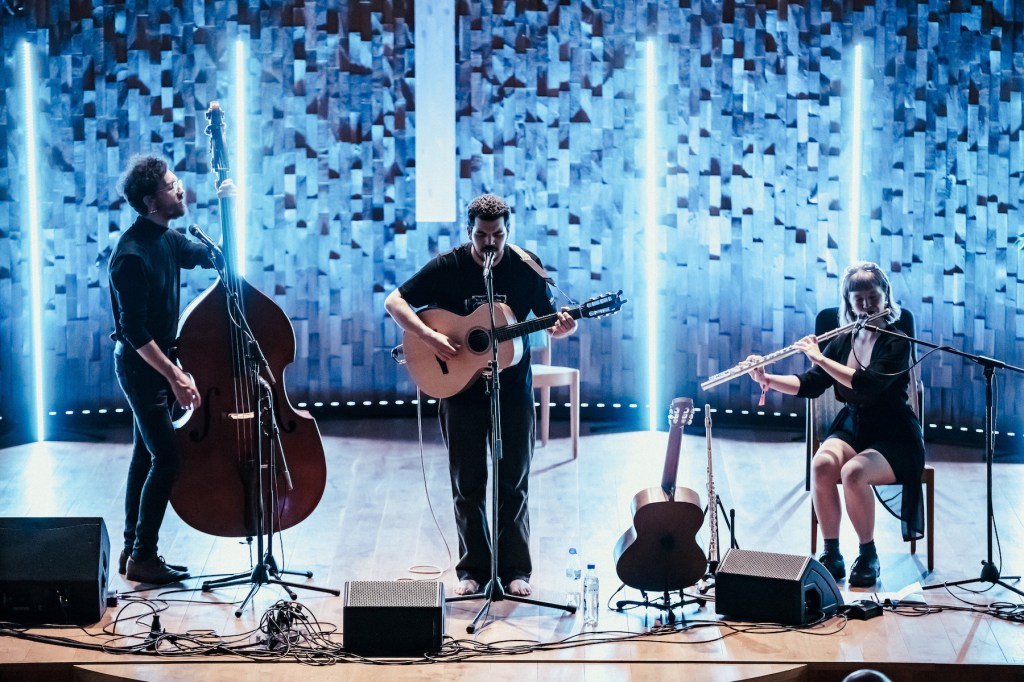
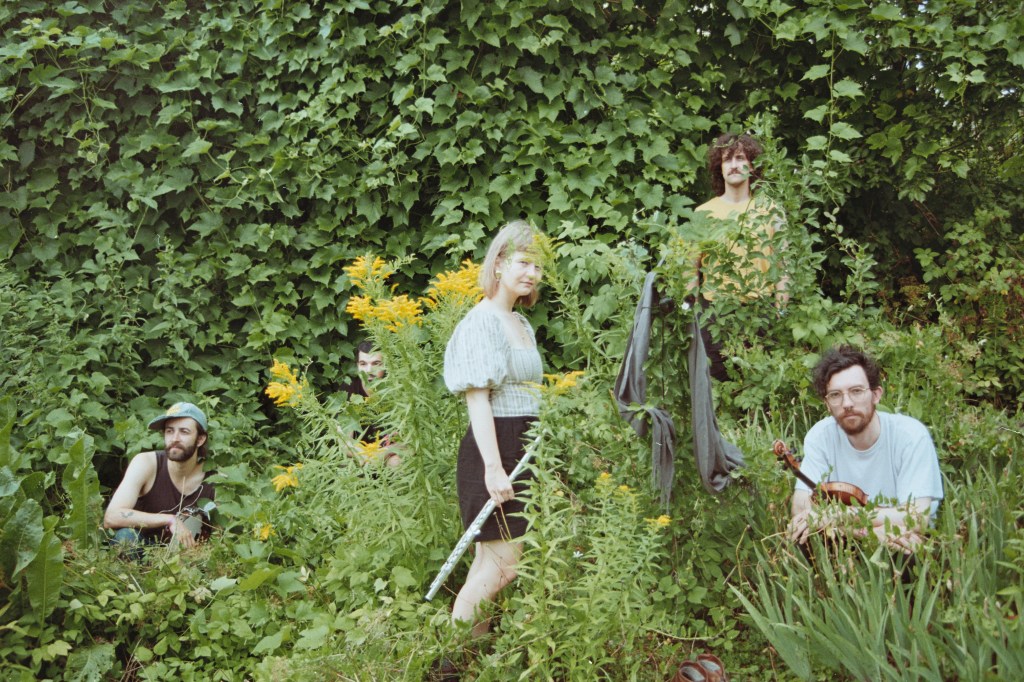
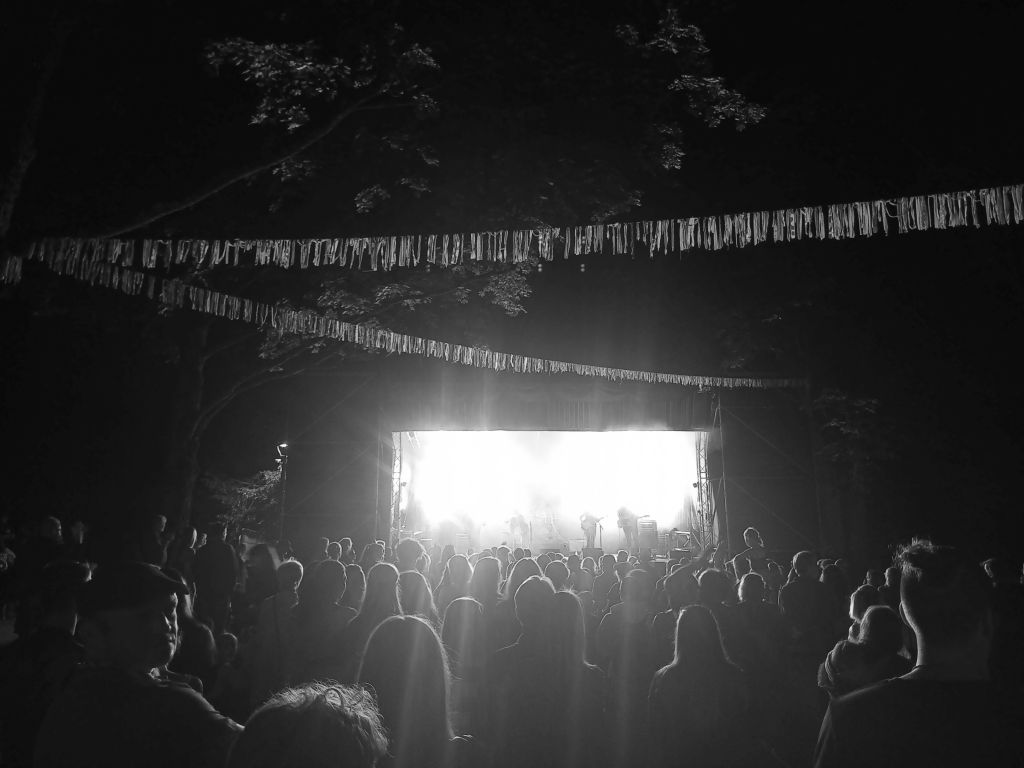
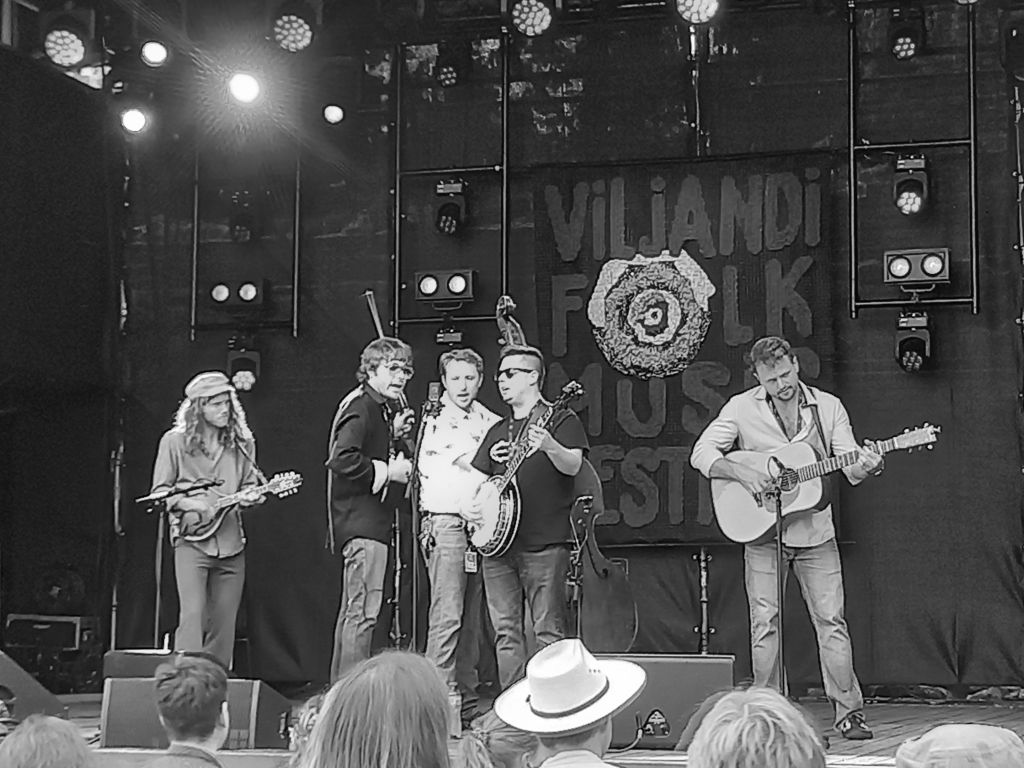


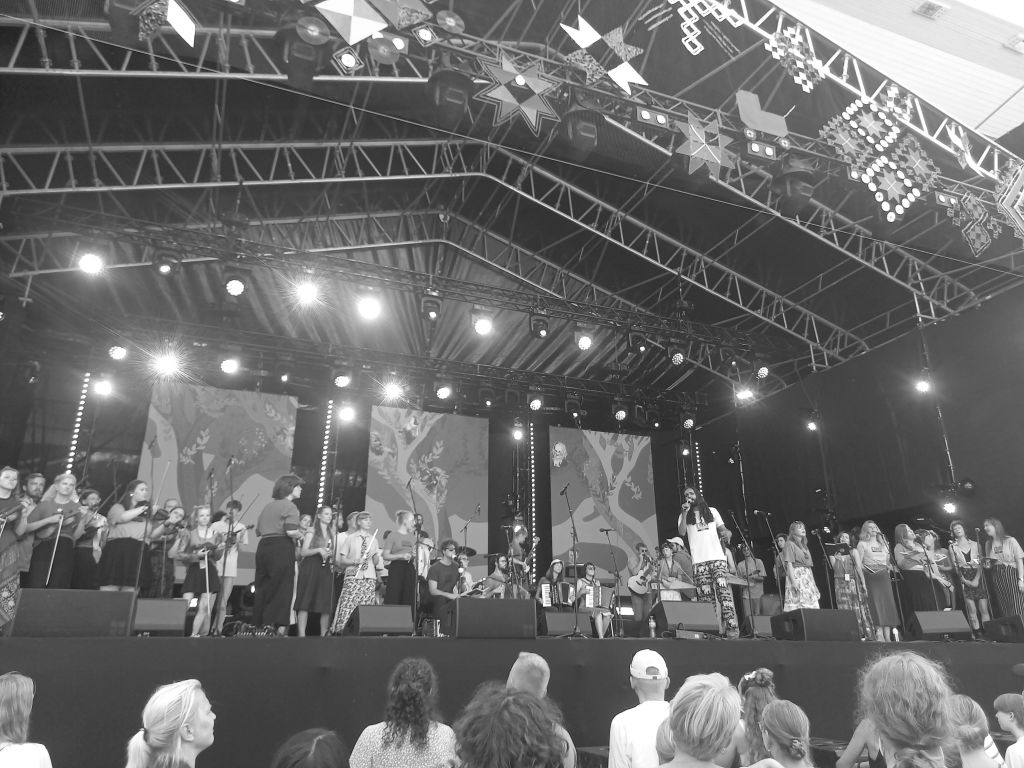
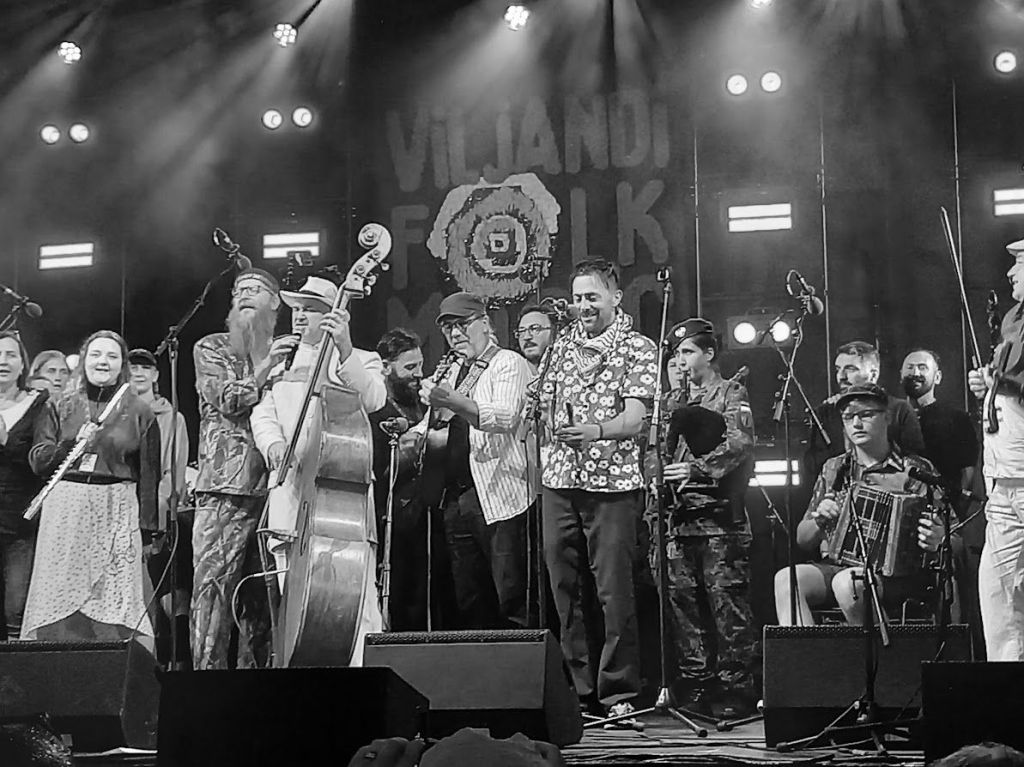



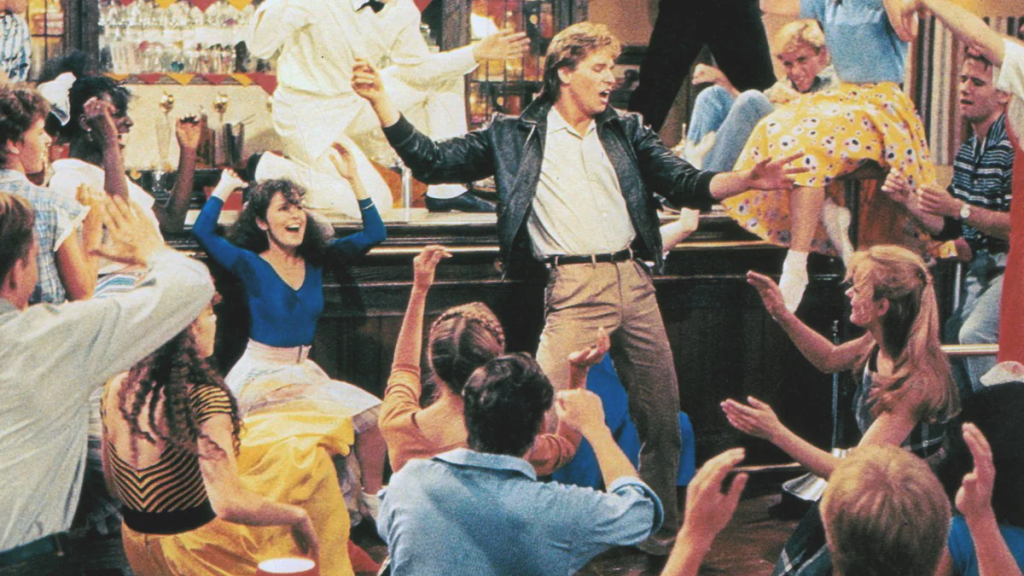


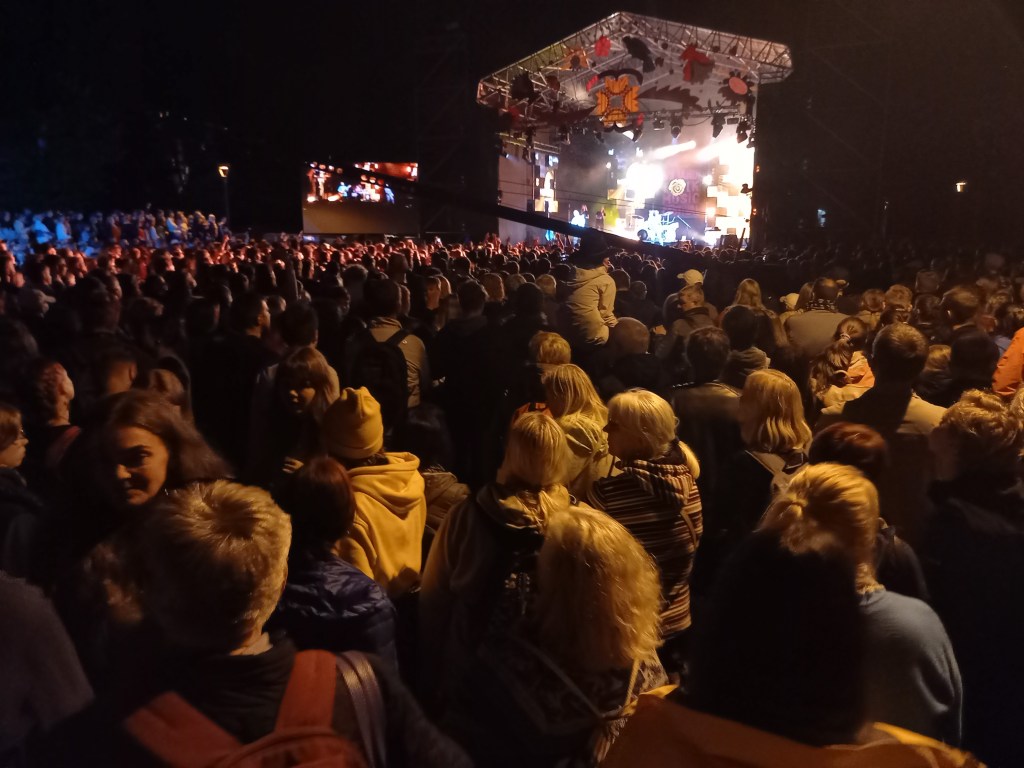
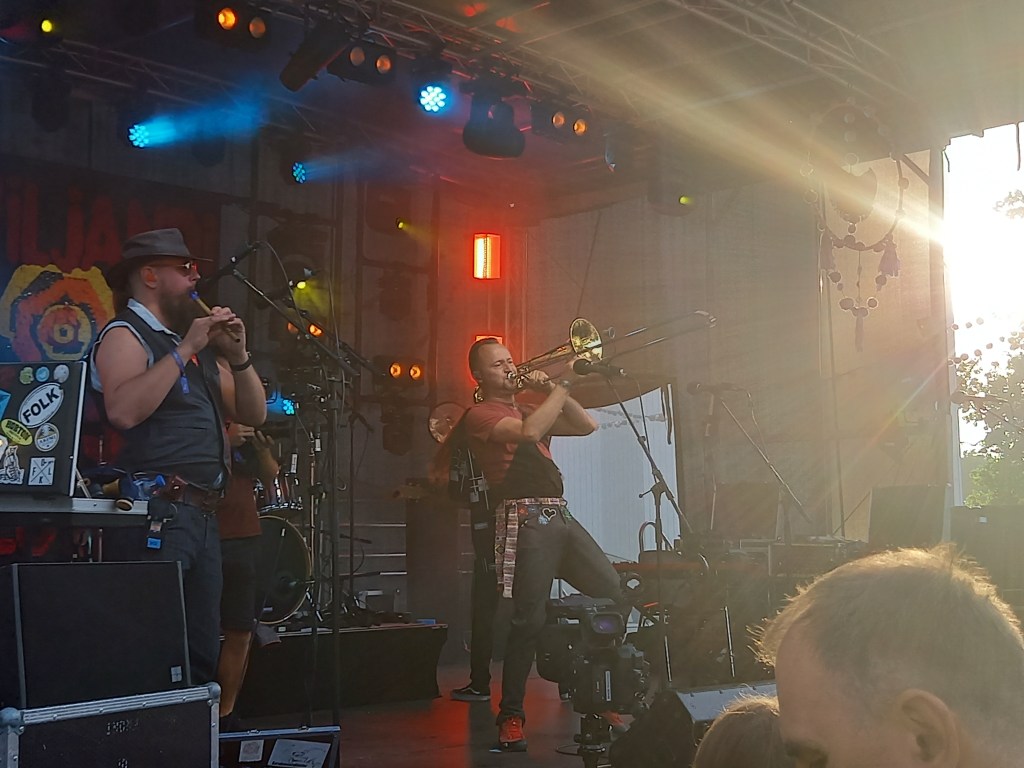

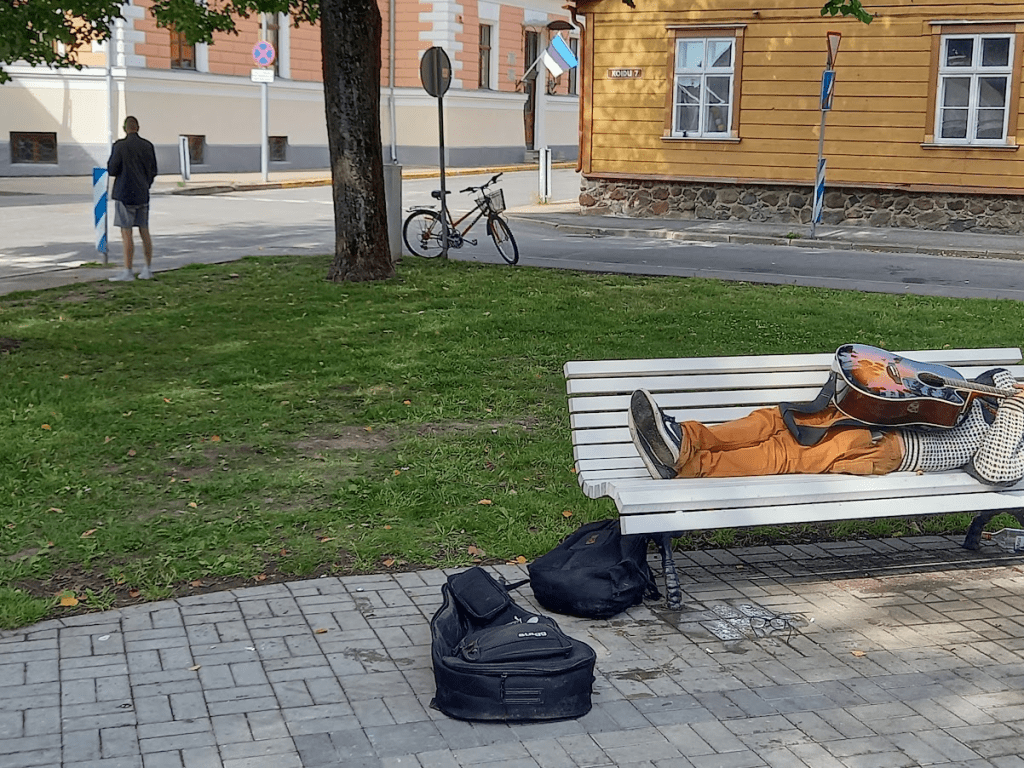

 north!