AFTER SONJA STOLE my lost book of erotica, she continued her music studies, later becoming a rather impressive jazz singer and all around chanteuse. She gave concerts on the top of the tallest hotel in Tallinn, which is not that tall, but still pretty tall. From there, on summer evenings, one could feel the brisk winds of the north and stare off into a Matisse swirl of stars and purple orange sunset fused into a stellar blue stardust trail of Baltic melancholy. It was pretty, in other words, and she was beautiful. She played with a little Finnish trio. They were not as beautiful as blonde Sonja was, but they played beautifully. There was a drum solo.
I started attending the rooftop jazz concerts around the time I returned from America, where I had to visit family with Jane and her new lover Hans, the Dutch screenwriter. They got to stay in the guest bedroom while I was there, and, well, I had no place to sleep. To make matters worse, nobody could understand why this fact bothered me. “Why are you so moody? You again with your moods! You should go see a psychologist! You seem to have a lot of issues.” Hans and her shacked up in my parents house, and I went and slept in the guesthouse. Agnetha was there, with her young daughter, and I gave them my bed. I curled up to sleep beside them on the hard floor. It was uncomfortable and I went back to Europe after that.
That was how I stumbled upon Sonja and the hotel concerts. She was a good singer. Usually this kind of elevator jazz bores me, but hers was a more ambrosial blend. But jazz alone doesn’t pay the bills, does it. Sonja was also working as a waitress at the hotel bar. At breakfast, she brought me a glass of freshly squeezed orange juice. In Islam, orange juice is a rich and promising symbol. If you are poor, you will become rich if you drink enough orange juice. If your heart is broken and you have suffered many hardships, your pain will be relieved by the tang of this tropical nectar. I don’t think Sonja knew this though. She just needed the money. Then she walked over to the elevator and took it back up to the roof for some rooftop jazz.
MISS MARITIME was seated at a desk in a silver dress. I saw her the day after I ran into Celeste. She was gentle, vivid, and memorable, like the slopes of the best childhood beaches. She was small. She was young and had blue eyes and brown hair. But at least Miss Maritime was still there.
The classroom was in the part of the school that used to house the theatre arts program. It was fall and there was lightning outside the windows. We had all been assigned group work and I had been placed on her team. She was apprehensive, but I guess it was all for the best.
Hours earlier there had been a jailbreak from the school. All of the students ran down the hallways. It had been sunny then and through the windows of the corridors you could see the dust in the light and smell the chalk. That chalky smell of an old school constructed in the 1930s. They tried to contain the uprising, but it was of no use. All of the students spilled into the streets. We went with them and by the ponds I saw a boy run into the Taylor House. He went inside and I could see there was a party going on there behind the door of Edwardian textured glass. By that time the weather had started to turn and a few of us went back to the school, Miss Maritime among us.
In previous incidents with her, various weird things had happened. Once, she had told me she needed to go to the Faroe Islands. Another time, she was being hoisted on a chair while well wishers wished her a happy birthday. This time she was seated across from me in a silver dress.
“Well, here we are again,” I said. We had to give a presentation about the Vikings. “Thank you,” Miss Maritime said, “for being on my team.”
IT WAS NAIVE of me to think that I could have ever replaced you. I tried so hard, for years, and failed spectacularly. I don’t even know why I started trying, or how many astrologers, witches, healers, tarot card readers, and other masters of the black arts I consulted, only to be led deeper into my own delusions. I did it for you, to free you of me, and to free myself of you. I saw it as a mutual liberation. That’s what you asked of me. In retrospect, it was wrong of me to wish for anything, one way or the other, and especially wrong to try to course correct and to play god. I had to learn the unfortunate lessons that all people must learn, that the more you tinker, the more you pry, the more you struggle against the web of time, the harder things become, the less natural they are, the worse off everyone in the end is. The only right path forward is the raw and honest one, I think. There isn’t any other legitimate way. I could find 15,000 substitutes, and they would all crumple in the end. I didn’t make it so. That’s how it is.
I WAS LOST AGAIN, driving a convertible in the dark. De Niro and Pacino were in the backseat, clutching their newborns, and feeding them formula. We were in a vast underground aquarium that had been built by the Romans in the second century. Some areas of the site were still unknown to archaeology. These were dark and blotted out by an ominous swirling mist. We drove beneath the arch of an aqueduct, but I decided to turn around. “Do you even know where you’re going?” De Niro piped up. “Well, we’re not going in there,” I said, gesturing. “If you go in there, you only fall more deeply asleep.”
We took another road and soon arrived at a brightly lit exhibit called “The History of Cheese,” which was on loan from the Smithsonian. Some pieces were contributed by the Amalienborg in Copenhagen too. Pacino was impressed by the Caseus Fumosus Velabrensis or Smoked Velabran Cheese. “Bobby, get over here. Try it, just try it.” Pacino slipped his baby a taste.
I left the veteran actors at the cheese exhibit and went to a book launch after that, and there was a lot of cake for the guests. Jane was there eating the cake and selling books and she didn’t want to leave. Antti, a spectacled Finnish reader who likes to talk geopolitics, also showed up and was having the cake and whispering to me about Bourdain and Nord Stream. “Splendid work,” he kept muttering aloud and pacing. He was carrying a fresh issue of The Economist. Jane couldn’t be pulled away from all of the after hours cake and mingling and networking.
On the steps on the way out, we did hug, and it felt refreshing, as if all was healed, but then she told me she had rented a garage in the city and was going to start raising some sheep there. She already had a few lambs. Bolt scooters soared by, and in the distance I heard the metallic clang of an urban fender bender. The lambs were pressing themselves against the walls. They were frightened. “Look, this is no place for sheep,” I kept trying to convince her. “The city is no place for sheep!” She wouldn’t listen to me, so I left.
My convertible was parked in a garage that had served as a site of crucifixion for early Christians. I paid the attendant a few euros for his troubles, coaxed De Niro, Pacino, and the brood from the cheese exhibit and we were off, but not empty handed. Pacino kept feeding me blocks of ancient cheese over my shoulder. “Try this, man. A precursor to Pecorino Romano. Hoo-ah! I just love this shit.”
AFTER MY WIFE AND I SPLIT, she took up with a Dutch screenwriter named Hans and moved to L.A. When Hans was on strike, they invited me out to visit and I obliged. We agreed to meet at an exclusive beach club that had a special iron gate at its entrance. From the club promenade one could look out and watch the whales diving and singing in the straits. Hans seemed nice enough, but I couldn’t understand his desire to befriend me. He was a wiry sort, with orange-red hair, and he liked to wear dark clothes, even in the summer and in California. “What would you like to drink?” “Was your flight all right?” “Is the hotel comfortable?” “You know, you can always stay with us.” He also tried to win me over by gifting me various treasured items of modern day hipsterdom, such as a freshly pressed edition of Talking Heads’ classic 1980 album Remain in Light. “This is high quality, 180-gram vinyl,” Hans said, displaying my gift. I didn’t have the heart to tell him that because of the divorce settlement, I didn’t have the money for a decent turntable or sound system. I decided to file the record away for future listening. A man’s got to have some goals, you know. He also presented me a copy of Thunderball signed by Ian Fleming. Such artifacts are easy to come by if you are one of Hollywood’s top writers, even if you are on strike. I put it away in my knapsack. The club had a tennis area divided into two sections. The first had “batting cages,” where new players could try out their backhands, and then the second had the proper, luxurious courts. Taylor Swift was there playing tennis against Idris Elba. “Fifteen-Love,” Taylor announced. “Thirty-Love.” They both wore shorts so bleached white you had to squint to look at them. “Do you want to play a game?” Hans said. My ex was behind him, toying with an umbrella like Deborah Kerr in The King and I. “After that, we can have lunch at the club restaurant. It’s no problem.” I agreed and said I needed to go and change my clothes. On the way out, I left the Talking Heads LP and the Ian Fleming novel with someone up front. I knew Hans meant well, but L.A. was not for me.
FOR A LONG TIME, I didn’t give the woman in the other apartment much attention. I would only see her in the corridors of the house on Väike-Patarei, or Little Battery Street, overlooking the bay and the gulf. The halls inside the house were poorly lit, with only a single blinking lightbulb surrounded by a worn meshed textile material that in some day and age was thought of as a lamp. The steps in the house were tiled, in a familiar pattern of light and dark. The place smelled of moisture and light rot, though pleasantly.
On a typical writing day, I would only hear the comings and goings of the woman. I would hear her shoes on the tiles, the sound of which would grow when she was coming, and retreat when she was leaving. I could hear her fumbling for her keys. She seemed to have many of them, and it took her time to grip the right one and slide it into the lock, turn it, and open the door. The door creaked open and then shut. The sound of the door closing did fill me with a sense of dread or alarm. There was an abruptness, a heaviness to the way that door shut.
I found out from the girl who worked at the pastry shop that the woman’s name was Sylvia. I had seen her just a few times in person. She had blonde hair, of course, and a fondness for wearing black or dark blue dresses. I usually regard other writers with a necessary caution. There are dark waters there. Two dark waters don’t make a particularly pacific ocean. I was intrigued though. I wondered what Sylvia was writing. The pastry girl said she was a novelist.
One day, there was a knock at the door. My own office was a mess. I had been sorting through notes and papers, and there were piles all over the floor. When I opened the door, Sylvia came through it. She kissed me immediately. I wish I could tell you what she looked like. I can tell you her skin was smooth and tanned, and I remember the fleshy pink of her lips, and the slope of her cheek and the aroma of her hair. She wore a tiny silver medallion around her neck that I later learned depicted Jeanne D’Arc. We somehow tumbled into the papers, and I apologized for how messy and unmanageable my life was. Sylvia didn’t care. She tugged up her dress, this time white and linen, and we were soon deeply connected. She was mumbling about her ex-husband James half the time. She told me that he had gone off salmon fishing. “He loves salmon more than me,” she said. “Don’t you see? James loves salmon fishing more than me!”
She was crying. Then she came.
Afterward, she smoothed out her dress. My hips ached and I was as deflated as an old party balloon. There were pages stuck to my back. Those notes from the trip to Mexico in ’00. I still hadn’t used them. Some of the pages were soaked. “I’m sorry for the mess,” I repeated. “Could you please stop apologizing,” Sylvia said. She kissed me again and stood up. “I have to go now,” Sylvia said. “I have a deadline today.” “I’m also on deadline,” I said. I was. After she had left, I positioned myself in front of the old typewriter. There I tapped out the following line.
“Theirs was a love of escapism, but sometimes a sweaty escapism is just what this sordid life of ours requires.”
I HAD TO GO HOME, if home is the place where you lived when you attended high school. I was down by the village green at dusk, at that forested intersection of Old Stone Street and Welsh Tract Run, where the constable usually sits in his car eating donuts and waiting to catch a speeder or two. That’s when I saw the tugboat pulling the distressed oil tanker into Sowassetville Harbor. I ran down to the pebble beach and began to walk along it, among the high reeds and tangy stink of rotting clams and seaweed. You could see the stars in the purple sky already, and I noticed the faded writing on the bow of the tugboat that read, SS Jimmy Carter. I didn’t realize that the bay here was deep enough to accommodate a tanker of that size. Maybe it had been dredged? It went right by the Smiths’ place, and then a moment or two later was off Dead Indian Point.
I followed that tanker toward the opening to the port, which was where my family still lived, only to learn that Hannah and Lewis had started living with them. These were two high school friends who had married and, basically, disowned me for having abandoned them by not living on the same continent. “You ran away from America,” they had always said. This time they were happy to see me though, while reminding me that I owed them about $700, which I didn’t remember borrowing. They had become proper suburban liberals in the meantime. Lewis, with his graying black beard, had even taken to smoking and gesturing with a pipe. Hannah had made a small fortune advising others on what was wrong with their lives. They lived comfortably and had no worries. The children were being battle trained in lacrosse. All food in the pantry had been certified organic. They wanted the money repaid though. “Pay us half up front, the other half in a month,” said Lewis.
O’Mara, another high school friend, was there too. In my time away he had been admitted to the bar and remade as the family attorney. He came out to speak with me briefly, playing with a pocket watch from time to time. He wore a three-piece suit. The family was not ready to meet with me. First we had to reach a binding agreement.
O’Mara was also disappointed to see that there was a woman with me, Rakel, who was a psychologist from Denmark. Don’t even ask me how we met or what she was doing there. O’Mara the attorney toyed with his pocket watch some more and studied the strange blonde girl in her tight red sweater. He squinted at her through pince-nez glasses. “Officially, she is not welcome at the coming legal proceedings,” he said. “But she seems nice enough. We might be able to make an exception.”
After he went back inside, Rakel and I walked down to the Sowassetville seaport. We admired the rusty oil tanker, and that proud little red tugboat, the SS Jimmy Carter. It was a fine ship, and it had helped this tiny New England maritime enclave avoid an environmental disaster. The crew was being celebrated in port. Someone brought out champagne and the captain was waving his hat. Maybe he could smuggle us out.
I WAS ON MY WAY HOME when I passed by the café. There were colorful balloons tied to the awnings and customers out the door and into the streets, drinking coffee and beer and kombucha, and spooning mouthfuls of creamy tort into hungry mouths. Through the glass I could see them hoisting the girl up and down on a chair. “Twenty-one, twenty-two!” Was that how young she was? She already looked different though. Did a few days really age a woman that much? More mature, I suppose. There was something more captivating about the way her dark hair dangled loosely around her shoulders. The young lady saw me briefly through the glass. “Happy birthday,” I mouthed to her, and she mouthed back, “Thank you.” Then I left her alone again, as I had promised myself, and went along my way. Our new house was in some derelict back district, an old tenement building with crumbling brick stairs. The floors inside were just wooden planks laid out side by side. My ex-wife was in the kitchen stirring a black cauldron of stew and listening to a podcast about the end of the world. When I came inside, she told me to be quiet and that she was very busy. I tiptoed across the floor and picked up a sack of books and was out the door. Chan, my editor, pulled up in a jeep with the top down. He was in the driver’s seat as usual, looking like, well, an editor. He wore his glasses and a crisp white shirt. His black hair was combed back and fixed into place. Chan honked the horn and I left the house and got in. Vahtra, an Estonian hippie percussionist, complete with incomplete beard, tribal headband, and bemused look, was also seated in the back. We began to drive and soon we were out of the town bearing down on the Florida Keys. When we pulled into sunny Key West, we cruised past Sloppy Joe’s Bar. There was a shouting match going between some bearded, Proud Boys-looking figures at Sloppy Joe’s and at Irish Kevin’s next door. You know the types, braggarts with Viking rune tattoos and piercings. One pulled out a semiautomatic and began spraying the Irishmen with bullets. An Irish Kevin responded with a blast from a grenade launcher. Chan just kept driving toward the wharf, as cool as cracked ice. He had said there was a boat that could take us to Havana. “Welcome to Florida, boys,” Chan announced, as we drove through the billowing and stinking grenade launcher smoke. “It’s real fucked up.” Vahtra was in the back observing the scene and tapping lightly on a bongo drum. I think he was high. “Why did you even move down here, Chan,” I yelled. “If you don’t mind me asking.” “For the weather,” he said.
SILVER WAS ON the north coast. I had never been there before and I wasn’t sure if it had been named after a precious metal or a popular folk musician. The city was located in the fjords somewhere between the Pakri Islands and Akureyri. The architecture revealed both Japanese and Nordic influences. The rooftops were angular, half Shinto, half Norse. It was dusk when we arrived by train and an orange sun was sinking into the cola-colored sea on the horizon. There were long piers along the waterfront. Vendors were out selling ice cream, painting portraits, and strumming guitars. I took a walk out to the end of one of the piers and climbed down a metal staircase. Then it began to rumble. This was another submarine, right beneath my feet! We began to voyage out into the harbor. There is something magnificent and a little terrifying about the stealthy and quiet movements of a submarine. Once far enough out from port, the one below me began to dive. The water levels rose quickly. The dark and warm seawater pooled at my ankles, then was at my knees. So this was it then, the big end. The submarine was going to go down and I was going to drown with it. Davy Jones Locker. I was somehow resigned to this fate, when the submarine suddenly rose again and returned to port. When I disembarked, I saw that the submarine captain — a certain Peter Townshend, the guitar player for The Who — was wiping his head with a handkerchief and pacing on the docks of Silver. “All my friends are dead! All my friends are dead!” There were tears behind his blue eyes. His face was pink from the moisture. I didn’t know what else to do, so I went and tried to cheer him up.
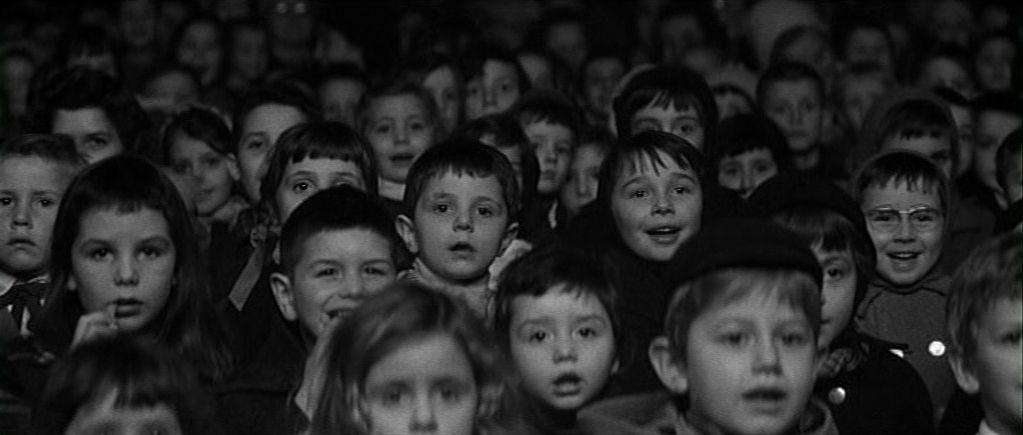
A scene from The 400 Blows (1959) directed by François Truffaut
TUESDAY, the 21st of September was my first day off social media. It also happened to be my father’s birthday, but these two events were not related. I did feel guilty for not being there to wish him a happy birthday in front of everybody, but this prompted another perplexing question: Where was this ‘there’ where I was supposed to be? It almost reads like an absurd poem. In the old days, I might get him a card. Nobody had to witness any moment of it. I did not go out in the street and loudly proclaim my sentiments. We might gather, yes, and he might be served a cake. Someone might take a picture. I have no idea where the ‘there’ is where I was supposed to be on that day, my father’s birthday, but I could sense that I was absent from that place. If it is a place.
Why I decided to leave social media is I guess of some interest. A simple answer is: addiction. Scrolling social media developed into my most sacred ritual over the years. It was the first thing I did in the mornings, the last thing I did at night. And if I had happened to wake up in the middle of the night, I would do it again. I would check posts, notifications. I felt some kind of pleasure when I saw that someone had liked something, or expressed something. I am sure this is correlated to a surge in dopamine, but I didn’t see it that way. In all my time spent as a mouse in that artificial labyrinth, I had barely noticed how it was all set up. Looking back I have to wonder if all of that time I spent there, in that place, wherever it is, was worth it. Perhaps a tenth. More likely 1 percent of the time I spent on social media platforms enriched my life in any way. Therefore I had wasted a part of my life using the 21st century version of an online bulletin board, or one of those usenet groups that emerged in the 1990s at the dawn of internet time. Yet for now at least, those days have come to a rest, if not an end. I had left the shared space. For many, it seemed, I had vanished. “Where did you go?” a concerned friend wrote to me. “But I didn’t go anywhere,” I told him truly. “I’m right here where I have always been all along. Here.”
***
There is a saying among the Irish for people who leave a family event without saying anything. They just feel like it’s time to go and then silently slip out the door. My grandmother was Irish, and so I’ve been made aware of this situation, particularly when one of my uncles just disappears, leaving people wondering where he went, and why he hadn’t bothered to kiss everyone, in the Italian fashion. They call it the “Irish Goodbye” and, in a way, I had given social media the Irish goodbye. One morning, I just wasn’t there. But it was necessary. Social media was not only an addiction. It had become a war zone. It perhaps had always been one, a virtual conurbation of unhappy people airing grievances and settling scores. In the year 2021, this became the terrain of a scorched earth war between new vaccine advocates and opponents.
Feelings throughout the pandemic had been heated. Before the pandemic, it was the Trump presidency that gave lifeblood to the arguments. In the summer of ’21, it was now epidemiology. I began to feel my own psychosis set in as I was exposed to diatribes by social justice warriors turned vaccination advocates on one part, and conspiracy theorists trying to feed me livestock dewormers on the other. It was relentless and it was unhealthy. Data, data, data. One morning, I awoke to a friend describing his desire to load a tranquilizer gun with miRNA vaccines and drive around town shooting people. People from both sides accused the other of being accessories to murder. Being exposed to this daily torrent of discontent had a bad effect. Any remaining peace of mind was shattered. It would take me hours to shake off the feeling.
Social media also fed massive insecurity issues within me, I think, and reinforced a sense of isolation or apartness from others. When I was using it, I would tune out the people who were actually inhabiting the same physical space as me. I ignored the rich detail of real life, yes, real life, this one that one can taste, touch, and smell here now. When I deactivated my accounts, however, I felt a massive void open up. Somehow, I felt as if I had lost everything. I had lost nothing of course. Most of those people were not my real friends. In fact, I had never seen most of them in the flesh. So they were not “leaving” my life, as they never were in my life to begin with. The sense of loss was synthetic. Yet there was also this odd sensation of disconnecting from the world, because nobody knows where you are anymore, or what you are having for lunch, except the person who is seated next to you, or the server who brings it to you on a tray.
I want you to think about this for a moment, because it is very important. How can you “leave the world” by deactivating an online account? Regardless, I felt this void open. Only in the evening on the second day off social media did I start to feel something like normal. That night I watched The 400 Blows by Francois Truffaut about some French kids in Paris in the 1950s. This was actually a beautiful film, one I couldn’t take my eyes off. Watching those little boys run around the city back in 1959, I began to realize that when I was 10 years old, circa 1989, my life wasn’t so different from theirs. In the past, I had thought 1959 was a very long time ago. Now it suddenly seemed comforting and familiar, even if it was in some other language.
I realized that I belonged to some other species, the people who had grown up before this. There had been a real life, one that came before the advent of social media. That was a world I used to inhabit. The real one, as I saw it, which was being displaced by this flimsy fake one.
Going off social media isn’t a miracle cure though. It takes weeks, if not months, for one’s mind to return to its natural state. People don’t realize how much they have changed. How much it influences their identities, their self-concepts. One day in that first week off social media, I ran into the TV host and producer Teet Margna in a restaurant, and he wanted to tag me in a photo. He kept searching for my name from his friend list, but was frustrated because it wasn’t there. “But where are you?” said Teet, pressing the phone with his thumb in frustration. “Where did you disappear to?” “I’m right here, Teet,” I told him. “I am standing beside you.”
***
On the third day off of social media, I even managed to read a book. It was called The Head in Edward Nugent’s Hand, and it was about failed English attempts to colonize the Atlantic coast of what is now the US in the 1580s. I didn’t realize that Sir Francis Drake landed 300 Central American indigenous women and 200 Africans and Turks in the Outer Banks of North Carolina and just set them loose. They disappeared into the wilds and perhaps were assimilated by Indians. Nobody knows what happened to them. In Haiti around the same time, English adventurers discovered dozens of skeletons scattered on a beach, perhaps bodies from a shipwreck. Nobody knows what happened to them either, and there is no record of who they were. Nobody had marked themselves as safe during the Great Haitian Shipwreck of 1590. It was just lost to time. That same night, I dreamt I was in the Russian Embassy in Tallinn. I needed a special visa to enter the embassy, and my visa was only valid for three hours. The inside of the embassy was rather posh, like a nice boutique hotel in Rome, with carpets on the staircases. There was also a nice buffet with croissants and freshly squeezed orange juice. In the back, I discovered, the Russians had constructed an indoor water park, and I decided to go for a swim. Later I asked the concierge at the embassy where my eldest daughter, who would soon be 18, was, and he said that she was last seen getting into Mr. Putin’s car wearing an orange dress. I did not like the thought of my daughter alone with Mr. Putin, and ran into the street in my swimsuit. When I awoke from the dream, I wrote some memories down into my notebook. I have actually been maintaining handwritten journals for more than 20 years, old-fashioned some say, but in these days off of the social media machine, I have suddenly found them more relevant in my life. I notice how the books feel in my hands, and enjoy the sensation of writing for my eyes only. I read somewhere that Haruki Murakami, one of my favorite writers, had once dived head first into the social media universe, only to also retreat into solitude, and hide himself away from that world. In an interview, he said he had to leave social media behind because the writing was so bad. As a good writer, he needed to read other good writing to continue to produce good writing.
This made perfect sense to me. It sounded like a good idea. There is something counterintuitive to all this, of course. For writers, social media is actually a blessing. It’s a lightning quick way to reach more readers. But to be a good writer, you must stay very far away.
***
Of course, I cheated a few days after that and checked my Instagram account. It seemed like a harmless vice. At first glance, Instagram is less addictive and menacing than Facebook, with its deluge of angry political outbursts, but it also peddles in illusions of people who are so beautiful doing such wonderful things. Somehow someone named Brigitte Susanne Hunt had been added to my feed. I had no idea who that was. Also Kelly Sildaru was there. I sort of knew who she was. I used to follow Anu Saagim, but I got tired of all the posing and pictures of the sweet life. In my real life, my cat had just thrown up again in the kitchen. The bubble of fantasy had burst.
If you leave Instagram for a while and return, you will notice how strange people look in their selfies. They have an odd gleam in their eyes, a kind of satisfaction as they transmit some photo of themself doing something to the rest of the world. If you are away from it for a while, such photos start to look stupid and absurd. There is a perversness there, a narcissism you don’t notice until you are away. This is what 21st Century life has been reduced to. And I mean, almost all of 21st Century life. I have a stream of content posted going back to at least 2008, when I was convinced to get a Facebook account. It hangs there suspended in time, accessible at almost from any point in the future. This has blurred my sense of time. If all these images are accessible at any moment, then at what moment on the time continuum are we? If I can look through 2008 and 2018 at the same time, in different windows of the same browser, it all becomes part of the same experience of reality. But it isn’t actually how we remember our lives or experience them really.
Even days off of socal media won’t heal a fractured mind. You still remember things you have seen, comments people made. Arguments that happen online continue in your mind when you step off line. You go for a long walk in the woods, replaying these dialogues and then see a bird or a tree and want to share it. Then you realize the depths of your addiction. One night, a week or two after I had quit social media, I went out for a walk and turned off my phone data. I wondered where I was in 2001 at this time, 20 years ago? I had no mobile phone, I only used the internet at a university computer lounge. In the year 1998, before I left for college, I did not use the internet at all. I worked in a music shop that summer and I can recall a woman asking me for something called an email address, which I did not have. I remember how my family went out to the islands that summer and I spent my days searching around in used records and book shops.
If we can access photo albums from 2008 with a click, perhaps I can access that time? If I can leave this place called social media, perhaps I can go back to that place too. That’s where I want to go. I don’t want to go back in time. I want to resume time as I once knew it and leave everyone behind, floating away into the depths of black digital space. I’ve just got to get away.
***
It actually took about a month for me to forget about social media altogether. It was during this time that I came down with Covid-19 and was locked away in isolation for about two weeks. I’m somehow glad that my bout with this illness was private, and that I did not provide status updates on every cough, runny nose, ache or pain or feeling of weakness or sense of disorientation.
Sickness is now political and invites the rabble to comb through your behavior (“Did you wear two masks? Did you get your booster?”) or to score your own illness according to symptoms and play doctor (“I would say it was a mild case”). When I was ill, I needed none of that in my life at all, because illness is personal and doesn’t actually involve people on the internet. They aren’t there with you in bed as you sleep sick. When I awoke from the fever dream of Covid-19, I saw on the news there had been a rally in Freedom Square led by the Helmes and Igor Mang had also made an appearance. It seemed so distant and irrelevant to my real life, but apparently the incessant arguments had continued, the neverending social media war. I had left it, but it had gone on. Think of all the energy expended, the sleepless nights, the unhappy arguments. This was how much of humanity was spending its life. I was in bed recovering and people were arguing on their phones about the sickness I had. It seemed too strange to be true.
As I said, I was completely off social media and had even forgotten about it. Before the local elections, I had heard a friend talking about a mutual acquaintance who was running for city government in Tallinn and I said I hadn’t heard about her campaign. “But how could you not know?” the friend said. “It’s everywhere!” Interesting, I thought. Where was this “everywhere?” Because in Viljandi it was nowhere, as there were no signs for Tallinn candidates here, especially those a bit farther down the list who were more interested in boosting their popularity online. People would start conversations with me on the presumption that I had seen their morning post, then act agitated when I said that I had not seen it, as if it was my job to be on Facebook all the time. It may be hard to believe, but I forgot that Facebook even existed. The word was strange. Face? Book? A book of faces? It sounded like an old catalogue for a modeling agency. If they even make those anymore. Sometimes I would see people in cafes with that ugly layout open on their screens. It was really like something out of a science fiction film. Each person deep in that space, that idea of “there,” this fictive place where they felt they needed to be all the time.
They had become robots.
***
Other than being ill, those months off of social media brought me feelings of balance and clarity. I felt my mind realign itself to a more natural tempo, and I was more creative too. So you might ask, why on earth would I reactivate my account? The answer was simple: to sell more books.
Yes, social media, the marketplace for attention. I had a new book coming out, and felt I must do everything to support its launch. If the eyes of the world were on Facebook, then that is where my book needed to be. Part of this is my livelihood and my children depend on this, so I cannot just write it off as a need for greed, or a desire for attention. There was a material need.
Going back onto Facebook at first seemed harmless. Its layout is horrible, by the way, and it is a pain to navigate. It’s odd to think that so many people have spent part of their lives staring at this ugly thing. All of these little boxes, strips of text, windows of images, a headache. If I had to look at it any longer, I thought, I might go insane or blind. But I did. The first days back, I used it judiciously. Slowly though, I began to check it again and again, and engage in the same arguments I once loathed. Once again, I was checking it in the mornings, and at night, and at all points in between. Once again, a grown man could be seen standing alone in a forest, or in the aisle of a supermarket, staring at a small rectangular object and pressing it with his thumbs. The access to other people’s personal lives was also offputting. Suddenly I had living dossiers on virtually any person of interest. If you saw a pretty girl and knew her name, you could find out almost anything about her with a few clicks, which felt somehow deeply wrong and unfair, not only to her, but to yourself and the natural flow of life. It felt like you were cheating life, using social media, and yet being cheated yourself in the end, as technology made the very prospect of a naturally manifesting existence impossible. Everything and nothing were at your fingertips. The same disappointment in the experience began to haunt me, and I decided to go away again. It happened to be my ex-girlfriend’s birthday, the 3rd of February, when I pulled the plug again. The two events were not connected, and yet I could no longer spy on her life, even if I wanted to. It also happened to be a new moon, supposedly the time for new beginnings and fresh new starts.
We shall see, of course, how long it will last this time. We shall see.

 north!