
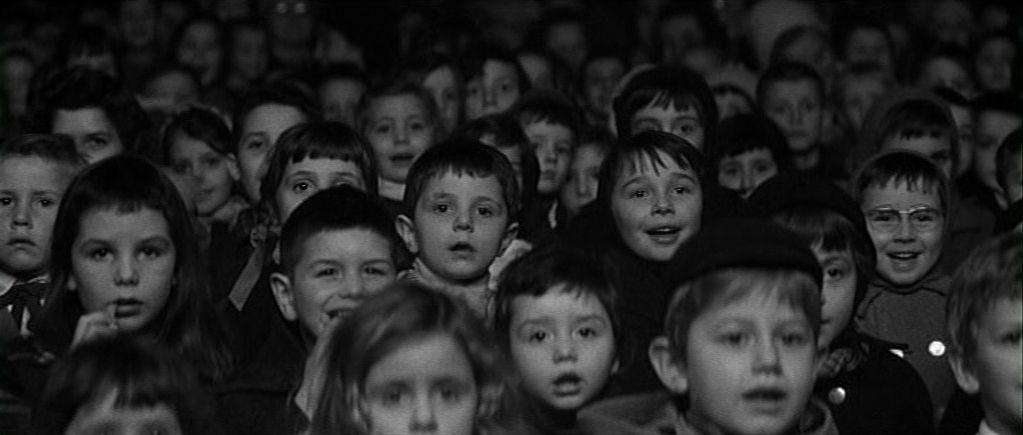
A scene from The 400 Blows (1959) directed by François Truffaut
TUESDAY, the 21st of September was my first day off social media. It also happened to be my father’s birthday, but these two events were not related. I did feel guilty for not being there to wish him a happy birthday in front of everybody, but this prompted another perplexing question: Where was this ‘there’ where I was supposed to be? It almost reads like an absurd poem. In the old days, I might get him a card. Nobody had to witness any moment of it. I did not go out in the street and loudly proclaim my sentiments. We might gather, yes, and he might be served a cake. Someone might take a picture. I have no idea where the ‘there’ is where I was supposed to be on that day, my father’s birthday, but I could sense that I was absent from that place. If it is a place.
Why I decided to leave social media is I guess of some interest. A simple answer is: addiction. Scrolling social media developed into my most sacred ritual over the years. It was the first thing I did in the mornings, the last thing I did at night. And if I had happened to wake up in the middle of the night, I would do it again. I would check posts, notifications. I felt some kind of pleasure when I saw that someone had liked something, or expressed something. I am sure this is correlated to a surge in dopamine, but I didn’t see it that way. In all my time spent as a mouse in that artificial labyrinth, I had barely noticed how it was all set up. Looking back I have to wonder if all of that time I spent there, in that place, wherever it is, was worth it. Perhaps a tenth. More likely 1 percent of the time I spent on social media platforms enriched my life in any way. Therefore I had wasted a part of my life using the 21st century version of an online bulletin board, or one of those usenet groups that emerged in the 1990s at the dawn of internet time. Yet for now at least, those days have come to a rest, if not an end. I had left the shared space. For many, it seemed, I had vanished. “Where did you go?” a concerned friend wrote to me. “But I didn’t go anywhere,” I told him truly. “I’m right here where I have always been all along. Here.”
***
There is a saying among the Irish for people who leave a family event without saying anything. They just feel like it’s time to go and then silently slip out the door. My grandmother was Irish, and so I’ve been made aware of this situation, particularly when one of my uncles just disappears, leaving people wondering where he went, and why he hadn’t bothered to kiss everyone, in the Italian fashion. They call it the “Irish Goodbye” and, in a way, I had given social media the Irish goodbye. One morning, I just wasn’t there. But it was necessary. Social media was not only an addiction. It had become a war zone. It perhaps had always been one, a virtual conurbation of unhappy people airing grievances and settling scores. In the year 2021, this became the terrain of a scorched earth war between new vaccine advocates and opponents.
Feelings throughout the pandemic had been heated. Before the pandemic, it was the Trump presidency that gave lifeblood to the arguments. In the summer of ’21, it was now epidemiology. I began to feel my own psychosis set in as I was exposed to diatribes by social justice warriors turned vaccination advocates on one part, and conspiracy theorists trying to feed me livestock dewormers on the other. It was relentless and it was unhealthy. Data, data, data. One morning, I awoke to a friend describing his desire to load a tranquilizer gun with miRNA vaccines and drive around town shooting people. People from both sides accused the other of being accessories to murder. Being exposed to this daily torrent of discontent had a bad effect. Any remaining peace of mind was shattered. It would take me hours to shake off the feeling.
Social media also fed massive insecurity issues within me, I think, and reinforced a sense of isolation or apartness from others. When I was using it, I would tune out the people who were actually inhabiting the same physical space as me. I ignored the rich detail of real life, yes, real life, this one that one can taste, touch, and smell here now. When I deactivated my accounts, however, I felt a massive void open up. Somehow, I felt as if I had lost everything. I had lost nothing of course. Most of those people were not my real friends. In fact, I had never seen most of them in the flesh. So they were not “leaving” my life, as they never were in my life to begin with. The sense of loss was synthetic. Yet there was also this odd sensation of disconnecting from the world, because nobody knows where you are anymore, or what you are having for lunch, except the person who is seated next to you, or the server who brings it to you on a tray.
I want you to think about this for a moment, because it is very important. How can you “leave the world” by deactivating an online account? Regardless, I felt this void open. Only in the evening on the second day off social media did I start to feel something like normal. That night I watched The 400 Blows by Francois Truffaut about some French kids in Paris in the 1950s. This was actually a beautiful film, one I couldn’t take my eyes off. Watching those little boys run around the city back in 1959, I began to realize that when I was 10 years old, circa 1989, my life wasn’t so different from theirs. In the past, I had thought 1959 was a very long time ago. Now it suddenly seemed comforting and familiar, even if it was in some other language.
I realized that I belonged to some other species, the people who had grown up before this. There had been a real life, one that came before the advent of social media. That was a world I used to inhabit. The real one, as I saw it, which was being displaced by this flimsy fake one.
Going off social media isn’t a miracle cure though. It takes weeks, if not months, for one’s mind to return to its natural state. People don’t realize how much they have changed. How much it influences their identities, their self-concepts. One day in that first week off social media, I ran into the TV host and producer Teet Margna in a restaurant, and he wanted to tag me in a photo. He kept searching for my name from his friend list, but was frustrated because it wasn’t there. “But where are you?” said Teet, pressing the phone with his thumb in frustration. “Where did you disappear to?” “I’m right here, Teet,” I told him. “I am standing beside you.”
***
On the third day off of social media, I even managed to read a book. It was called The Head in Edward Nugent’s Hand, and it was about failed English attempts to colonize the Atlantic coast of what is now the US in the 1580s. I didn’t realize that Sir Francis Drake landed 300 Central American indigenous women and 200 Africans and Turks in the Outer Banks of North Carolina and just set them loose. They disappeared into the wilds and perhaps were assimilated by Indians. Nobody knows what happened to them. In Haiti around the same time, English adventurers discovered dozens of skeletons scattered on a beach, perhaps bodies from a shipwreck. Nobody knows what happened to them either, and there is no record of who they were. Nobody had marked themselves as safe during the Great Haitian Shipwreck of 1590. It was just lost to time. That same night, I dreamt I was in the Russian Embassy in Tallinn. I needed a special visa to enter the embassy, and my visa was only valid for three hours. The inside of the embassy was rather posh, like a nice boutique hotel in Rome, with carpets on the staircases. There was also a nice buffet with croissants and freshly squeezed orange juice. In the back, I discovered, the Russians had constructed an indoor water park, and I decided to go for a swim. Later I asked the concierge at the embassy where my eldest daughter, who would soon be 18, was, and he said that she was last seen getting into Mr. Putin’s car wearing an orange dress. I did not like the thought of my daughter alone with Mr. Putin, and ran into the street in my swimsuit. When I awoke from the dream, I wrote some memories down into my notebook. I have actually been maintaining handwritten journals for more than 20 years, old-fashioned some say, but in these days off of the social media machine, I have suddenly found them more relevant in my life. I notice how the books feel in my hands, and enjoy the sensation of writing for my eyes only. I read somewhere that Haruki Murakami, one of my favorite writers, had once dived head first into the social media universe, only to also retreat into solitude, and hide himself away from that world. In an interview, he said he had to leave social media behind because the writing was so bad. As a good writer, he needed to read other good writing to continue to produce good writing.
This made perfect sense to me. It sounded like a good idea. There is something counterintuitive to all this, of course. For writers, social media is actually a blessing. It’s a lightning quick way to reach more readers. But to be a good writer, you must stay very far away.
***
Of course, I cheated a few days after that and checked my Instagram account. It seemed like a harmless vice. At first glance, Instagram is less addictive and menacing than Facebook, with its deluge of angry political outbursts, but it also peddles in illusions of people who are so beautiful doing such wonderful things. Somehow someone named Brigitte Susanne Hunt had been added to my feed. I had no idea who that was. Also Kelly Sildaru was there. I sort of knew who she was. I used to follow Anu Saagim, but I got tired of all the posing and pictures of the sweet life. In my real life, my cat had just thrown up again in the kitchen. The bubble of fantasy had burst.
If you leave Instagram for a while and return, you will notice how strange people look in their selfies. They have an odd gleam in their eyes, a kind of satisfaction as they transmit some photo of themself doing something to the rest of the world. If you are away from it for a while, such photos start to look stupid and absurd. There is a perversness there, a narcissism you don’t notice until you are away. This is what 21st Century life has been reduced to. And I mean, almost all of 21st Century life. I have a stream of content posted going back to at least 2008, when I was convinced to get a Facebook account. It hangs there suspended in time, accessible at almost from any point in the future. This has blurred my sense of time. If all these images are accessible at any moment, then at what moment on the time continuum are we? If I can look through 2008 and 2018 at the same time, in different windows of the same browser, it all becomes part of the same experience of reality. But it isn’t actually how we remember our lives or experience them really.
Even days off of socal media won’t heal a fractured mind. You still remember things you have seen, comments people made. Arguments that happen online continue in your mind when you step off line. You go for a long walk in the woods, replaying these dialogues and then see a bird or a tree and want to share it. Then you realize the depths of your addiction. One night, a week or two after I had quit social media, I went out for a walk and turned off my phone data. I wondered where I was in 2001 at this time, 20 years ago? I had no mobile phone, I only used the internet at a university computer lounge. In the year 1998, before I left for college, I did not use the internet at all. I worked in a music shop that summer and I can recall a woman asking me for something called an email address, which I did not have. I remember how my family went out to the islands that summer and I spent my days searching around in used records and book shops.
If we can access photo albums from 2008 with a click, perhaps I can access that time? If I can leave this place called social media, perhaps I can go back to that place too. That’s where I want to go. I don’t want to go back in time. I want to resume time as I once knew it and leave everyone behind, floating away into the depths of black digital space. I’ve just got to get away.
***
It actually took about a month for me to forget about social media altogether. It was during this time that I came down with Covid-19 and was locked away in isolation for about two weeks. I’m somehow glad that my bout with this illness was private, and that I did not provide status updates on every cough, runny nose, ache or pain or feeling of weakness or sense of disorientation.
Sickness is now political and invites the rabble to comb through your behavior (“Did you wear two masks? Did you get your booster?”) or to score your own illness according to symptoms and play doctor (“I would say it was a mild case”). When I was ill, I needed none of that in my life at all, because illness is personal and doesn’t actually involve people on the internet. They aren’t there with you in bed as you sleep sick. When I awoke from the fever dream of Covid-19, I saw on the news there had been a rally in Freedom Square led by the Helmes and Igor Mang had also made an appearance. It seemed so distant and irrelevant to my real life, but apparently the incessant arguments had continued, the neverending social media war. I had left it, but it had gone on. Think of all the energy expended, the sleepless nights, the unhappy arguments. This was how much of humanity was spending its life. I was in bed recovering and people were arguing on their phones about the sickness I had. It seemed too strange to be true.
As I said, I was completely off social media and had even forgotten about it. Before the local elections, I had heard a friend talking about a mutual acquaintance who was running for city government in Tallinn and I said I hadn’t heard about her campaign. “But how could you not know?” the friend said. “It’s everywhere!” Interesting, I thought. Where was this “everywhere?” Because in Viljandi it was nowhere, as there were no signs for Tallinn candidates here, especially those a bit farther down the list who were more interested in boosting their popularity online. People would start conversations with me on the presumption that I had seen their morning post, then act agitated when I said that I had not seen it, as if it was my job to be on Facebook all the time. It may be hard to believe, but I forgot that Facebook even existed. The word was strange. Face? Book? A book of faces? It sounded like an old catalogue for a modeling agency. If they even make those anymore. Sometimes I would see people in cafes with that ugly layout open on their screens. It was really like something out of a science fiction film. Each person deep in that space, that idea of “there,” this fictive place where they felt they needed to be all the time.
They had become robots.
***
Other than being ill, those months off of social media brought me feelings of balance and clarity. I felt my mind realign itself to a more natural tempo, and I was more creative too. So you might ask, why on earth would I reactivate my account? The answer was simple: to sell more books.
Yes, social media, the marketplace for attention. I had a new book coming out, and felt I must do everything to support its launch. If the eyes of the world were on Facebook, then that is where my book needed to be. Part of this is my livelihood and my children depend on this, so I cannot just write it off as a need for greed, or a desire for attention. There was a material need.
Going back onto Facebook at first seemed harmless. Its layout is horrible, by the way, and it is a pain to navigate. It’s odd to think that so many people have spent part of their lives staring at this ugly thing. All of these little boxes, strips of text, windows of images, a headache. If I had to look at it any longer, I thought, I might go insane or blind. But I did. The first days back, I used it judiciously. Slowly though, I began to check it again and again, and engage in the same arguments I once loathed. Once again, I was checking it in the mornings, and at night, and at all points in between. Once again, a grown man could be seen standing alone in a forest, or in the aisle of a supermarket, staring at a small rectangular object and pressing it with his thumbs. The access to other people’s personal lives was also offputting. Suddenly I had living dossiers on virtually any person of interest. If you saw a pretty girl and knew her name, you could find out almost anything about her with a few clicks, which felt somehow deeply wrong and unfair, not only to her, but to yourself and the natural flow of life. It felt like you were cheating life, using social media, and yet being cheated yourself in the end, as technology made the very prospect of a naturally manifesting existence impossible. Everything and nothing were at your fingertips. The same disappointment in the experience began to haunt me, and I decided to go away again. It happened to be my ex-girlfriend’s birthday, the 3rd of February, when I pulled the plug again. The two events were not connected, and yet I could no longer spy on her life, even if I wanted to. It also happened to be a new moon, supposedly the time for new beginnings and fresh new starts.
We shall see, of course, how long it will last this time. We shall see.
 north!